Diatomic molecules are molecules made of exactly two atoms bonded together. They are homonuclear when both atoms are the same element (e.g. O2, N2, H2) and heteronuclear when the atoms are different elements (e.g. CO, HCl, NO). Seven elements naturally exist as diatomic molecules — H2, N2, O2, F2, Cl2, Br2, I2 — remembered by the mnemonic BrINClHOF.
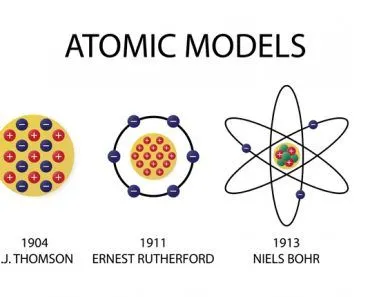
The world of the very minuscule dictates the characteristics that the world of the very big exhibits. This “world of the small” is inhabited by atomic and sub-atomic particles.
Atoms can be thought of like Lego blocks; they combine together in different ways to make different things. So, the same Lego blocks can make a boat or a bridge, as the atoms that can make a blade of grass or a giraffe.
When two or more atoms come together, they form a molecule. The number of atoms in a molecule denotes the prefix, so a molecule containing two atoms is called diatomic.
There are different types of diatomic molecules. Let’s begin this discussion by better understanding the workings of a molecule.
Molecules
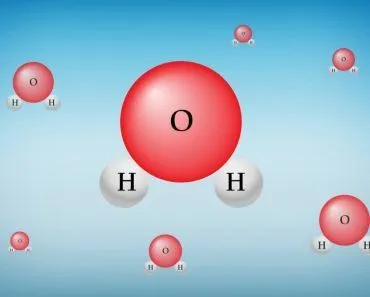
Molecules are the components of matter; they are the smallest particles that exhibit the chemical properties of the element to which they belong. Molecules can be homonuclear, meaning they can consist of atoms from only one chemical element (e.g., Hydrogen (H2)), or they can be heteronuclear, meaning they can be a chemical compound with atoms from more than one element (e.g., Water (H2O)).
Molecules are formed when two or more atoms are held together by chemical bonds. This bond represents a lasting attraction between molecules, ions and atoms. This bond can be a result of the attraction of oppositely charged ions or the sharing of electrons between two atoms.
Atoms are stable if their outer layer is either filled or empty. For it to be considered filled, it needs to have 8 electrons in the outer layer, which is called an octet. When this is not the case, the atoms bond to either gain or lose an electron from another atom, or share electron pairs with another atom.
This electron transaction gives way to chemical bonds.
Diatomic Molecules
A diatomic molecule is the simplest possible molecule: exactly two atoms bonded together. Some elements are only stable in this form, never as lone single atoms under normal conditions. Others, like water (H2O) or carbon dioxide (CO2), have three or more atoms and so are not diatomic, despite often being confused with diatomic molecules in introductory chemistry.
The 7 Homonuclear Diatomic Elements
Seven elements naturally exist as homonuclear diatomic molecules under standard conditions: hydrogen (H2), nitrogen (N2), oxygen (O2), fluorine (F2), chlorine (Cl2), bromine (Br2), and iodine (I2). A popular mnemonic to remember them is “BrINClHOF” (pronounced “Brinklehoff”). About 99% of Earth’s atmosphere is composed of just two diatomic molecules: nitrogen (78%) and oxygen (21%).
Types Of Diatomic Molecules
Diatomic molecules are held together by chemical bonds. The two atoms can share electrons (a covalent bond) or, more rarely in true diatomic form, transfer electrons (an ionic bond). The vast majority of diatomic molecules at normal temperatures are covalent.
Ionic Bond
This bond occurs when there is a total transfer of electrons from one atom to another, creating ions. Atoms that gain electrons become anions (negatively charged) and those that lose electrons become cations (positively charged). Most familiar ionic compounds (sodium chloride, NaCl; potassium fluoride, KF) are not diatomic at room temperature, because the oppositely charged ions arrange into an extended 3D lattice rather than discrete two-atom units. Genuine gas-phase diatomic ion pairs like NaCl(g) only appear at very high temperatures (above about 1,400 °C / 2,550 °F).
Covalent Bond
In a covalent bond, atoms share electrons rather than transferring them. Homonuclear diatomic molecules like H2, O2, and N2 form nonpolar covalent bonds because electrons are shared equally. Heteronuclear diatomic molecules like carbon monoxide (CO) and hydrogen chloride (HCl) form polar covalent bonds because the atoms have different electronegativities.
Nitric Oxide – NO
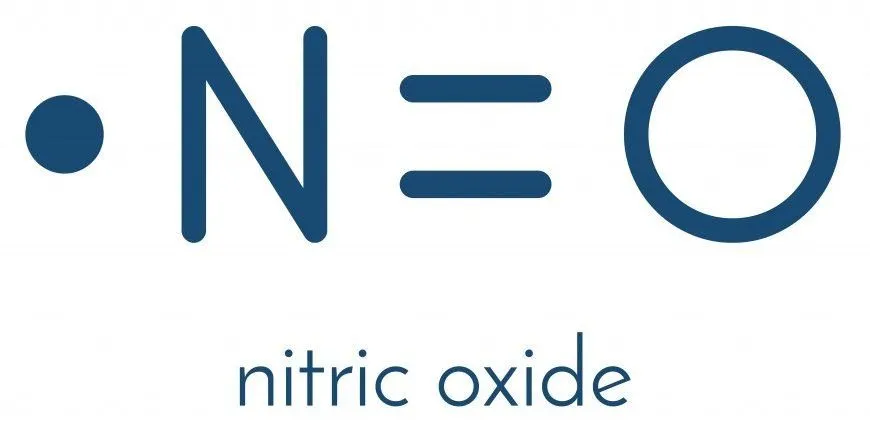
Nitric oxide is a colorless gas formed through a polar covalent bond (not ionic — the electronegativity difference between nitrogen and oxygen is only 0.4). A nitrogen atom has 5 valence electrons and oxygen has 6, so they share electrons to form a bond with a bond order of 2.5. One electron is left unpaired, which makes nitric oxide a free radical and an important signaling molecule in the human body.
Is It Diatomic? Quick Reference
The label “diatomic” is often misapplied to common substances that contain more (or fewer) than two atoms. The table below covers the substances most often searched in connection with diatomic molecules, and explains why each one is or isn’t a diatomic molecule at standard temperature and pressure.
| Substance | Diatomic? | Why |
| Hydrogen (H2) | Yes | One of the 7 homonuclear diatomic elements; two hydrogen atoms held by a single covalent bond. |
| Nitrogen (N2) | Yes | Homonuclear diatomic. A triple bond makes it extremely stable; 78% of Earth’s atmosphere. |
| Oxygen (O2) | Yes | Homonuclear diatomic; double-bonded; 21% of Earth’s atmosphere. |
| Fluorine (F2), Chlorine (Cl2), Bromine (Br2), Iodine (I2) | Yes | The four halogens that complete the 7 homonuclear diatomic elements. Each exists as a covalently bonded pair under standard conditions. |
| Carbon monoxide (CO) | Yes | Heteronuclear diatomic; a polar covalent bond between carbon and oxygen. |
| Hydrogen chloride (HCl) | Yes | Heteronuclear diatomic; a polar covalent bond, since chlorine pulls electron density away from hydrogen. |
| Nitric oxide (NO) | Yes | Heteronuclear diatomic; polar covalent bond with bond order 2.5, and a free radical (one unpaired electron). |
| Water (H2O) | No | Triatomic. Water has three atoms (two hydrogen, one oxygen), not two. |
| Carbon dioxide (CO2) | No | Triatomic. CO2 contains one carbon and two oxygen atoms (3 atoms total). |
| Carbon (C) | No | Elemental carbon exists as allotropes (graphite, diamond, graphene, fullerenes), not as discrete C2 molecules at room temperature. |
| Sulfur (S) | No | At room temperature sulfur exists as S8, an eight-atom crown-shaped ring, not as two-atom units. A diatomic form (S2) appears only as a high-temperature gas, by analogy with O2. |
| Phosphorus (P) | No | White phosphorus is a four-atom molecule (P4), so it is polyatomic rather than diatomic. |
| Helium (He) and the other noble gases | No | Monatomic. Noble gases (He, Ne, Ar, Kr, Xe, Rn) have a complete outer electron shell, so they exist as single atoms rather than bonded pairs. |
| Sodium (Na), Potassium (K), Magnesium (Mg), Iron (Fe), and other metals | No | Metals form an extended 3D lattice of atoms held together by metallic bonding, not discrete two-atom units. (Diatomic metal molecules like Na2 or K2 exist only as rare gas-phase species at high temperature.) |
| Sodium chloride (NaCl) | No | Solid NaCl is an ionic lattice of Na+ and Cl− ions, not discrete molecules. Gas-phase NaCl(g) diatomic pairs form only at very high temperatures (above ~1,400 °C / 2,550 °F). |
The pattern: “diatomic” is a strict head-count of atoms in one molecule. Anything with three or more atoms (water, carbon dioxide, ammonia) isn’t diatomic regardless of how simple it looks; anything that exists only as single atoms (helium, neon) or as an extended lattice (sodium metal, table salt) isn’t diatomic either.
How Are Molecules Classified By Number Of Atoms?
Diatomic is really just one rung on a short ladder. Chemists often sort molecules by the simplest property of all: how many atoms are bonded together in a single unit. Counting atoms gives four everyday categories, and diatomic sits second from the bottom.

Monatomic molecules are single, unbonded atoms. The noble gases (helium, neon, argon, krypton, xenon and radon) already have a full outer electron shell, so they have no reason to bond and drift around as lone atoms.
Diatomic molecules, the subject of this article, contain exactly two atoms, whether identical (O2, N2) or different (CO, HCl).
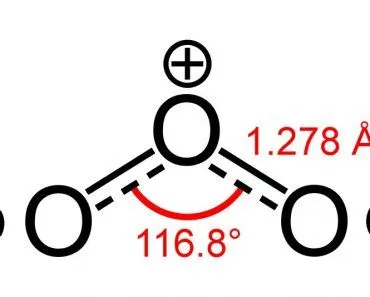
Triatomic molecules contain three atoms. The textbook example from a single element is ozone (O3), a reactive allotrope of oxygen; familiar triatomic compounds include water (H2O) and carbon dioxide (CO2).
Polyatomic molecules contain four or more atoms. A couple of elements even take this form: phosphorus travels as P4 and sulfur as S8 rings under normal conditions. Most of the molecules that run living things, from glucose to proteins, are large polyatomic structures.
So when a search points you toward monatomic or polyatomic, it is really asking a single question: count the atoms in one molecule. One atom is monatomic, two is diatomic, three is triatomic, and four or more is polyatomic.
Can A Diatomic Molecule Be An Ion?
Yes. A diatomic ion is simply two atoms bonded together that carry a net electric charge, because the pair has gained or lost one or more electrons. The atom count (two) is what makes it diatomic; the charge is what makes it an ion.
Three of the most commonly encountered diatomic ions are all negatively charged anions:
- Hydroxide (OH−): one oxygen and one hydrogen atom carrying a single negative charge. It is the ion that makes a solution basic (alkaline).
- Cyanide (CN−): one carbon bonded to one nitrogen, with a negative charge; the notoriously toxic ion.
- Superoxide (O2−): a molecule of oxygen that has picked up one extra electron, making it both an ion and a free radical that carries one unpaired electron. Living cells generate it as a reactive oxygen species.
Diatomic ions are easy to confuse with polyatomic ions, which also carry a charge but contain three or more atoms, such as sulfate (SO42−), nitrate (NO3−) and ammonium (NH4+). The test is the same as for neutral molecules: count the atoms first, then note the charge.
In Closing
Some of the most abundant and common elements on our planet are diatomic molecules. Ranging from the homonuclear to heteronuclear categories, diatomic molecules represent a stable state for elements due to the strong chemical bonds that form between valence electrons.
References (click to expand)
- What are molecules? | Ask Dr. Universe | Washington State .... Washington State University
- The Covalent Bond - people.seas.harvard.edu:80
- Polar Covalent Bonds - academic.brooklyn.cuny.edu
- Homonuclear Diatomic Molecules - Chemistry LibreTexts.
- Diatomic molecule - Wikipedia.
- Diatomic molecule. Britannica.
- Does Nitric Oxide have a covalent bond? CK-12.
- Sodium chloride (NaCl), gas-phase thermochemistry. NIST Chemistry WebBook.
- Structures and Energetics of Metallic and Ionic Solids. Chemistry LibreTexts.
- Characteristics of Gases (monatomic, diatomic and triatomic molecules; ozone). Chemistry LibreTexts.
- Monatomic and Diatomic Elements (S8 and P4 as larger molecular elements). Chemistry LibreTexts.
- Hydroxide (OH−), CID 961. PubChem, National Library of Medicine.
- Cyanide (CN−), CID 5975. PubChem, National Library of Medicine.
- Superoxide (a diatomic oxygen radical anion), CHEBI:18421. ChEBI, EMBL-EBI.