Table of Contents (click to expand)
- What Is A Replacement Reaction?
- What Are Single Replacement Reactions?
- What Are Double Replacement Reactions?
- How Do You Know If A Single Replacement Reaction Will Happen?
- What Are The Three Types Of Double Replacement Reactions?
- How Can You Tell A Single Replacement From A Double Replacement Reaction?
- What Are Some Real-Life Examples Of These Reactions?
In single replacement reactions, one element replaces another in a chemical compound. In double replacement reactions, the swapping of elements takes place.
Imagine a hypothetical situation where a kid who loves ice cream is going out with his two friends. Initially, he is holding hands with Friend A, but Friend B soon joins then and offers his ice cream to the child. Whose hand do you think he will want to hold then? Obviously, Friend B! Kids are like that. They easily drift towards people who offer them the things they love. Funnily, chemistry also deals with these types of interactions, which are called reactions.
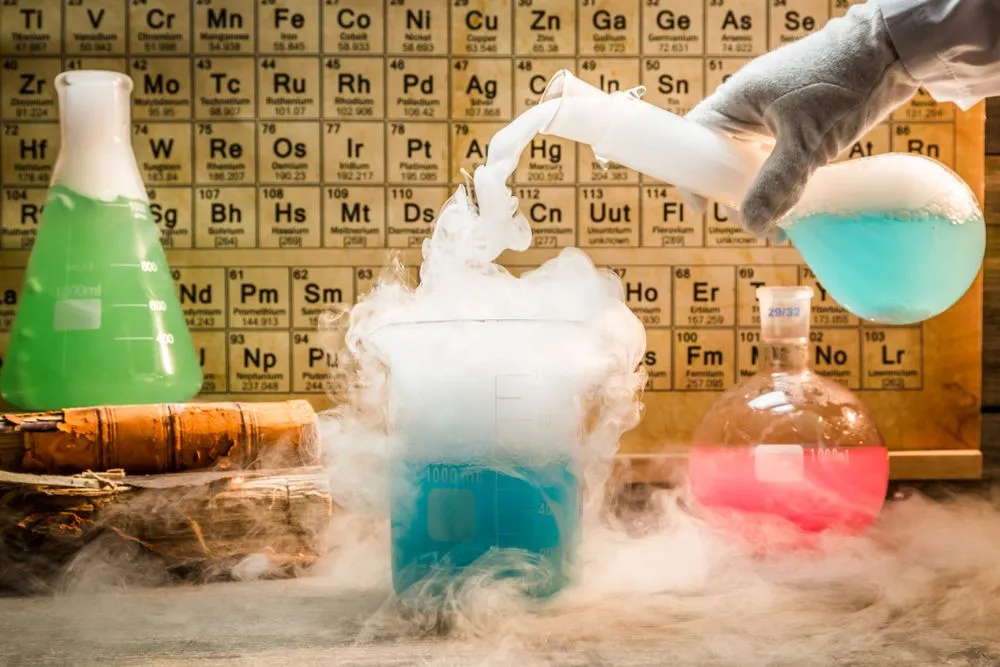
A replacement reaction is a type of chemical reaction in which one element replaces another in a compound. This can either be in the form of a single replacement reaction or a double replacement reaction. In a single replacement reaction, one of the reactants is more reactive than the other, which results in the formation of a product that is more stable. In double replacement reactions, the elements get replaced in both the reacting compounds. Double replacement reactions often result in the formation of a solid product (called a precipitate), though they can also produce a gas or water.
But how do these reactions take place? Let’s take a look!
What Is A Replacement Reaction?
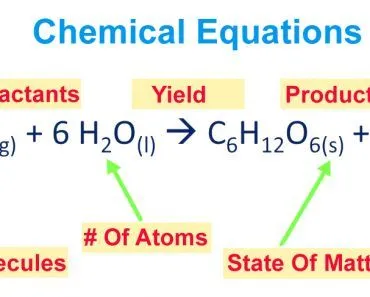
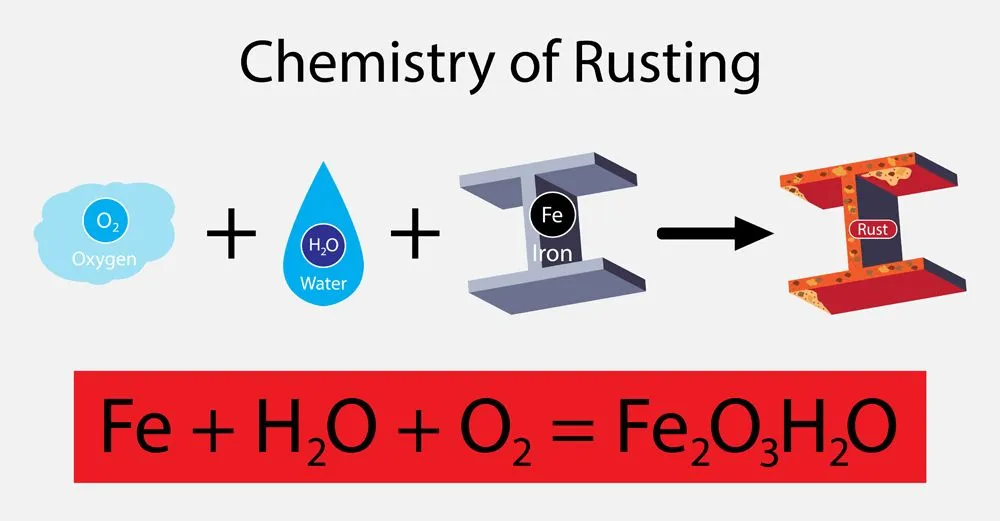
Before diving into the subtypes, let’s explore the basics of this chemistry principle. Have you ever seen a rusted iron rod? This type of object is a prime example of a chemical reaction. A process in which one or more substances are converted into one or more different substances is called a chemical reaction. The substances that undergo a change are referred to as reactants, while those being formed are called products. In the case of rusting, our reactants are represented by iron, oxygen, and water vapor in the air. When these react, they form rust, which is referred to as our product.
However, to classify reactions and make things a bit easier, we have broken this down into specific categories. In replacement reactions, more reactive elements replace the less reactive elements of a compound to form a stable product. These replacement reactions are also known as displacement reactions.
What Are Single Replacement Reactions?
Now that you know what replacement reactions are, let’s take a look at one of its subtypes. Consider the following reaction: A + BC —— B + AC
Here, A is an element, and BC is a compound, but A is more reactive than element B in the compound BC. Therefore, when they undergo a chemical reaction, A will replace B, as it is more reactive, to form the compound AC. B is given out in either an elemental or ionic form. Only a single compound undergoes replacement in this reaction, thus the name “single replacement”.
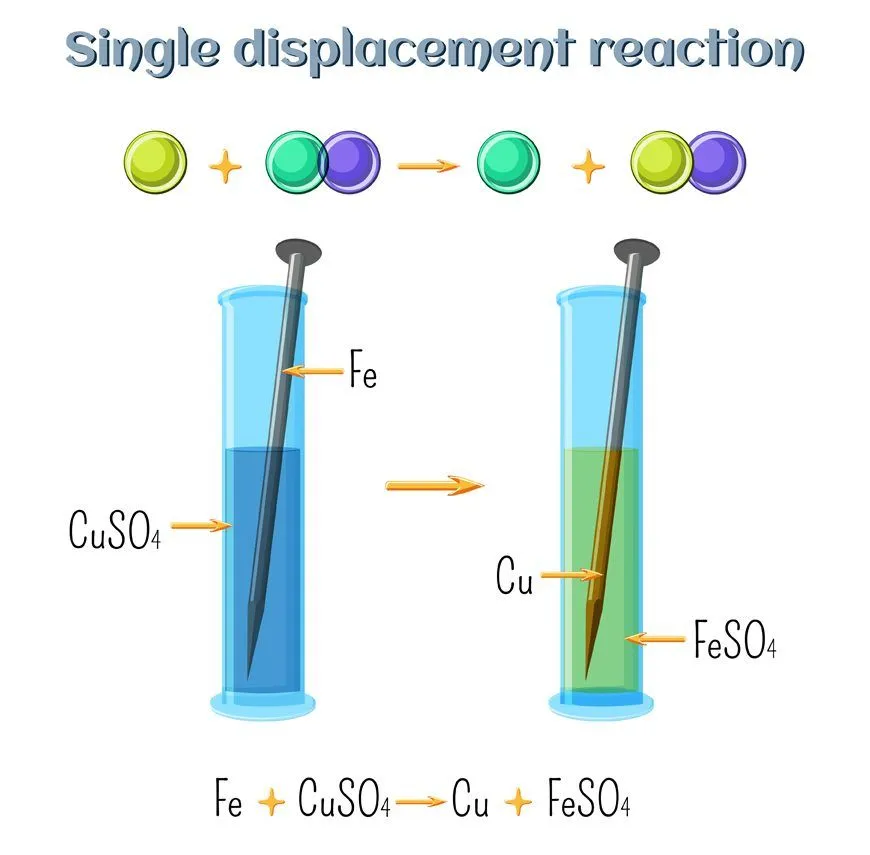
To understand this better, let’s consider the following examples:
Zn + CuCl2 —— ZnCl2 + Cu
This reaction easily fits in with the above explanation. Zinc is more reactive than Copper. Thus, when it is added in a solution of Copper Chloride, it replaces Copper and forms Zinc Chloride. Copper is given out in the elemental (metallic) form. This reaction is also an excellent example of cationic replacement. We say this because the replacing ion has a positive charge, i.e., 2+. As such, it is a cation.
Br2 + 2KI —— 2KBr + I2
Similarly, when Bromine is added to a solution of Potassium Iodide, it replaces the position of Iodine in the compound. As a result, Potassium Bromide is formed, whereas a molecule of Iodine is given out. This reaction takes place because Bromine is more reactive than Iodine, which is why it replaces it. Because the replacement ions have a negative charge, this reaction is an example of anionic replacement.
What Are Double Replacement Reactions?
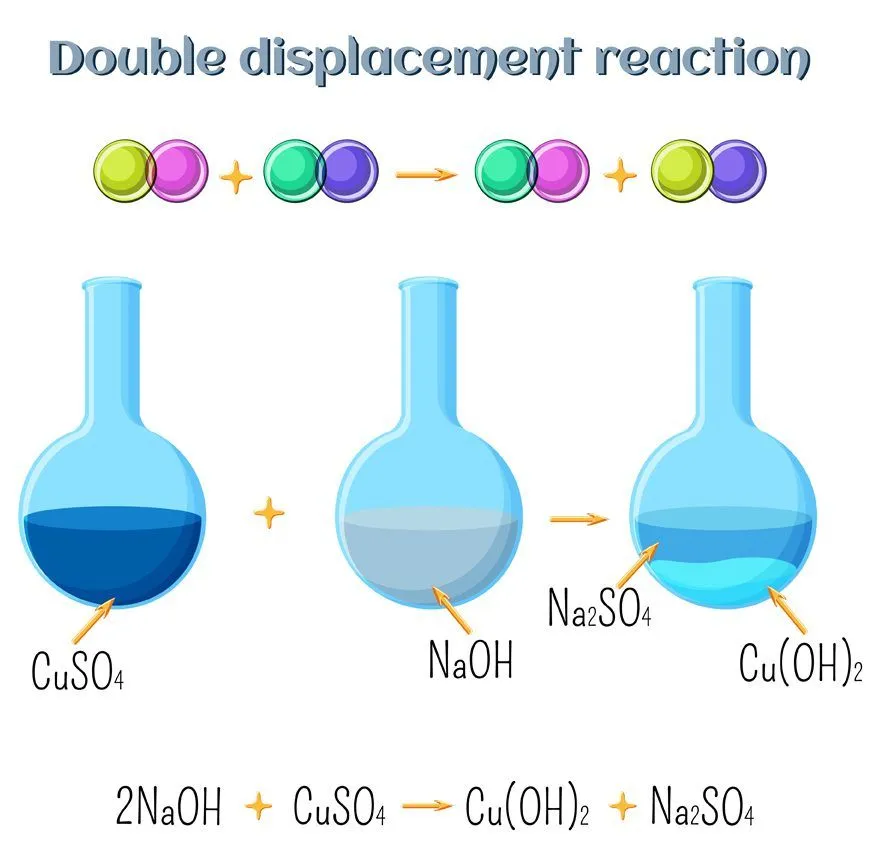
The easiest way to understand a double replacement reaction is by remembering the term “swapping partners”. In double replacement, the elements get replaced in both the reacting compounds. Here, parts of two ionic compounds are exchanged, making two new compounds. Let’s consider the following reaction: AB + CD —— AC + BD
Here, the elements in the reacting compounds exchange their partners. In the product, A combines with C, while B combines with D. Because the replacement occurs in two places, it is referred to as a double replacement. Double replacement reactions are also called metathesis or double displacement reactions. Often, in these reactions, when combining aqueous solutions, a solid product is formed. This product is referred to as a precipitate, and the reaction is called a precipitation reaction. However, double replacement reactions can also produce a gas or water, as in acid-base neutralization reactions.
For example, take a look at this reaction:
AgNO3 (aq) + NaCl (aq) —— AgCl (s) + NaNO3 (aq)
When an aqueous solution of Silver Nitrate is mixed with an aqueous solution of Sodium Chloride, it results in the formation of a Sodium Nitrate solution, while Silver Chloride precipitates out. One can easily see that elements have been replaced in both the reacting compounds.
How Do You Know If A Single Replacement Reaction Will Happen?
We keep saying the "more reactive" element wins, but how do you know which element that is before you mix anything? Chemists lean on a handy ranking called the activity series (also called the reactivity series). It lists metals from the most reactive at the top to the least reactive at the bottom, running roughly: lithium, potassium, barium, calcium, sodium, magnesium, aluminum, zinc, iron, lead, (hydrogen), copper, silver, gold.
The rule is wonderfully simple: an element can only replace another element that sits below it in the series. Picture two pieces of nickel, one dropped into iron(III) nitrate and the other into lead(II) nitrate. Nickel sits above lead but below iron, so it cheerfully replaces the lead, Ni + Pb(NO3)2 → Ni(NO3)2 + Pb, yet does nothing at all in the iron solution. No reaction.
Hydrogen earns a spot on the list too. Any metal above it, such as zinc, can shove hydrogen out of an acid, which is exactly how we make hydrogen gas in the lab: Zn + 2HCl → ZnCl2 + H2. Non-metals follow their own order, with the halogens ranked F2 > Cl2 > Br2 > I2. That ranking is precisely why the bromine in our earlier example could displace iodine, but never the reverse. If you want to dig into what makes some elements so eager to react, we have a whole piece on the most reactive elements on the periodic table.
What Are The Three Types Of Double Replacement Reactions?
A double replacement only actually "goes" if something pulls the swapped ions out of the mix, so chemists sort these reactions by what that something is. There are three classic outcomes.

The first is a precipitate, an insoluble solid that drops out of solution. When potassium iodide meets lead(II) nitrate, bright yellow lead iodide rains down: 2KI (aq) + Pb(NO3)2 (aq) → 2KNO3 (aq) + PbI2 (s). This showy version is a favorite classroom demo nicknamed "golden rain".
The second is a gas. Mix sodium sulfide with hydrochloric acid and rotten-egg-smelling hydrogen sulfide bubbles off: Na2S (aq) + 2HCl (aq) → 2NaCl (aq) + H2S (g). Carbonates do something similar, fizzing out carbon dioxide.
The third is water, formed when an acid neutralizes a base: HCl (aq) + NaOH (aq) → NaCl (aq) + H2O (l). Here the salt stays dissolved, but the H+ and OH− lock together as water, and that is enough to drive the swap. It is because all three share this partner-trading mechanism that double replacements are also grouped under the umbrella term metathesis. So no, a double replacement does not always make a precipitate. It can hand you a solid, a gas, or water.
How Can You Tell A Single Replacement From A Double Replacement Reaction?
Once you have a balanced equation in front of you, telling the two apart takes only a quick glance at the reactants. The trick is to count the lone elements.
In a single replacement, one reactant is a pure element (a single metal or non-metal sitting on its own) and the other is a compound. The element muscles its way in and kicks one piece of the compound out: A + BC → AC + B. There is always exactly one uncombined element on each side of the arrow.
In a double replacement, both reactants are compounds, usually two ionic compounds dissolved in water, and they simply trade partners: AB + CD → AD + CB. No element ever appears on its own. So if you see two compounds going in and two compounds coming out, with the positive and negative ions reshuffled, you are looking at a double replacement. Spotting that lone element, or the lack of one, is the fastest way to label any replacement reaction correctly.
What Are Some Real-Life Examples Of These Reactions?
These reactions are not just chalkboard curiosities, they quietly do real work.

One of the most dramatic single replacements is the thermite reaction, in which powdered aluminum displaces iron from iron(III) oxide: 2Al + Fe2O3 → Al2O3 + 2Fe. It releases so much heat that the iron pours out molten, which is exactly why track crews use it to weld railway rails together out in the field. A gentler cousin lets us recover copper: drop scrap iron into a copper sulfate solution and the iron slowly grows a reddish copper coat as it takes copper's place, Fe + CuSO4 → FeSO4 + Cu.
Double replacements are just as close to home. Reach for an antacid and you are running a neutralization in your own stomach, as magnesium hydroxide mops up excess hydrochloric acid to make a harmless salt and water: Mg(OH)2 + 2HCl → MgCl2 + 2H2O. Calcium-carbonate antacids do much the same but also fizz out a little carbon dioxide. And the classic baking-soda-and-vinegar "volcano" is a double replacement too, swapping partners to release that satisfying foam of carbon dioxide gas.
To summarize, in single replacement reactions, the more reactive element takes the place of a less reactive compound. On the other hand, in double replacement reactions, both of the reacting compounds swap partners and end up forming entirely new compounds!
References (click to expand)
- Single replacement reactions (article) | Khan Academy. Khan Academy
- Single Replacement Reactions - Chemistry LibreTexts
- Double replacement reactions - Khan Academy. Khan Academy
- Double Replacement Reactions - Chemistry LibreTexts
- Activity Series - Chemistry LibreTexts
- The thermite reaction between aluminium and iron(III) oxide - Royal Society of Chemistry
- Antacids - StatPearls - NCBI Bookshelf