Table of Contents (click to expand)
A molecule is a group of two or more atoms held together by covalent bonds as a discrete unit. A compound is any substance made of two or more different elements in a fixed ratio. The two overlap but are not the same: molecular compounds like water (H2O) and methane (CH4) are both molecules and compounds, ionic compounds like table salt (NaCl) are compounds but exist as crystal lattices, not discrete molecules, and elemental molecules like H2 or O3 are molecules but not compounds, because they contain only one element.
If you close your eyes and think back to high school science, you can probably still remember your teacher incessantly discussing molecules and compounds in your chemistry class. It may not be a pleasant memory, and you may not remember what she was trying to explain, but molecules form the entirety of our existence, so a brief review of the jargon surrounding molecules and compounds is probably a good thing.
When you see a molecular diagram or read a molecular formula, it may not immediately be apparent whether you are seeing a molecule or a compound. In fact, you may not even know if there is a difference between these two designations at all! A popular textbook shortcut says “all compounds are molecules, but not all molecules are compounds.” That is a useful first approximation, but it gets ionic compounds like table salt wrong: NaCl is a compound but isn’t a discrete molecule, it’s a giant crystal lattice. Keep reading for the more careful version.
Molecules Vs Compounds
The words “molecule” and “compound” get thrown around very casually, often interchangeably, in any conversation about chemistry or material sciences. There is a good reason for this—the formal definitions are very nuanced, and there is some overlap, as well as debate about the boundaries of each classification.
Molecules
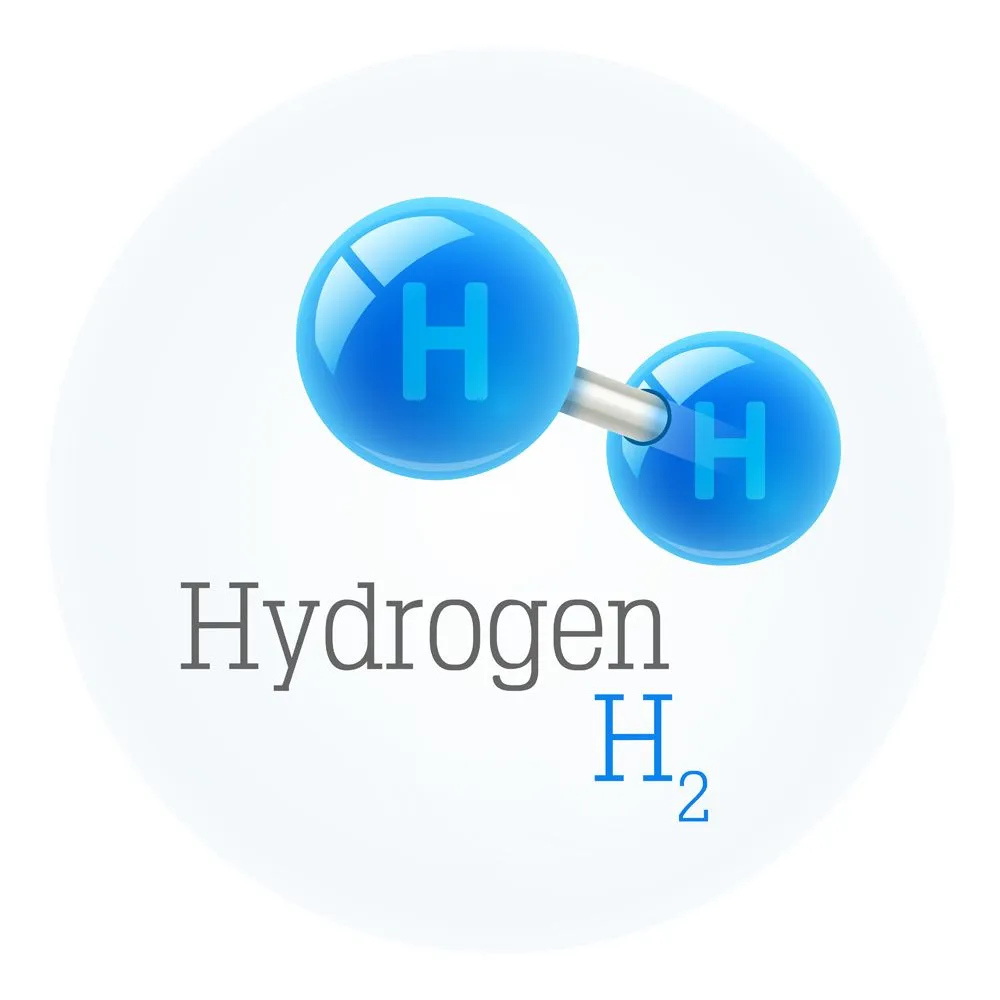
Simply put, molecules are particles composed of two or more atoms that are chemically held together; these molecules have a specific number of atomic nuclei, and can be considered an individual particle. Whether a particle consists of only one type of atom or a variety of different atoms, it is still considered a molecule. There are small molecules and large molecules, ranging from the most basic H2 molecule, containing only two hydrogen atoms, to a complex DNA macromolecule, which consists of millions of base pairs and atoms, “molecule” is a word that applies to a huge variety of particles.
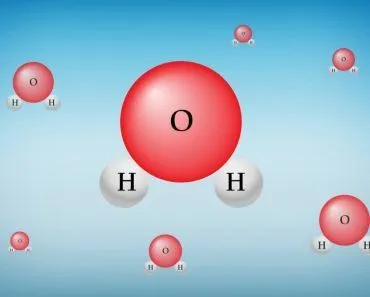
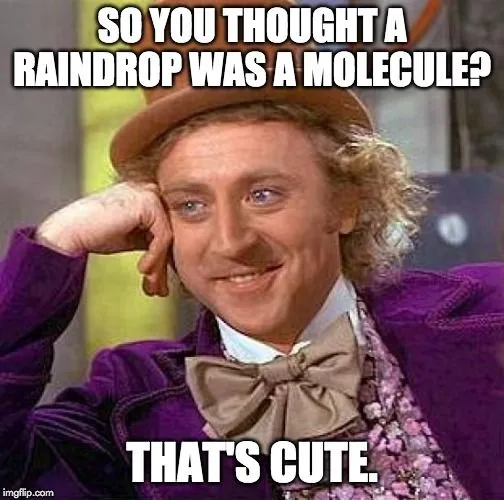
However, if you were to look at a grain of salt, made up purely of NaCl, you wouldn’t consider it a molecule, as it is in fact a huge lattice network of individual sodium chloride compound particles, without a clear number of atomic nuclei. The same thing is true if you look at a drop of water; you aren’t looking at a molecule of water, but rather a huge grouping of liquid H2O molecules in a high enough concentration to be seen by the naked eye!
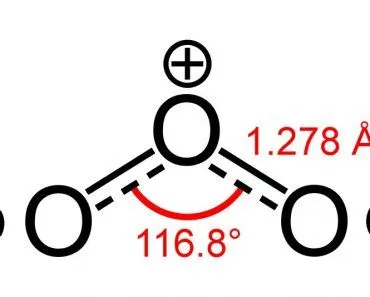
Now, in the past, molecules have been defined as those particles that were solely bonded through covalent bonds, meaning bonding that occurs through the sharing of electrons. In the case of O3, for example, an ozone molecule, the three oxygen atoms that compose that molecule are bonded in a unique way. Two of the oxygen atoms are bonded by a double covalent bond (two pairs of electrons being shared), and one of those oxygen atoms is simultaneously sharing a coordinate covalent bond with a third oxygen atom.
This type of classification made a clear distinction between other particles that used ionic bonding, but it was soon realized that real-world bonding sits on a continuous covalent-to-ionic spectrum, so classifying things as molecules purely by bond type is shaky. The IUPAC definition that most chemists use today calls a molecule "an electrically neutral entity consisting of more than one atom," which is still a discrete, countable particle, not a continuous lattice. Under that definition, ionic compounds (table salt, calcium carbonate) are compounds but not molecules, while elemental molecules like H2, O2 and O3 are molecules but not compounds. The intersection, things that are both, is what chemists call molecular compounds.
Covalent Compounds
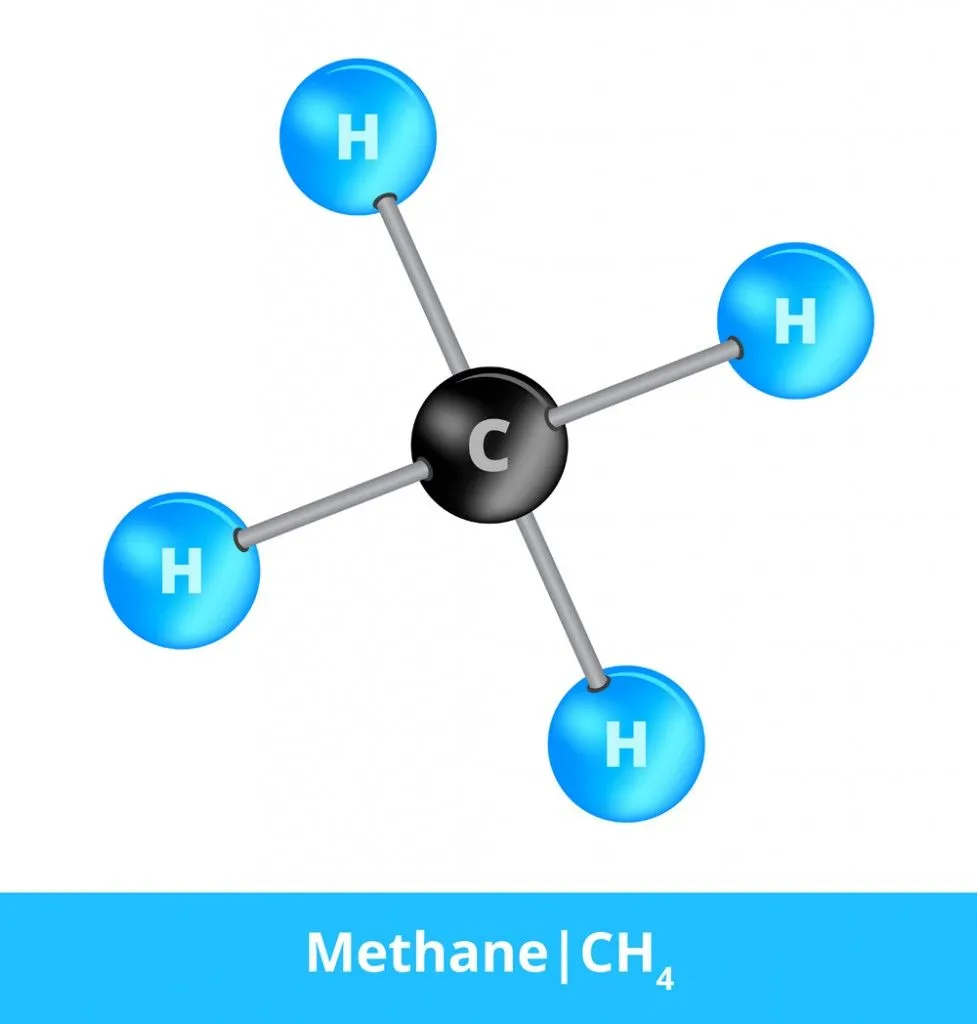
This is a label that gets used to specifically denote when a molecule is composed of at least two different elements. Methane, for example, is a greenhouse gas that has received a great deal of attention in recent years. Methane has the chemical formula CH4, and consists of one carbon atom and four hydrogen atoms that are all covalently bonded to one another. Each hydrogen atom shares one electron with the carbon atom. Methane (CH4), water (H2O), carbon chloride (CCl4), ammonia (NH3) and countless other covalent compounds are considered both molecules and compounds, since they only rely on molecular bonds to form.
Ionic Compounds
Ionic compounds are similar to covalent bonds, but differ in terms of how the electrons of the two atoms interact. Ionic compounds a formally defined as a grouping of atoms of more than one element connected through ionic bonds. In a covalent (molecular) bond, the electrons are shared, whereas in an ionic bond, one or more electrons is given fully to another atom. This is because an ionic bond forms between oppositely charged ions; in simple terms, an ion may have a positive or negative charge, due to the excess or lack of an electron. When these oppositely charged ions connect, an ionic bond is formed. Whether ionic bonds are inherently "stronger" than covalent bonds depends on what you mean: individual ionic interactions in the gas phase can be moderate, but ionic crystals are held together by enormous cumulative lattice energies (hundreds to thousands of kJ/mol), which is why salt has such a high melting point. Strong covalent bonds in molecules can rival or exceed these (a C-C single bond is around 347 kJ/mol; a C=O double bond around 745 kJ/mol; a triple bond in nitrogen gas a remarkable 945 kJ/mol).

Perhaps the most common example of an ionic compound is table salt, NaCl. A neutral sodium atom (Na) has no charge, but if that atom were to lose an electron, it would become a sodium ion with a net charge of +1. Similarly, a neutral Chlorine atom has no charge, but if that atom were to gain an electron, it would have a net ionic charge of -1. When these two ions—a cation and an anion, respectively—come together, the extra electron from chlorine can be given to sodium. This stabilizes the two atoms, the outer electron shells of both atoms are satisfactorily filled, and an ionic compound is formed, boasting a strong bond that will be more difficult to break than a covalent bond.
Atom, Element, Molecule Or Compound: How The Terms Fit Together
People often reach for the words atom, element, molecule and compound as though they were interchangeable, but each one sits on a slightly different rung of the same ladder, and getting them straight makes the whole molecule-versus-compound question far less slippery. Start at the bottom. An atom is the smallest structural unit of an element, a single nucleus of protons and neutrons wrapped in a cloud of electrons. An element is a pure substance built from just one kind of atom, which is exactly what the periodic table catalogs, from hydrogen to uranium, and it cannot be broken down into anything simpler by chemical means.
Climb one rung and you reach the molecule, which forms whenever two or more atoms are chemically bonded into a single, countable particle. Crucially, those atoms need not be different: two hydrogen atoms bonded together make a diatomic H2 molecule, and three oxygen atoms make an O3 (ozone) molecule. A compound tacks on one extra condition, namely that at least two different elements are combined in a fixed ratio, as in water (H2O) or table sugar (C12H22O11). That single requirement is the whole reason the two words are not synonyms: every compound contains more than one element, but a molecule can quite happily be made of only one.
| Term | What it is | Example |
|---|---|---|
| Atom | The smallest unit of an element | A single oxygen (O) atom |
| Element | A substance made of one type of atom | Oxygen gas (O2) |
| Molecule | Two or more atoms bonded together (same or different elements) | O2, H2O |
| Compound | Two or more different elements in a fixed ratio | H2O, NaCl |
What Are Discrete Molecules?
One phrase that quietly trips people up is the idea of a “discrete” molecule, and it is worth unpacking, because it marks the real dividing line between something that earns the name molecule and something that does not. A discrete molecule is a defined, countable group of atoms with a fixed number of nuclei, so a single water molecule is always exactly two hydrogen atoms and one oxygen atom, no more and no less. You can point to where one molecule ends and the next begins, and the intermolecular forces holding neighboring molecules together are far weaker than the covalent bonds locked inside each one.

Plenty of familiar substances are not built this way at all. In a giant covalent (network) solid such as diamond, graphite or quartz (silicon dioxide, SiO2), every atom is covalently bonded to its neighbors in a continuous three-dimensional lattice. A single crystal is, in effect, one enormous molecule, and the number of atoms it contains simply depends on how large the crystal happens to be. That is why a formula like SiO2 does not describe a discrete molecule of silicon dioxide at all; it just states the fixed 1-to-2 ratio of silicon to oxygen atoms repeated endlessly through the structure. The same reasoning applies to ionic solids like table salt, which are extended lattices of alternating ions rather than separate NaCl units.
This structural difference is exactly why network and ionic solids behave so differently from molecular ones. Because pulling them apart means snapping a whole web of strong covalent or ionic bonds, rather than overcoming the weak forces between separate molecules, they tend to be hard and carry very high melting points. Diamond, for instance, only melts at around 3,500 degrees Celsius, and even then only under high pressure. Molecular solids, held together by nothing sturdier than intermolecular forces, are generally much softer and melt at far lower temperatures. So whenever a substance has no discrete molecules to count, chemists fall back on the empirical formula, the simplest whole-number ratio of its atoms, in place of a molecular formula.
A Final Word
Words have a great deal of power, so using the correct ones is important when discussing certain areas of science. In terms of molecules and compounds, there are some nuanced differences between the two, but for most purposes and conversations, the two can be used interchangeably. However, if you are discussing a molecule that consists of only one type of element, such as H2 or O3, be sure not to call it a compound! And next time you sprinkle some salt on a bland meal, offer up some thanks to ionic bonding!
References (click to expand)
- Covalent bond | Definition, Properties, Examples, & Facts.
- Molecule - Molecular Bonding - Atoms, Electrons, Formed ....
- Bonding and Structure of Molecules and Solids.
- Network Covalent Solids and Ionic Solids - Chemistry LibreTexts.
- Covalent Network Solids - Chemistry LibreTexts.
- Atoms, Molecules, and Compounds - University of Hawaii at Manoa.