Simply put, a tesseract is a cube in 4-dimensional space. You could also say that it is the 4D analog of a cube. It is a 4D shape where each face is a cube.
If you’re an Avengers fan, the first thing that comes to mind when you hear the word “tesseract”:
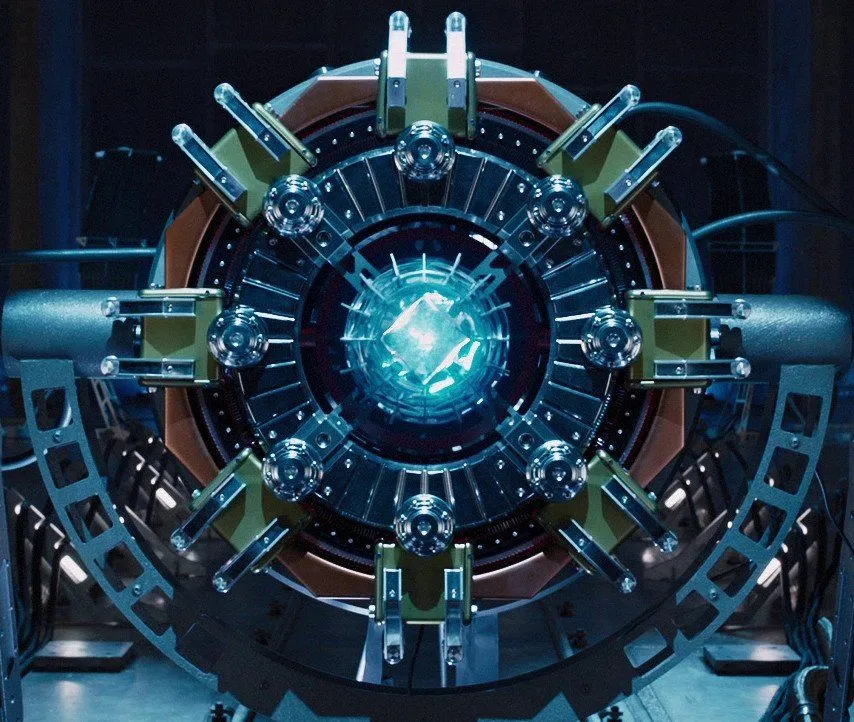
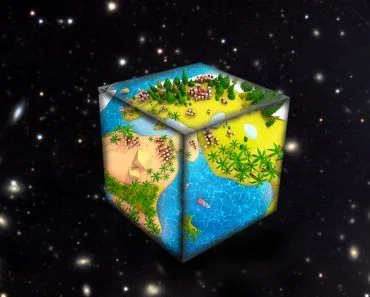
For fans of the Marvel Universe, the Tesseract is the bright blue cube that not only people from Earth, but also from other planets are crazy about. That’s why all Avengers joined forces to protect Earthlings from the extraordinarily destructive powers of the Tesseract.
But let me tell you this: The tesseract is an actual geometric concept, or rather, a shape that exists in 4D. It’s not just a blue cube from the Avengers… it’s a real concept. The term was coined by British mathematician Charles Howard Hinton in 1888, derived from the Greek words tessara (four) and aktis (ray), referring to the four edges that radiate from each vertex.
But before we explain a tesseract in detail, let us start from the bottom.
What Are “Dimensions”?
I am sure that you have heard the terms 2D and 3D, which represent two and three-dimensional objects of space respectively.
A dimension is only one direction you can go in. For example, if you draw a line on a sheet of paper, then you can go in either the left/right (x-axis) direction, or in the up/down direction (y-axis). So we say that the paper is effectively two-dimensional, since you can only go in two directions on it.
Now in the real world, in addition to the two directions mentioned above, one can also go in/out. Therefore, in 3D-space, a feeling of depth is added. Therefore, we say that real life is three-dimensional.
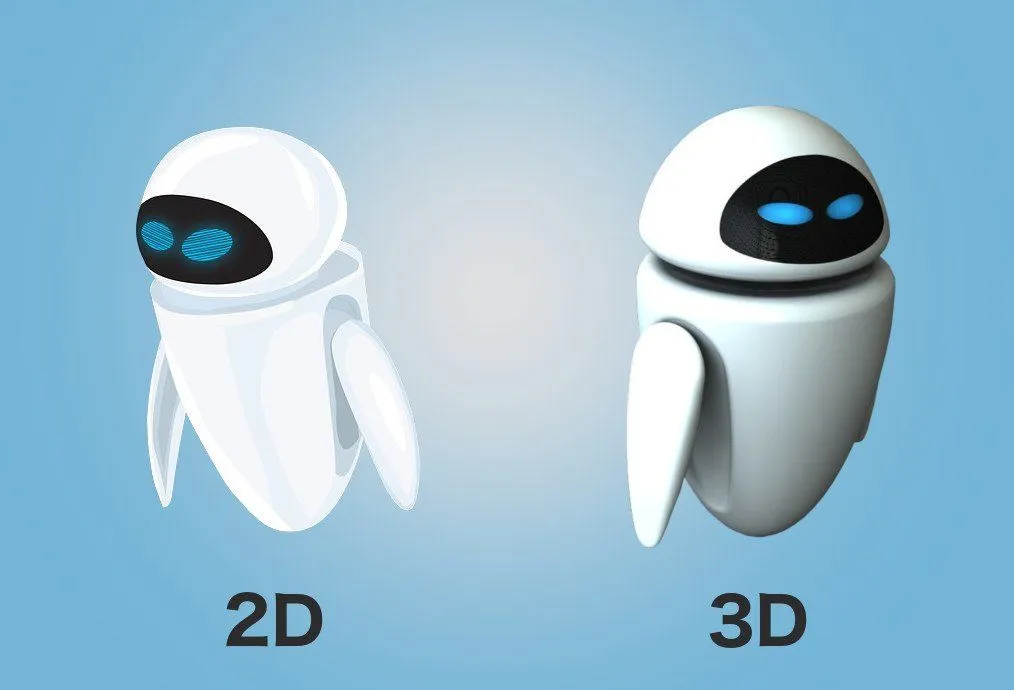
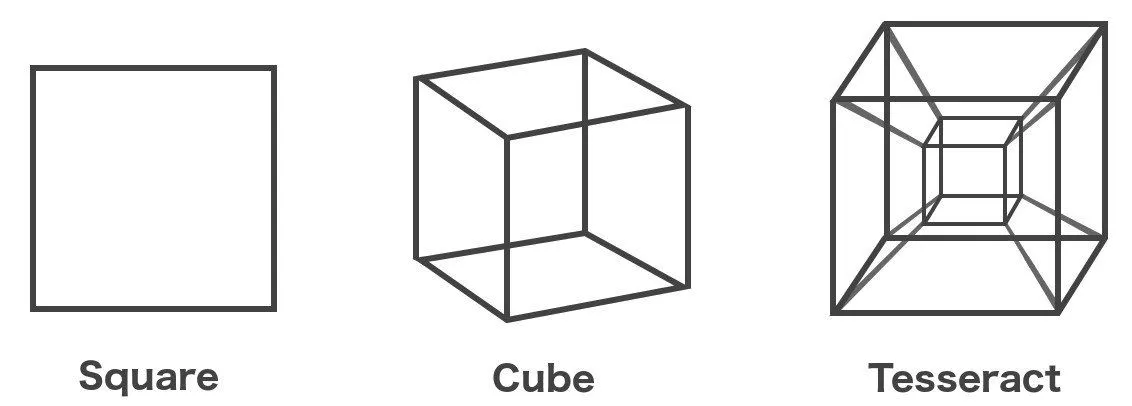
A point represents 0 dimensions because it does not move in any direction, a line represents 1 dimension (length), a square represents 2 dimensions (length and width) and a cube represents 3 dimensions (length, width and height).
Take a 3D cube and replace each face, which is currently a square, with a cube. And lo and behold! The shape you get is a tesseract.
What Is A Tesseract?
Simply put, a tesseract is a cube in 4-dimensional space. You could also say that it is the 4D analog of a cube. It is a 4D shape where each face is a cube. A tesseract has 16 vertices, 32 edges, 24 square faces, and 8 cubic cells.
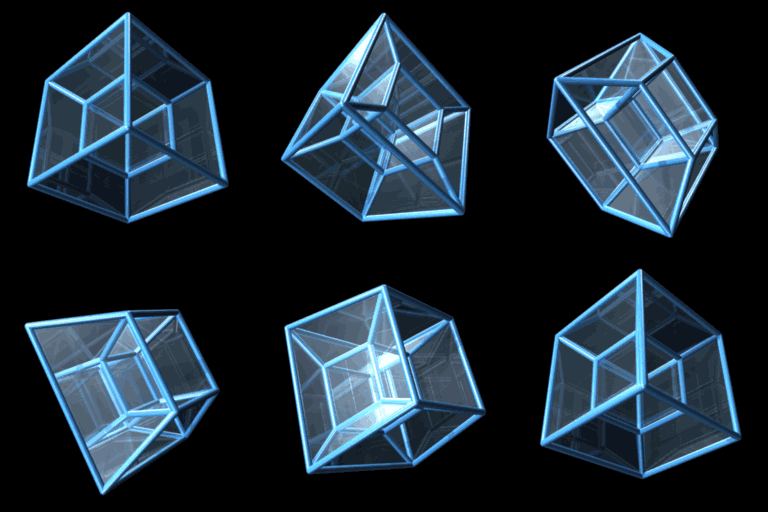
A square is a 2D shape; therefore, each of its corners has two lines that separate at a 90-degree angle from each other. A cube is 3D, so each of its corners has three lines that separate from it. Similarly, a tesseract is a 4D shape, so each corner has four lines that separate from it.
Why Is It Difficult To Imagine A Tesseract?
Since we as humans have evolved only to visualize things in three dimensions, anything that is part of other dimensions, such as 4D, 5D, 6D, etc., makes no sense to us because we cannot visualize them at all. Our brain cannot make sense of a fourth dimension in space.
But just because we cannot visualize a concept does not mean that it cannot exist.
Mathematically, a tesseract is a perfect shape. Likewise, all shapes in higher dimensions, i.e. 5D and 6D, are also mathematically plausible.
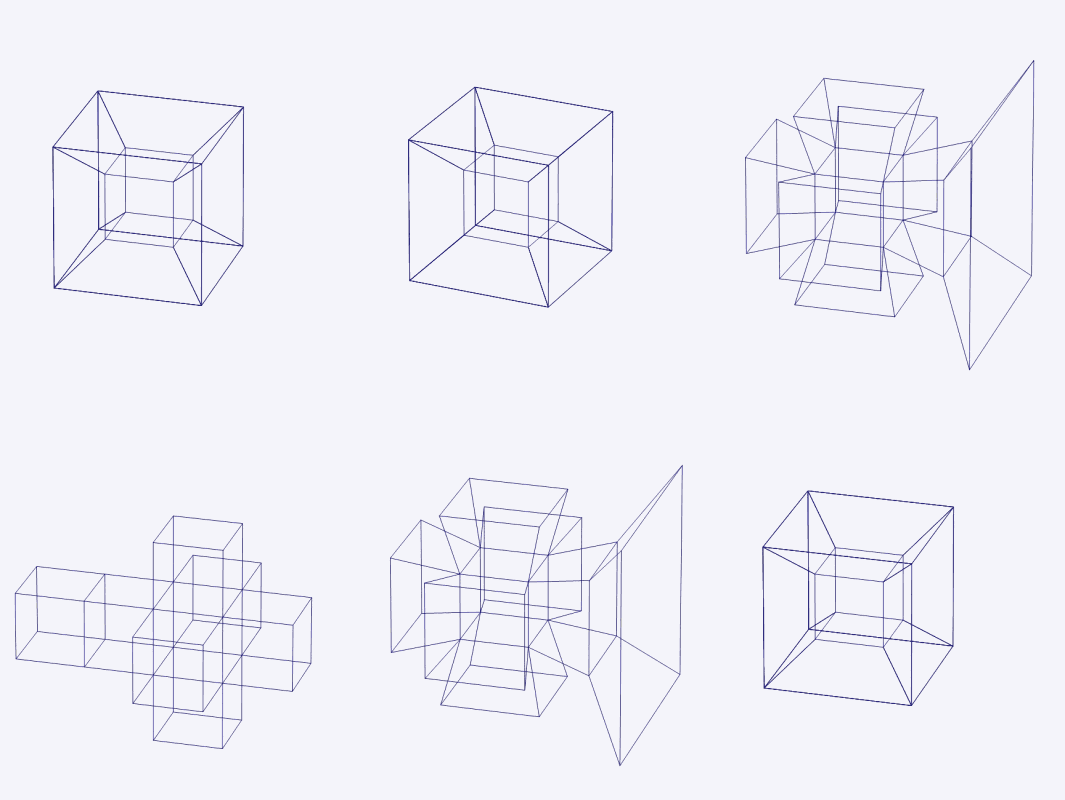
Just as a cube can be unfolded into a net of 6 squares in 2D space, a tesseract can be unfolded into a net of 8 cubes in 3D space. In fact, there are exactly 261 distinct ways to unfold a tesseract into 8 cubes. The most famous unfolding is the cross-shaped arrangement, which Spanish surrealist painter Salvador Dalí depicted in his 1954 masterpiece Corpus Hypercubus.
Incredible, isn’t it?
A tesseract is definitively a 4D object, not 5D, as some people mistakenly believe. This confusion often arises because, in physics, time is sometimes called "the fourth dimension." Since a tesseract has four spatial dimensions, some assume it must be 5D when you add time. However, mathematically, a tesseract is unambiguously four-dimensional.
The tesseract has also made notable appearances in popular culture beyond the Marvel Universe. In Christopher Nolan’s 2014 film Interstellar, Cooper enters a "tesseract" (a construct that allows him to interact with time as a physical dimension). While the movie’s depiction is more of a plot device than strict geometry, it powerfully illustrates the idea of visualizing higher dimensions.
How Do You Actually "See" A Tesseract?
If we are stuck in three dimensions, how can we picture a four-dimensional object at all? The trick is to step down a dimension and reason by analogy. Shine a light on a wireframe cube and it casts a flat, two-dimensional shadow on the wall: a square inside a square, with the corners joined by slanting lines. The shadow is not the cube, but it captures the cube's structure. Mathematicians do exactly the same thing one dimension up. As the University of Pittsburgh's John D. Norton puts it, drawing a tesseract in three-dimensional space is "straightforward": you "take two of its faces, two cubes, and connect the corners."

That nested "cube within a cube" is the most familiar picture of a tesseract, and it is technically a Schlegel diagram, a 3D projection of the 4D shape. The inner cube is not really smaller than the outer one, just as the inner square of a cube's shadow is not really smaller; it only looks that way because it is "farther away" in the fourth direction. As Wikipedia's article on four-dimensional space describes it, if the wireframe of a tesseract "were lit from 'above' (in the fourth dimension), its shadow would be that of a three-dimensional cube within another three-dimensional cube." When you see an animated tesseract appearing to turn itself inside out, you are watching this 3D shadow shift as the 4D object rotates, which is why the cubes seem to pass through one another even though, in 4D, nothing is intersecting at all.
Can A Tesseract Exist In Real Life?
This is the question most people really want answered, and the honest reply is: not as a physical object you could hold. A genuine tesseract needs four spatial dimensions to exist in, and the space we live in has only three. Norton is blunt about this in his Pittsburgh course notes: "I am NOT saying that our space is really four dimensional. It is not. It has only three spatial dimensions." A tesseract is a perfectly valid mathematical object, the way the number a billion is perfectly valid even though you will never count to it, but our universe gives it nowhere to physically sit.
What confuses people is the phrase "the fourth dimension." In Einstein's relativity, time really is treated as a fourth dimension, woven together with the three of space into a single fabric called spacetime. But that fourth dimension is time, not a fourth direction of space, and its geometry is different from the neat right angles a tesseract is built on. So spacetime being "four-dimensional" does not mean a four-dimensional cube can show up in your living room. The closest we get to a real tesseract is its shadow: the 3D projections, models, and animations we use to study it. Those are genuine and you can even 3D-print them, but they are to a true tesseract what a flat drawing is to a real cube.
What Is The Tesseract In Marvel And Interstellar?
Because so many people first meet the word through the movies, it is worth separating the screen version from the geometry. In the Marvel Cinematic Universe, the glowing blue Tesseract is not a four-dimensional shape at all. It is a cube-shaped containment device that holds the Space Stone, one of the six Infinity Stones. Its on-screen ancestor is the comic-book "Cosmic Cube"; as Wikipedia notes, "In the Marvel Cinematic Universe, the Cosmic Cube is depicted as the Tesseract, a container for the Space Stone." That stone, not the cube, is the source of the power, which is why Thanos crushes the Tesseract in his hand in Avengers: Infinity War and simply plucks the Space Stone out. The filmmakers borrowed the name because "tesseract" sounds like an object from beyond our world, but geometrically it is just an ordinary glowing cube.
Christopher Nolan's Interstellar uses the word more faithfully. When Cooper falls into the black hole, he ends up inside a vast "tesseract," a structure built by higher-dimensional beings that lays out every moment of his daughter's bedroom as a navigable physical space. It is the film's way of dramatizing the real idea behind a tesseract: that a being able to perceive an extra dimension could see what we experience as time all at once, the way we can take in a whole flat drawing in a single glance. The set was famously built for real rather than added digitally, which is fitting, since the whole point of a tesseract is to make an abstract higher dimension feel solid enough to walk through.
So a tesseract is a real concept (which is mathematically absolutely plausible), and not just a bright blue cube that they fight over in The Avengers or a time-bending room in Interstellar.
Last Updated By: Ashish Tiwari