Table of Contents (click to expand)
Mixing bleach and ammonia releases toxic chloramine gases—monochloramine (NH₂Cl), dichloramine (NHCl₂), and nitrogen trichloride (NCl₃)—because the hypochlorite in bleach reacts directly with ammonia. Breathing them causes watery eyes, nausea, coughing, shortness of breath, chest pain, and irritation of the throat, nose, and lungs. If it happens, move to fresh air right away and (in the US) call Poison Control at 1-800-222-1222.
You might have heard that mixing certain household cleaning products can be dangerous, even life-threatening in some cases. Out of those deadly combinations of cleaning products, the one that’s most commonly talked about is the mixture of bleach and ammonia.
We have made a video about why the combination of ammonia and bleach is so dangerous; you can check it out here:
What Is Ammonia?
Ammonia, in its natural state, is a colorless gas with a sharp, pungent smell that dissolves readily in water to form aqueous ammonia (often loosely called ammonium hydroxide). It’s basically a compound made of one atom of nitrogen and three atoms of hydrogen, bearing the formula NH3.
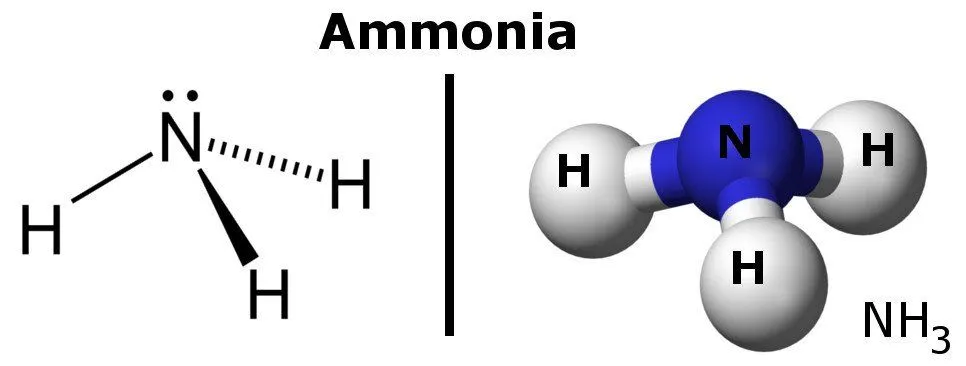
Ammonia is the simplest pnictogen hydride and the principal nitrogenous waste of fish and many other aquatic creatures, which simply excrete it directly into the water. In nature, it occurs mostly in trace amounts produced from decaying nitrogenous vegetable and animal matter—but industrially, roughly 240 million tonnes are manufactured each year through the Haber-Bosch process. It’s lighter than air (its vapor density is 0.589 times that of air) and can be liquefied easily, thanks to strong hydrogen bonding between its molecules.
Around 70–80% of all the ammonia we make goes into nitrogen fertilizers like urea and ammonium nitrate—a huge chunk of the food supply quietly depends on it. The rest is split between pharmaceuticals, plastics, explosives, refrigeration, and household cleaning products.
What Is Bleach?
The term ‘bleach’ is collectively used to refer to certain chemicals that are used as household cleaning products. In more technical terms, a bleach is a chemical that’s used to remove stains and whiten clothes. It can also be used as a disinfectant, mostly in the kitchen and bathroom. Bleaches have potent bactericidal properties, which is why they’re used for sterilizing in places that need to stay clean—from hospital surfaces to swimming pools, where chlorine bleach keeps bacteria in check.
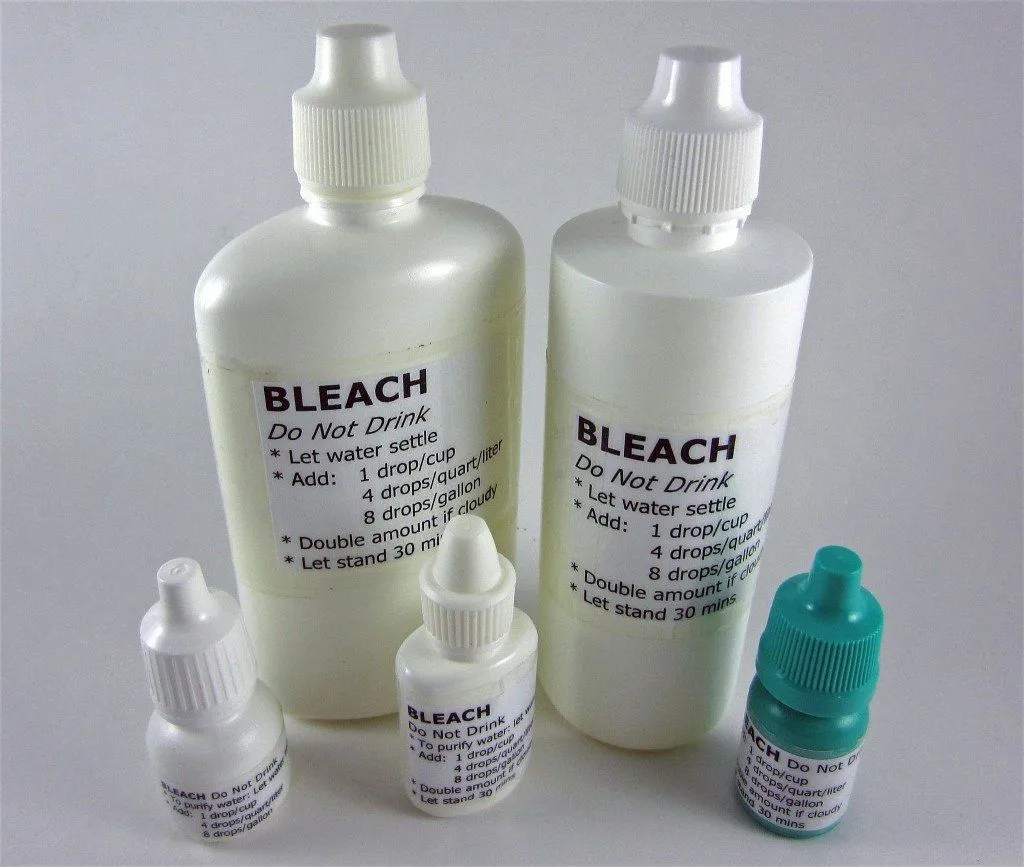
Although bleaches are made by the combination of a few different chemicals, chlorine is the basis for the most commonly used bleaches. For example, calcium hypochlorite is the active compound in bleaching powder and sodium hypochlorite is simply called ‘bleach’, such is its popularity!
What Happens When Bleach Is Mixed With Ammonia?
Sodium hypochlorite is the active ingredient in chlorine bleaches. Not only is it found in bleach, but also many other disinfectants. Similarly, ammonia is also found in some window and glass cleaners, certain exterior and interior paints and a few other products.
Although it’s generally advised to avoid mixing ammonia and bleach together, some people still end up doing so, whether while mixing cleaning products (which is generally considered a bad idea), or while using chlorine bleach to disinfect water (e.g., from a pond) that contains organic matter.
The chemistry that actually happens when bleach meets ammonia is simpler than it’s often made out to be:
First, sodium hypochlorite in water doesn’t just sit there as NaOCl—it exists in equilibrium with hypochlorous acid (HOCl) and hydroxide (OH⁻). HOCl is the actual reactive species.
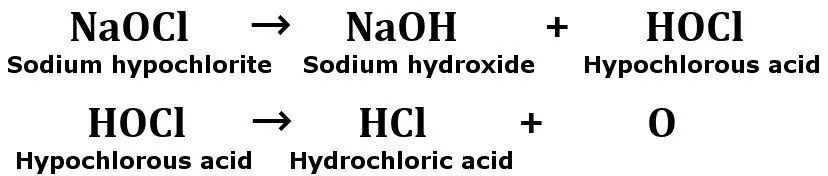
Hypochlorous acid then reacts directly with ammonia in a stepwise series, swapping out hydrogens on the nitrogen for chlorines. With a small amount of bleach you get monochloramine (NH₂Cl); with more bleach, you get dichloramine (NHCl₂); and with a large excess, you can produce nitrogen trichloride (NCl₃)—which is unstable and even explosive. All three are toxic gases that sting the eyes, nose, and lungs. (You’ll notice there’s no hydrochloric acid intermediate involved—the “bleach → HCl → Cl₂” chain is the chemistry of bleach plus an acid like vinegar, not bleach plus ammonia, which is basic.)

And what about hydrazine? You’ll see this mentioned in older write-ups, but the warning is overstated for a kitchen accident. Making hydrazine from ammonia and hypochlorite—the industrial Olin–Raschig process—needs roughly a 40:1 ammonia-to-hypochlorite ratio, temperatures of 130–150 °C, and elevated pressure. You won’t recreate those conditions by accident in a household sink. The real danger at home is the chloramine vapors. (As a side note, with a huge excess of bleach the chemistry can pass a threshold called “breakpoint chlorination” and start releasing free chlorine gas, Cl₂, too.)

The formation of such hazardous and potentially lethal products is the main reason why ammonia and bleach should never be mixed.
However, if by accident, you do end up mixing these two compounds, the first thing you need to do is get away from the site where these two chemicals have come together. The biggest threat in this situation is the inhalation of toxic gases.
To avoid that, remove yourself from that area and try to get some fresh air immediately. This way, you’ll protect yourself from the toxic chloramine vapors and other hazardous products that form as a result of their combination.
Once you’re in a safe environment, call for help and get yourself checked by a medical professional. In the US, Poison Control (1-800-222-1222) is free, staffed 24/7, and the right first call for any chemical exposure. Dial 911 if symptoms are severe—difficulty breathing, chest tightness, or persistent coughing.
Being aware of the hazardous properties of common household cleaning products is the best approach to avoid such accidents; however, if they DO happen, remember to keep calm, get some fresh air immediately and seek medical help. The risk isn’t hypothetical, either—the CDC reported that calls to US poison centers for cleaning-product and disinfectant exposures jumped sharply in early 2020 as more people scrubbed surfaces against COVID-19, with bleach behind the biggest share of the cleaner-related rise.
References (click to expand)
- Dangers of Mixing Bleach with Cleaners. The Washington State Department of Health
- Chlorine Gas. National Capital Poison Center (poison.org)
- Cleaning and Disinfectant Chemical Exposures—Calls to Poison Centers, 2020. CDC MMWR
- Epidemiologic Notes and Reports Chlorine Gas Toxicity from .... The Centers for Disease Control and Prevention
- Chlorine gas from household cleaners? - Go Ask Alice!. Columbia University
- Accidental Mixing of Bleach and Acid - UC Berkeley, EHS. The University of California, Berkeley