Table of Contents (click to expand)
- What Is Chloroform?
- Chloroform Formula (CHCl3): Structure And Properties
- Where Is Chloroform Normally Found?
- What Does Chloroform Smell Like?
- Use Of Chloroform: What Is Chloroform Used For?
- Modern Uses Of Chloroform Today
- Chloroform Effects: What Does Chloroform Do?
- How Does Chloroform Work On The Human Body?
- How Long Does It Take For Chloroform To Work?
- How Long Does Chloroform Keep A Person Unconscious?
- Does Chloroform Work Like It Does In The Movies?
- Chloroform Risks: Hazards Associated With The Ingestion/consumption Of Chloroform
- Can You Be Killed By Chloroform?
- Is It Legal To Have Chloroform?
- What To Do If You Are Exposed To Chloroform?
Chloroform (CHCl3) is a colorless, sweet-smelling volatile liquid (not a gas), with an odor often compared to ether or acetone, similar to the disinfectant smell in hospitals. It can render a person unconscious, but unlike in the movies it doesn't work in seconds: a chloroform-soaked rag pressed firmly to the face takes around five minutes of continuous inhalation, and the liquid evaporates quickly off the cloth. Chloroform was used as a surgical anesthetic from the 1840s, but has long since been abandoned because of its narrow safety margin and toxic effects on the liver, kidneys, and heart.
Pick a famous crime story, serial killer investigation or espionage movie and chances are that the following scene will unfold one way or another:
A villain sneaks behind a target and puts a rag over his mouth; after a few moments, the victim becomes weak on his knees and loses consciousness.
If you’re more interested in chemistry than action scenes, then this question has surely come into your head at some point: Does chloroform really knock someone out that quickly?
While the movie depiction is exaggerated, chloroform has been documented in real-world drug-facilitated crimes. A 2022 systematic review found chloroform among volatile substances used in drug-facilitated sexual assault across multiple studies. However, in practice, more accessible substances like alcohol, GHB, and sedatives are far more commonly used in such crimes.
What Is Chloroform?
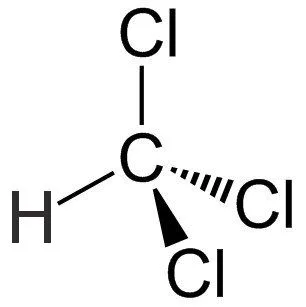
Chloroform is a colorless, sweet-smelling liquid (not a gas) with the chemical formula CHCl3 and the IUPAC name trichloromethane. It is dense and volatile, with tetrahedral molecular geometry and C3v symmetry. The structural formula of chloroform is given below:
Chloroform is a volatile liquid that has been widely used throughout history due to its anesthetic properties and has a reputation for anaesthetizing or rendering people unconscious, even when consumed in small doses.
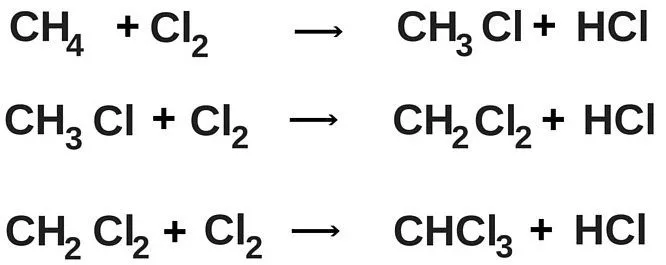
In chemical jargon, chloroform is liquid trichloromethane and is produced on an industrial scale by heating a mixture of chlorine and either chloromethane or methane.
Chloroform Formula (CHCl3): Structure And Properties
The chemical formula of chloroform is CHCl3, written out in chemistry textbooks as trichloromethane. Picture a single carbon atom at the center, bonded to one hydrogen and three chlorine atoms arranged in a tetrahedral shape, like a tiny pyramid with the carbon at its peak. If you swap one of those chlorines back to a hydrogen, you get dichloromethane (CH2Cl2); swap the lone hydrogen for one more chlorine and you get carbon tetrachloride (CCl4). Chloroform sits in the middle of that chlorination ladder.
The numbers that define CHCl3:
- Chemical formula: CHCl3
- IUPAC name: trichloromethane
- Molar mass: 119.38 g/mol
- Boiling point: 61.2 °C (142 °F)
- Melting point: −63.5 °C
- Density: 1.49 g/cm³ at 20 °C (denser than water, so it sinks)
- Solubility in water: about 8 g/L at 20 °C (only slightly soluble)
- Appearance: colorless, dense, volatile liquid
Two of these properties explain almost everything about how chloroform behaves in the real world. Its volatility means it evaporates fast at room temperature, which is precisely why a chloroform-soaked rag loses its potency within minutes of being exposed to air. Its density means it sinks in water, which matters in environmental contamination. Chloroform spills don't float away on a river surface; they collect on the bottom. The polar carbon–chlorine bonds also make CHCl3 a versatile organic solvent, capable of dissolving fats, oils, alkaloids, and resins that simply won't dissolve in water.
Where Is Chloroform Normally Found?
Chloroform is a naturally occurring organic compound found in the air and in coastal waters, lakes, inland waters and groundwater. However, most of the chloroform found in the environment is produced by humans. Higher chloroform levels are found in industrial areas and in the air above swimming pools where the water has been disinfected with chlorine.
What Does Chloroform Smell Like?
Chloroform is a sweet-smelling liquid, similar to ether, along with a slightly sweet taste. Some people compare the smell to the smell of disinfectants, similar to the smell that is perceived in hospitals and medical facilities. We interviewed a number of chemists working in chemical laboratories who explained that the chloroform smell vaguely resembles the smell of acetone, an organic compound.
Use Of Chloroform: What Is Chloroform Used For?
- Chloroform is often used as a solvent in the chemical production of compounds.
- It is used in the paper, construction and woodworking industries.
- It is used in pesticide and film production.
- Chloroform is used to produce a refrigerant called HCFC-22 (Freon-22), though production of HCFC-22 has been banned in developed countries since 2020 under the Montreal Protocol due to its ozone-depleting effects, with a complete global phaseout scheduled by 2030.
- Chloroform is used as a solvent in floor polishes, lacquers, adhesives, resins, oils, alkaloids, fats and rubber.
Use Of Chloroform As An Anesthetic In The Past
Chloroform was independently discovered by three chemists in 1831: American Samuel Guthrie, Frenchman Eugène Soubeiran, and German Justus von Liebig. It was first used as an anesthetic in 1847 by an obstetrician named James Young Simpson; he first tested it on himself and two colleagues. A few days later, it was successfully used in a dental procedure in Edinburgh with no discernible adverse effects.
Soon, its popularity as an anesthetic soared to the point that it is said that it was even used during the birth of Queen Victoria’s last two children in the 1850s. Its golden age, however, was short-lived, as it was gradually replaced by ether, which was considered safer but was still far from ideal. Ether was highly flammable and caused nausea and airway irritation. Both chloroform and ether were eventually abandoned in favor of modern inhaled anesthetics such as halothane (introduced in the 1950s) and today's agents like sevoflurane and desflurane, which offer far better safety profiles.
Modern Uses Of Chloroform Today
Despite its dark reputation, chloroform hasn't disappeared from modern industry. It just moved out of the operating room and into the laboratory and chemical plant. Its present-day usage falls into four main buckets:
- Laboratory solvent. Chloroform is one of the most common solvents in chemistry labs, used for extractions, recrystallizations, and (in its deuterated form, CDCl3) as the workhorse solvent for nuclear magnetic resonance (NMR) spectroscopy, the analytical technique used to identify and characterize organic compounds.
- Refrigerant precursor (declining). Chloroform is the raw material for making HCFC-22 (Freon-22), once the standard refrigerant in air conditioners and home fridges. Under the Montreal Protocol, HCFC-22 production for new equipment has been phased out in developed countries since 2020, with a complete global phaseout scheduled by 2030, so this use is shrinking fast.
- Pharmaceutical and industrial extraction. Chloroform is used in the extraction of penicillin and other pharmaceuticals, in the manufacture of dyes and pesticides, and as a solvent for producing fats, oils, resins, lacquers, and adhesives.
- DNA and RNA extraction. In molecular biology labs, the classic phenol-chloroform extraction protocol uses chloroform to separate DNA and RNA from proteins during nucleic acid purification, a workhorse technique still taught in genetics courses today.
What chloroform is not used for, despite movie portrayals: it isn't a household product. The FDA banned its use in consumer drugs, cosmetics, and food packaging in 1976 due to its carcinogenic potential. In the US, buying chloroform requires proper documentation, and it is not legally sold for general consumer use.
Chloroform Effects: What Does Chloroform Do?
Chloroform causes drowsiness, dizziness, headache, loss of consciousness, and at high doses, paralysis of the chest muscles, organ damage, cardiac arrhythmia, and death. Its effect on humans scales with the dose: small amounts cause lethargy and disorientation; larger amounts produce rapid loss of consciousness with no pain or sensation; higher concentrations still lead to labored breathing, complete muscle relaxation, and paralysis of the chest muscles, which can be fatal.
The effects of chloroform on the human body largely depend on its dosage and method of administration.
According to the Wisconsin Department of Health, “immediately or shortly after exposure to a chloroform level of 100 ppm (100,000 ppbv) in the air, a person may feel tired, dizzy, and have a headache.”
Chloroform is known for its anesthetic properties. If taken in small doses, it can numb or knock a person out, while in high concentrations it can be fatal.
There is some evidence that chloroform directly affects the central nervous system, along with the liver and kidneys; at high doses, it can cause respiratory depression and coma.
Although many of us associate chloroform with “a fluid in a rag that knocks people out,” its effects on the human body can be far more complex, and if not carefully monitored, chloroform can be fatal.
How Does Chloroform Work On The Human Body?
When inhaled, chloroform in the lungs passes quickly into the bloodstream. It then travels to the brain and tissues, where it slows and sedates the central nervous system (CNS). It effectively stops communication between the brain and body, causing unconsciousness.
A landmark 2020 study published in PNAS identified the specific mechanism: chloroform disrupts lipid rafts in neuronal cell membranes, causing an enzyme called phospholipase D2 (PLD2) to relocate and produce a signaling lipid (phosphatidic acid) that activates TREK-1, a potassium ion channel. When TREK-1 is activated, it hyperpolarizes neurons (essentially silencing them), which prevents normal communication between different parts of the brain, leading to unconsciousness.
How Long Does It Take For Chloroform To Work?
In 1865, The Lancet, the medical journal, called upon any person, criminal or not, to prove that waving a chloroform drenched handkerchief was enough to knock someone out. No one has to date come forward with an answer.
While the right dose of chloroform soaked in a rag can definitely render you unconscious (the Lancet articles cites 5 minutes and persistence should knock someone out, but no experimental evidence was provided), it would take much longer than what they show in movies: you wouldn’t drop unconscious just by taking a whiff!
Issues Of Volatility
Chloroform is a volatile liquid, so it quickly loses its effectiveness when it comes into contact with air. Therefore, it is not a plausible scenario that the “villain holds a cloth soaked in chloroform while waiting for the victim to appear,” since the chloroform in the cloth would lose its effectiveness by the time it is actually pressed against the victim’s nose.
It is possible that a victim in such a situation will not faint simply because of the chloroform. Along with chloroform, the victim may faint due to suffocation, since putting a cloth over the nose and mouth would not allow the victim to breathe.
How Long Does Chloroform Keep A Person Unconscious?
Chloroform, if inhaled in very small doses, can keep a person unconscious from 20 minutes to 2 hours or even more, depending on how concentrated the dose is. Even when the person recovers, they may have symptoms like disorientation, vomiting, headache etc. If the dose is too concentrated, the person inhaling chloroform may potentially die. This is why chloroform is considered too dangerous to be used as an anesthetic.
Does Chloroform Work Like It Does In The Movies?
Short answer: no. The cinematic trope (a villain creeps up behind the victim, presses a damp cloth over the nose and mouth, and the victim slumps within a couple of seconds) is one of the most persistent inaccuracies in popular fiction. Three things in the real pharmacology of chloroform make the scene impossible.
- Onset takes minutes, not seconds. A chloroform-soaked rag pressed firmly to the face takes roughly five minutes of continuous inhalation to render an adult unconscious, a figure first laid out in the 1865 challenge that The Lancet issued when it asked anyone, criminal or otherwise, to prove the "instant knockout" scenario. No one ever did. A modern review of documented cases by Payne in Anaesthesia (1998) reached the same conclusion: chloroform incapacitates slowly, not instantaneously.
- The rag has already evaporated. Chloroform's boiling point is only 61.2 °C (142 °F), so it flashes off a damp cloth within minutes of being exposed to air. The villain who lurks behind a doorway with a soaked handkerchief at the ready is, in practice, holding a near-dry handkerchief by the time the victim arrives. The chemistry does not wait for the plot.
- The safety window is brutally narrow. The dose that reliably knocks a person out is uncomfortably close to the dose that stops their breathing. This is the same reason chloroform was abandoned as a surgical anesthetic in the early 20th century: even in operating-room conditions with a trained anesthetist, its mortality rate was several times that of ether. Anyone applying it freehand in the dark, without monitoring, is far more likely to kill the victim than to neatly subdue them.
What About A "Chloroform Spray" Or "Knockout Spray"?
This is largely myth. No legitimate consumer aerosol product knocks someone out in seconds the way movies suggest. Reports of "fainting sprays" or "knockout sprays" tend to be either scam products marketed at the credulous, or news items where the substance involved was never actually confirmed in a lab. A pressurized mist faces the same problems as the soaked rag, only worse: it disperses into the surrounding air almost instantly, gives the target nothing close to the minutes of continuous inhalation the chemistry requires, and would announce itself by the distinctive sweet odor.
What does the forensic record actually show? Payne's review of criminal cases in Anaesthesia (1998) and a more recent systematic look in Cureus (2022) both find documented chloroform crimes to be rare, and largely confined to situations where the victim was already sleeping, intoxicated, or otherwise incapacitated. Chloroform shows up in fiction far more often than in forensic toxicology reports.
Chloroform Risks: Hazards Associated With The Ingestion/consumption Of Chloroform
When chloroform enters the body, it is metabolized in the liver, where enzymes (specifically cytochrome P450) convert it into a toxic byproduct called phosgene, a compound so toxic it was used as a chemical weapon in World War I. Phosgene is highly reactive and toxic to cells, so excessive chloroform exposure can cause serious cellular damage.
If you look at how its use is portrayed in films and television, you might assume that it is just another liquid that is harmless to the victim, but that is absolutely wrong.
The International Agency for Research on Cancer (IARC) classifies chloroform as Group 2B ("possibly carcinogenic to humans") based on sufficient evidence of carcinogenicity in experimental animals. Some studies have shown a possible link between chloroform in chlorinated water and the occurrence of cancer of the colon and urinary bladder. Liver and kidney cancer developed in rats and mice who ate food or drank water containing large amounts of chloroform for long periods of time.
Can You Be Killed By Chloroform?
Chloroform can be very dangerous, to the point of being fatal to the victim if an inappropriate dose is administered or if the chloroform-soaked cloth is placed too tightly on their face.
For good reason, chloroform is no longer used as an anesthetic; it is a difficult task to determine the right dose that would render a person unconscious without affecting other vital nerve functions.
Is It Legal To Have Chloroform?
In many countries, the government regulates the use and possession of Chloroform.
In the United States, chloroform is regulated by the FDA and EPA. The FDA banned its use in consumer drug and cosmetic products in 1976 due to its carcinogenic potential. While chloroform is not classified under the DEA's Controlled Substances Act schedules, its purchase and use are restricted and require proper documentation. It is necessary to check with local laws before acquiring the substance.
What To Do If You Are Exposed To Chloroform?
The first thing to do is to move away from the source of exposure as quickly as possible.
If the person exposed is already unconscious and unable to move independently, they should be removed from the source of chloroform exposure by others. Clothes that may have come into contact with chloroform should be removed and thrown away. Eyes and skin exposed to chloroform should be washed and rinsed with clean, uncontaminated water.
References (click to expand)
- Anesthesia and Queen Victoria - www.ph.ucla.edu
- Chloroform | Wisconsin Department of Health Services. The Wisconsin Department of Health Services
- (1865, October). Medical Annotations. The Lancet. Elsevier BV.
- Payne, J. P. (1998, July). The criminal use of chloroform. Anaesthesia. Wiley.
- Chloroform - NIOSH Pocket Guide to Chemical Hazards | CDC
- How does anesthesia work?.
- Studies on the mechanism of general anesthesia. PNAS (2020).
- Phaseout of Class II Ozone-Depleting Substances. US EPA.
- Chloroform (Group 2B) - IARC Overall Evaluations of Carcinogenicity.
- The Use of Volatile Substances in Drug-Facilitated Sexual Assault: A Systematic Review. Cureus (2022).
- Chloroform - Wikipedia.
- Chloroform | CHCl3 | CID 6212 - PubChem.
- Trichloromethane - NIST Chemistry WebBook (CAS 67-66-3).
- Purification of nucleic acids by extraction with phenol:chloroform. PubMed.