Table of Contents (click to expand)
Exocytosis is the energy-requiring (ATP-dependent) process by which cells release large molecules — like hormones, enzymes, and neurotransmitters — into the extracellular space. The cargo is packaged inside a membrane-bound vesicle that fuses with the cell's plasma membrane via SNARE proteins, then dumps its contents outside the cell.
The human body is an incredible machine, and there are thousands of critical processes going on during every single day of your life, even if you are largely unaware that these things are happening! New tissues are being made, wounds are healing, enzymes are breaking down energy sources, hormones are stimulating metabolic processes, and proteins are being formed, just to name a few.
A great deal of the work of keeping a body healthy and functioning is done at the cellular level, where individual cells create proteins and neurotransmitters, but getting those molecules to where they need to be is just as important! That is where exocytosis comes into play.
Exocytosis Definition: What Is Exocytosis?
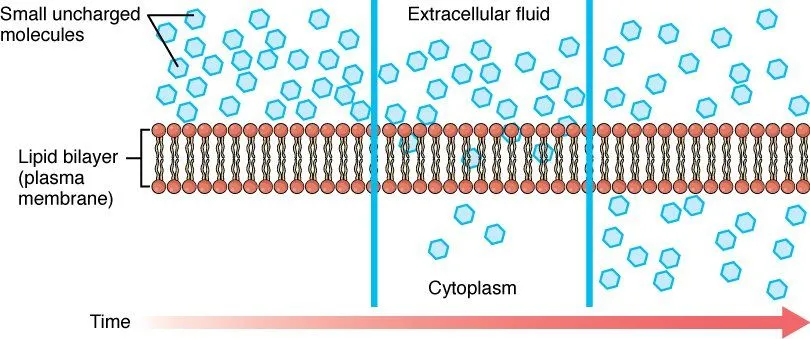
Exocytosis is the energy-requiring (ATP-dependent) process cells use to move large molecules across the plasma membrane and out into the extracellular space. It's a critical process for all living things, from plants and invertebrates to protozoa and human beings. Unlike simple diffusion, exocytosis can't be passive, because the bulky, often polar molecules cells need to export — proteins, hormones, neurotransmitters — can't slip through the hydrophobic interior of the lipid bilayer on their own. They need a vesicle and an active molecular machinery to get out.
When a cell is ready to move a molecule into the outer environment, the molecule is bound in a secretory vesicle, which can be thought of as a suitcase for complex molecules. This vesicle will then move to the outer edge of the cell and temporarily fuse with the membrane. At that point, the water-soluble molecule inside the vesicle can be “dumped out” into the extracellular environment.
There are two main types of exocytosis: Ca2+-triggered regulated (non-constitutive) exocytosis and constitutive exocytosis, which runs continuously without a trigger. The difference is that the regulated kind only fires when an external signal causes a rise in cytosolic calcium — this is the type of exocytosis that releases neurotransmitters at synapses and dumps hormones from endocrine cells on demand. Constitutive exocytosis is the steady, background traffic that delivers fresh membrane lipids, extracellular-matrix proteins, and surface receptors to the cell membrane around the clock. Both kinds still require the expenditure of ATP.
That is a general overview of the process, but we prefer to delve deep into topics here at ScienceABC, and there is plenty more to learn about exocytosis – a crucial activity that occurs in every cell of your body.

Exocytosis Stages
Although the process of moving a complex molecule across the microscopic distance from an organelle to the cell membrane seems simple, there are a few distinct stages that make this movement possible.
Vesicle Trafficking
Vesicles are initially moved from their spot of creation to the cell membrane using motor proteins within the cell, which requires work and the expenditure of ATP (the basic unit of energy within a cell).
Vesicle Tethering
Tethering factors on the cell membrane will attach and hold the vesicles in place; this will also allow the vesicle to communicate with the membrane and “get in line” for transport out of the cell.
Vesicle Docking
The link between the secretory vesicle and the cell membrane is completed when it firmly docks tightly in place, and prepares to be “dumped out” of the cell.

Vesicle Priming
In some situations, such as the exocytosis that occurs in the nervous system, in the form of neurotransmission, priming will occur immediately before the contents of the vesicle are released. This priming consists of various modifications and changes to the vesicle and membrane, and involves fats and proteins within the cell.
Vesicle Fusion
In this final step, SNARE proteins (short for Soluble NSF Attachment Protein REceptor proteins, where NSF stands for N-ethylmaleimide-Sensitive Factor) mediate the fusion of the vesicle membrane with the cellular membrane. The plasma membrane will increase in size to accommodate the new vesicle, and the contents of the vesicle (proteins, hormones, enzymes, neurotransmitters, and so on) will be released into the extracellular space. The vesicle membrane will now become a part of the cell membrane, including the proteins embedded in that vesicle membrane. Essentially, the inside of the vesicle membrane becomes a part of the outside of the cell membrane.
What Happens After Exocytosis?
After full fusion, much of the vesicle membrane is folded into the plasma membrane and has to be retrieved later — often by clathrin-mediated endocytosis — before a new vesicle can be built around it. Building vesicles from scratch is an energy-intensive job that leans heavily on the mitochondria, the energy factories of the cell. Neurons, however, can't afford to rebuild every vesicle they release: synaptic terminals fire so often that they extensively recycle their vesicles locally, via clathrin-mediated endocytosis, kiss-and-run, and activity-dependent bulk endocytosis, so that fresh neurotransmitter-filled vesicles are ready for the next action potential.

That being said, there are some forms of vesicle fusion that are not permanent, such as “kiss and run” fusion, which allows a partial deposit of vesicle contents, and then a reformation of the vesicle membrane. Recent research has also identified partial emptying of vesicles in some cases, where a secretory vesicle will release some of its contents, detach and reseal, and float back into the intracellular space. It can then return to the membrane and release the rest of its contents, or be re-filled with a new molecule at a receptor site for another organelle.
Recent super-resolution imaging (using techniques like STED microscopy) has let biologists watch fusion pores open, expand, constrict, and close in living cells on a millisecond timescale, reinforcing the idea that "kiss-and-run" and full-collapse fusion are two ends of a continuous, dynamic fusion-pore landscape rather than two cleanly separate mechanisms.
A Final Word
While the intricate workings of our cells may not fascinate everyone, exocytosis is a critical foundation for life as we know it, in all its diverse and incredible forms. Being able to effectively move complex molecules enables everything from growth and repair to muscle movement, breathing and even conscious thought. In other words, you may not think about it, but you should certainly appreciate all of these silent, reliable processes that keep you alive and kicking every day!
References (click to expand)
- Vesicle Docking, Fusion, and Exocytosis.
- Intracellular Compartments: Exocytosis, Endocytosis, and the Lysosome (Penn State, wikispaces.psu.edu)
- Exocytosis - academic.brooklyn.cuny.edu:80
- Transport from the Trans Golgi Network to the Cell Exterior - Molecular Biology of the Cell (NCBI Bookshelf)
- Revisiting Clathrin-Mediated Endocytosis in Synaptic Vesicle Recycling (PMC, NIH)
- Lysosomal Exocytosis: The Extracellular Role of an Intracellular Organelle (PMC, NIH)