The stones that are seen lying close to the railway tracks are collectively called track ballast. Track ballast is packed between the sleepers, in the areas below, and on the sides of railway tracks. The function of railway sleepers is to hold the rails upright and properly spaced. The stones in the track ballast serve a number of purposes, such as keeping the tracks in place, keeping vegetation in check, and sealing out any water that may be around the tracks.
Traveling in a train is an amazing experience in itself. You get to witness the stunning vistas of nature, sprawling fields, cities teeming with people, or endless stretches of land with no sign of any life whatsoever. One more thing that you almost always see throughout your train-journey are those small stones lying alongside the track on which your train races?
Have you ever given any thought as to why there are almost always stones alongside a railway track?
Track Ballast
To start with, the stones that you see lying close to the railway tracks are collectively called track ballast. It basically forms the trackbed on which the railway sleepers are kept. Track ballast is packed between the sleepers, in the areas below, and on the sides of railway tracks. I can already hear the question beginning to form in your head; what’s a sleeper?
A railway sleeper is a rectangular support that is usually kept perpendicular to the tracks. Sleepers are known by a few other names too, like a railroad tie or a crosstie. These are usually made of wood or pre-stressed concrete, although the latter is more widely used today. The function of railway sleepers is to hold the rails upright and properly spaced.
Why Specifically Those Stones?
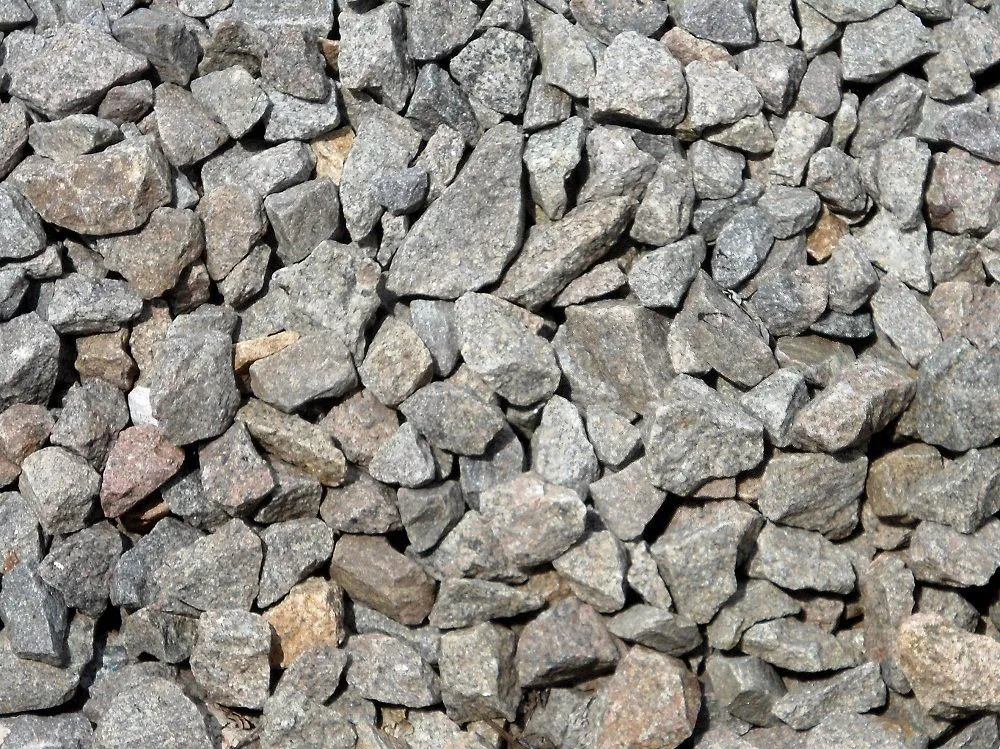
It’s not like the construction crews put just any stone they find around the tracks. That wouldn’t do the trick. For instance, if you put smooth, round pebbles in the ballast, then they might roll or slide over each other when a train passes over the tracks; therefore, they would fail at their main job – providing stability for the tracks. Given that fact, you need stones of a specific type that won’t move around too much, except by kids chucking stones near the tracks, of course!
In order to guarantee that the stones stay in place, railway engineers use sharp, angular crushed stone in the ballast: typically granite, basalt, trap rock, quartzite, or hard limestone, sized somewhere between about 19 and 63 mm (under the US AREMA #4 grading commonly used in North America). The angular faces lock together and resist sliding under vibration, the way a dry-stone wall holds itself up. Smooth river gravel of the same size simply will not interlock the same way.
Is That All Track Ballast Does?
Not even close. The American Railway Engineering and Maintenance-of-Way Association (AREMA) and pretty much every railway engineering textbook list five main jobs for the ballast:
- Spread the load. The crushed stones distribute the very large vertical force at each sleeper out over a much wider patch of soil (the subgrade) so the ground underneath the track does not collapse.
- Hold the track in place laterally and lengthwise. The ballast shoulder (the heap of stones piled against the ends of the sleepers) stops the rails from creeping sideways or buckling lengthwise under heat and traffic.
- Drain rainwater. Water that puddles around the sleepers softens the subgrade and rots wooden ties. The big gaps between the angular stones let water fall straight through into the trackbed below.
- Keep vegetation off the track. Plants need fine soil and water to root. The clean, well-drained stone layer makes a hostile growing medium and is far easier to spray with weed killer if anything does take hold.
- Damp vibration and make maintenance easy. The loose stones absorb some of the impact energy of passing wheels. Even better, when the track settles unevenly, a maintenance machine called a tamper can be driven over the section to lift the rail and rake stones underneath in seconds, no concrete pour required.
A Novel Technique To Reduce Vibrations
The excessive use of railway lines for transportation poses a threat to the buildings in the areas near the tracks due to the immense vibrations the tracks experience when a high speed locomotive moves over them. Also, the loud noise that is produced when a train moves rapidly on the tracks is also a nuisance to the surrounding areas.
In order to minimize these vibrations, a fairly simple clamping technique is employed using a dynamic vibration absorber. It consists of EPDM or Ethylene Propylene Diene Monomer rubber because of its high resistance to heat, water and other mechanical strains. As a result, the vibrations are reduced to a great extent and the noise is also diminished to a bare minimum.
What we’re trying to say should be clear… Picking up stones from around the tracks on a pleasant, sunny day and chucking them out into the nearby forest is not an ideal way to release your stress!
What About High-Speed Rail And Metros?
If you have ever ridden Japan’s Shinkansen, Germany’s ICE, China’s CR400, or a modern metro in Singapore or London, you may have noticed the rails are bolted directly to a continuous concrete slab, with no stones at all. That is ballastless track, also called slab track, and it is rapidly replacing crushed stone on the world’s fastest and busiest lines. It costs 30 to 60 percent more to build but lasts well over 50 years with almost no maintenance, does not fling stones into windows at 320 km/h, and keeps its precise geometry far longer than ballasted track. So the classic ballast still rules conventional and freight lines, while the high-speed corridors of the 2020s mostly run on concrete.
References (click to expand)
- Track ballast - Wikipedia. Wikipedia
- S.Naresh Kumar, S.Gunasekharan - Design And Analysis Of Dynamic Vibration Absorber (DVA) To Reduce Vibration In Rails - International Journal of Engineering and Applied Sciences
- Giving freight rail tracks a boost - UW–Madison News. The University of Wisconsin–Madison