Table of Contents (click to expand)
A frisbee flies because its tilted, airfoil-shaped disc deflects air downward, generating lift, while the spin gives it gyroscopic stability that keeps it from tumbling. You can't throw one well with two hands because a single arm acts as a longer lever, generating far more torque and wrist-snap spin, so the disc flies straighter and farther.
A day on the beach is never complete without some good frisbee time. Gliding through the air like a UFO, how do frisbees seem to defy gravity and ride the air?
Well, that all depends on your toss.
If you’ve ever played a game of frisbee, you would know that a frisbee thrown with one hand travels much farther than one thrown with both hands! Let’s try to better understand the physical mechanics involved so you get the perfect throw next time you’re slinging discs!
Structural Design Of Frisbee
In cross-section, a frisbee is an airfoil, a shape that keeps drag low and lift high so the disc can fly.
Briefly, an airfoil is any structure that manipulates its flow in a fluid, such as air or water, to generate a reaction. For example, airplanes, the body of fish, and the wings of birds are all types of airfoils.
The airfoil design helps the frisbee maneuver through a fluid (air). The spin on the disk, meanwhile, imparts gyroscopic stability, which keeps the disc level and on target.
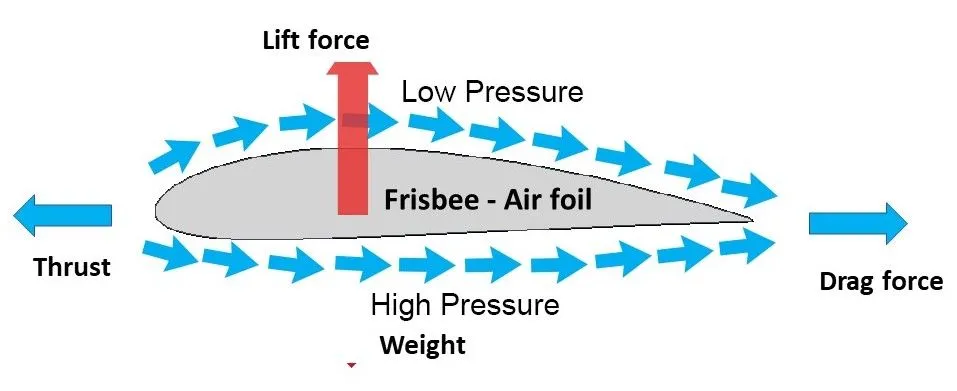
The rim on a frisbee adds curvature to the airfoil when it comes in contact with the air, creating differential pressures between the top and bottom of the disk. Most frisbees have ridges on the surface, which creates turbulence within the air stream, helping them to fly even farther.
Mechanics Of A Frisbee
The concepts of physics that enable the gliding of the frisbee are aerodynamic lift and gyroscopic stability.
Aerodynamic Force
Two counteractive forces acting on any frisbee are the lift force and the drag force. The third factor in the successful flight of a frisbee is the launch angle.
a. The lift force is the force that opposes the weight of the frisbee and holds the disk in the air. A frisbee generates lift in two ways. First, because of the curvature of the disk, the air moving over the top travels faster than the air underneath.
Bernoulli’s Principle states that when the velocity of a fluid increases, its pressure decreases.
So the top of the disk experiences lower pressure, while the bottom experiences higher pressure, and this differential pressure provides some lift. Second, and even more important, a frisbee flies slightly nose-up. This tilt, called the angle of attack, makes the underside of the disk push the oncoming air downward, and by Newton’s third law the air pushes the disk upward in return. Most of a frisbee’s lift comes from this downward deflection of air, which is why a flat disk thrown with no tilt at all simply drops. A modest angle of attack, in the range of roughly 10°, gives the best balance of lift and distance.
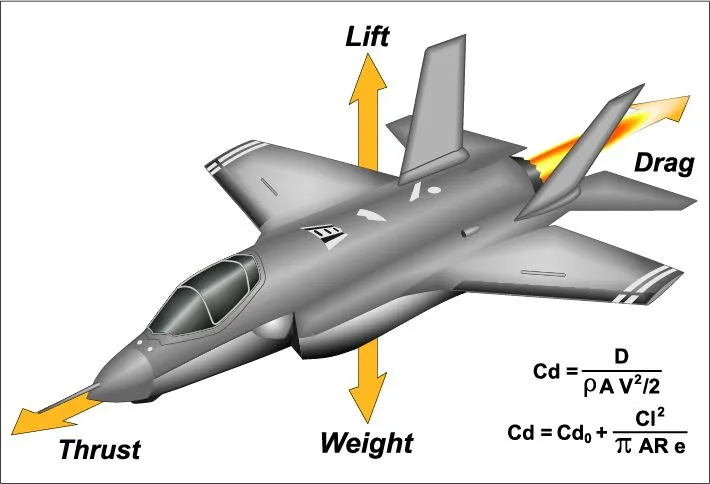
b. The drag force is a resistive force caused by the interaction of a solid body with a fluid, such as a liquid or gas. It acts opposite to the disk’s direction of travel (and so perpendicular to the lift force), slowing the disk’s movement through the air.
c. Launch angle: The angle at which the frisbee is released sets its initial angle of attack, so it directly affects how much lift and drag the disk produces. Release it too flat and it stalls for lift; tilt it too steeply and drag builds up and robs it of distance.
2. Gyroscopic Stability
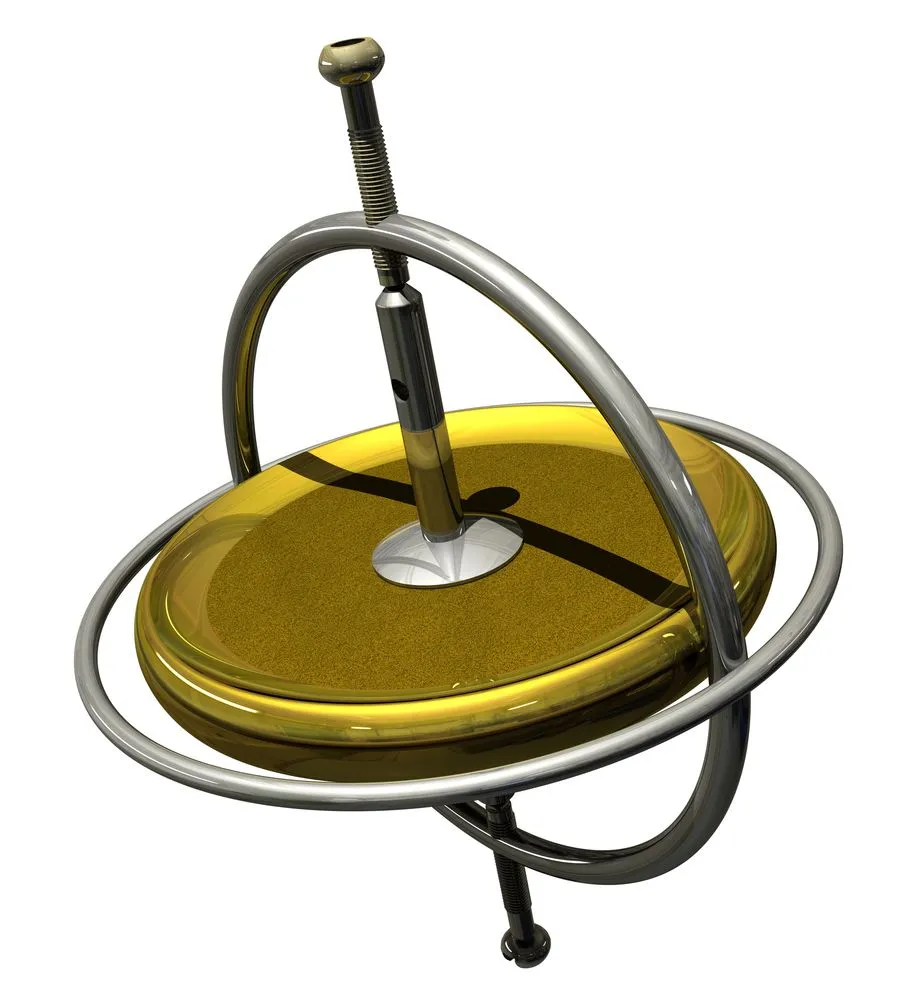
The rotation of the frisbee is critical for its flight. Without any spin, a frisbee would just flutter and tumble to the ground. A spinning disk has angular momentum, and just like a gyroscope or a spinning top, that angular momentum resists any force trying to tip it over. The faster the disk spins, the more strongly it holds its orientation, so it keeps its nose-up tilt steady all the way through the flight instead of wobbling and stalling.
The Flight Of The Frisbee Is In The Hand That Chucks It
The flight of the frisbee rests on the wrist. A good flick of the wrist supplies the necessary lift force, spin, and turbulence to the disc so that it can fly straight and far.
What Is Torque?
Torque is the rotational equivalent of force, the twist that makes something spin about an axis. We throw a frisbee around a rotational axis, not along a straight line. The force applied by the forearm acts at a distance from the pivoting elbow and shoulder, and that combination of force and distance is what gets converted into torque.
Torque = Force × Lever arm (the distance from the pivot)
Biomechanics Of A Throw
The human body delivers speed to a frisbee through torque, not through a straight-line push. The release speed comes from pivoting the body about an anchor point, which builds up rotational acceleration that the wrist finally transfers into the disc.
One Hand Is Better Than Two
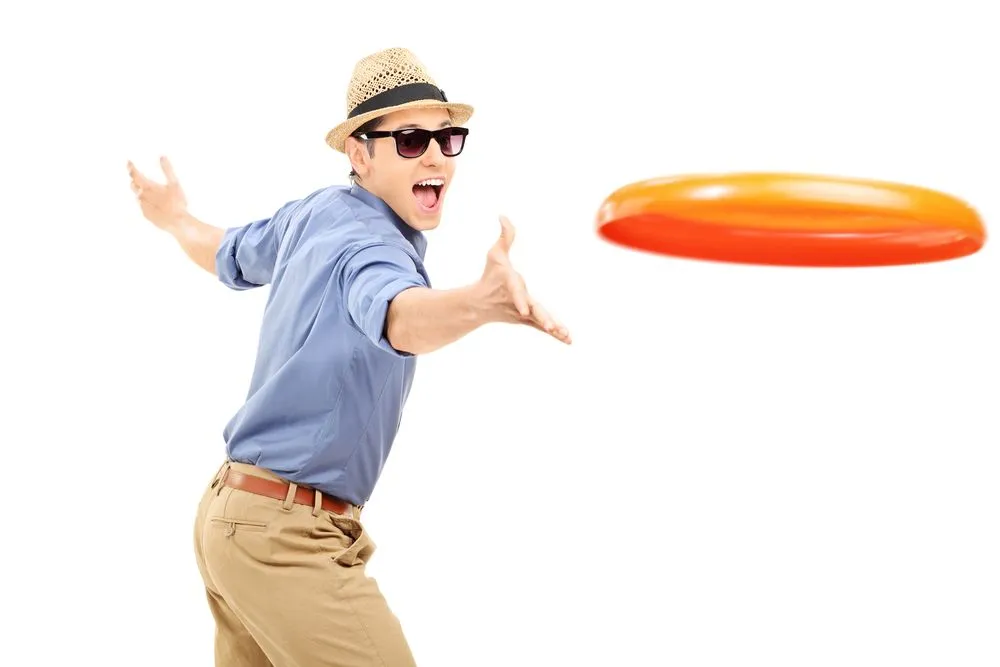
There are many advantages to a single-hand throw of a frisbee:
- The higher the momentum of the throw, the greater the distance travelled by the frisbee. The human body builds the fastest release speeds through torque, rather than linear force. For higher torque, the body must pivot around an anchor point, coiling at the hips and trunk and then uncoiling that energy up through the arm into a sharp snap of the wrist. A one-handed throw lets you put your entire body behind that single motion, generating higher torque, more rotational acceleration, and more spin on the disc. All these factors favor the use of one hand when throwing a frisbee.
- When we throw a frisbee with two hands, each arm constrains the other’s natural swing, so the resultant force on the frisbee is less than the force applied when we throw with just one hand.
Wingspan Adds To Torque
Wingspan is the distance from one fingertip to the other when your arms are stretched out parallel to the ground at shoulder height. Wingspan plays a major role in all sorts of sports, from baseball and basketball to frisbee and darts.
When we throw a frisbee with one hand, the torque is higher because the disc swings out on the longer lever of a single fully extended arm. The greater the torque, the higher the angular acceleration. When you use two hands, however, the disc stays close to your chest and that lever shrinks, so the torque drops.
For example, if two players with different arm lengths throw a frisbee with the same force, the one with the longer arm will produce more torque and more angular acceleration, and will therefore achieve more distance.
Conclusion
A frisbee is an airfoil that behaves much like an aircraft wing. The shape of the disk, the aerodynamic forces of lift and drag, and the gyroscopic stability of its spin all work together to keep it aloft against gravity. The launch angle, which sets the disc's angle of attack, is just as critical to the flight. And the disk glides much farther when thrown with one hand than with both, because the torque you can generate depends on your wingspan, and a single fully extended arm gives the longer lever. So next time you suggest a game of frisbee with your friends, remember just how much physics is packed into that simple flick of the wrist!