Table of Contents (click to expand)
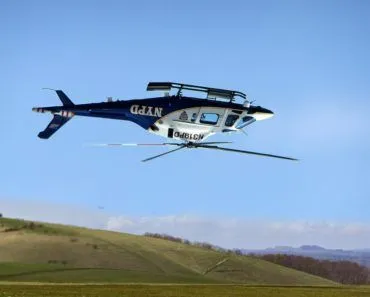
Fighter jets and stunt planes fly upside down because most of their lift comes from the wing’s angle of attack, not its shape. Their symmetrical wings make lift equally well either way up, so the pilot simply tilts the nose to angle the wings into the airflow, deflecting enough air downward to stay aloft while inverted.
Wings are the most important part of an airplane when it comes to flying, because they’re shaped in a way that maximizes the lift the air offers as it rushes past (and no, that lift isn’t buoyancy, the way a balloon floats; it’s an aerodynamic force generated by motion). However, if the shape of the wings is the sole reason behind the capacity of an airplane to fly, then how do stunt planes and fighter jets manage to fly upside down?
Doesn’t the orientation of the wings with respect to the airplane body get messed up when airplanes fly upside down? In other words, when the plane’s wings face the opposite direction of their aerodynamic design, why don’t they crash?
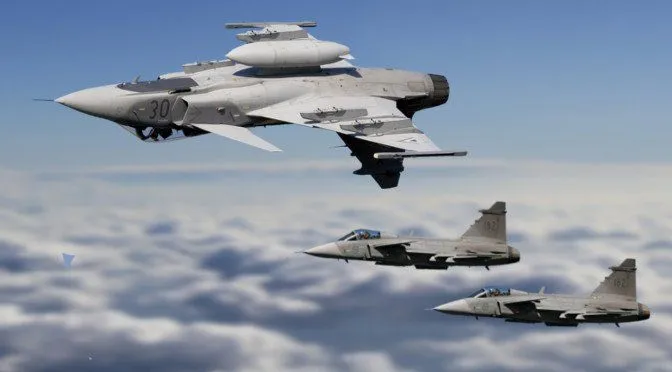
Although it’s true that the shape of an airplane’s wings play a significant role in its ability to fly, that’s not actually the primary reason why an airplane is able to soar through the air. If it were, then fighter jets and other aircraft would never be able to fly upside down and perform such breathtaking maneuvers while airborne, because the shape of the wings would change with respect to the direction of the airplane’s motion. There is clearly another important factor at play….
Lift
Airplanes, or anything that sails through the air for that matter, such as birds, kites, a boomerang or even a folded paper plane, have a physical force working in their favor that allows them to continue their flight: lift.
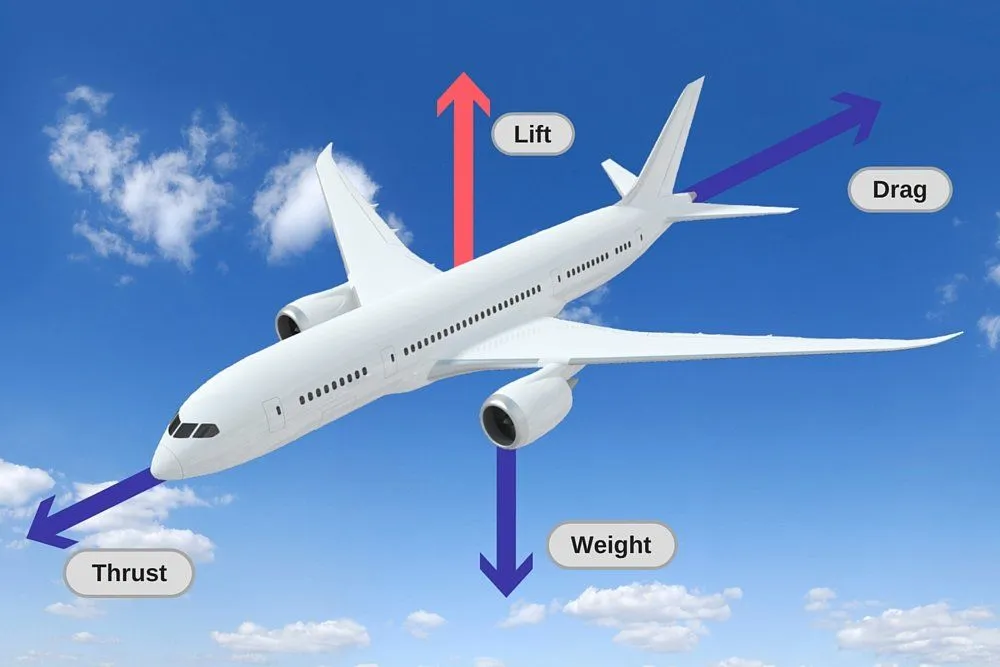
Put in simple terms, ‘lift’ deserves its name, as it is the force that lifts things into the air. More specifically, it directly opposes the weight of an object moving through a fluid (air, in this case). It is closely linked to Newton’s Third Law of Motion: “To every action, there is an equal and opposite reaction.”
For an airplane moving through air, the force acting downwards on its body is its ‘Weight’ (which is its mass multiplied by gravity, and not the same thing as mass itself). To counteract this force, lift is applied perpendicular to the plane, but in the upward direction. To better understand the forces acting on an airplane in flight, take a look at this image:
Angle Of Attack
The lift generated by an airplane depends on its wings; although their shape matters, that’s not the primary contributor to the lift that an airplane experiences. Rather, the ‘angle of attack’ of the wings is what makes an airplane cruise. The ‘angle of attack’ is the angle that an imaginary reference line on the airplane makes with the oncoming air. The picture below will help you visualize this better:
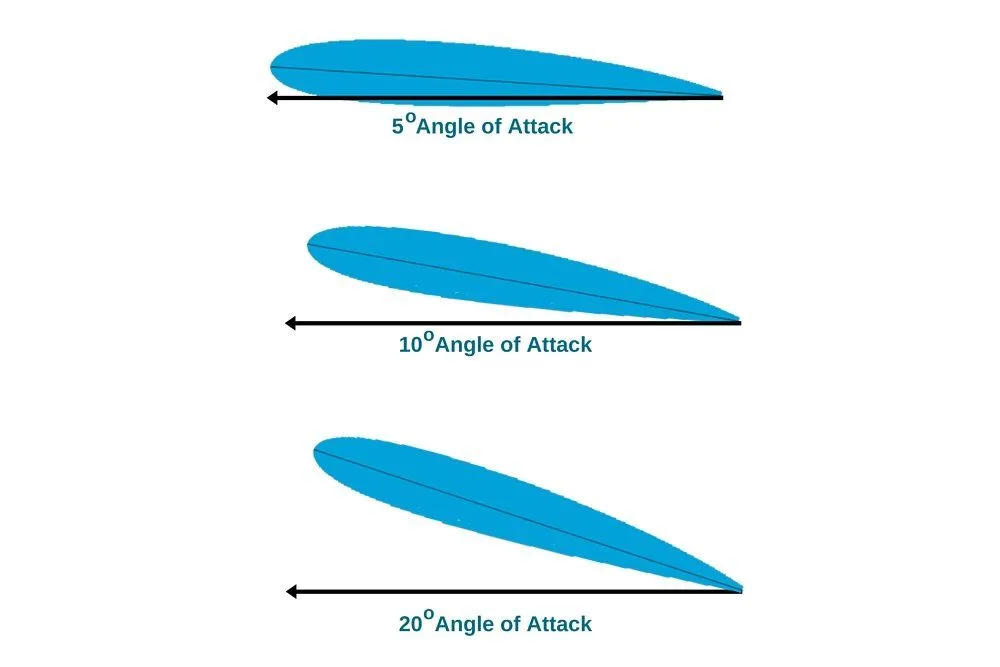
Up to a point, the higher the angle of attack, the more lift the wing generates (push the angle too far and the airflow separates, the wing ‘stalls’ and lift collapses, but that’s a story for another day). That’s why airplane wings are tilted with the leading edge pointed up relative to the oncoming wind. A tilted wing deflects the oncoming air downward, and by Newton’s Third Law, the air pushes the wing up by an equal and opposite amount. That same tilt also speeds up the air flowing over the top of the wing, and by Bernoulli’s principle, faster-moving air exerts lower pressure. So you end up with reduced pressure above the wing and higher pressure below it, and that pressure difference adds up to the upward force we call lift.
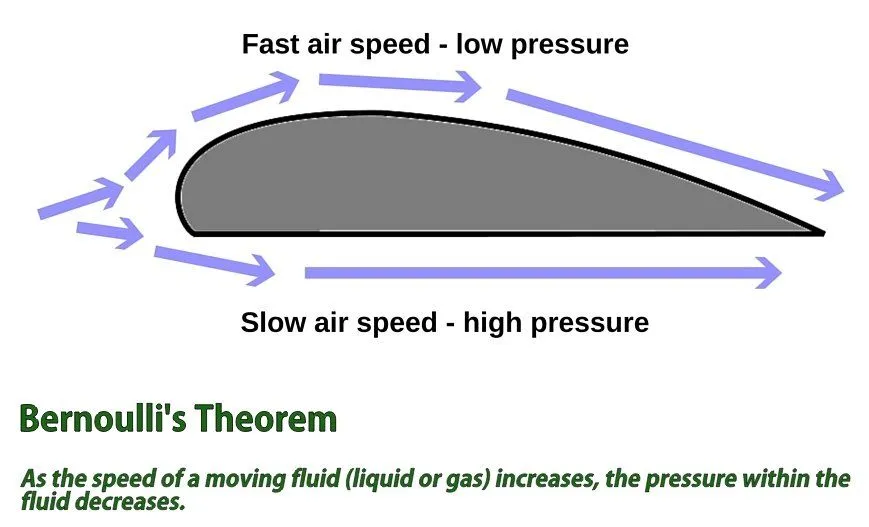
You can picture the wing as riding on a cushion of higher-pressure air below while a patch of lower-pressure air tugs it upward from above, the two together providing enough lift to keep the plane up.
The same is true for airplanes flying upside down. Note that not every airplane is meant to fly upside down; you wouldn’t expect a commercial plane flying in this fashion, except in Hollywood flicks (like Flight).
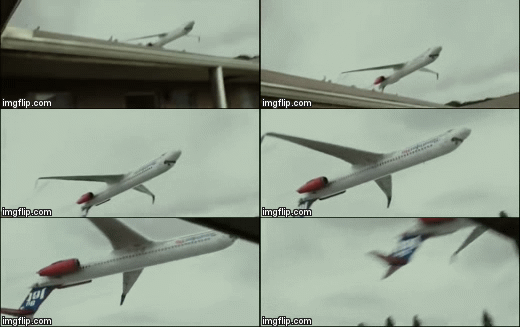
However, airplanes that consistently have to fly upside down (like stunt planes or fighter aircraft), have symmetrical wings. Therefore, they can’t rely on the shape of the wings; they only manage to fly upside down by tilting their wings in the right direction to generate sufficient lift.
All in all, it’s true that the shape of the wings does play a significant role in making an airplane fly. However, it’s essentially the angle of attack of the wings that facilitates all those arduous and breathtaking maneuvers that stunt airplanes and fighter jets pull off so impeccably.
How Do Jet Engines Actually Make A Plane Fly?
Lift keeps a plane up, but something still has to push it forward fast enough for those wings to bite into the air. On a fighter jet, that job belongs to the engine, and a jet engine is a beautifully simple idea dressed up in complicated hardware. It works on the exact same law we just met: Newton's Third Law. Where the wing throws air downward to be pushed up, the engine throws hot gas backward to be pushed forward.
NASA's Glenn Research Center lays out the sequence cleanly. Air rushes into the intake at the front, where a spinning compressor squeezes it to many times its original pressure. That dense air pours into the combustion chamber, where it mixes with fuel and ignites, producing a blast of hot, rapidly expanding gas. The gas roars rearward through a turbine (which skims off just enough energy to keep the compressor spinning) and then out through the exhaust nozzle, which squeezes that energy into raw velocity. The engine accelerates the gas to the rear, and the thrust is generated in the opposite direction, straight ahead.

How much thrust you get comes down to two things: the mass of gas the engine flings out each second, and the change in velocity of that gas from front to back. Fling more air, or fling it faster, and you get more push. There is one catch worth noting: unlike a rocket, which carries its own oxygen, a jet engine breathes in oxygen from the surrounding air. That is exactly why a jet engine simply will not run in the vacuum of space, while a rocket happily can. For our inverted stunt pilot, the takeaway is neat: flipping upside down does nothing to the engine's logic. The compressor still squeezes, the fuel still burns, and the gas still blasts out the back, keeping the airspeed high enough for those symmetrical wings to do their work.
What Does It Mean When A Fighter Jet Rocks Its Wings?
If you have ever seen a fighter pull alongside an airliner and tip its wings up and down, you have witnessed one of the oldest signals in aviation, and it is not showing off. Rocking the wings is a deliberate, internationally agreed instruction used when a military aircraft intercepts another plane, usually because that plane has strayed off course, gone silent on the radio, or wandered into restricted airspace.

Under the standardized intercept signals listed in the FAA's Aeronautical Information Manual (and in ICAO's international rules of the air), the very first signal, called Series 1, is the interceptor rocking its wings from a position slightly above, ahead, and usually to the left of the other aircraft, then making a slow level turn onto a new heading. The meaning is blunt: "You have been intercepted. Follow me." At night the fighter adds flashing navigation lights at irregular intervals so the message reads clearly in the dark.
The intercepted aircraft is then expected to reply in kind. It rocks its own wings to say "Understood, I will comply," and follows the fighter's turn. So when those wings waggle, it is less a stunt and more a silent conversation, a backup language for the moments when radios fail or a pilot is not answering, designed to settle an interception safely in a matter of seconds. Worth remembering the next time you spot a jet doing it: it is talking, not performing.
References (click to expand)
- How Things Work: Flying Upside Down | Flight Today | Air & Space Magazine - www.airspacemag.com
- (2011, March). The Simple Science of Flight. Northeastern Naturalist. Humboldt Field Research Institute.
- Brainstorming and Barnstorming:Brainstorming and Barnstorming:Basics of FlightBasics of Flight - www.math.ksu.edu
- Inclination Effects on Lift. Beginner's Guide to Aeronautics - NASA Glenn Research Center
- Bernoulli and Newton. Beginner's Guide to Aeronautics - NASA Glenn Research Center
- How do planes fly upside-down? - Smithsonian National Air and Space Museum
- Gas Turbine Propulsion. Beginner's Guide to Aeronautics - NASA Glenn Research Center
- What is Thrust? Beginner's Guide to Aeronautics - NASA Glenn Research Center
- Section 6. National Security and Interception Procedures - FAA Aeronautical Information Manual