Table of Contents (click to expand)
- Why Do Liquids Freeze?
- Intermolecular Forces And Hydrogen Bonds
- Hydrogen Bonds In Water And Ethanol: A Comparison
- How Does This Affect Freezing?
- What Is The Freezing Point Of Alcohol?
- What Intermolecular Forces Are In Ethanol?
- Why Doesn't Vodka Or Liquor Freeze In The Freezer?
- Does Freezing Alcohol Make It Stronger Or Weaker?
- Does Rubbing (Isopropyl) Alcohol Freeze?
- Conclusion
Alcohol doesn't freeze in a home freezer because ethanol's freezing point is -114°C (-173°F). Its weak hydrogen bonding and hydroxyl group make it harder to crystallize than water.
Have you ever wondered why a bottle of pure ethanol doesn’t freeze, even when you store it in the deep freezer? As you may know, alcohols are characteristically difficult to freeze into their solid states, as these organic molecules tend to stay in their liquid state. The solidification of different liquids depends on several factors.
But why do liquids solidify in the first place? And what conditions lead to it?
Since ethanol is the most common alcohol, this article will primarily focus on this type. The terms ethanol and alcohol will be used interchangeably in this article.
Why Do Liquids Freeze?
Freezing can be simply defined as a compound transforming from its liquid to its solid state, but what causes liquids to undergo this process?
Every compound has some internal energy that is dependent on the temperature around it. This internal energy controls the state in which the substance exists. When the temperature around the compound reduces, the internal energy available to the compound reduces as well. This leads to an increase in the intermolecular forces.
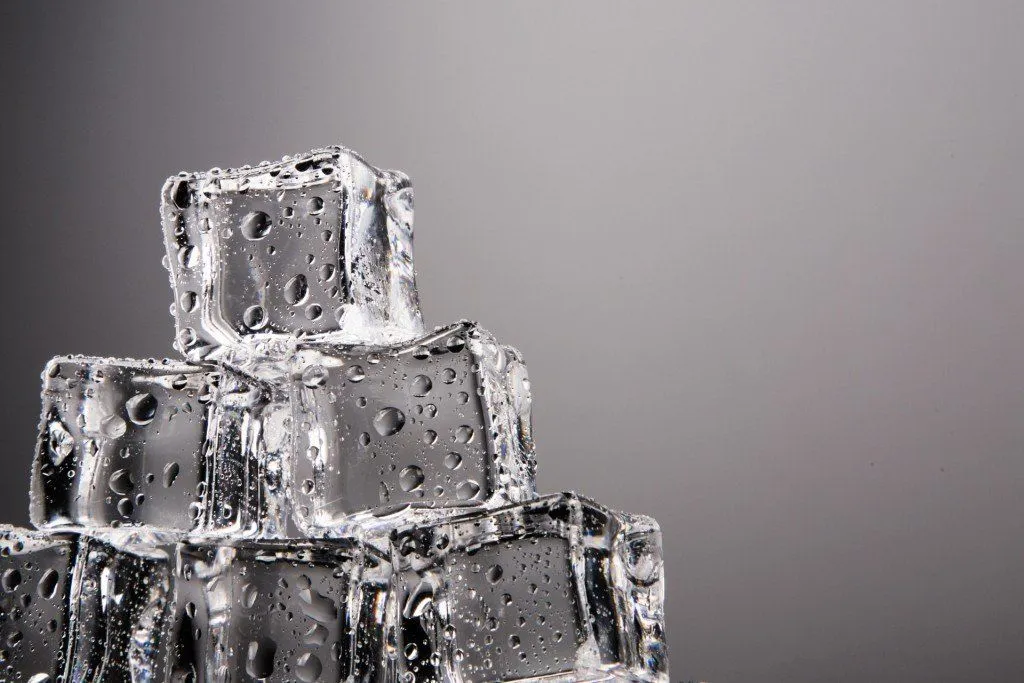
When heat is removed, the molecules of the compound come closer together. This is why many liquids begin to solidify at a low temperature. However, different liquids have different freezing points.
The freezing point of a liquid is the temperature at which that liquid transitions into a solid state. Water has a freezing point of 0° Centigrade, but ethanol has a freezing point of -114° Centigrade. This means that to freeze alcohol, you have to drop its temperature below -100° C!
The huge difference in the freezing point of the two liquids is due to the huge difference between their intermolecular forces. The molecules of water are bound more tightly to each other than the molecules of ethanol.
Intermolecular Forces And Hydrogen Bonds
Intermolecular forces help bind the molecules to each other so they do not separate. Gases have the lowest amount of intermolecular force, whereas solids have the highest. The explanation for this is rather simple. The intermolecular forces between molecules in the liquid state are less than those in a solid state, but more than in gases.
These forces are dependent on the distance of the molecules from each other. The distance is the highest in gases, and lowest in solids. Intermolecular forces are also dependent on the nature of the molecules. Hence, some molecules inherently have greater intermolecular forces.
The most important bond displaying strong intermolecular force is something called H-bonding. The hydrogen atom of one water molecule forms an intermolecular H-bond with the oxygen atom of another molecule. Sometimes, hydrogen atoms make stronger bonds, depending on the atom to which they are connected.
Hydrogen Bonds In Water And Ethanol: A Comparison
For example, let’s take a look at the structure of water:
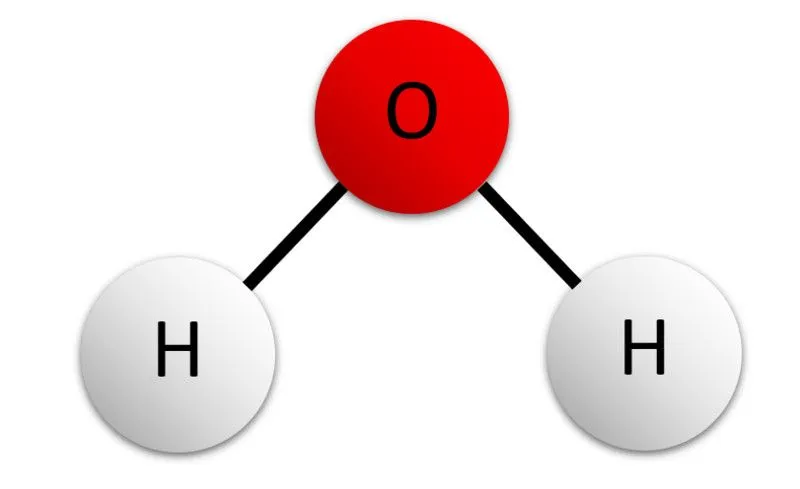
Here, you can see one oxygen atom bound to two hydrogen atoms. Now, these two hydrogen atoms must bind to the oxygen of another molecule, which gives rise to a structure like this:
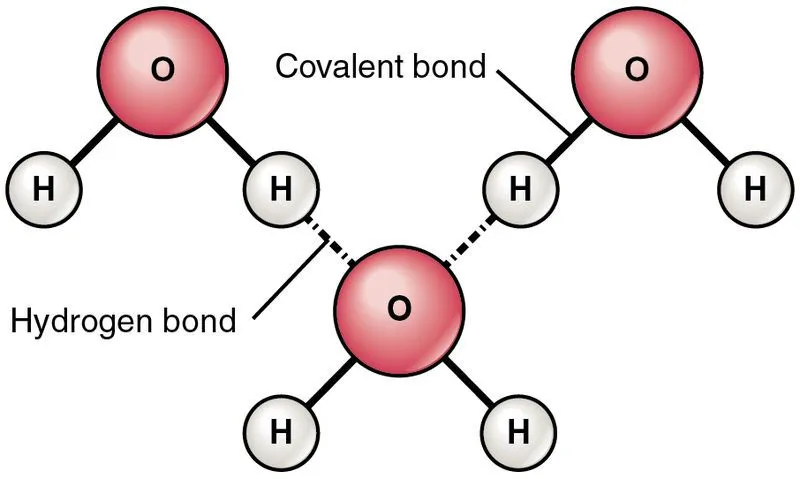
Now, let’s see what an ethanol molecule looks like:
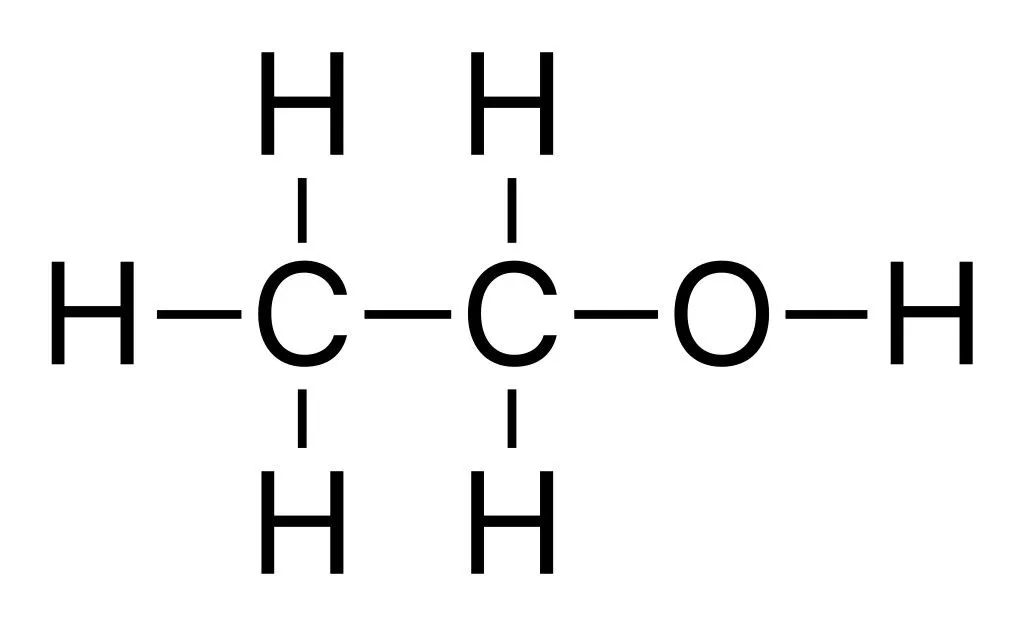
An ethanol molecule has two carbon atoms attached to each other. Each carbon atom can make three more bonds. The first carbon has three hydrogens, while the second has two hydrogens and one alcohol (-OH) group attached. It is this -OH group that forms the hydrogen bonds between alcohol molecules.

However, since the oxygen is connected to a carbon, the polarity of the oxygen goes down. Polarity here is the amount of negative or positive charge that an atom possesses in a neutral molecule.
The more polar the atoms in a molecule, the more polar the molecule becomes. Here, water is much more polar than ethanol, which is why the H-bonds in water are so much stronger.
How Does This Affect Freezing?
Coming back to our initial question: why is ethanol hard to freeze? A common misconception is that ethanol is non-polar. It is not. Ethanol is a polar molecule, and it does form hydrogen bonds through its hydroxyl (-OH) group. The real reason is that it is less polar than water and forms a less extensive hydrogen-bond network. Each ethanol molecule has only one -OH group, so it can donate just one hydrogen bond, whereas each water molecule has two O-H bonds and two lone pairs, letting it link to as many as four neighbors at once. That dense, four-way network is also why water expands when it freezes.
Because the attractions between ethanol molecules are weaker and fewer than those between water molecules, ethanol does not lock into an orderly solid as readily. Until enough molecules are pinned together in a fixed lattice, the compound stays liquid.
The ethanol molecules do not come together on their own. Extremely low temperatures are needed to solidify the compound. Simply put, the lack of attraction between the molecules makes it difficult for alcohol to freeze.
What Is The Freezing Point Of Alcohol?
If you came here just for the number, here it is: pure ethanol freezes at about -114 °C (-173 °F). The widely cited peer-reviewed value in the CRC Handbook of Chemistry and Physics is -114.14 °C, and chemical databases such as PubChem list it as -114.1 °C. That is more than 100 degrees colder than where water turns to ice, which is why a sealed bottle of pure ethanol simply will not solidify in any kitchen appliance.

Not all alcohols share that figure. Methanol (wood alcohol) freezes near -98 °C (-144 °F), and isopropyl alcohol (the rubbing alcohol in your medicine cabinet) freezes around -89 °C (-128 °F). What they have in common is a freezing point far below water's 0 °C (32 °F), thanks to that single hydroxyl group per molecule. So when someone asks "at what temperature does alcohol freeze?", the honest answer is: much, much colder than you can manage at home, and the exact figure depends on which alcohol, and how much water is mixed in with it.
What Intermolecular Forces Are In Ethanol?
Plenty of readers arrive at this page from a chemistry class, typing "ethanol intermolecular forces" or "does ethanol have hydrogen bonding?" The short answer is yes, ethanol experiences three kinds of intermolecular force at once: hydrogen bonding, dipole-dipole interactions, and London dispersion forces.

The standout is hydrogen bonding. Ethanol's hydroxyl group has an oxygen carrying a partial negative charge and a hydrogen carrying a partial positive charge, so the -OH hydrogen of one molecule is attracted to the oxygen of a neighbor. Because that oxygen is also a permanently polarized region, the molecules feel dipole-dipole attraction too, and every molecule, polar or not, has fleeting London dispersion forces from momentary shifts in its electron cloud. This is exactly why ethanol is polar, not non-polar: the bent C-O-H arrangement gives the whole molecule a net dipole. Hydrogen bonding is the strongest of the three, which is what gives ethanol a far higher boiling point than a non-polar molecule of similar size, such as propane.
Why Doesn't Vodka Or Liquor Freeze In The Freezer?
Here is the everyday version of the question: you put a bottle of vodka in the freezer and it comes out perfectly liquid, while a bottle of water turns to a block of ice. Vodka and most spirits are roughly 40% alcohol by volume (80 proof), meaning they are mostly water with a large dose of ethanol mixed in.

That ethanol behaves like a built-in antifreeze. By getting in the way of the orderly hydrogen-bond cage that water molecules need to form ice, it drags the freezing point of the mixture far below water's 0 °C (32 °F), an effect chemists call freezing-point depression, the same principle behind salting icy roads. A 40% ABV spirit typically freezes somewhere around -23 to -27 °C (-9 to -17 °F). A standard home freezer sits at only about -18 °C (0 °F), as recommended by the FDA for food storage, so it never gets cold enough to solidify the bottle. Weaker drinks, such as beer and wine at 5 to 14% alcohol, have a higher freezing point and will freeze (and sometimes burst) in the same freezer. This is also the answer to the popular trivia question about which liquids stay liquid in extreme cold: a strong spirit, like a high-proof alcohol, simply needs a far harsher chill than a household freezer can deliver.
Does Freezing Alcohol Make It Stronger Or Weaker?
A surprising number of searches ask whether sticking a drink in the freezer makes it stronger or weaker. Simply chilling a sealed bottle does neither, as nothing leaves the bottle, so the alcohol percentage is unchanged. But if you let part of a watery alcoholic drink actually freeze and then remove the ice, the story changes.
Because water freezes before ethanol, the ice that forms is mostly pure water, leaving the remaining liquid richer in alcohol. This old trick is called freeze distillation, or "jacking", and it is famously how traditional American applejack was once made from hard cider in cold winters. Repeatedly freezing cider and skimming off the ice could push the alcohol content from around 5% up toward 30% or more.
There is a serious catch, though. Real distillation with a still separates out toxic byproducts because methanol and fusel alcohols boil off at different temperatures. Freeze distillation does not remove anything except water, so it concentrates methanol and other impurities right alongside the ethanol. That is why freeze-distilling drinks at home is risky, and why commercial producers use proper distillation instead.
Does Rubbing (Isopropyl) Alcohol Freeze?
Ethanol is not the only alcohol people try to freeze. The rubbing alcohol in a first-aid kit is usually isopropyl alcohol (isopropanol), and it follows the same rules. Pure isopropyl alcohol freezes at about -89 °C (-128 °F), again far below anything a kitchen freezer can reach, so a bottle of it will stay liquid no matter how long you leave it in there.
Like ethanol, isopropyl alcohol owes this to its single hydroxyl (-OH) group, which lets it form hydrogen bonds along with dipole-dipole and London dispersion forces. Most drugstore rubbing alcohol is sold as a 70% or 91% solution, with the rest being water. As with spirits, the more water in the mix, the higher the freezing point, but even diluted rubbing alcohol will not turn solid in a normal freezer. This is part of why isopropyl alcohol is handy as a cold-weather de-icer and lens cleaner: it stays usable at temperatures where water would have frozen solid.
Conclusion
As compared to liquids like water, it is much more difficult to freeze alcohol. Even at the -18 °C (0 °F) of a typical home freezer, a bottle of pure ethanol will refuse to solidify, because that is nowhere near its -114 °C (-173 °F) freezing point.
This is because ethanol, although polar, is less polar than water and makes a sparser network of hydrogen bonds. Each molecule offers only one -OH group, so the intermolecular attractions are weaker and fewer than in water. With its molecules less strongly held to one another, ethanol does not readily settle into a solid lattice.
This leads to the compound having higher energy, so it needs a much lower temperature to solidify. This is why it is so difficult to freeze alcohol!
References (click to expand)
- Gallery :: water molecules - Future Engineers. futureengineers.org
- 13.1: Physical Properties of Alcohols; Hydrogen Bonding. LibreTexts
- L. N. D., Lehninger A. L., Nelson D. L., Cox M. M., Nelson I. F. M. G. D. L.,& Cox U. M. M. (2005). Lehninger Principles of Biochemistry. W. H. Freeman
- Ethanol (CID 702), Melting Point. PubChem, National Center for Biotechnology Information
- 14.3: Physical Properties of Alcohols. Chemistry LibreTexts
- Isopropyl alcohol (CID 3776), Melting Point. PubChem, National Center for Biotechnology Information
- Cold Food Storage Chart (freezer at 0°F / -18°C). FoodSafety.gov
- Applejack (drink) - freeze distillation and methanol concentration. Wikipedia