Table of Contents (click to expand)
- What Is Tetanus?
- What Causes Tetanus?
- How Does The Process Work?
- Why Are Rusty Objects Considered More Dangerous?
- What To Do Right After You Step On A Rusty Nail?
- My Wound Wasn’t Deep: Do I Still Need To Worry?
- Do You Need A Tetanus Shot, And How Often?
- What Are The Symptoms Of Tetanus, And How Fast Do They Appear?
Yes, you can get tetanus from stepping on a rusty nail, but the rust itself is not the cause. Tetanus is caused by Clostridium tetani, a soil-dwelling bacterium that thrives in low-oxygen environments. A nail left outside often picks up these bacteria from soil or dust, and a deep puncture wound delivers them past your skin into a perfect oxygen-starved hiding spot. The single most important protection is a current tetanus vaccination. Public-health authorities recommend a Tdap booster every 10 years (sooner if your wound is dirty and your last shot was more than 5 years ago).
Accidents happen all the time, and they happen in all different forms.
When you hear about an accident, it’s more commonly associated with a tragedy on the road or some other unfortunate event, but there are certain small, seemingly innocuous accidents that also happen constantly. Stepping on a rusty nail is one such accident.
What Is Tetanus?
Tetanus, which is also known as lockjaw, is a type of infection typically associated with being injured by some sharp object, such as knife, needle, or rusty nail. The reason it is also known as lockjaw is because one of the basic symptoms of tetanus comes in the form of contractions in the muscles around the mouth. The jaw seems to be ‘locked’ due to very little movement, hence the name.
These muscle contractions can often spread to other parts of the body, causing uncontrolled spasms. Some of these spasms are so strong that they can cause fractures, so tetanus is clearly nothing to fool around with. Furthermore, someone suffering from tetanus may have trouble swallowing and breathing, and may experience irritability, drooling, abnormal sweating and fever.
What Causes Tetanus?
Tetanus is caused by a spore-forming bacillus named Clostridium tetani. The bad news is that this bacterium is found quite commonly all over the world. These bacteria may be found in soil, feces, dust or even on the skin of human beings.
Now, let’s talk about how this all connects to blades and rusty nails. It’s important to note that these warnings aren’t limited to rusty nails; even perfectly new and polished ones (if they puncture the skin) can cause a deep wound that may lead to tetanus. Why is that? Let’s dig into the details…
How Does The Process Work?
The bacteria, C. tetani, can grow and reproduce only in the absence of oxygen. This bacterium enters the body through the wound, where there is an abundance of contamination and dead skin cells, as well as a deprivation of good oxygen flow. These puncture wounds can be caused by anything, including needles, animal bites, broken glass, knives, wood splinters or nails.
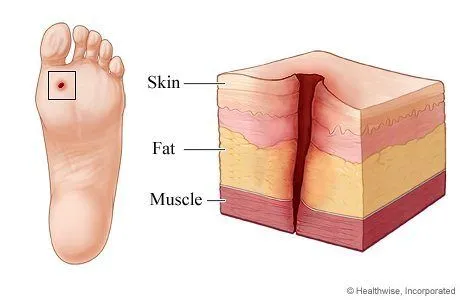
Once the bacteria enter the wound, they release a neurotoxin called tetanospasmin, one of the most potent biological poisons known, with a lethal dose of just a few nanograms per kilogram of body weight. The toxin travels along nerve cells, blocks the brain’s signals that relax muscles, and lets contraction signals run unchecked, which is why tetanus victims experience severe full-body spasms.
Why Are Rusty Objects Considered More Dangerous?
If an object is able to puncture your skin, then it can potentially cause tetanus. The reason why rusty nails are often blamed more than other objects is that due to the exposure of the nail to air, water and soil from the surroundings, the tetanus-causing bacteria can enter the nail and hide there, almost guaranteeing that the bacteria will enter the body. Any piercing injury should be looked at carefully, not just the ones caused by rusty metallic objects, but the chances of contracting tetanus are much higher with those rusted materials.
It is also important to note that cleaning the wound with normal disinfectant won’t help much, as spores of C. tetani are resistant to antiseptics. The best thing you can do is head to the nearest hospital, where you will be given an antitoxin known as tetanus immunoglobulin.
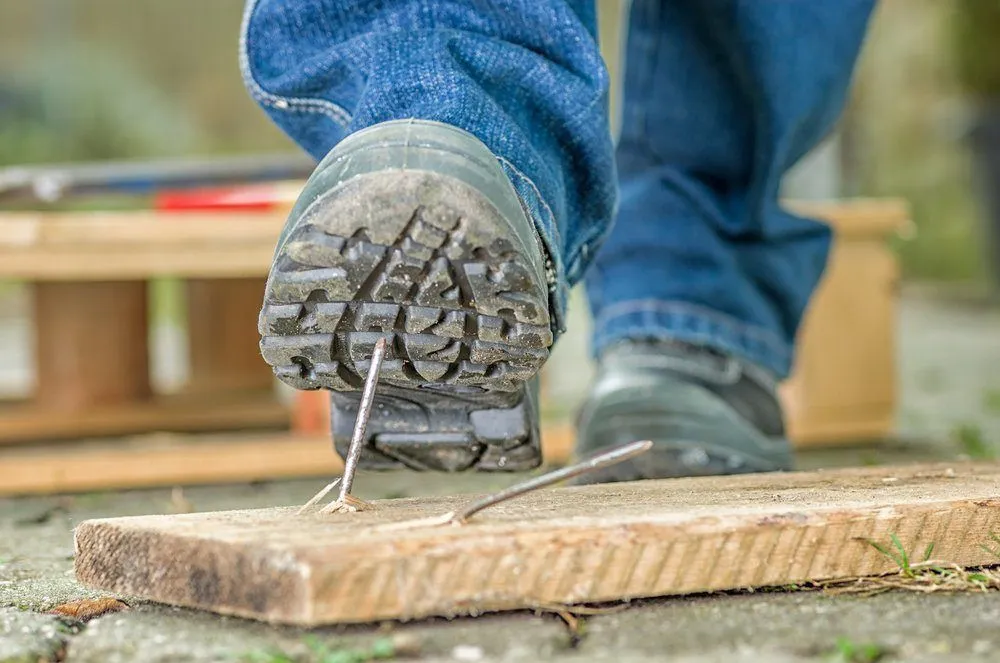
Now that you know the whole story, don’t blame old, rusty needles and nails for tetanus; they’re just carriers for this dangerous bacteria. And remember, even an innocuous cut or scratch by a brand-new material can also be just as deadly. Take a trip to the hospital just to make sure!
The real protection against tetanus is your vaccination history. The CDC recommends a Tdap (tetanus, diphtheria, pertussis) booster every 10 years for adults, and within 5 years of any dirty or deep wound. Thanks to widespread vaccination, tetanus is now extraordinarily rare in countries with mature immunization programs. The United States typically reports fewer than 30 cases a year, and global deaths have fallen from over 200,000 in the early 2000s to roughly 25,000 in 2024 (most still in regions with low maternal and neonatal vaccination coverage). If you can’t remember when you last had a booster and you just stepped on a nail, that’s a good reason to head to the clinic.
What To Do Right After You Step On A Rusty Nail?
Let’s say it just happened: there’s a nail in your foot, or there was a second ago. The good news is that the immediate first aid is simple, and doing it well genuinely lowers your risk of infection. Public-health and hospital sources broadly agree on the same handful of steps:
- Wash your hands first. You don’t want to introduce a fresh batch of germs while you’re treating the wound.
- Stop the bleeding. Puncture wounds often bleed surprisingly little, but if yours is bleeding, press a clean cloth or bandage on it. A little bleeding actually helps flush the wound.
- Rinse it out. Run clean water (and soap around, not inside, the wound) over it for about 5 to 10 minutes. The goal is to physically wash out dirt and debris, since this is the contamination that matters.
- Gently remove any debris. If there’s grit left in the wound, tweezers cleaned with rubbing alcohol can help. If something is lodged deep, leave it and let a clinician handle it.
- Apply an antibiotic ointment and cover it. A thin layer of ointment and a clean bandage keep the area clean while it heals. ScienceABC has covered whether it’s better to cover a wound or leave it exposed if you’re curious about that debate.
One important myth-buster: pouring antiseptic into the wound is not the magic fix people imagine. The spores of C. tetani are resistant to antiseptics, and even hydrogen peroxide mainly cleans the surface. The real protection comes from thorough rinsing plus your vaccination status, which we’ll get to below. Because a puncture from a nail is, by definition, a deep and potentially dirty wound, the standard advice is to see a doctor within 24 hours so they can assess infection and tetanus risk properly.
My Wound Wasn’t Deep: Do I Still Need To Worry?
This is the question people ask the most, and it’s a fair one. A nail prick can look like almost nothing on the surface: a tiny dot, barely any blood, not much pain after the first sting. Unfortunately, the outside view is misleading. As the Cleveland Clinic bluntly puts it, a puncture wound “might not look all that bad on the outside,” but these injuries “go deeper than they might seem.”
Two things make puncture wounds sneaky. First, the depth: a nail can drive bacteria deep under the skin while leaving only a pinhole on the surface, and that deep, low-oxygen pocket is exactly where C. tetani likes to grow. Second, they are hard to clean, because you can’t easily flush out something that closed up behind the nail. Infection, not blood loss, is the main risk, and roughly 1 in 10 people who step on a nail go on to develop one. If the nail went through a rubber-soled shoe, there’s an added twist: Pseudomonas bacteria often live on those soles and can be driven into the foot, occasionally leading to stubborn deeper infections.
So “it wasn’t deep” is reassuring, but it doesn’t settle the question. What actually settles it is your tetanus vaccination history and whether the wound was dirty. Even a shallow-looking nail puncture counts as a tetanus-prone wound, so the depth you can see is not the depth that matters.
Do You Need A Tetanus Shot, And How Often?
Here is the part that genuinely decides your outcome. Whether you need a shot after stepping on a nail depends almost entirely on when you last had a tetanus-containing vaccine and how clean the wound is. The CDC’s wound-management rule is refreshingly clear:
- For a clean, minor wound: if your last tetanus dose was within 10 years, you’re considered protected and don’t need another.
- For a dirty or deep wound (which a nail puncture usually is): the threshold tightens to 5 years. If it’s been longer than that, you should get a booster.
For adults, the routine schedule is a Tdap (tetanus, diphtheria, pertussis) or Td booster every 10 years. If you genuinely can’t remember your last shot and you’ve just had a puncture wound, that uncertainty is itself a good reason to head to a clinic. People who have never been vaccinated, or who don’t know their history, may also be given tetanus immune globulin (TIG), an antitoxin that provides immediate, short-term protection while the vaccine kicks in. Worth noting: routine antibiotics are not recommended specifically to prevent tetanus, and TIG is never needed for a clean, minor wound. Being up to date on your boosters is, by a wide margin, the single biggest factor that keeps tetanus from ever taking hold.

What Are The Symptoms Of Tetanus, And How Fast Do They Appear?
If you’re watching a wound and wondering what to look for, it helps to separate two very different things: an ordinary wound infection and tetanus itself. A local infection shows up as redness, swelling, warmth, increasing pain, or pus around the wound, sometimes with a fever. That’s your cue to see a doctor, but it is not the same as tetanus.
Tetanus has its own distinctive signature, and it doesn’t appear instantly. The symptoms typically begin between 3 and 21 days after exposure, with an average of about 8 days, which is why a wound can seem fine for over a week before trouble starts. The first sign is usually trismus, the stiffness of the jaw muscles that gives tetanus its old name, lockjaw. From there, the spasms tend to spread: a fixed, grimace-like facial expression (called risus sardonicus), a stiff neck and back, difficulty swallowing, and painful, full-body muscle contractions. In severe cases the back arches violently, a posture known as opisthotonus.

This is not a wait-and-see illness. Even with modern intensive care, generalized tetanus is fatal in roughly 1 in 10 cases, and the risk is highest in older adults. The reassuring flip side is that it is almost entirely preventable: nearly all cases occur in people who were never vaccinated or fell behind on their boosters. If you ever notice jaw stiffness or muscle spasms after a wound, treat it as an emergency and seek care immediately.
References (click to expand)
- If you step on a rusty nail, will you really get tetanus?. HowStuffWorks
- How to Know when You Need a Tetanus Shot - wikiHow. wikiHow
- Cut by rusty metal! Do I need a tetanus shot? - Go Ask Alice!. Columbia University
- I stepped on a nail. Do I need a tetanus shot? | BuckMD Blog. The Ohio State University
- About Tetanus. Centers for Disease Control and Prevention (CDC)
- Clinical Guidance for Wound Management to Prevent Tetanus. Centers for Disease Control and Prevention (CDC)
- Puncture Wound. Cleveland Clinic
- Tetanus (Clostridium tetani Infection). StatPearls. NCBI Bookshelf
- Stepped on a nail: What to do and when to see a doctor. Medical News Today