No, you cannot feel an earthquake from a plane in flight. Earthquake tremors propagate through the ground (and to a much smaller extent through the air as infrasound below 20 Hz), but by the time those waves reach a cruising plane at around 11 km (39,000 ft) altitude, they are so attenuated that they are completely overwhelmed by engine noise and ordinary flight vibrations. Pilots and passengers would not notice anything at all.
Earthquakes are some of the most devastating natural disasters to occasionally wreak havoc on human civilizations. Thanks to a wide range of information sources around the world, in addition to personal, regional, or national experience, almost everyone knows about earthquakes. Even if you have never experienced an earthquake, your general perception is that things on the ground start to move and shake by themselves when an earthquake occurs, meaning that one can definitely feel tremors (depending on the intensity of the earthquake) on the ground or at sea.
However, what if you happen to be sitting in an airplane that is passing above an area experiencing the tremors of an earthquake? Would you feel anything at all?
Earthquake
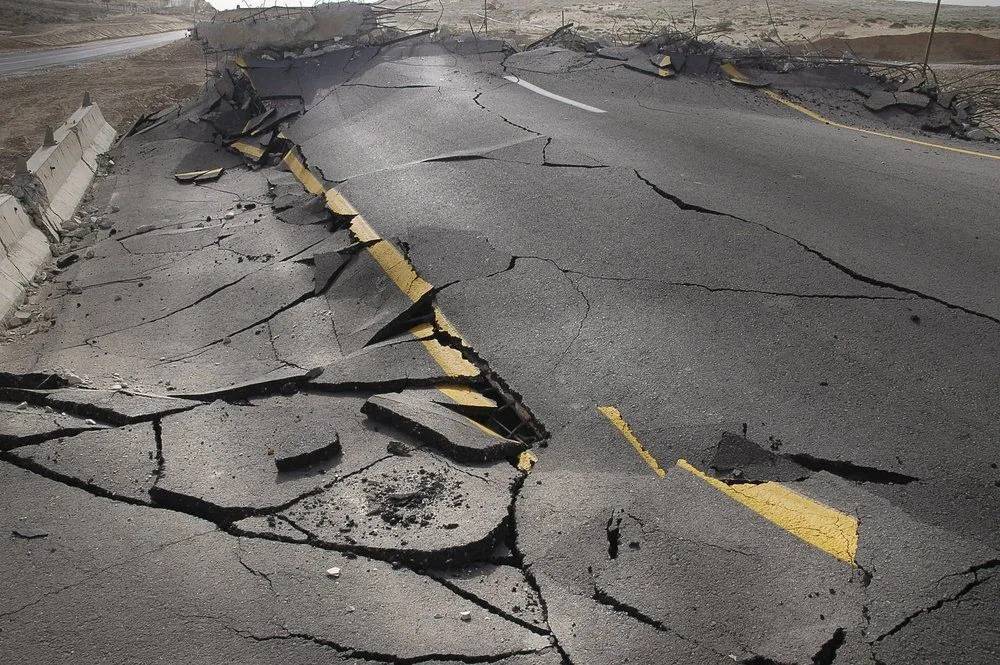
Not that these disastrous phenomena need too much of an introduction, but let’s take a closer look at what an earthquake actually is. An earthquake occurs when there is a sudden release of energy in the Earth’s crust, resulting in seismic waves; these waves then travel towards the ground and cause people to feel tremors or a shaking sensation on the surface of the Earth. The tremors from earthquakes vary in their severity; some are so mild that you won’t feel anything, while others are violent enough to toss people around, topple huge buildings, destroy established infrastructure above the ground, and even sink ships at sea.
Release Of Waves
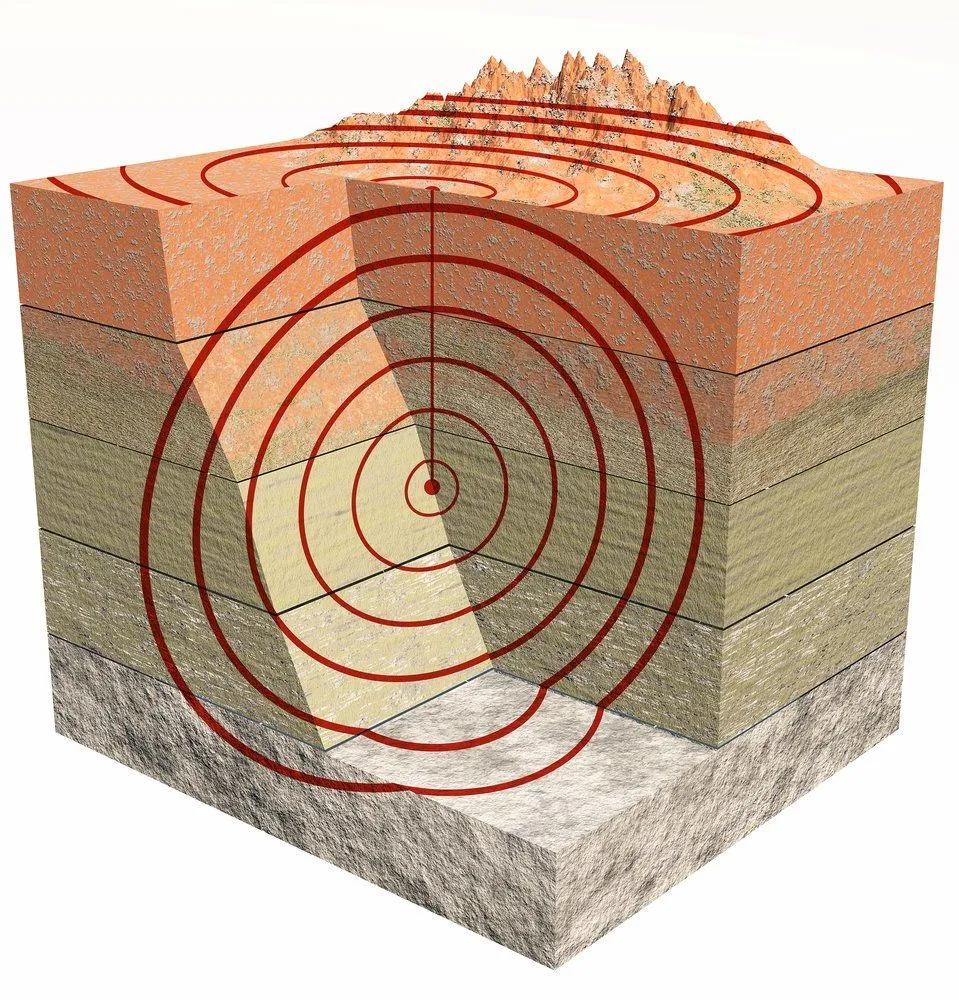
When an earthquake occurs, it sends waves in all directions in the form of pressure and shear waves. When pressure waves leave Earth’s crust and pass through the atmosphere, these waves are converted to sound waves. However, since these waves are usually below the range of audible sound for humans (below 20 Hertz), humans are unable to hear them.
In other words, this means that humans cannot hear the seismic waves, but many have claimed to hear a discernible rumble during an earthquake. The sound that they hear is caused by the seismic waves moving through solid material, such as underlying rocks or buildings. It is the sound of the rattling and shaking of solid structures, and not the sound of the seismic waves themselves, which one hears during an earthquake.
In An Airplane
So, what happens to these seismic waves when you’re high above the ground? Will you able to feel or hear the sound of the rumble in an airplane?
The short answer is NO.

This lack of effect is due to what physicists call attenuation, which is the tendency of waves to gradually lose their energy over time and distance, and therefore lose their intensity, as they travel through a medium like air. It is also the reason why you are able to distinctly hear a person lecturing when you are sitting in the front row, but not so clearly when you are sitting at the back of the auditorium.
So, even if seismic waves manage to travel a distance of approximately 39,000 feet or 11 kilometers (the altitude at which planes usually fly), they would be so attenuated that you wouldn’t hear them above the sound of the roaring engine of your aircraft, let alone feel the tremors like the ones people would experience on the earth below.
I suppose one thing is clear: a plane that is already cruising is one of the calmest places to be during an earthquake, simply because it is not touching the ground that is doing all the shaking. The catch is that being in the air and being at the airport are two very different situations, as we will see next.
What Happens To A Plane On The Ground During An Earthquake?
Here is the twist that catches a lot of people out. A plane high in the sky is decoupled from the shaking earth, but a plane sitting at the gate, taxiing, or rolling down the runway is very much resting on the ground, and the ground is exactly what an earthquake throws around. So the honest answer to "is it safe to be on a plane during an earthquake" depends entirely on whether the wheels are touching tarmac.

The biggest hazard is not the aircraft itself but the surface it relies on. Strong shaking can trigger liquefaction, where water-saturated, sandy soil briefly behaves like a liquid and loses its strength. When that happens under an airport, runways and taxiways can crack, buckle, and settle. This is not hypothetical: during the magnitude 6.9 1989 Loma Prieta earthquake, liquefaction in a zone of dredged sand fill damaged part of Runway 11-29 at Oakland International Airport, with the affected stretch needing repair before jets could use it again. You can read more about how scientists study earthquakes and the ground failures they cause.
A modern airliner is actually fairly robust against the jolt itself. Its landing gear uses oleo shock struts (telescoping cylinders of compressed gas and hydraulic fluid) designed to absorb the considerable forces of a hard landing, so the comparatively gentle shaking passing up through the wheels is not the main worry for a parked or taxiing aircraft. The bigger issue is operational. If the pavement is damaged or even just suspect, the runway cannot be used until it has been checked, and a large quake can knock out the power, lighting, and communications that an airport depends on. So if a big earthquake hits while you are buckled in at the gate, the most likely outcome is a long delay rather than danger from the shaking, because nothing is going to take off or land until the airfield has been inspected and cleared.
Can An Earthquake Be Detected From The Air At All?
If passengers cannot feel a quake at cruising altitude, can the earthquake be sensed in the sky by any means? Surprisingly, yes, but with instruments rather than your inner ear. As we saw, a fraction of an earthquake’s energy couples from the ground into the atmosphere as infrasound, the band of sound below 20 Hz that humans cannot hear. Vertical ground motion at the surface acts like a giant loudspeaker, pushing on the air and launching low-frequency acoustic waves upward and outward.

Scientists in the field of seismoacoustics routinely record this earthquake-generated infrasound on dedicated ground arrays of sensitive microbarometers, and the signals can travel hundreds to thousands of kilometers through the atmosphere. Even moderate magnitude 6.0 to 6.5 earthquakes can produce infrasound detectable far from the epicenter. The energy can climb so high that it disturbs the ionosphere, which is one reason researchers study these waves at all: they carry information about the earthquake’s size and the atmosphere itself.
The key point for a curious passenger is the difference between detecting and feeling. Picking out an earthquake’s infrasound takes purpose-built sensors, careful processing, and quiet recording sites. Inside a pressurized cabin filled with engine roar and airflow, those faint, sub-audible pressure ripples are utterly swamped. So while an earthquake genuinely does send a whisper into the sky, you would need a seismograph network on the ground, not a seat by the window, to know it was there.
References (click to expand)
- The Science of Earthquakes. U.S. Geological Survey (USGS)
- Introduction to the Special Section on Seismoacoustics. U.S. Geological Survey (USGS)
- Earthquake Source Impacts on the Generation and Propagation of Seismic Infrasound. Geophysical Journal International (2024)
- Earthquake Damage and Repair of Oakland Airport Runway. Journal of Performance of Constructed Facilities (ASCE, 2000)
- Loma Prieta Earthquake 1989: Liquefaction. University of Washington
- Earthquake. Wikipedia