No commercial airliner has been brought down by turbulence alone in the modern jet era. Today’s aircraft are built to absorb forces far beyond what they typically encounter. Turbulence does, however, injure unbelted passengers every year, and one rare fatality on Singapore Airlines SQ321 in May 2024 is why fastening your seat belt at all times matters most.
When you’re flying thousands of feet above the ground in a pressurized metallic tube, even the tiniest aberrations in the flight pattern and stability can cause an uproar. Of all the things that give people chills during a flight, I wager that trembling drinks, the momentary shaking of the fuselage, the noise of luggage dislodging from its place and abrupt changes in the plane’s course and altitude… in a word, turbulence, is the scariest of all.
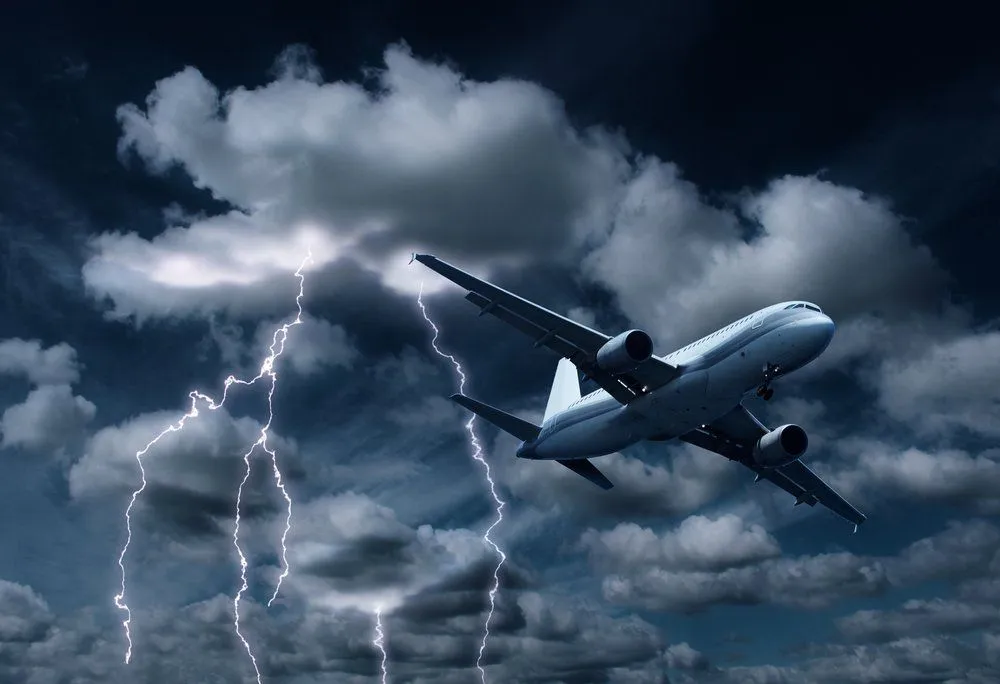
However, is the widespread fear of turbulence justified? Can it really be bad enough to cause a plane to plummet thousands of feet through the sky and actually crash?
What Is Turbulence?
When talking about fluids like air and water, turbulence refers to rapid changes in the speed and pressure of the fluid. In more technical terms, inertial forces dominate the viscous forces when turbulence is experienced.
Although turbulence frequently occurs in various media, and therefore has implications on things we observe in daily life (like the swing of a cricket bat, smoke rising from a cigarette, and most terrestrial atmospheric circulation), the term ‘turbulence’ strikes particular fear in the minds of air travelers, especially non-frequent ones.
What Causes Turbulence?
Turbulence in an airplane is mainly caused by the interaction of fast jet-stream winds with slower-moving air alongside them, creating zones of strong wind shear. This kind of turbulence is aptly called Clear Air Turbulence (CAT), because pilots cannot see it (there are no clouds to give it away) and weather radar cannot detect it. CAT is most common at cruise altitudes, between roughly 20,000 and 50,000 feet (6,000 to 15,000 meters), near the jet stream.
There are some other causes of turbulence, including:
1 – Thermal turbulence: Also referred to as convective turbulence, this happens due to the sun heating up the air just above the ground, making it lighter. This makes it rise in the air, thereby mixing with the cooler air above. This type of turbulence usually occurs during daytime when the sun is still in the sky.
2 – Mechanical turbulence: This type of turbulence occurs due to the friction between the ground and the air, especially in regions which have mountains, hilly terrain or even very tall buildings.
3 – Wind shear: When there is a sharp change in the direction or speed of wind over a short distance, a plane may experience this type of turbulence. If the change is large enough, the resulting turbulence can be severe, and at low altitude (during takeoff or landing) it is one of the more dangerous flavors a pilot can encounter.
Furthermore, a plane can hit turbulence during stormy weather or a thunderstorm. A smaller plane running into the wake of a larger plane can also experience turbulence. Basically, whenever a plane enters a region where winds are not behaving normally, it’s bound to sustain a little battering.
Can Turbulence Crash An Airplane?
The short answer is – no. Not in the 21st century.
Although in its worst form, turbulence may scare passengers to the point where they start praying to the Almighty, asking for mercy for their sins, it’s very, very rare for turbulence to be powerful enough to actually bring a plane down. Modern aviation technology has made it almost impossible for a commercial airplane to crash because of turbulence alone.
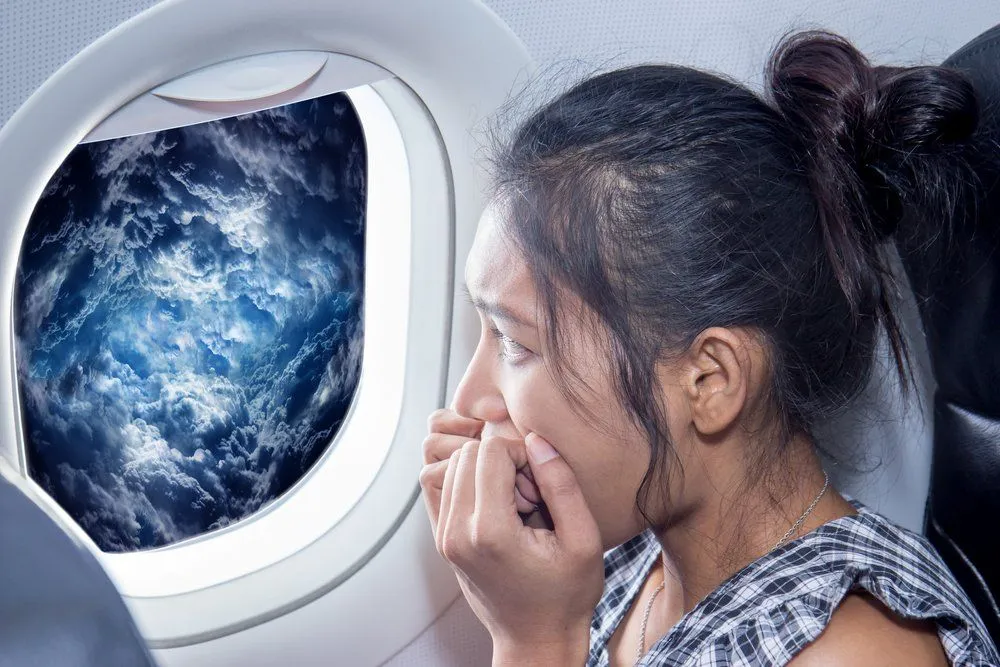
The FAA actually classifies airplane turbulence into four categories: light, moderate, severe and extreme. The labels are based on how the aircraft reacts rather than a fixed altitude deviation, but the practical differences are easy to picture.
In light turbulence, an airplane might sustain a few feet of altitude loss and occupants feel a slight strain against their seat belts. While a bit scary for kids and people who don’t fly that often, light turbulence is routine and considered nothing more than a minor inconvenience. Moderate turbulence is similar but more pronounced, with noticeable changes in altitude and airspeed and loose objects sliding around. It can unnerve even frequent fliers and cause drinks to spill. For safety, passengers will likely be advised to put on their seat belts.
Severe turbulence, as the name implies, is the nastiest form of turbulence that a typical passenger plane might run into. It causes large, abrupt changes in altitude and airspeed, the aircraft may briefly be out of the pilots’ control, and a significant rattling noise will be heard in the fuselage. Severe turbulence requires immediate corrective actions by the pilots (like changing the pitch, bank and altitude) to steer out of it. It can break bones, throw unbelted passengers into the ceiling and, in the rarest of rare cases, inflict fatal wounds, all of which can usually be avoided by following a simple safety guideline… (Extreme turbulence, the fourth category, is rare enough that most pilots never see it; it is capable of causing structural damage and is what design engineers worry about when building wings and tails.)

Before you start worrying about hitting severe turbulence the next time you fly, you should know that the chances of running into severe turbulence are slim to none; in fact, most fliers, even pilots, don’t encounter severe turbulence over their entire flying lives!
According to Patrick Smith, the pilot of a commercial plane and the author of Cockpit Confidential, “the level of turbulence required to dislodge an engine or bend a wing spar is something even the most frequent flyer, or pilot for that matter, won’t experience in a lifetime of traveling.”
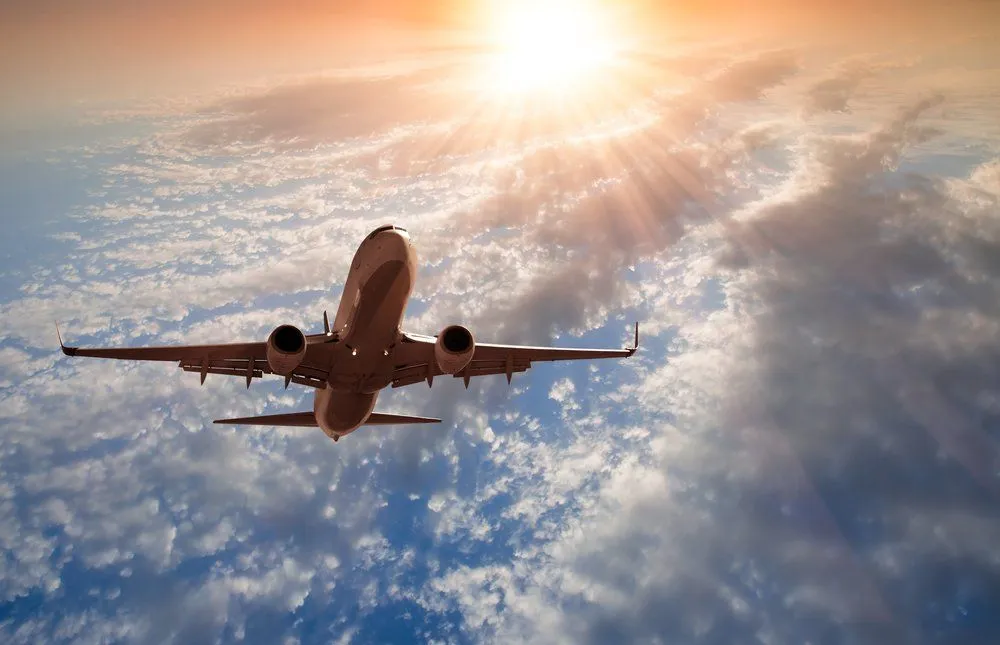
Furthermore, modern commercial airplanes are built to withstand harsh weather conditions; there have been instances where the external surface of planes have sustained serious damage, but the internal fuselage remained completely untouched. The fact that each plane is put through a series of rigorous tests before being allowed to carry passengers should be evidence of the safety of flying in these planes. According to the Federal Aviation Administration, turbulence is rarely the direct cause of an accident.
Has Turbulence Ever Caused A Plane Crash?
There were rare incidents in the 20th century where turbulence was directly involved in plane crashes. The clearest example is BOAC Flight 911, a Boeing 707 that broke up in clear-air turbulence over Mount Fuji in March 1966, killing all 124 people on board after the aircraft was hit by mountain-wave turbulence well beyond its design limits. In other cases, turbulence was not the sole cause of the crash but was accompanied by technical failure. As mentioned above, advancements in modern aviation technology (stronger airframes, better radar, jet-stream forecasting and real-time turbulence reporting) have made airplanes structurally safe from turbulence in the 21st century. The far bigger risk today is to people inside the cabin, not the aircraft itself.
That was made painfully clear on 21 May 2024, when Singapore Airlines Flight SQ321, a Boeing 777 cruising at about 37,000 feet (11,300 meters) over Myanmar, hit sudden severe turbulence. Vertical acceleration swung from +1.35g to −1.5g in under a second, hurling unbelted passengers into the ceiling. One British passenger died (a suspected cardiac event triggered by the impact) and dozens were seriously injured; the aircraft itself landed safely in Bangkok. It was the first turbulence-related death on a commercial flight in about 25 years.
Researchers also expect bumpier rides ahead. A 2023 University of Reading study published in Geophysical Research Letters found that severe clear-air turbulence over the North Atlantic increased by roughly 55 percent between 1979 and 2020, and modelling suggests CAT could double or triple in busy flight corridors as the climate warms. The planes will keep handling it, but seat belts matter more than ever.
How Often Does Turbulence Actually Injure Anyone?
So the aircraft is safe, but what about the people inside it? This is where the honest answer gets a bit more nuanced. Turbulence is, in fact, one of the leading causes of injury on commercial flights, yet the raw numbers are reassuringly small. In a landmark 2021 safety study, the National Transportation Safety Board (NTSB) reviewed every US airline (Part 121) accident from 2009 to 2018 and found that turbulence was involved in more than a third (about 38 percent) of them. Even so, across that entire decade those accidents produced only a little over 120 serious injuries, an average of roughly a dozen a year for a system that carries hundreds of millions of passengers.

Here is the detail that matters most: nearly four out of five of the people seriously hurt (about 79 percent) were flight attendants, not passengers. Cabin crew are so often up and unbuckled, serving meals or stowing carts, when a sudden jolt hits, while passengers spend most of the flight belted into their seats and made up only about 21 percent of the seriously injured. The NTSB's blunt takeaway was that a fastened seat belt very nearly removes a seated passenger's risk of injury. In other words, the single biggest factor in whether turbulence hurts you is not the weather; it is whether your belt is buckled.
For a sense of scale, US pilots file around 65,000 reports of moderate-or-greater turbulence every year and roughly 5,500 reports of the severe kind, according to the Flight Safety Foundation. Set the low dozens of annual serious injuries against those tens of thousands of rough encounters and the millions of flights behind them, and the odds of a belted passenger being hurt shrink to something close to statistical noise.
Why Can't Pilots Just Fly Around Turbulence?
If some turbulence is so predictable, why do pilots still get caught out? For the bumps tied to thunderstorms, they usually aren't. The weather radar in an aircraft's nose paints areas of rain and storm cloud, so crews can steer tens of kilometers around a towering cell long before they reach it. The troublemaker is clear-air turbulence, the jet-stream variety described earlier. Because it forms in dry, cloudless air with no rain for the radar to bounce off, onboard weather radar simply cannot see it, which is exactly why CAT tends to ambush a flight with little or no warning.

To stay ahead of the invisible stuff, pilots rely on a network of forecasts and reports rather than any single instrument. Pilot reports, or PIREPs, are the workhorse: when one crew hits a rough patch, they radio it to air traffic control, which relays the warning to everyone else in the area, often buying following aircraft several minutes of notice. Those reports feed into official advisories called SIGMETs and into computer forecasts such as the Graphical Turbulence Guidance system run by the US National Center for Atmospheric Research, which maps expected turbulence across the country, refreshes every hour and issues rapid nowcasts every 15 minutes.
Newer tools are on the horizon. Doppler LIDAR, which fires laser pulses instead of radio waves, can sense the faint motion of clear air ahead of an aircraft, though it still struggles to reliably flag CAT and is not yet standard equipment. So when a flight does blunder into rough air, the crew falls back on two time-tested moves: they slow to the aircraft's published turbulence penetration speed to ease the strain on the airframe, and they ask air traffic control for a different altitude. Because CAT often sits in thin layers, climbing or descending just a few thousand feet from the usual cruise altitude can be enough to find smooth air again.
To conclude, a plane flying into turbulence is like driving a car on a bumpy road (although the former is far less jerky); it’s usually nothing more than a nuisance. Turbulence is certainly something that pilots must be aware of, but for passengers it is overwhelmingly an issue of comfort and the occasional injury, not a threat to the aircraft itself, provided you keep that seat belt fastened.
References (click to expand)
- Laminar Flow and the Holy Grail - NASA Blogs. The National Aeronautics and Space Administration
- Turbulence: Staying Safe. Federal Aviation Administration
- Turbulence. The National Weather Service
- Clear-air turbulence (CAT). Encyclopaedia Britannica
- Boeing 720B. Federal Aviation Administration Lessons Learned
- Singapore Airlines Flight 321. Wikipedia
- Aviation turbulence strengthened as the world warmed. University of Reading
- Preventing Turbulence-Related Injuries in Air Carrier Operations. National Transportation Safety Board
- Flight Attendants Continue to Be Seriously Injured in Turbulence. NTSB Safety Compass
- Bumpy Ride Ahead. Flight Safety Foundation
- Turbulence. National Center for Atmospheric Research (RAL)