No, you can’t literally taste an emotion like fear or happiness. But your emotional state does change how food tastes. Winning makes treats taste sweeter, sadness flattens sweetness and sharpens sourness, and fear can dull sweetness too. So emotions don’t have a flavor, but they quietly reshape the flavors you sense.
As a Taylor Swift fan, I’ve learned to associate the color ‘red’ with passionate, exciting love. The color ‘dark gray’ is connected with loneliness and silence, while the color ‘blue’ is now linked with a feeling of emptiness and sadness. This made me look at the phrase “winning tastes sweet” in a different light.
Can we actually taste the emotion of winning? Just like colors, can flavors and emotions also have a unique association?
We use several flavors to describe our emotions. For example, we’re ‘salty’ when we’re angry with someone or don’t like them. We’re “sour” when we act jealous or envious. You’re “spicy” when you’re in a playful or even vengeful state of mind.
The question is, can we taste the different emotions that we feel? Do we get a taste of fear when we’re shaking with it?
Let’s first understand what emotions are, how they influence and alter our experiences, and what we’ve uncovered about them.
What Are Emotions?
Don Hockenbury and Sandra E. Hockenbury, authors of ‘Discovering Psychology’, suggest that emotions are complex psychological states that involve three components: a subjective experience, a physiological response and a behavioral or expressive response.
Paul Ekman, a psychologist, asserted that humans have six basic emotions that are universal, indicating that all humans experience and recognize them. These emotions are fear, anger, disgust, sadness, happiness, and surprise.
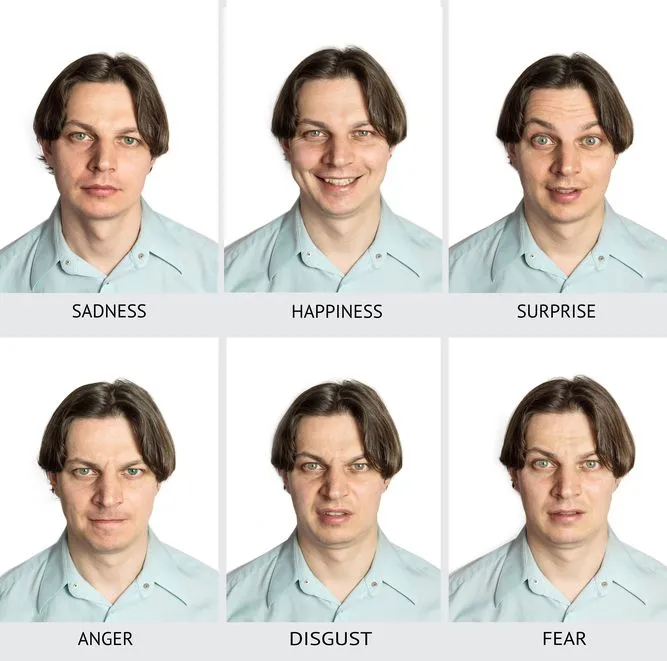
Emotions And Sense Of Taste
So, can we taste emotions? Not quite.
However, emotions and the sense of taste are associated in such a way that we may actually taste “sweetness” in victory.
Neuroscience Of Emotions
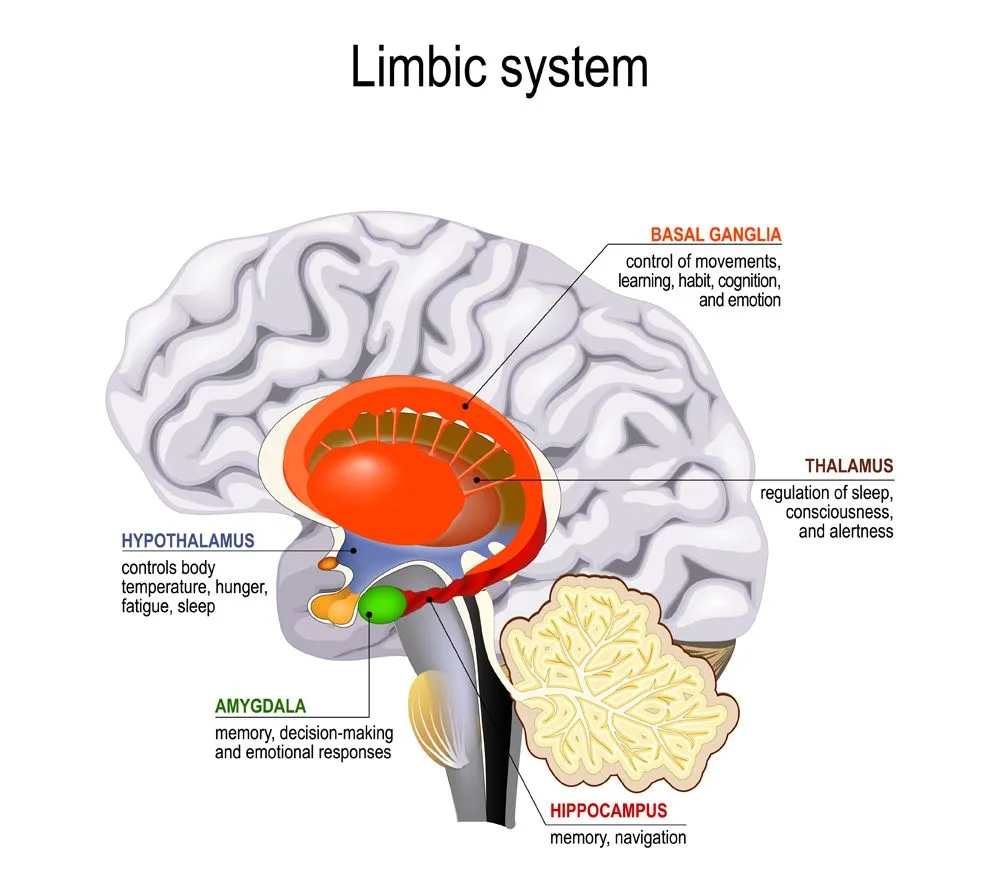
Emotions are controlled by our limbic system, a group of interconnected structures located deep within the brain.
Interestingly, studies have also found that the limbic system controls our sense perception, including our sense of taste.
This helps us understand the association and close linkage of emotions and the sense of taste that we feel and experience.
Relationship Between Taste And Emotions
Robin Dando, Head of the Taste Physiology Lab at Cornell University, is interested in understanding how real-world experiences influence our emotions and how these emotions then affect our taste sensations. He and his colleague Corinna Noel carried out an interesting experiment to study if one could actually taste victory.
They studied the fans during the 2013-14 men’s hockey season after the end of each game. First, they asked each fan how satisfied they were with the result of the game. Winning and losing didn’t mean that the fans of the winning team were necessarily happy with the results, especially if the winning mark was not that significant, or if the victory was the result of foul play.
After gauging their satisfaction levels, the researchers offered several treats and asked participants to taste them. After the participants tasted it, they were surveyed to rate the intensity of how sweet, salty, bitter, creamy, sour, or savory these food items tasted.
These are simple terms used to describe taste sensations. Participants were also asked to give an overall rank of how much pleasure they derived from eating something (aka the food’s “pleasure value”).
The responses were collected from 550 fans. The researchers found a relationship between positive emotions and taste. Participants reported that the sweet treats tasted sweeter, whereas they reported that the sour treats were “not sour enough”.
The emotions associated with loss, such as sadness or feeling sulky, tended to make the sweet treats taste less sweet and sour treats to taste more sour. When the result of the game was a tie, the fans reported that the flavors were somewhere in the middle, neither too sweet nor too sour.

Research done by Ellen Greimel, who works in the Department of Child and Adolescent Psychiatry at the University Hospital Aachen, and her colleagues found that people tend to associate sweet tastes with positive experiences, while they associate bitter, sour, and salty tastes with negative experiences.
There is a positive correlation between the intensity of taste with the affective (emotional) response we have; as the intensity of taste increases, so does the intensity of our affective response.
It works the other way around too, as studies have found that emotional responses can also impact how you perceive taste. This means that if you eat something sweet when you’re in a bad mood, your mood can reduce the intensity of the sweetness.
Therefore, even though we may not “taste” our emotions, the relationship between taste and emotions is a two-way street; they influence and impact each other.
So what would fear taste like? Not a flavor of its own, but it does leave a mark. In a 2021 study, volunteers who had just watched a horror film rated a sweet drink as noticeably less sweet than people who had watched a comedy or a documentary, and the more anxious they felt, the more the sweetness faded. In other words, you can’t taste the fear itself, but being scared can quietly turn down the sweetness dial. Sadness works in a similar direction, muting sweetness and making sour notes sharper, while the happy buzz of winning does the opposite.
Interestingly, taste is also linked to morality.
A 2011 study by researchers at the City University of New York suggested that taste can nudge our moral judgments, or at least color our moral reactions.
In that experiment, people who sipped a bitter drink rated everyday moral transgressions as more wrong than those who drank water or a sweet drink, as if a literally bad taste in the mouth made them feel more disgusted. It’s a neat idea, but worth a pinch of salt: a large 2020 study that re-ran the experiment with more than 1,100 people couldn’t reliably reproduce the effect, so the link between bitterness and harsher moral judgments is shakier than it first appeared.
In these cases, the metaphors associated with emotions can mediate our experiences.

The Metaphorical Relationship Between Taste And Emotion
Kai Qin Chan, who works as a social psychologist and researcher, observed the consistency of taste-emotion metaphors and the relationship between emotions, tastes, and the English language that metaphors have with each other.
Along with his colleagues, he found that “love” and “passion” were often associated with sweetness, whereas “jealousy” was associated with the taste of sourness, and both “sadness” and “betrayal” are associated with bitterness.
Thus, if you’re out on a date, and your date orders an ice cream that tastes more sweet than usual, it may be the feeling of “being in love” that is influencing your tastebuds!
They also found that emotions, specifically fear and disgust, alter our taste perception.

References (click to expand)
- RajMohan, V., & Mohandas, E. (2007). The limbic system. Indian Journal of Psychiatry. Medknow.
- Hockenbury D. H.,& Hockenbury S. E. (2008). Psychology. Worth Publishers
- Greimel, E., Macht, M., Krumhuber, E., & Ellgring, H. (2006, September). Facial and affective reactions to tastes and their modulation by sadness and joy. Physiology & Behavior. Elsevier BV.
- Wang, Q. J., Wang, S., & Spence, C. (2016, February 12). “Turn Up the Taste”: Assessing the Role of Taste Intensity and Emotion in Mediating Crossmodal Correspondences between Basic Tastes and Pitch. Chemical Senses. Oxford University Press (OUP).
- Noel, C., & Dando, R. (2015, December). The effect of emotional state on taste perception. Appetite. Elsevier BV.
- Hellmann, J. H., Thoben, D. F., & Echterhoff, G. (2013, October). The Sweet Taste of Revenge: Gustatory Experience Induces Metaphor-Consistent Judgments of a Harmful Act. Social Cognition. Guilford Publications.
- Eskine, K. J., Kacinik, N. A., & Prinz, J. J. (2011, February 9). A Bad Taste in the Mouth. Psychological Science. SAGE Publications.
- Chan, K. Q., Tong, E. M. W., Tan, D. H., & Koh, A. H. Q. (2013). What do love and jealousy taste like?. Emotion. American Psychological Association (APA).
- Zushi, N., Ogawa, M., & Ayabe-Kanamura, S. (2021). Fear Reduces Perceived Sweetness: Changes in the Perception of Taste Due to Emotional State. SAGE Open.
- Ghelfi, E., et al. (2020). Reexamining the Effect of Gustatory Disgust on Moral Judgment: A Multilab Direct Replication of Eskine, Kacinik, and Prinz (2011). Advances in Methods and Practices in Psychological Science.