Table of Contents (click to expand)
Usually, yes. The Law of Demand says quantity demanded falls when price rises, and almost all goods follow it. The two textbook exceptions are Giffen goods (a rare class of inferior staples) and Veblen goods (luxury status symbols), where demand can actually rise with price.
Common sense logic suggests that when the price of a good falls, buyers flock to buy that good and vice-versa. Therefore, it can be said that the quantity demanded and the price of a good are inversely related. This is known as the Law of Demand in the world of economics.
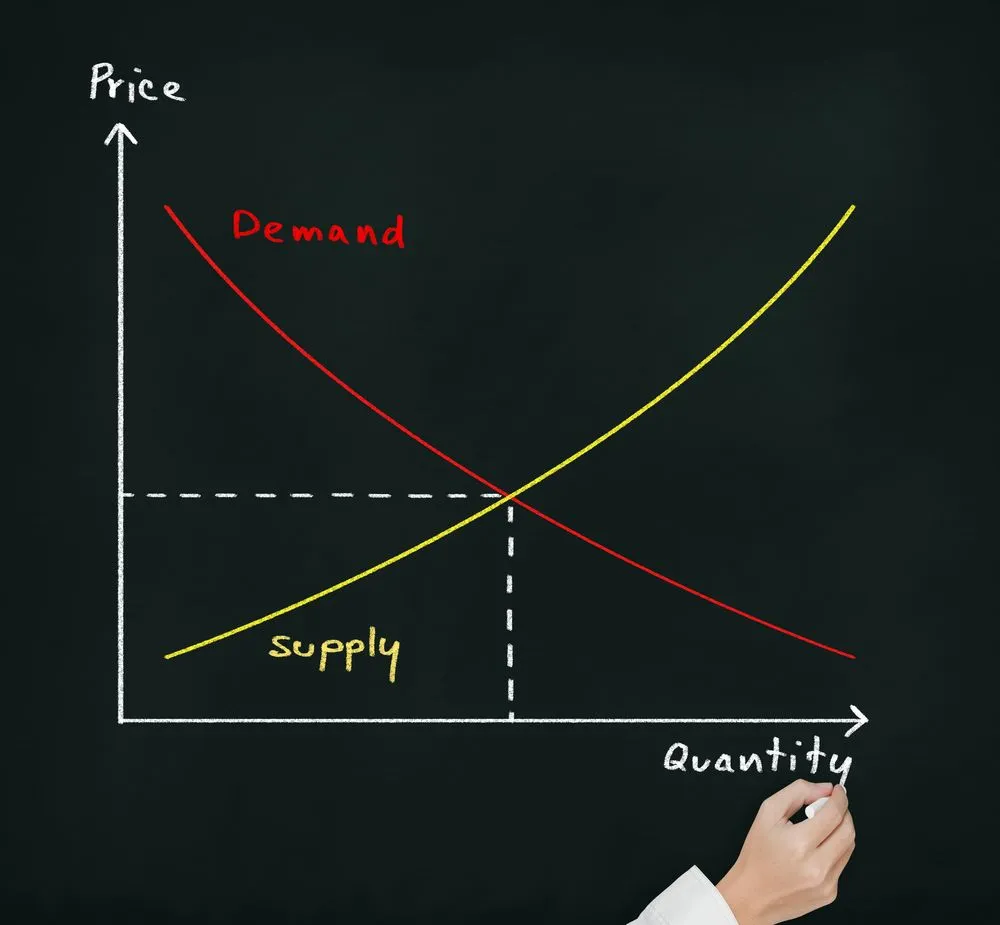
The Laws of Supply and Demand work together to ensure that the market attains an equilibrium price for any good. This means that based on the different prices prevalent in the market, one price is attainable for any good. This equilibrium or obtainable price is reached when the price at which a buyer is willing to purchase a good is equal to the price the seller is willing to sell that good.
Does The Law Of Demand Apply To All The Goods Humans Use?
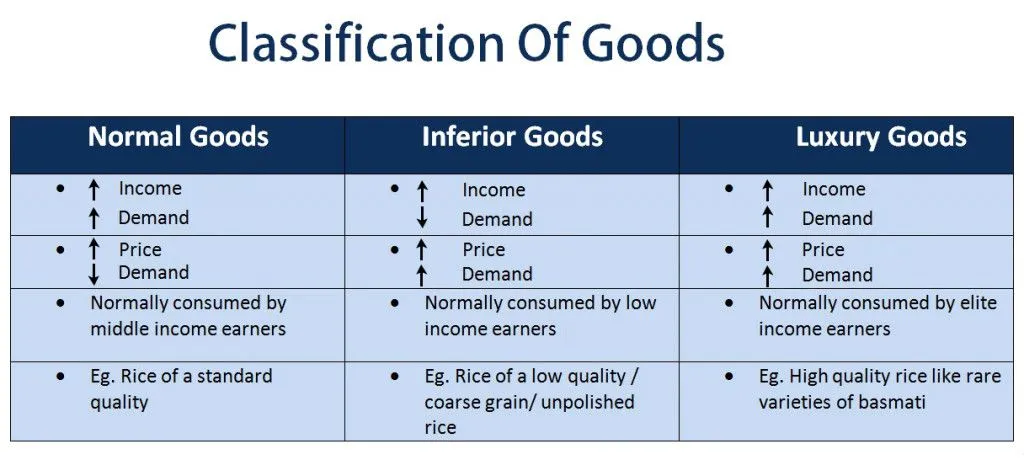
This inverse relationship between price and quantity demanded applies to most goods, but there are a few exceptions to this Law. Before delving into them, we need to understand that economists have classified goods broadly based on how demand for them responds to income. They are generally of the following types: normal goods, inferior goods and luxury goods.
Normal goods refer to the majority of goods consumed by people, such as clothing, food staples, household appliances, and other everyday items. As the income of individuals rises, the demand for normal goods also tends to rise. Inferior goods, on the other hand, refer to goods whose demand falls as income rises. A generic store-brand cereal or a bus pass, for instance, is something many people switch away from once they can afford the branded or private alternative.
Usually, inferior goods are associated with consumers on tighter budgets, and they often serve as affordable substitutes for normal goods. Importantly, being an inferior good is a statement about income, not about the price–quantity relationship. Most inferior goods still obey the Law of Demand: their quantity demanded falls when their own price rises.

Luxury goods are similar to normal goods in that demand for them increases as income rises, but they respond much more strongly: a small bump in income produces a disproportionate jump in how much people buy. Normal goods like staples and appliances cover everyday needs, whereas luxury goods carry an element of desire and are often tied to social status. For a specific subset of luxury goods, the prestige effect is so strong that a higher price actually attracts more buyers. That is the exception, not the rule, and it has its own name (more on that shortly).
These definitions are not watertight and must be applied in context. Take rice as an example. In a country where rice is a staple, polished, branded organic basmati can sit in the luxury or normal bucket depending on the grade and the label. The same grain, when unpolished and unbranded, is treated as an inferior good. The category isn’t a property of the rice itself; it’s a property of how buyers and their incomes react to it.
Why Are Inferior And Luxury Goods Purchased Even When Prices Rise?
The first real exception to the Law of Demand comes from a narrow subset of inferior goods called Giffen goods, named after the Scottish economist Sir Robert Giffen. (Alfred Marshall actually coined the term in his Principles of Economics, crediting Giffen with the observation that poor 19th-century households in Britain seemed to eat more bread when its price went up.) Every Giffen good is an inferior good, but only a small handful of inferior goods are Giffen goods, because the label requires a very specific kind of price behavior.
The logic goes like this. A Giffen good is a cheap, essential staple with no close substitute (think bread or rice for a household on a tight budget). When its price rises, that household becomes so much poorer in real terms that they can no longer afford pricier foods like meat. To keep their stomachs full, they cut the meat and buy more of the very staple that just got expensive. The income effect of the price hike overwhelms the substitution effect, and demand rises with price. Outside that thin slice of cases, most inferior goods behave like everything else: raise the price and people buy less.
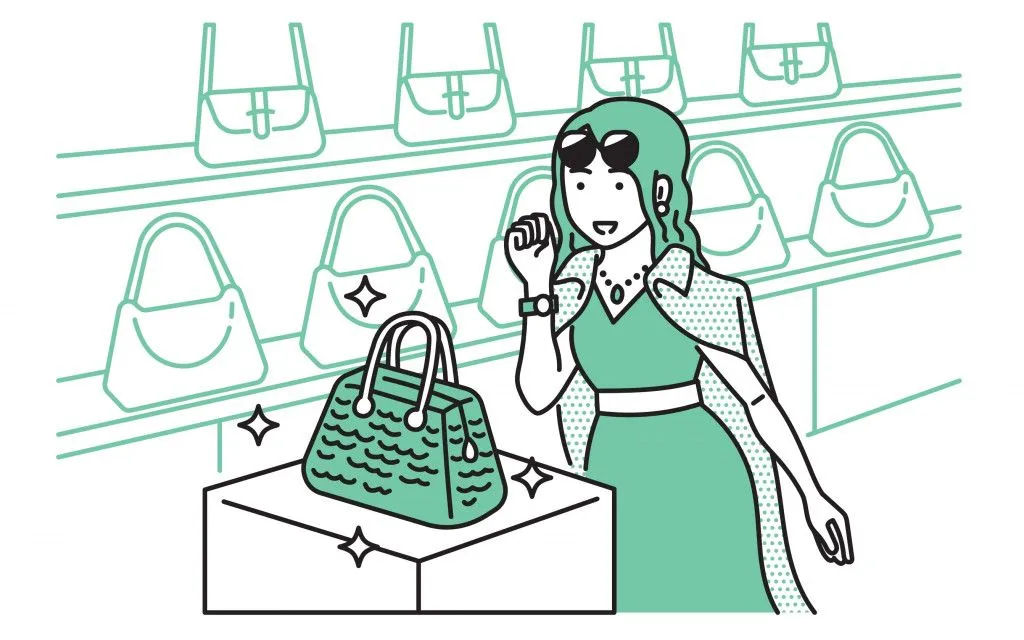
The second exception sits at the opposite end of the income ladder: Veblen goods, named after the American economist and sociologist Thorstein Veblen, who described the pattern in his 1899 book The Theory of the Leisure Class. Veblen goods are tied to conspicuous consumption, the act of buying expensive things in part because they are expensive. The high price itself signals quality, exclusivity and prestige, so raising it can pull in more buyers rather than fewer. Designer watches, handbags, shoes, belts, cars, and jewelry are bought, at least in part, to showcase the owner’s wealth and status. Strip away the brand and the badge and they’re largely normal goods; the price tag is doing the social work.
It’s worth being precise here: not every luxury good is a Veblen good. A Veblen good is the specific case where demand actually rises as price rises, producing an upward-sloping demand curve. Plenty of luxury goods still slope downward; make a designer handbag twice as expensive overnight and demand for that particular model usually drops. Giffen and Veblen goods are the two textbook cases where the demand curve flips. The critical distinction between them is that Giffen goods are cheap, inferior staples with no close substitute, while Veblen goods are pricey status symbols demanded precisely because they are pricey.
Conclusion
The Law of Demand is a sturdy rule of thumb, but it isn’t universal. Quantity demanded is shaped by more than just price; income, the price of substitutes, tastes and consumer preferences all push and pull. Within that broader picture, two narrow categories actually flip the price–quantity relationship: Giffen goods and Veblen goods.
Giffen goods (a small subset of inferior goods) can see demand rise when their price rises, because they are cheap, essential staples with no close substitute and a price hike leaves the buyer too poor to afford anything better. Veblen goods do the same at the other end of the income ladder: their high price is the appeal, and lifting it can make them more desirable as a marker of status. Beyond these special cases (which is to say, for the vast majority of inferior and luxury goods), the standard, downward-sloping demand curve still holds: when something costs more, people generally buy less of it.