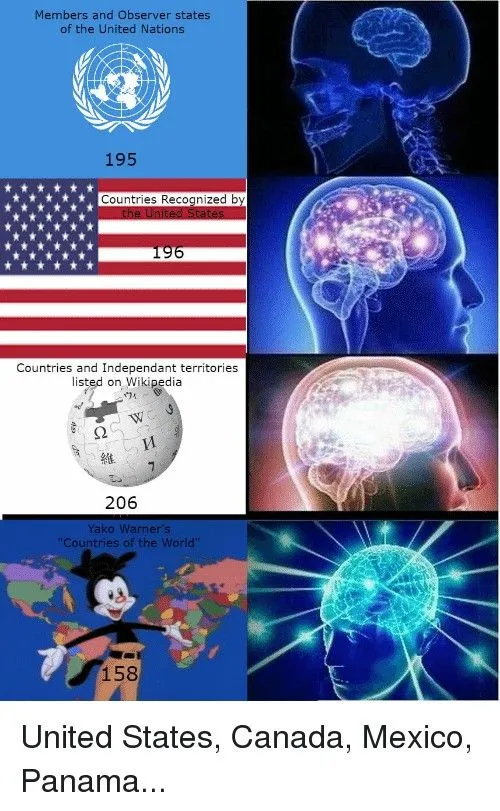
There are 195 countries in the world by the most common definition: 193 full member states of the United Nations plus 2 non-member observer states (the Holy See and the State of Palestine). About a dozen other territories function as de facto states with limited or no international recognition, including Taiwan, Kosovo, and Somaliland.
One of my friends asked me the other day, “Do you know how many countries there are in the world?” To my surprise, I had never really thought about it until then.
A gentleman sitting in front of us joined the conversation and claimed that there were 250 countries in the world. Another man sitting next to him brushed off his claim, declaring that “the number of countries in the world is not fixed, but changes every year due to several conditions.”
I came home and tried to get some information from the Internet. However, it seemed that there was similar confusion on the internet as well. Different organizations provide different facts and claim all kinds of different figures. Curious about the whole matter, I started digging deeper and came across some surprising facts.
Let us take a closer look!
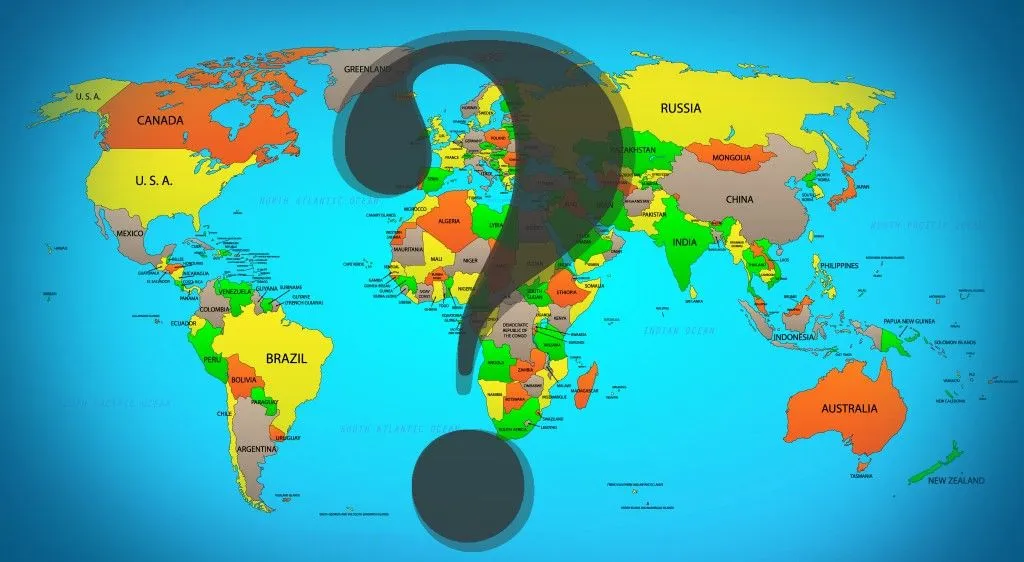
Starting With The Numbers Games
The answer to our question simply depends on our point of view and on how we define a “country”: according to its formal definition, a country is a region characterized by specific borders and a different political geography; it could be a sovereign nation with its own government, or a state associated with a larger one that has fixed political norms.
However, many claim that a country does not really exist until it has been recognized by the United Nations. By that rule of thumb, the commonly cited total is 195, which is made up of 193 full UN member states plus 2 non-member observer states (the Holy See and the State of Palestine). All 195 are widely recognized as independent nations and have a seat at the UN General Assembly in some form.
If you also count every dependent territory, autonomous region, and inhabited bit of land under another country’s jurisdiction (places like Aruba, Christmas Island, the Isle of Man, Hong Kong, Greenland) plus Antarctica, the total climbs well past 200. The ISO 3166 country-code list, for instance, contains 249 entries. The United States Minor Outlying Islands are bundled into a single ISO code, but in fact they are a collection of nine separate islands and atolls (Baker, Howland, Jarvis, Johnston Atoll, Kingman Reef, Midway, Navassa, Palmyra, and Wake). There are also uninhabited islands and atolls in the count, such as Bassas da India, a French-administered shoal in the Mozambique Channel.
Country, State, Or Nation: Is There A Difference?
We tend to throw around the words “country”, “state” and “nation” as if they were interchangeable, but in the language of international law they are not quite the same thing. The most widely cited yardstick for what makes a sovereign state is the Montevideo Convention on the Rights and Duties of States, signed in Montevideo, Uruguay in 1933. Its very first article lists four qualifications a state should possess: a permanent population, a defined territory, a government, and the capacity to enter into relations with other states.
A nation, by contrast, refers to a group of people bound by a shared identity (language, culture, history) rather than a patch of land with borders. That is why we can speak of the Kurdish nation or various First Nations even though they do not run a sovereign state of their own. A state (or sovereign state) is the legal and political unit, while country is simply the everyday word most of us use for it.
Here is a subtle point that trips up a lot of people: the United Nations does not actually “recognize” countries. The UN is a club of states, and it is the member states that recognize one another. Article 3 of the Montevideo Convention goes further, declaring that “the political existence of the state is independent of recognition by the other states.” A territory can therefore tick every box of statehood and still be left off the headline list, simply because it lacks the diplomatic recognition needed for a seat at the table.
What Is An Observer State?
Non-member states of the United Nations, which are part of one or more specialized UN bodies, receive the designation of an Observer state. These nations have the privilege to attend all sessions of the UN General Assembly and the right to speak, but may not vote on the resolutions or propose new ones. They are free to submit a petition to join as a full member at their discretion.
South Sudan became the 193rd member country of the United Nations in 2011 after its petition was approved in the General Assembly.
Nations Not Recognized By The UN
Taiwan
As of 2026, only 11 UN member states plus the Holy See (12 governments in total) formally recognize Taiwan as the Republic of China, that is, as a sovereign nation separate from the People’s Republic of China. That list has shrunk over the past decade, with several Pacific and Latin American states switching diplomatic recognition to Beijing (most recently Nauru in early 2024 and Honduras in 2023). Taiwan has an operational, democratically elected government, its own army, a currency unrelated to China’s, and its own constitution; whether it counts as an independent nation, however, remains diplomatically contested.
Kosovo
Kosovo is a member of several important organizations, including the International Monetary Fund, the World Health Organization and the World Bank. However, its statehood has been controversial since it declared independence from Serbia in February 2008 and is not fully recognized as an independent nation by the UN Security Council.
How Many Countries Are On Each Continent?
Once you have settled on 195, the natural follow-up is how those countries are spread across the globe. Using the seven-continent model and the 195 widely recognized sovereign states, the breakdown looks like this:

- Africa – 54 countries (the most of any continent)
- Asia – 48 countries
- Europe – 44 countries
- North America – 23 countries
- Oceania (Australia and the Pacific) – 14 countries
- South America – 12 countries (the fewest)
- Antarctica – 0 countries
Add those up and you land right back at 195, which is a tidy way to double-check the headline number.
The tallies are not quite so clean in real life, because a handful of countries straddle two continents. Russia, for instance, has most of its land in Asia but is almost always counted in Europe, while Turkey, Egypt and Kazakhstan also sit across continental boundaries and can be slotted either way depending on the source. Antarctica stands apart for the opposite reason: under the Antarctic Treaty it has no permanent population and no government, so it fails the most basic test of statehood even though several nations run research bases and hold overlapping territorial claims there.
Unclaimed Territories
If you have always dreamed of becoming president of a nation or ruling a kingdom, this could be your chance. There are several places in the world that are claimed by no one, as well as regions that are under title dispute but recognized as independent nations by many other countries.
Bir Tawil is perhaps the most famous uninhabited piece of land in the world.
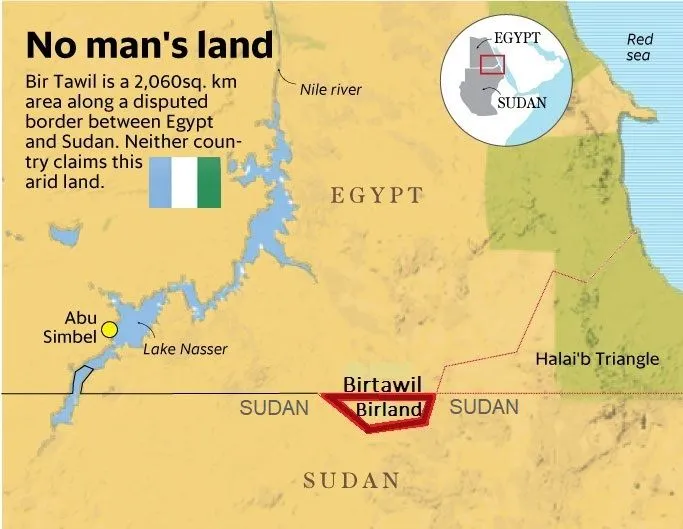
The region lies between Egypt and Sudan. The issue here is that Egypt considers the border to be straight, claiming the Hala’ib Triangle along with the wealthy port city of Hala’ib as its very own, whereas Sudan suggests that the border is jagged, and Hala’ib falls into its territory, while also claiming Bir Tawil to be inside Egypt. Neither country wants Bir Tawil because it would nullify their claim to the Hala’ib triangle and thus their passage to the Red Sea.
If Egypt claims Bir Tawil, it must accept the border as jagged as it is depicted on the map, because historical facts suggest that only one of the two borders is possible, not another. If Sudan claims Bir Tawil, it is faced by a similar situation.
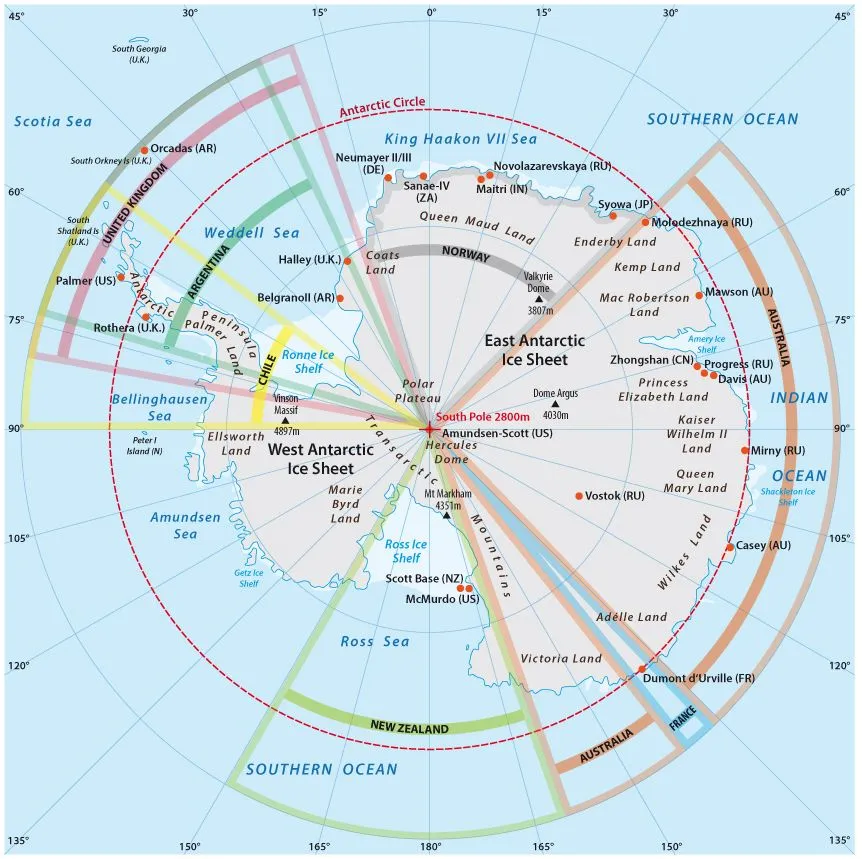
Antarctica is governed by the Antarctic Treaty System, which has been ratified by 58 nations as of 2025 (29 of them with decision-making consultative-party status). Some claims overlap, while many are not recognized by most of the underlying parties. However, much of the icy desert remains unclaimed, as can be seen in the illustration below. Who knows… you could be their next ruler!
The Principality of Sealand
If you would rather lay claim to an entire micronation, you can also visit the Principality of Sealand, a former World War II naval platform seven miles off the coast of England, occupied since 1967 by the Bates family. Sealand prints its own passports and stamps, awards titles of nobility online, and operates as the world’s best-known unrecognized micronation. No major government accepts its claim to be a sovereign state, but it has held its perch on the platform for nearly six decades.
Conclusion
There are 193 UN member states plus 2 observer states (Holy See and Palestine), giving the widely cited total of 195. Around a dozen other territories function as de facto states with limited or no international recognition (Kosovo, Taiwan, Western Sahara, Northern Cyprus, Somaliland, Abkhazia, South Ossetia, Transnistria, and a handful of others). Until the world agrees on a single standard for defining a country, the headline figure will keep being debated.
However, looking at the overall picture in which people around the world are planning space expeditions to other planets in the hope of building settlements and establishing civilizations, it is essential that we understand the concept of borders and sovereignty logically and consistently.
The recent past of our planet in the last 10,000 years, which is a blink of an eye compared to the history of our planet, has been full of blood and war, all because of borders. An enormous amount of resources have been wasted, all of which could have been saved, along with many innocent lives, if people could understand one simple thing…. our whole planet is just a huge country!
References (click to expand)
- Non-member States. United Nations.
- How Many Countries Are There In The World? - WorldAtlas. worldatlas.com
- Member States. United Nations.
- Diplomatic Allies. Ministry of Foreign Affairs, Republic of China (Taiwan).
- Parties to the Antarctic Treaty. Secretariat of the Antarctic Treaty.
- Who owns Antarctica? - Australian Antarctic Program. The Australian Antarctic Division
- Montevideo Convention on the Rights and Duties of States (1933). University of Oslo Faculty of Law.
- Continents By Number Of Countries. worldatlas.com