Table of Contents (click to expand)
There is no single reliable “tell” for spotting a liar, and on average people catch lies only about 54% of the time, barely better than a coin toss. The best-supported cues are subtle: slightly raised vocal pitch, larger pupils, and language with fewer first-person pronouns and more negative words. Popular signs like avoiding eye contact or fidgeting are largely myths.
Lying is a part of human nature, and has existed since language was first developed, and the idea of deception goes back even further. We have all lied and been lied to. The reason why lying is so prevalent is because it’s sometimes the easiest way out. Moving back to evolution and survival, we humans lied to gain resources to both survive and mate.
It is much easier to be deceptive rather than to physically engage in conflict. Even if we look at the animal kingdom, camouflage is a form of deception used by thousands of species. Tons of research has been done on liars and how to identify them to save ourselves from being conned. Now, let’s take a deep look at the underlying causes, rather than the superficial reasons that we all know.
Why Do We Lie?
We mainly lie to either protect ourselves or promote ourselves. We can protect ourselves from a misdeed or wrong action by covering it up with a lie to avoid facing the consequences. We also lie to remove ourselves from situations or people with whom we do not want to be associated. Remember the time when you broke your mother’s favorite possession in the house and put the blame on your sibling to avoid her wrath? We’ve all been there.
When it comes to promoting ourselves, it can be to gain a monetary advantage, a personal advantage, to create a good impression on a date or an interview, or just for the sake of a joke, so we lie. Other factors include altruistic activities like white lies, malicious intent and certain unknown motives that even the liar may not be aware of.

The Biology Behind Lying
Research suggests that pathological liars have more white matter (the wiring that connects different parts of the brain) in their prefrontal cortices. In a study published in the British Journal of Psychiatry, Yaling Yang and Adrian Raine found that habitual liars had roughly 22 to 26% more prefrontal white matter than non-liars. This extra connectivity can be read in two ways: more white matter may predispose someone to lying, since they can spin a story more quickly, or years of lying may build up that wiring over time.
Joshua Greene from Harvard University scanned the brains of subjects using fMRI (functional magnetic resonance imaging) and found that people with a stronger response in the nucleus accumbens, the region responsible for reward processing, were more likely to behave dishonestly. The more excited this region gets at the prospect of money, the more likely a person is to cheat and lie. In other words, greed can nudge us toward lying.
A study by Neil Garrett and Tali Sharot at University College London suggests that small acts of deception can snowball into bigger ones. Repeated lying dulls the response of the amygdala, the brain region tied to emotion, so small lies can escalate into larger ones with fewer pangs of guilt each time.
How To Spot Liars In Verbal Communication
Detecting lies is an inexact science. Decades of research are humbling here: a famous meta-analysis by Charles Bond and Bella DePaulo, pooling tests on nearly 25,000 people, found that we correctly tell truths from lies only about 54% of the time, barely above the 50% you would get by guessing. DePaulo’s earlier review of 158 possible cues found that very few are reliably linked to lying, and the ones that are tend to be weak. So treat the markers below as faint signals that can hint at deception, never as proof on their own.
Facial Expression And Body Language

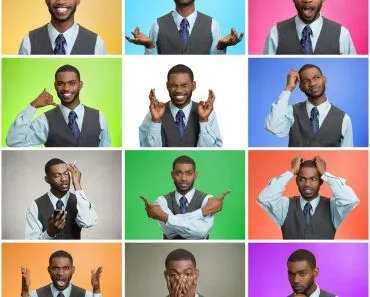
Two of the better-supported cues are slightly larger pupils and a slightly raised vocal pitch, both of which show up modestly in the research. The idea is that telling the truth is usually effortless, while lying takes more focus and attention to spin a yarn that will not be questioned. Nervous or inexperienced liars may also pause more and press their lips together, though plenty of honest people do exactly the same when they are stressed.
When the stakes are high, a skilled liar may instead look completely relaxed, much like a truth-teller, precisely because they do not want to be caught. This can mean a relaxed posture, little fidgeting and a calm voice. It is worth dispelling one stubborn myth here: gaze aversion is not a dependable sign of lying. Studies repeatedly show that liars do not avoid eye contact any more than honest people do, and some hold eye contact even more deliberately to seem credible.
Facial Action Coding System
Paul Ekman and Wallace Friesen developed the Facial Action Coding System (FACS) in 1978, a method for precisely cataloging facial movements. Ekman is also known for studying micro-expressions, fleeting flashes of emotion that typically last between about 1/25 and 1/5 of a second. In principle these brief leaks can hint at concealed emotions, such as anger or guilt, in even very good liars, although how reliably they can be used to catch lies in everyday situations remains debated.
Conversation Style And Language
When a lie is unrehearsed, people often take a little longer to answer, because they need time to invent a story that holds together. When they have prepared beforehand, the opposite can happen: they reply quickly and say less. Their tone may lean negative, more complaining and less cooperative, and they tend to withhold detail, whether out of guilt or fear of being caught. None of these patterns is a guarantee, but together they can raise a flag.
Pinocchio Effect
Fabricated stories are often vaguer and less logically structured than true ones. Liars may use fewer hand movements and repeat words and phrases to avoid committing to new details. When a listener seems doubtful, they tend to pile on more and more words. Researchers have called this the Pinocchio Effect: just like Pinocchio’s nose, the length of the account grows along with the lie.

How To Spot Liars In Written Communication
Lies leave traces in writing too, whether in an email, a text message or a chat thread. In a study titled Lying Words, Matthew Newman and James Pennebaker analyzed the language people used when telling the truth versus lying, and a computer program correctly sorted the two about 67% of the time when the topic was held constant. A few patterns stood out in the choice of words and grammar.
- Fewer first-person pronouns: Liars will avoid taking ownership and will avoid using first-person pronouns like ‘I’ or ‘we’ to distance themselves from the plot they are spinning.
- More negative words: Liars are generally guilty of their actions and thus their writing will have more blame, hate and sad words included.
- Fewer exclusionary words: Words like ‘except’, ‘but’ or ‘nor’ that distinguish what they did from what they did not do will be suspiciously absent.
Not every lie is harmful. Telling the bride her dress looks beautiful when you secretly disagree spares feelings, but lies in business and from deceitful partners can wreck entire lives. With that in mind, it helps to know what genuine warning signs look like, while remembering that even the best cues are far from foolproof. When the stakes are high, do not lean on any single tell. Ask follow-up questions, look for facts you can check independently, and weigh the whole picture rather than one nervous glance.
References (click to expand)
- How to Spot a Liar - HBS Working Knowledge. Harvard Business School
- Psychological sleuths--Detecting deception. The American Psychological Association
- Why We Lie: The Science Behind Our Deceptive Ways. National Geographic
- When Is It OK to Tell a Well-Meaning Lie?. Harvard Business Review
- Prefrontal White Matter In Pathological Liars. British Journal of Psychiatry (PubMed)
- Response To Anticipated Reward In The Nucleus Accumbens Predicts Behavior In An Independent Test Of Honesty. The Journal of Neuroscience
- The Brain Adapts To Dishonesty. Nature Neuroscience
- Lying Words: Predicting Deception From Linguistic Styles. Personality and Social Psychology Bulletin (PubMed)
- Micro Expressions. Paul Ekman Group