Humans are the only species on this planet which have the ability to “talk”. So what is the reason that other animals don’t have this capability?
My mother often tells me that if my dog could talk, my secrets would be revealed. She is, in fact, absolutely correct. He is, after all, my biggest confidante. However, this often makes me think. Why can’t animals talk like us?
A number of movies depict or are based on such scenarios, where animals are talking not just to each other, but to humans too. So why isn’t this actually possible? Or rather, what confers on us the ability to communicate in this way?
Communication And Talking: What Do They Mean?
Communication and talking can be quite ambiguous, so let me clarify what I mean. Every species communicates. It is their key to survival. Even single-celled organisms have the ability to communicate. This communication doesn’t have to be in the form of the spoken word. It could be done through actions, gesticulations, chemicals, sounds, or even dances!
When I say ‘talking’, I’m referring to the ability that humans have to not just say when they’re hungry, but also to discuss their upcoming weekend plans.
Communication is usually inbuilt. A young creature doesn’t need to learn how to communicate from its parents. For instance, a cat doesn’t teach her kitten how to purr when its happy or hiss when its angry. A dog doesn’t need training to wag its tail when it’s happy, or to bark. Similarly, in humans, we shout out in pain or fear. This is innate behavior and doesn’t require teaching. However, our talking is something we do learn. We learn different languages from our parents, or from other humans.

Talking is a unique thing. It is a combination of sounds and syllables arranged in various combinations and lengths to express various thoughts, emotions, ideas, etc. Apart from the basic production of the sound, a major component is the meaning behind the word. The words “dog” or “apple” have no meaning apart from the one decided upon by English speakers. The same sound may have different meanings in different languages; similarly, the same object may have different names in different languages. My point is that when we speak of talking, it involves both the production of the sound and the meaning behind it.
Why Can’t Animals Talk?
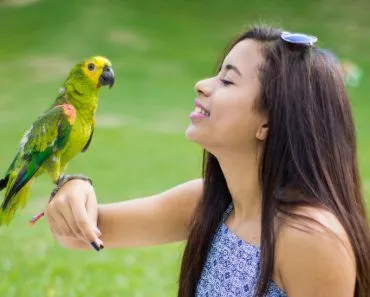
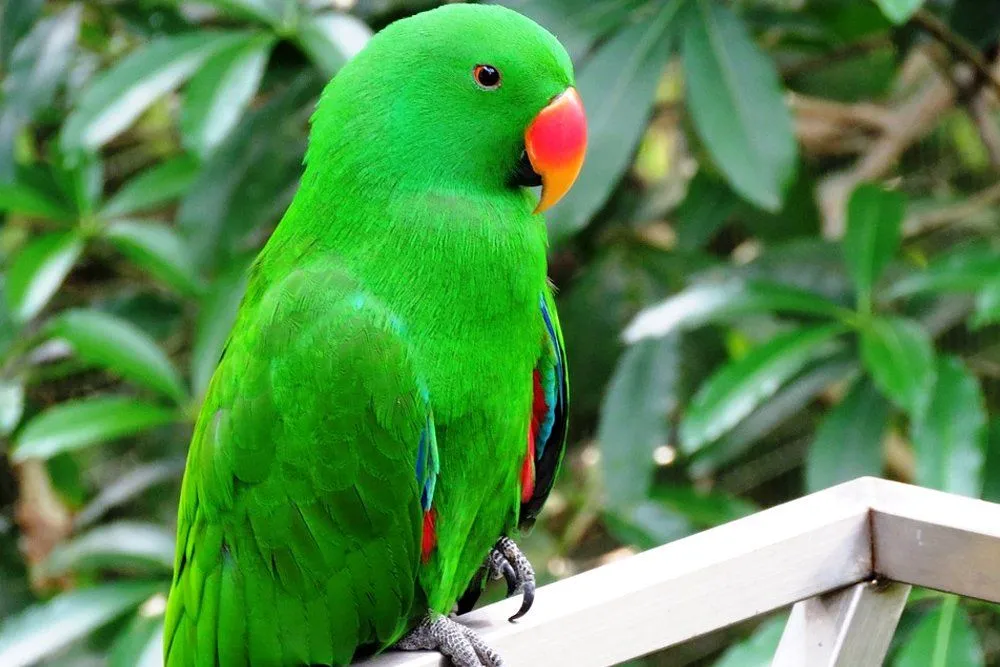
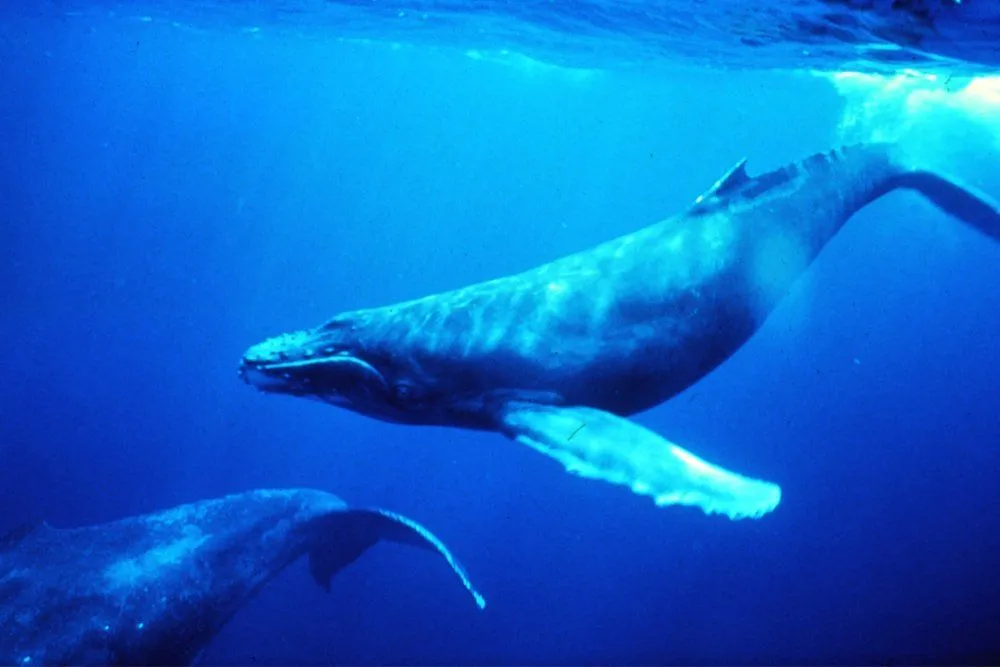
Now that we have broken down, or simplified, the act of talking, it will be easier to answer the above question. When we think about why animals cannot talk, we need to figure out why they cannot perform the two comprising actions simultaneously. The word ‘simultaneously’ is essential, as there have been animals known to perform either one of the 2 functions, but that cannot be considered “talking”. For instance, parrots can mimic the sounds made by humans. Alternatively, there are animals, like whales, which teach their young ones their songs. However, these have no specific meaning behind them.
In humans, there are a number of reasons that can be attributed to our ability to speak. As with a lot of biological functions, the extent and accuracy of these factors isn’t completely understood.
The first and most obvious conclusion researchers reached was that our bodies are structured differently. More specifically, we possess a jaw, tongue, and larynx (voice box) shaped to produce a wide range of sounds. For a long time, the favored explanation was that apes couldn’t speak because their larynx sat higher in the throat than ours. However, that simple picture has since been complicated. Researchers found that the larynx also descends in young chimpanzees, so larynx position alone can’t fully explain the difference.
A landmark 2022 study published in Science by Takeshi Nishimura and colleagues turned the old story on its head: it found that humans actually have a simpler larynx than other primates. Every nonhuman primate examined, from baboons and marmosets to chimpanzees and orangutans, has thin, ribbon-like vocal membranes sitting on top of the vocal folds. Humans have lost these membranes. Computer models showed that vocal membranes make sound chaotic and unstable, while our simpler larynx allows for the stable, harmonic-rich phonation that speech requires. In short, we didn’t evolve a more elaborate voice box; we evolved a cleaner one.
The Broca’s area in the cerebrum of our brain is closely associated with speech production, while Wernicke’s area handles language comprehension. These regions are far less developed in other animals. There are also direct neural pathways from the cortex to the muscles that control the larynx, a feature humans share with only a small group of “vocal learners” such as songbirds, hummingbirds, parrots, bats, and cetaceans. Most other mammals, including our closest primate relatives, lack these direct connections, which is why they cannot voluntarily reshape the sounds they make.
In fact, recent comparative neuroscience suggests that the brain may matter even more than the throat. A 2022 review noted that modern primates already have “speech-ready” vocal anatomy; they simply lack the cortical control to use it. Primates that produce a wider range of calls, such as chimpanzees and bonobos, have larger cortical association areas devoted to voluntary behavior. Speech, in other words, is a brain problem at least as much as a body problem.
Foxp2: A Fascinating Gene
Another factor that gives us this ability is the gene FOXP2. FOXP2 is a transcription factor, a master switch that turns dozens of other genes on and off, particularly during brain development. People with rare mutations in FOXP2 have severe difficulty with the fine motor coordination needed for speech, and the gene also influences vocal learning in songbirds and mice. However, FOXP2 is not a “language gene.” Recent work has shown that the version of FOXP2 once thought to be uniquely human was also present in Neanderthals, and the same gene plays roles in lung, gut, and heart development. Newer research from Stanford in 2025 even found that FOXP2’s unusual structure helps prevent toxic protein clumping, hinting at links to neurodegenerative disease. In other words, FOXP2 is one critical cog in the speech machinery, not the whole engine.
One older idea, popularized by writer Elaine Morgan, suggested that our ability to talk came from an “aquatic ape” phase, a period when our ancestors supposedly waded or swam, learning conscious control of their breathing in the process. It is a colorful story, but it is worth noting that the aquatic ape hypothesis is not accepted by mainstream paleoanthropology. There is no fossil or anatomical evidence for an aquatic stage in human evolution, and most researchers consider the idea to be pseudoscience. Conscious breath control in humans is more plausibly tied to bipedalism, endurance running, and the gradual reorganization of the brain regions that govern the larynx and diaphragm.
Which Animals Come Closest To Talking?
If no animal can truly talk, a few come remarkably close, and they manage it in two very different ways. Some species can copy the sounds of human speech, while others have been taught to use symbols that stand for words. Neither group is really talking, as we will see, but both blur the line in fascinating ways.
The sound-copiers are the famous ones. Parrots lead the pack: Alex, an African grey trained for nearly three decades by psychologist Irene Pepperberg, learned more than 100 English words and could correctly name an object’s color, shape, and material, count small quantities, and even grasp the idea of “none.” Elephants can do it too: Koshik, an Asian elephant in a South Korean zoo, learned to imitate five Korean words (among them annyong, “hello,” and anja, “sit down”) by tucking his trunk into his mouth to reshape his vocal tract. Even marine mammals have managed it. A captive beluga whale named NOC startled his handlers by mimicking the rhythm and pitch of human speech, and orcas and some seals have produced speech-like sounds too.
The second route is symbolic. Because apes lack the vocal control to form spoken words, researchers gave them other tools. Washoe, a chimpanzee, became the first non-human to pick up American Sign Language in the 1960s, eventually using roughly 250 signs and even passing a few on to her adopted son. Koko, a gorilla, was credited with over 1,000 signs and an understanding of around 2,000 spoken English words, though many linguists treat those figures with caution. The most remarkable case was Kanzi, a bonobo who learned to “speak” by pressing lexigrams, abstract symbols on a keyboard. Kanzi picked up the system on his own, simply by watching his mother’s training sessions, went on to master more than 300 symbols, and could follow spoken-English requests he had never heard before. When he died in 2025, obituaries called him the ape who understood language.

So why doesn’t any of this count as talking? The sound-copiers produce words without meaning, rather like a speaker playing back a recording it does not understand. The symbol-users have the opposite limitation: they genuinely attach meaning to signs, but they tend to string them together as simple requests (“give orange,” “tickle me”) rather than building the open-ended, grammatical sentences that a human three-year-old produces without effort.
Can Animals Be Taught To Speak?
If our pets are so clever, why can’t we simply teach them to talk? For dogs, cats, and most other mammals, the honest answer is that it is physically impossible. As we saw earlier, they lack both the flexible vocal anatomy and the direct neural wiring from the brain to the voice box that voluntary speech demands. No amount of patient training can add a connection the animal was never born with. The viral “talking dog” clips are clever editing, or a few grunts that happen to land close to a word.
The vocal learners that can reshape their sounds, such as parrots, can be coached into an impressive repertoire, but it stays mimicry rather than conversation. And the great apes, our closest relatives, run into a different ceiling. They can clearly learn vocabulary, yet decades of research suggest they never crack grammar. When psychologist Herbert Terrace reviewed footage of a signing chimpanzee named Nim Chimpsky, he found that most of Nim’s apparent “sentences” were actually prompted imitations of whatever his teachers had just signed, not original combinations built from rules of their own.
That is the crux of it. You can teach an animal to link a sound or a symbol to an object, a request, or an action, and that alone is a genuinely impressive feat. What you cannot teach is the open-ended, rule-governed grammar that lets a human toddler invent sentences it has never heard. The gap isn’t down to a lack of effort or training; it is a difference in how our brains are built.
In short, speech is a uniquely human ability that emerged from a combination of factors: a simplified larynx, a flexible tongue, direct neural pathways from the cortex to the vocal muscles, and the FOXP2-orchestrated brain circuitry that lets us link sounds to meaning. Evolution did not make us “superior” (every species is exquisitely adapted to its own niche), but it did equip us with the rare combination of brain and body that supports language. Other animals communicate in extraordinary ways: bees dance, whales sing, elephants rumble at infrasonic frequencies, and dolphins use signature whistles that may function like names. Perhaps the real question is not why animals can’t talk like us, but how richly they already speak in their own languages.
References (click to expand)
- BBC - Earth - Can any animals talk and use language like humans? - www.bbc.com
- Why Humans Are the Only Animals That Speak - www.findingdulcinea.com
- Why don't animals talk? - מכון דוידסון. The Davidson Institute of Science Education
- FOXP2 gene: MedlinePlus Genetics. MedlinePlus
- A Behavioral Look at the Training of Alex (Review of Pepperberg's The Alex Studies). PMC, NCBI
- An Elephant That Speaks Korean (Stoeger et al., Current Biology 2012). EurekAlert, AAAS
- Captive Beluga Whale Imitated Human Voices. Scientific American
- Washoe the Chimpanzee, the First Animal to Learn a Human Language. Central Washington University
- Why Koko the Gorilla, Who Mastered Sign Language, Mattered. National Geographic
- Kanzi the Bonobo, Who Learned Language and Made Stone Tools, Dies at Age 44. Scientific American
- Terrace, H. S. et al. (1979). Can an Ape Create a Sentence? Science. Columbia University
- Young Children Have Grammar and Chimpanzees Don't. ScienceDaily (University of Pennsylvania)