Table of Contents (click to expand)
Economics is a social science. It uses the scientific method (theory, data, and empirical testing) to study how people use scarce resources, but because its subject is human behavior, it can rarely run the controlled, perfectly repeatable experiments of the natural sciences. That makes it scientific in method, yet less precise than physics or chemistry.
The National Academy of Sciences defines science as ‘the use of evidence to construct testable explanations and predictions of natural phenomena, as well as the knowledge generated through this process.’ Being able to use evidence to arrive at explanations that can help one precisely predict what happens next is what sciences aim to capture.
Repeated experimentation under the same conditions should reveal the same result, come what may. This holds true when the subject being studied is not human. Thus, the results of a scientific experiment conducted anywhere can be applied in any other corner of the world. This results from its ability to generate universal and valid results.

What Is Economics?
The word economics is derived from the Greek word ‘oikonomia’, which means ‘management of household affairs’. Management involves choosing between multiple options available at your disposal. In economics, this means choosing between alternatives for a desired end.
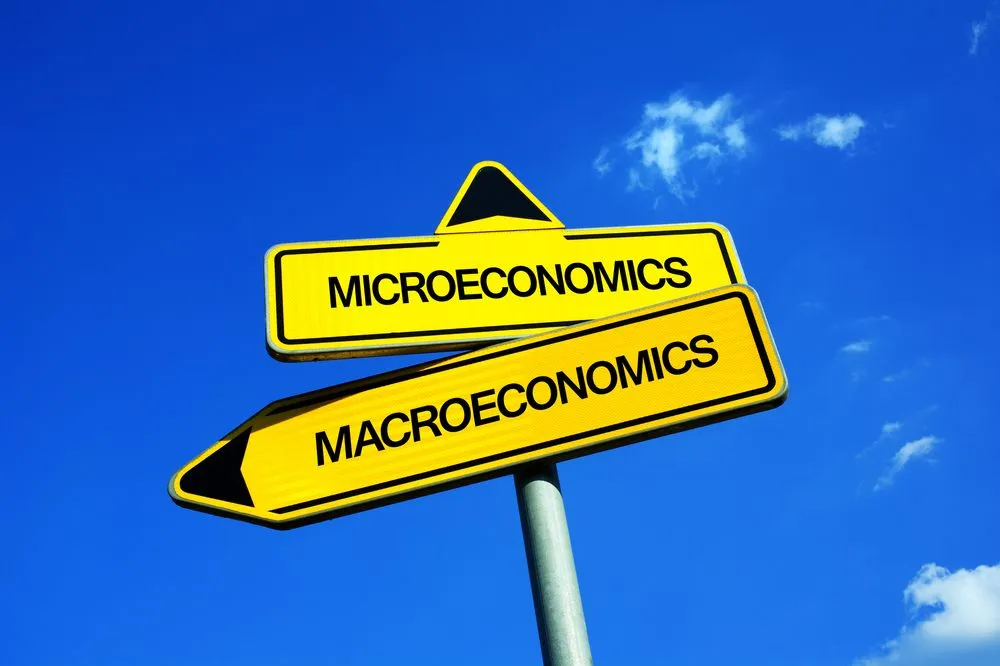
When it is macroeconomics, the desired end is a nation’s well-being; when it is microeconomics, the subject of study is often that of an individual. Both varieties can be steered by policy design. On the micro level, one may not necessarily draft a policy document per se. Still, one does spend time thinking or planning how they might choose to spend their income for consumption, investments etc. When performed at the level of an entire economy, this act is systematized as separate policy documents.
What Makes Economics A Science?
Economics even has its own “Nobel,” and the name itself is part of the debate. The award is officially the Sveriges Riksbank Prize in Economic Sciences in Memory of Alfred Nobel. It was not one of the five prizes set up by Alfred Nobel’s 1895 will; Sweden’s central bank established and funded it in 1968 on its 300th anniversary, and the first prize was awarded in 1969. Calling the discipline an “economic science” was, in part, a deliberate framing, and many scientists still object to lumping it in with physics or chemistry.
The label echoes an older pattern. Astronomy, for example, split from astrology precisely to stake a claim as a field with verifiable, testable results rather than myth. Economists have long wanted to be seen the same way: as analysts whose conclusions rest on evidence, not just ideology.
The second economics prize, awarded in 1970, went to Paul Samuelson for putting economic theory on a rigorous mathematical footing. By expressing economic ideas as formal, testable models, his work helped define what modern, scientific economic theory looks like.
The rigor of using mathematics to arrive at an essential understanding of the economy cannot be denied.
The use of Randomized Controlled Trials (RCTs), for which Abhijit Banerjee, Esther Duflo and Michael Kremer shared the 2019 economics prize, is another, more recent example. An RCT splits people at random into a treatment group, which receives the intervention, and a control group, which does not, so the two can be compared.
The “treatment” in economics takes the form of inputs such as textbooks, extra teachers, cash transfers or a specific government policy. The trial checks whether giving that input to the treatment group produces a measurably better outcome than in the control group. If it does, it becomes a candidate for wider policy rollout.
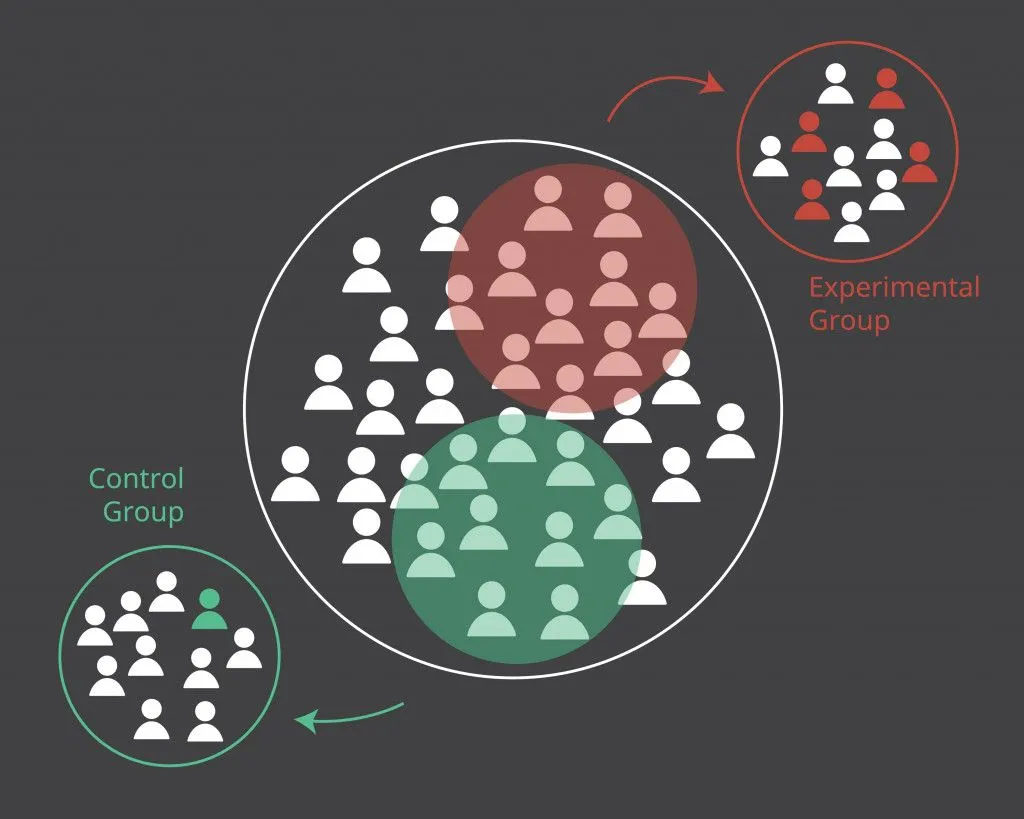
Where a true experiment is impossible, economists increasingly lean on “natural experiments,” situations where some outside event splits people into comparable groups by chance. David Card, Joshua Angrist and Guido Imbens shared the 2021 economics prize for showing how such accidents of history can reveal cause and effect, from how a sudden wave of immigration affects local wages to how an extra year of schooling changes earnings. This empirical, data-driven turn is a big reason economics now looks far more like an experimental science than it did a few decades ago.
Aside from RCTs and natural experiments, economics also borrows heavily from physics and mathematics, using tools like limits and differentiation to optimize choices and locate equilibria.
However, unlike the natural sciences, economics can never claim perfectly repeatable precision for its results. Context has to be weighed before any economic theory can be applied to a real situation.
What Makes Economics A Social Science?
Economics relies heavily on mathematics and physics to explain consumer and producer choices, such as buying a house, deciding wages and profit rates, etc.
Even influential economists worried about mathematics becoming the dominant approach. Alfred Marshall, who literally banished his equations to the appendix of his Principles of Economics, advised colleagues to use math as shorthand and then “translate into English” and “burn the mathematics.” John Maynard Keynes likewise attacked “symbolic pseudo-mathematical methods” that lose sight of the real world in a maze of symbols. This mathematical dominance only became entrenched after World War II. Before that, economics sat closer to sociology or philosophy, and it was taken for granted that humans are not algorithms: they respond to incentives and social norms in ways that standard neoclassical equilibrium models struggle to capture.
The famous Lucas critique states that economic agents anticipate changes in policy intervention and shape their behavior accordingly. It is only in social sciences, where humans are the subject, that such a possibility exists. Unlike in a laboratory, where a scientist can control their environment during an experiment, humans are a very unpredictable and highly adaptable species.
Economics studies how humans relate to their resources. This relation heavily varies from one economy to another. Inflation may mean the same thing everywhere, but the level of inflation a wealthy, developed economy (say, the United States or the United Kingdom) can absorb is very different from what a lower-income, developing economy can withstand. The drivers behind those differences can be political, social and even climatic.
This is also why economists rarely have a solid consensus on any policy intervention. Multiple motives and ideologies come into play when deciding any policy intervention. Every ideology has its own theoretical underpinnings that dictate and shape that policy intervention’s content.
Therefore, it becomes even more important for economists to realize when a situation demands the intervention of an anthropologist, sociologist or even a climate expert. An economist can never work in an isolated silo. These interactions fuse the social aspects of economics as a social science subject.
What an economist can bring to the table is limited in terms of how an individual or an economy can produce a certain level of output. However, questions regarding how this output is produced and for whom it is produced involve a deeper dive into the prevalent societal structures.
Conclusion
This points to a distinction economists themselves draw: between positive economics, which describes how the economy actually behaves (and can be tested against data), and normative economics, which asks what ought to be done. In the natural sciences, a priori reasoning stays inside logic and mathematics; for economies, the field is wide open.
The question of what is right or wrong for an economy rarely has a single, unequivocal answer, and that judgment sits outside the scope of science. A society, shaped by its own structures, arrives at it collectively. The verdict rests not only on quantitative factors but also on cultural norms, beliefs and value judgments.
It is overwhelming for an economist to consider multiple perspectives and try not to obfuscate them under assumptions. Again, while certain assumptions will seem relevant for some economies, when scaling that to other economies, an economist must be mindful of making assumptions, as the context will inevitably be different.
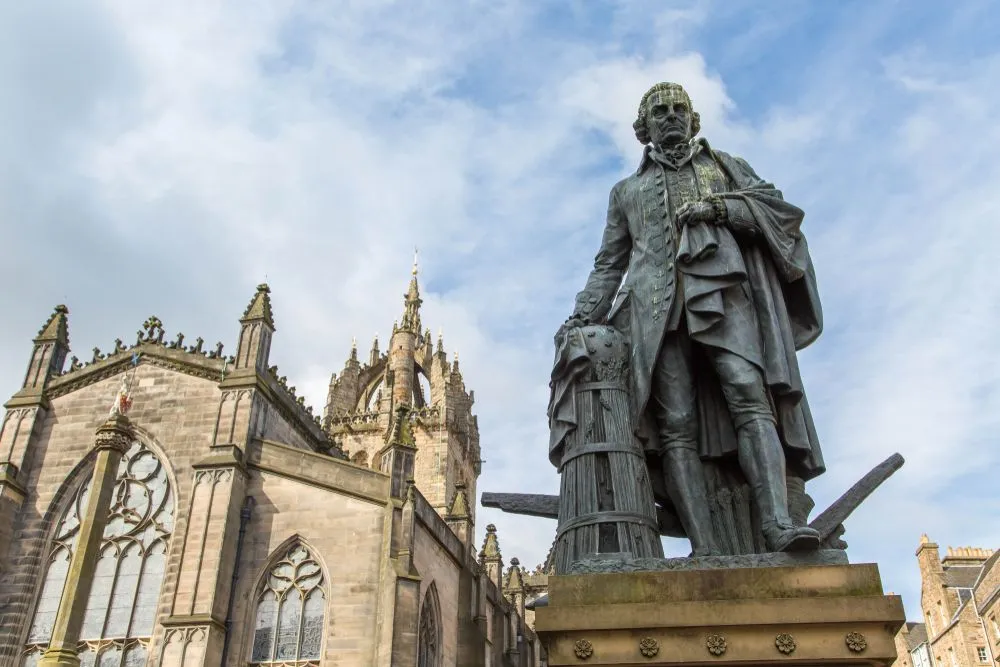
Classical and neo-Ricardian economists like Adam Smith, David Ricardo and Piero Sraffa managed to do exactly that while studying capitalist economies. They built theoretical frameworks that let economists gauge how societal structures shape the key questions of production, distribution and exchange.
References (click to expand)
- Leshem, D. (2016, February 1). Retrospectives: What Did the Ancient Greeks Mean by Oikonomia?. Journal of Economic Perspectives. American Economic Association.
- Focardi, S. M. (2015, July 21). Is economics an empirical science? If not, can it become one?. Frontiers in Applied Mathematics and Statistics. Frontiers Media SA.
- Is Economics a Science? by Robert J. Shiller - Project Syndicate. Project Syndicate
- Economics: an art not a science - News & insight. Cambridge Judge Business School