Table of Contents (click to expand)
- What Is Socioeconomic Status Or Social Class?
- How Does Socio-economic Status Affect Individuals?
- What Does The Research Say About Students Belonging To Lower Economic Strata And Educational Outcomes?
- How Language Development Is Affected By Socio-economic Status
- Why Does The Gap Exist? Cultural And Social Capital
- The Summer Slide: When The Resource Faucet Shuts Off
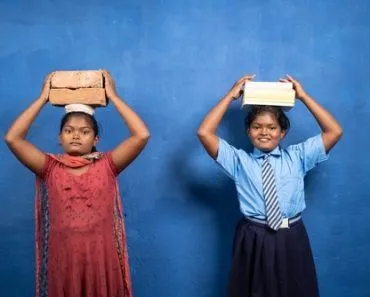
Socioeconomic status (SES), a measure of a family’s income, education, and social standing, is one of the most consistent predictors of how children fare in school. Worldwide, SES and academic achievement show a moderate correlation (about r = 0.22 to 0.28). It shapes early literacy, language exposure, and access to school resources, but it influences opportunity, not destiny.
A student’s progress in every educational setting differs from that of others; in some way, we’re all aware that every student has his or her own set of strengths and weaknesses. What we forget to consider, however, is how their socioeconomic background affects their educational progress. How income levels affect a student’s success in school has been a heated discussion and is usually filled with myths and one-sided facts.
It is well-known that a student’s performance in their early years of school may not be the only defining criterion for success in life. However, the habits adopted in those early years, the liking of certain subjects, and their comfort with different subjects, continue to influence their approach towards higher education. For those interested in being educators or working in educational settings, it is important to understand how the gap in academic skills between an outstanding student and an underperforming one often begins much earlier than the start of their formal education, and how much of it traces back to circumstances outside the child’s control.
In this article, we explore whether individuals who come from lower economic strata find it more difficult to be successful in academics.
What Is Socioeconomic Status Or Social Class?
Social class depends on how much access to wealth (and resources) you have. This social class then shapes a person’s life in important ways. Social class constructs our social reality and helps us describe what people do. For instance, it helps us understand a carpenter’s social status or standing in society. Compare this to the social standing or respect received by a doctor.
Socio-economic status (SES) is usually measured as a combination of a household’s income, the parents’ level of education, and their occupation, which together place a family somewhere along a social ladder. The different statuses are often described as: below the poverty line, lower class, middle class, upper-middle class, and upper class. In other words, “socioeconomic” simply means the mix of social and economic factors that describe where a person stands relative to others.
The link between that standing and how children do in school is not a new observation. As far back as 1966, the landmark Coleman Report (formally titled Equality of Educational Opportunity), a US government study of roughly 650,000 students, concluded that a child’s family background was a stronger predictor of academic achievement than the resources of the school they attended. That finding reshaped how educators think about inequality, and decades of research since have continued to refine it.

How Does Socio-economic Status Affect Individuals?
Socio-economic status goes beyond income or wealth. It includes financial security, education of family members, and their subjective understanding of where they stand in society. It affects the quality of life a person may live, what opportunities they are exposed to, and the privileges they may afford in society.
It is critical to understand that poverty is not a single factor; it includes characteristics of physical, biological, and psychological stressors. Research has found that socio-economic status is a consistent indicator of the outcomes that people experience across their life spans. These outcomes include their physical and psychological health, as well as whether they’re able to afford medical help under these circumstances.
What Does The Research Say About Students Belonging To Lower Economic Strata And Educational Outcomes?
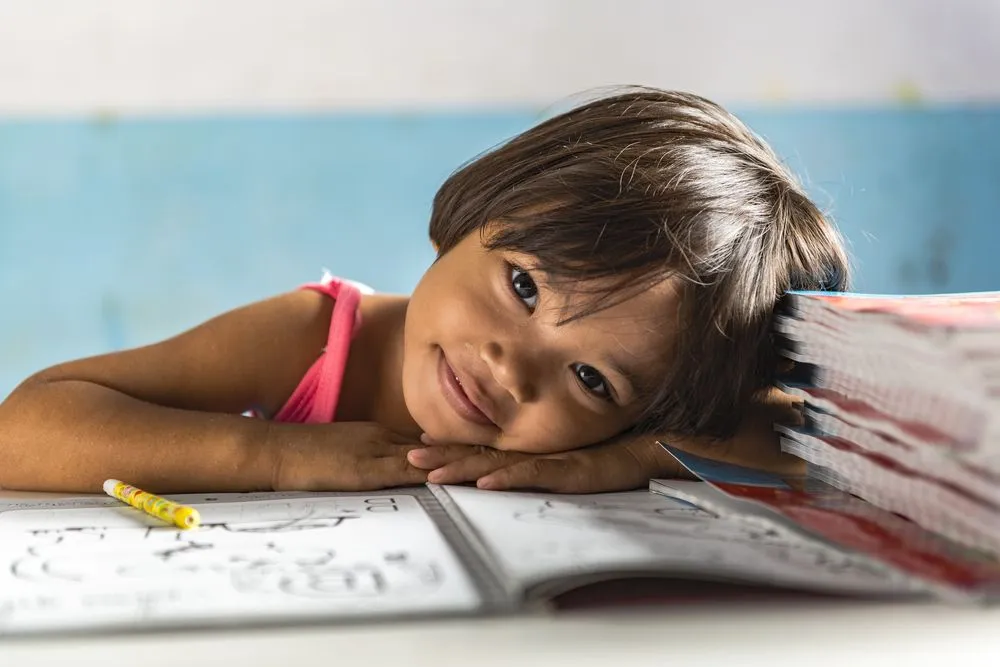
When researchers pool together many studies, a clear but moderate pattern emerges. A widely cited meta-analysis by Selcuk Sirin, which combined data on more than 100,000 students, found a medium-strength link between family socioeconomic status and how well students performed academically. A much larger 2022 review, drawing on close to a million students across 47 countries, put the worldwide correlation at roughly 0.22 to 0.28, and noted that this link has, if anything, grown slightly stronger since the 1990s. A correlation of that size is meaningful, but it is far from absolute: plenty of students from low-income homes thrive academically, and SES is one influence among many rather than a verdict.
Paul L. Morgan, from the Department of Educational Psychology, School Psychology, and Special Education at Pennsylvania State University, along with his colleagues, found that children who come from low socio-economic backgrounds tend to be slower in developing their academic skills, as compared to those who come from higher socio-economic groups.
For instance, children from low socio-economic backgrounds were poorer at developing problem-solving and decision-making skills, as well as slower at learning language, and had weaker memories, compared to those from high SES backgrounds. They also processed emotions more slowly and had more health-related complaints, such as stomachaches, headaches, and “feeling uneasy”.
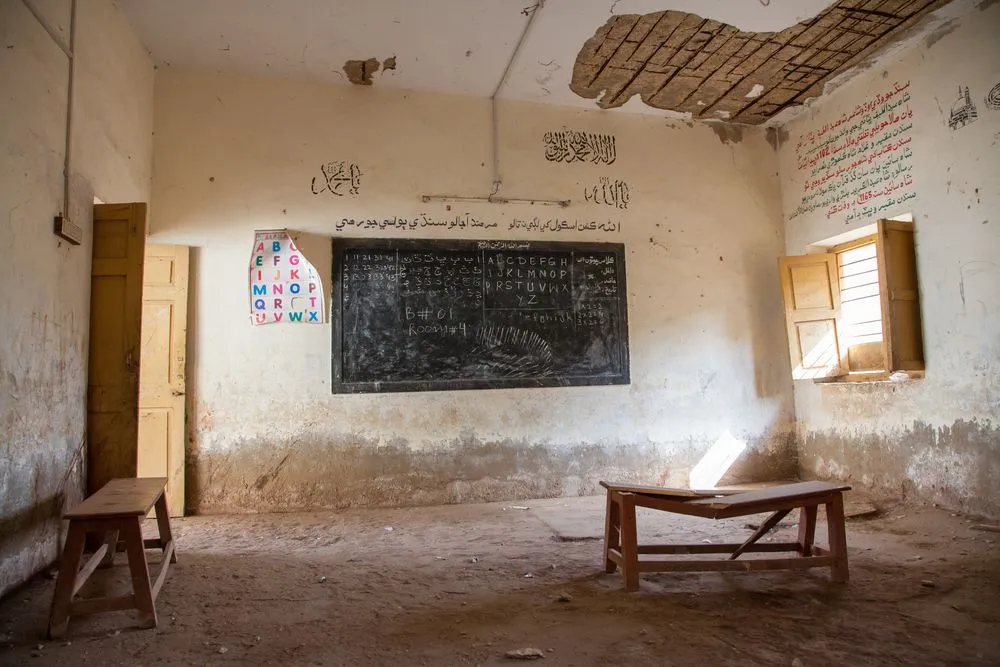
Research by Nikki L. Aikens and Oscar Barbarin found that the school context, including the resources and quality of schools serving low-SES communities, contributes to the reading gap, on top of family and neighborhood factors. Schools that serve poorer neighborhoods often have fewer resources, which compounds the disadvantages children already bring from home.
The researchers propose that improving these schools should help in reducing the risk of students dropping out prematurely.
How Language Development Is Affected By Socio-economic Status
Socio-economic status and the family you belong to also affect your language development skills. Moreover, there is a huge gap in the way children are raised. Parents with higher socio-economic status can spend more on their children’s education early by hiring tutors, and sending their children to classes. They may also have more time to spend reading and talking to their children.
Low-SES families may find this harder to manage, since they are often overstressed by working to make ends meet. This puts poorer children in a backward position in school, before they’ve even begun.
A child’s interest in learning and understanding language is related to their parent’s education level. It also depends on the number of books owned by parents and their stress levels. Hence, it is not surprising that children coming from underprivileged backgrounds are, on average, less likely to develop an interest in reading later in life. This can affect their ability to follow class lessons and is associated with a smaller vocabulary.
One famous illustration of this language gap comes from psychologists Betty Hart and Todd Risley, who in the 1990s recorded conversations in 42 families over more than two years. They estimated that, by age three, children in higher-income homes had heard roughly 30 million more words than children in families receiving welfare, a figure that became known as the “30 million word gap.” It is worth being careful here: later researchers have questioned that exact number. A 2018 study by Douglas Sperry and colleagues found wide variation within each income group and argued that, once speech overheard from other family members is counted, the gap shrinks considerably. The headline figure is contested, but the broader point that early language exposure differs across households, and that it matters for school readiness, still holds.
A study conducted by researchers at the University of Iowa and the University of Oregon found that children coming from low SES backgrounds had lower self-esteem when it came to their careers. This is due to their parents often struggling to make ends meet and having a pessimistic view of the world.

Why Does The Gap Exist? Cultural And Social Capital
Money alone does not explain everything. The French sociologist Pierre Bourdieu argued that families also pass on what he called cultural capital: the knowledge, vocabulary, tastes, and habits that schools quietly reward. A child who grows up surrounded by books, museum trips, and dinner-table debate arrives at school already fluent in the “language” teachers expect, while an equally bright child without that exposure has to learn the rules of the game first.
Closely related is social capital, the network of contacts and relationships a family can draw on. Better-off parents are often more able to navigate school systems, secure help, and open doors for their children. Modern research supports the broad idea: a 2018 analysis in Sociological Science found that cultural capital accounts for a meaningful slice of the gap in educational outcomes between richer and poorer children. In Bourdieu’s view, schools can therefore reproduce inequality even when they appear to treat everyone the same, because they reward dispositions that advantaged families were already able to provide.
The Summer Slide: When The Resource Faucet Shuts Off
Some of the clearest evidence that opportunity, not ability, drives much of the gap comes from what happens when school stops. Sociologists Karl Alexander, Doris Entwisle, and Linda Olson tracked Baltimore children for years and proposed the “faucet theory.” During the school year, the faucet of learning resources is on for everyone, and children from rich and poor homes tend to make similar gains. Over the long summer break, however, the faucet shuts off, and the children left without books, trips, camps, and tutoring at home tend to slip back.
In their Baltimore data, much of the achievement gap that had opened up by ninth grade could be traced to these unequal summers in the early elementary years, rather than to what happened in the classroom. More recent studies debate exactly how much of the gap the summer slide explains, and some find smaller effects, but the underlying insight remains powerful: when the playing field of resources is level, low-SES students keep pace, which suggests the problem lies less in the children than in the opportunities around them.
Though this article provides context into why children belonging to lower economic strata may struggle with their academic performance, there are several solutions provided by researchers working in educational settings. These include parental involvement in the academic achievement of children, adequate funding for schools built for children belonging to low socio-economic status communities, and educating teachers on their own biases and prejudices that may implicitly drive them to treat some students more preferentially than others. In the long run, whether these strategies work or not remains a question, but they’re worth working on in order to bridge this invisible, yet very evident gap in the educational sector.
References (click to expand)
- Morgan, P. L., Farkas, G., Hillemeier, M. M., & Maczuga, S. (2008, December 5). Risk Factors for Learning-Related Behavior Problems at 24 Months of Age: Population-Based Estimates. Journal of Abnormal Child Psychology. Springer Science and Business Media LLC.
- Aikens, N. L., & Barbarin, O. (2008, May). Socioeconomic differences in reading trajectories: The contribution of family, neighborhood, and school contexts. Journal of Educational Psychology. American Psychological Association (APA).
- Buckingham, J., Wheldall, K., & Beaman-Wheldall, R. (2013, September 9). Why poor children are more likely to become poor readers: The school years. Australian Journal of Education. SAGE Publications.
- Ali, S. R., McWhirter, E. H., & Chronister, K. M. (2005, February). Self-Efficacy and Vocational Outcome Expectations for Adolescents of Lower Socioeconomic Status: A Pilot Study. Journal of Career Assessment. SAGE Publications.
- BAUM, A., GAROFALO, J. P., & YALI, A. M. (1999, December). Socioeconomic Status and Chronic Stress: Does Stress Account for SES Effects on Health?. Annals of the New York Academy of Sciences. Wiley.
- (2002) How Expectations and Efficacy of Diverse Teachers Affect the .... JSTOR
- Hill, N. E., & Taylor, L. C. (2004, August). Parental School Involvement and Children’s Academic Achievement. Current Directions in Psychological Science. SAGE Publications.
- Sirin, S. R. (2005). Socioeconomic Status and Academic Achievement: A Meta-Analytic Review of Research. Review of Educational Research. SAGE Publications.
- Liu, J., Peng, P., et al. (2022). Socioeconomic Status and Academic Achievement in Primary and Secondary Education: A Meta-Analytic Review. Educational Psychology Review. Springer.
- Sperry, D. E., Sperry, L. L., & Miller, P. J. (2018). Reexamining the Verbal Environments of Children From Different Socioeconomic Backgrounds. Child Development. PubMed / NCBI.
- Jaeger, M. M., & Karlson, K. (2018). Cultural Capital and Educational Inequality: A Counterfactual Analysis. Sociological Science.
- Alexander, K. L., Entwisle, D. R., & Olson, L. S. (2007). Lasting Consequences of the Summer Learning Gap. American Sociological Review. SAGE Publications.
- The Coleman Report (Equality of Educational Opportunity, 1966) set the standard for the study of public education. Johns Hopkins University Hub.