Table of Contents (click to expand)
Poetry is hard to understand because it packs a lot of meaning into very few words, leans on metaphor, ambiguity and sound, and follows formal conventions (rhyme, meter, stanza, literary devices) that the reader is expected to recognise. Knowing a poem's structure, form and literary devices is what turns a confusing block of text into something you can actually decode.
Poetry is considered one of the most honourable literary genres. In Greek, a poem (poiema) literally means a "thing made", and Plato wrote about poetry as mimesis, an imitation of reality. Wordsworth, in his 1800 Preface to the Lyrical Ballads, famously defined poetry as "the spontaneous overflow of powerful feelings". Keats, again a Romantic, wrote to his publisher in 1818 that "if Poetry comes not as naturally as the Leaves to a tree it had better not come at all". If all that is true, then why do so many readers find poetry so difficult to understand, especially compared to prose?
One small surprise to start with: the novel, the prose form most of us read every day, is only about three centuries old. It really took off in the early 18th century with books like Daniel Defoe's Robinson Crusoe (1719). Prose itself, though, is far older. Cicero and Tacitus wrote in Latin prose two thousand years ago, and vernacular prose chronicles appeared in Europe by the 13th century. Poetry is older still. It has existed since the dawn of recorded civilisation, and for most of human history it was the medium of choice for serious writing. Poetry was treated as the language of the gods, and the foundational mythological and religious texts of many cultures were composed in verse.

Poetry is difficult to interpret because it consists of the serious compression of information in very few words. This requires the reader to be very attentive to detail. On the other hand, prose is very direct and usually written in the same language that is spoken during that era. Prose usually says what it means, whereas there is no single interpretation when it comes to poetry.
Poems can also be very engaging and entertaining because of the pleasure you get from decoding them. Since it is not simple, a reader must be well acquainted with different kinds of poems, as well as rhyme, meter and various literary devices.
Structure Of Poems
The first way to understand poetry is by looking at its outward appearance or structure. Although we say not to judge a book by its cover, we need to begin by analyzing poems through their outer appearance.
Stanza – A stanza is to poetry what a paragraph is to prose. Stanzas are a number of lines combined to form one idea or unit. By counting the number of lines, you can identify a stanza. There are couplets (2 lines), tercets (3lines), quatrains (4 lines), cinquains (5 lines), sestets (6 lines), septets (7 lines) and octaves (8 lines). A sonnet, for example, is 14 lines: a Petrarchan sonnet pairs an octave (8 lines) with a sestet (6 lines), while a Shakespearean sonnet stacks three quatrains and a closing couplet.
Form- A poem can be put into three categories or forms without even identifying the lines or stanzas.
- Lyric Poetry: All modern poems are usually written in this form. A lyric consists of a single speaker who is not necessarily the poet. Lyric poems express the state of mind of the speaker. William Wordsworth’s ‘Tintern Abbey’ expresses his deep love for nature and is often read as a near-pantheistic celebration of the natural world (a worldview in which God and nature are inseparable).
- Narrative Poem: As the name suggests, this poem tells or narrates a story. There is an introduction of characters and their motives, rising action, falling action and climax. In simple words, it’s a story written in verse or poetry.
- Descriptive Poem: Again, going with the name, this kind of poem pays special attention to details and adjectives. The surroundings are described in great detail. Descriptive poems are focused on the background or the environment, whereas lyric poems have an internal focus inside the speaker’s mind. Samuel Taylor Coleridge’s ‘Kubla Khan’ is an excellent example of a descriptive poem.
Rhymes and meters: Meter refers to the rhythmic flow of a poem. It is a play on sound. Rhymes in simple terms are rhyming words in the lines of a poem. They can be further classified into various types, such as end rhymes and internal rhymes. End rhymes are rhyming words present at the end of the lines, such as:
‘Know then thyself; presume not God to scan,
The proper study of mankind is man’ (Alexander Pope)
Internal rhyme, on the other hand, occurs within the same line in the poem:
‘Nor shapes of men nor beasts we ken’
Types Of Poems
- Ode– An ode is a long lyric poem whose subject matter is serious and elevated, and stanzas are very elaborative. John Keats was very famous for writing odes.
- Epic– An epic is a long narrative poem that usually has subjects like heroic deeds, divine characters and legends, or the risk of humanity at stake. An epic is therefore known as a heroic poem. John Milton’s ‘Paradise Lost’ and Homer’s ‘Odyssey’ are both epics.
- Elegy– An elegy is a lyric poem that mourns the loss of someone or something. The common subjects are death and unrequited love. ‘Elegy Written in a Country Churchyard’ by Thomas Gray (1751) is a particularly famous example of this style.
- Ballad– A ballad is a narrative poem that can be sung. It has a musical rhythm and the stanzas are usually quatrains. It is also called a ‘folk song’ and deals with the subject of ordinary people. Ballads are usually dramatic and written in incremental repetition, meaning that a line or stanza is repeated in every stanza adding more detail.
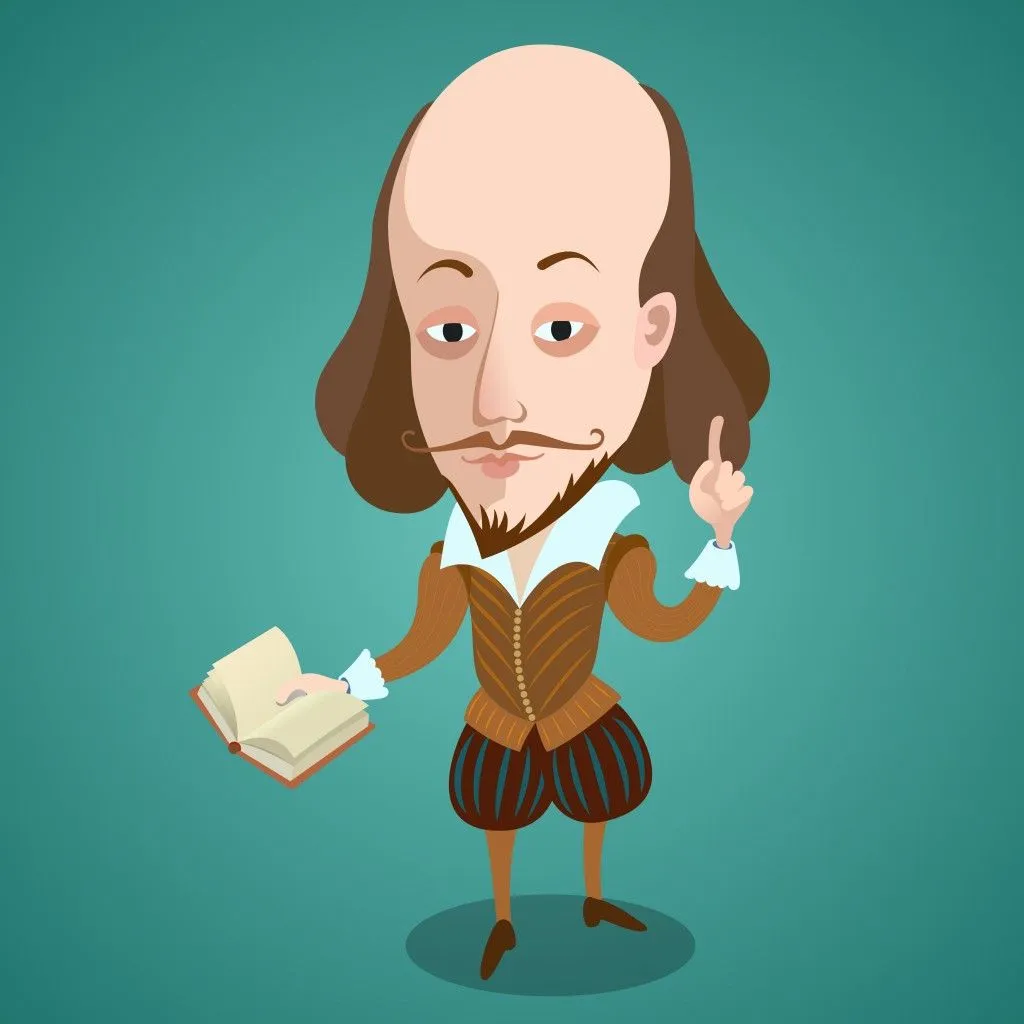
- Sonnet- A sonnet is a lyric poem that consists of 14 lines. These 14 lines are divided into an octave or a sestet (Petrarchan Sonnet), or three quatrains and a couplet (Shakespearean Sonnet). William Shakespeare, a name familiar to us all, wrote 154 sonnets in his lifetime, first collected and published in 1609.
Once you understand the structures, rhymes and types of poems, it will be easier to interpret their meaning. A poem also has many literary devices like the repetition of the first letter of adjacent words (alliteration) or lines (refrain) to emphasize or lay stress on an idea. A poem may have comparisons like ‘as brave as a lion’ or ‘having a lion’s heart’, which are known as similes and metaphors, respectively. These literary devices make a poem more interesting by drawing various comparisons to make the point clear, and paint a more vivid picture in a reader’s mind. A poem doesn’t convey its meaning directly, but rather does so in a puzzling or mysterious way. This can make reading poetry a bit nerve-wracking, but the fun lies in solving these clever riddles of verse!
References (click to expand)
- What is Poetry. poetry.org
- What Is Poetry? | NEA - www.arts.gov
- What Is Poetry? - Palm Beach State College. Palm Beach State College
- Glossary of Poetic Terms - Poetry Foundation. The Poetry Foundation
- Sonnet. Encyclopaedia Britannica
- Wordsworth, W. (1800). Preface to the Lyrical Ballads. Wikipedia
- Keats, J. (27 February 1818). Letter to John Taylor. The Morgan Library & Museum