Table of Contents (click to expand)
Metaphysics is the branch of philosophy that studies the fundamental nature of reality, including the relationship between mind and matter, substance and attribute, and possibility and actuality. Unlike physics, it tackles questions that cannot be settled by observation or experiment, such as what it means to exist, whether time is real, and whether we have free will.
Ever found yourself plunged into an ocean of thoughts? An unbearable quiver begins at the back of your mind, compelling you to dive deeper into the void of your knowledge and yet, you are left with the same uneasiness.
If you haven’t experienced this, I challenge you with a set of questions.
1. Is time an illusion?
2. Does “absolute reality” exist and if it does, what is it made of?
3. Can we ever know that God exists? Is God just a conscience?
4. Why is there something rather than nothing?
5. Is there an ultimate meaning to life?
Try to analyze or answer these, and you will find that you cannot answer a single question based solely on the concepts of physics.
A Philosophical Take On Time
We are born. We die. The span separating these two events is what we call “time”. The passage of time is perhaps the most fundamental feature of our own experience, yet we are incapable of saying exactly what it is. What’s worse? The laws of physics don’t help. Time exists, and this is undeniable, but the way we experience it makes no sense either. The same can be argued for the remaining questions.
This is where a philosophical take on such problems felt more convincing. Philosophy regards space-time as an unchanging four-dimensional block, as opposed to the view of the universe as a three-dimensional space modulated by the passage of time.

Metaphysics
Now, if all this seems to confuse you, welcome to the tribe of the science community. This difficulty arises because our strictly scientific mindset cannot digest philosophical solutions. What we tend to forget is that quantum physics has yet to be understood absolutely, but still holds, both theoretically and experimentally.
Unlike quantum physics, metaphysics has been around since the time of Plato and Aristotle.
Metaphysics is the branch of philosophy that examines the fundamental nature of reality: the relationship between mind and matter, substance and attribute, possibility and actuality. Unlike physics, it doesn’t lean on observation or experiment to settle its questions. Instead, it asks what must be true of anything that exists at all, which is why no single answer is ever truly final, and the debates have run for over two thousand years.
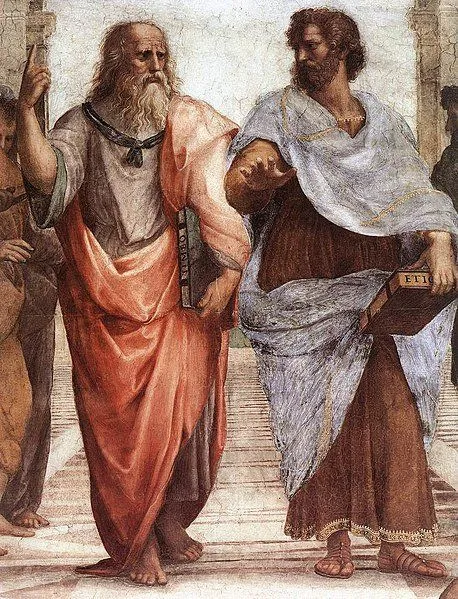
Metaphysics deals in the following areas-
Ontology
Ontology is the theory of objects and their ties. It provides a basis for distinguishing different types of objects (concrete and abstract, nonexistent and existent, real and virtual, dependent and independent) and their ties (relations, predication and dependencies).
When you ask deep questions about “What is the nature of the universe?” or “Is there a god?” or “What happens to us when we die?” you are asking inherently ontological questions.
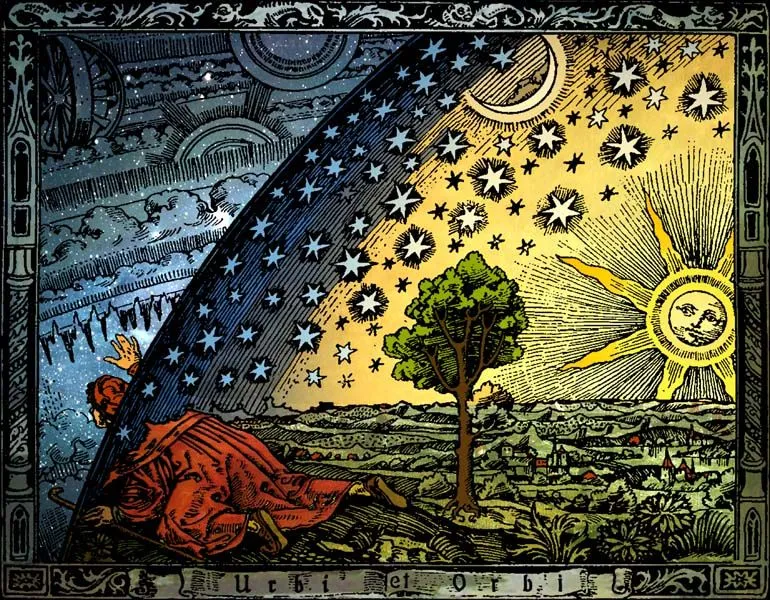
Modality
Modality deals with metaphysical statements, including necessities, possibilities and impossibilities.
For example, while there are, in fact, eleven players on a soccer team, there could have been fourteen, but there couldn’t have been zero. The first of these is a fact about what is actual or necessary; the second is a fact about what was possible, and the third is a fact about what is impossible.
We are often habituated to consider and evaluate judgments about what is possible and necessary, such as when we are motivated to make things better and imagine how things might be. We judge that things could have been different than they are, while some things could not have been. These modal judgments and modal claims are subconsciously carried out, in our minds and play a central role in human decision making.
Identity
Personal identity theory is a philosophical face-off with the most ultimate questions of our existence: Who are we? Is there a life after death? What is the ultimate goal of our existence?
It is highly unlikely for any of the current physical laws or theories to answer such questions, for one must die to describe the scenario of the afterlife. Consider a person X who survives an adventure. A person Y then comes into existence, during the time of the adventure, who psychologically evolved out of X.
Hence, experiences in daily life help a person evolve.

Natural theology
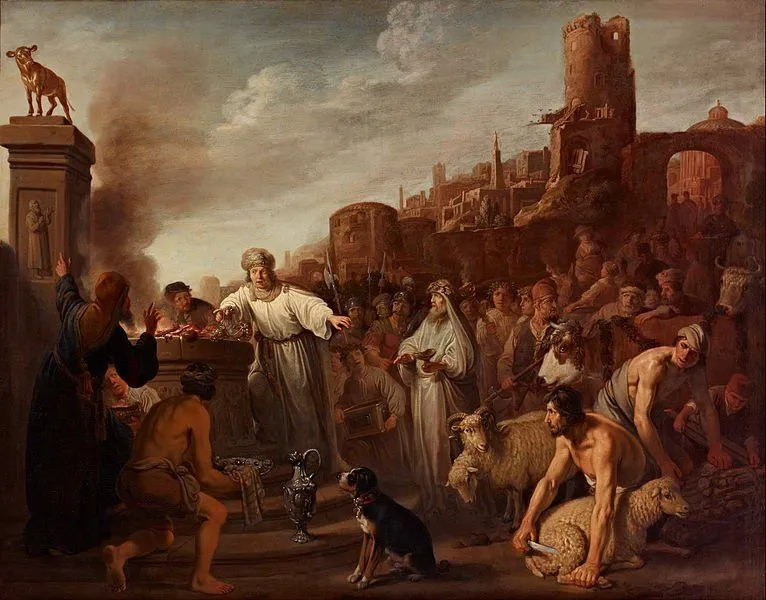
This inquires about the existence and attributes of God without referring or appealing to any divine revelation. In theology, one asks what the word “god” means? Should names apply to God? Whether God exists? Does God know the future and the free choices of living beings?
This sect aims to answer the above questions without using any claims drawn from sacred texts or divine scriptures, even though one may hold such claims.
As a scientific reader, you might be set entirely off, by the idea of God, let alone discuss his purpose. However, if you analyze the situation, you come to an important realization. Scientists have not been able to give a rigid explanation to the origins of our universe either. In this case, a theologian’s belief in a Creator should not be questioned either. To this claim arises another question—‘If God created the universe, who created God?’
Abstract Objects
It is universally acknowledged that numbers and other objects of pure mathematics are abstract (if they exist), whereas rocks, trees, human beings and all such natural figures are concrete.
According to Plato, there is, undoubtedly, a realm of existing abstract objects comprising reality beyond the material world. Arguably, these abstract objects do not originate with creative divine activity. Traditional Theism contradicts these notions by regarding God as the primary creator and that God is the source of existence of all realities beyond himself, including the realm of abstract objects.
What Metaphysics Does Not Deal With
You might still be wondering, how can Metaphysics be regarded as science when all it does is give illogical explanations to questions that cannot be explained by our current laws and theories.
Well, you might be correct on that point. Metaphysics does not take into consideration a wide range of ideas. It is not bound by chains of logic, nor does it owe any justification to its explanations. Theories of mind, theories of meaning, theories of science, theories of mathematics, ethics and morality, beauty and aesthetics, beliefs and rationality are not considered in metaphysical reasonings.
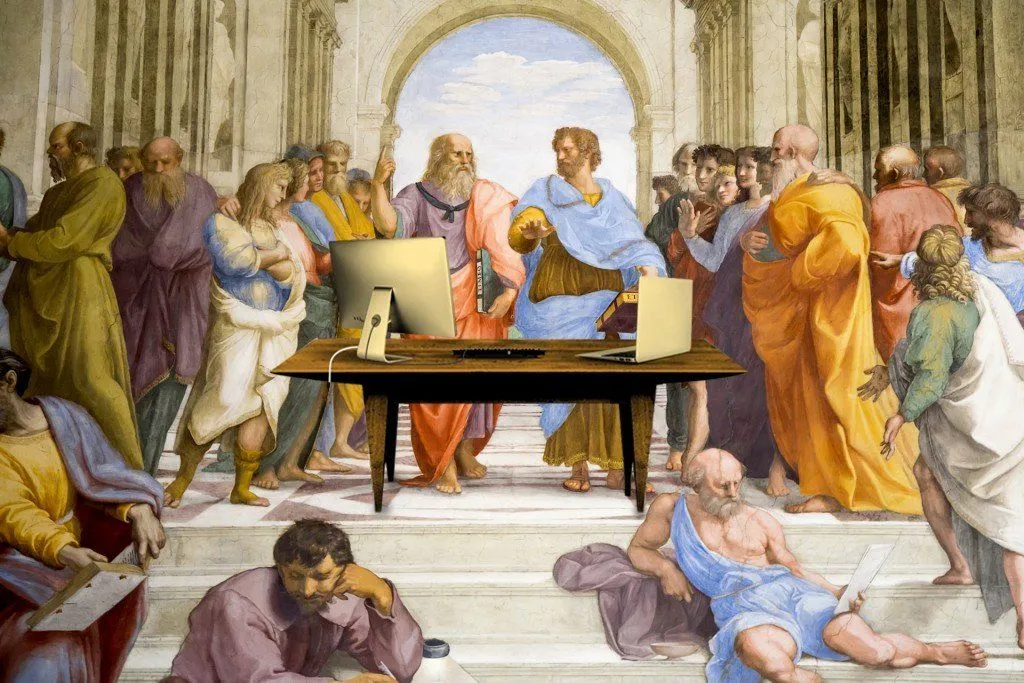
Consider the existence of a computer; a metaphysician might ask the following questions—‘What kind of thing is a computer?’ Does it have free will? How does it relate to its parts? Is it something necessary or contingent?
Conclusion
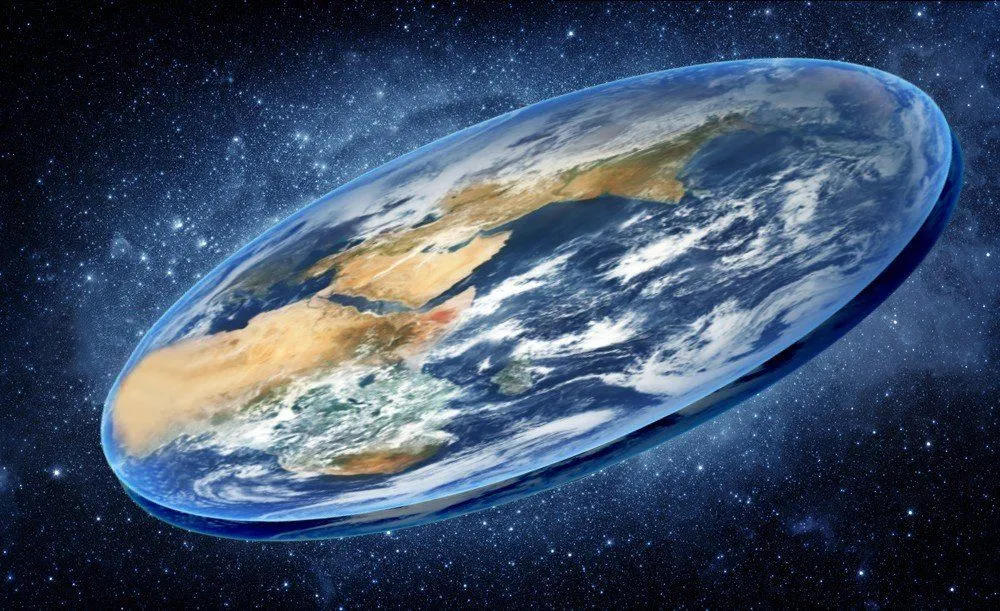
You have probably heard the story that scholars warned Christopher Columbus he would sail off the edge of a flat earth. It is a great tale, but it is not true. Educated Europeans had known the earth was a sphere since ancient Greek times, and the real argument against Columbus was about how big the planet is, not what shape it is. The flat-earth version was largely popularized by the writer Washington Irving in an 1828 biography of Columbus, and it has stuck ever since.
A clearer example is the structure of the heavens. For most of recorded history, people assumed the Earth sat fixed at the centre of everything, with the Sun, the Moon, the planets and the stars all wheeling around it. That belief felt as obvious as solid ground underfoot, yet there was no way to step outside the cosmos and check it. The question of what truly lies at the centre of our planetary system began as pure speculation, the kind of “what is really going on out there” puzzle that metaphysics loves.
The idea of a heliocentric universe is a common notion to us, but for people living in the 16th century, it was a metaphysical fact that has become a physical fact for us now.
Einstein is another excellent example in this case. When he proposed them, Einstein’s ideas were far ahead of anything anyone could observe. His theory of general relativity predicted strange objects so dense that not even light could escape, long before there was any way to look for them. For decades, the existence and appearance of such an object stayed in the realm of speculation. Then, in 2019, the Event Horizon Telescope released the first direct image of a black hole, at the centre of the galaxy M87, and one of Einstein’s boldest predictions finally came to life. Quantum physics tells a similar story: deeply counterintuitive, almost metaphysical in flavor, yet it now underpins much of modern science.

What must be understood here is the fact that the boundaries between metaphysics and the classically supreme physics are always moving and merging. What we deem metaphysical today might be a physically observed phenomenon in the ages to come. Metaphysics is of utmost importance because it not only discusses what happens beyond our senses but also claims to know the origins of our universe, something that physics can just hypothesize for now.
References (click to expand)
- Metaphysics - Stanford Encyclopedia of Philosophy
- Metaphysics - Internet Encyclopedia of Philosophy. The Internet Encyclopedia of Philosophy
- Personal Identity - Stanford Encyclopedia of Philosophy
- Myth of the flat Earth - Wikipedia
- Astronomers Capture First Image of a Black Hole - Event Horizon Telescope