Table of Contents (click to expand)
- It’s Not Just The Knights Who Wore Armor
- Knights With Really Good Armor Were Often Not Killed
- Chinks In The Armor
- Armor Doesn’t Protect Against Concussions
- How Effective Was A Knight's Armor, Really?
- How Did Knight's Armor Evolve From Mail To Plate?
- How Heavy Was A Full Suit Of Armor (And Could You Even Move In It)?
Knights in full plate armor were rarely killed by sword cuts. They were typically brought down in one of three ways: (1) thrusting daggers like the rondel or misericorde driven through the visor, armpit, groin or other gaps in the plate; (2) blunt-force weapons—maces, warhammers, war picks and poleaxes—that crushed bone and concussed the wearer through the steel; and (3) capture for ransom, which was often more profitable than killing a wealthy armored opponent. Plate also did not cover everything, and arrows or polearms could find weak spots in the joints.
If you’ve ever watched a movie based on an ancient war (such as Gladiator, Braveheart, 300, Troy… just to name a few), then you may recall that some warriors in those times wore special armor during battle. Then, there were others who were more privileged than most (knights and nobles, mainly), and wore even better and stronger full-body armor, which rendered them almost invincible against ‘regular’ swords and arrows.
Here, take a look at these various types of armor that could almost completely protect the wearer’s body:
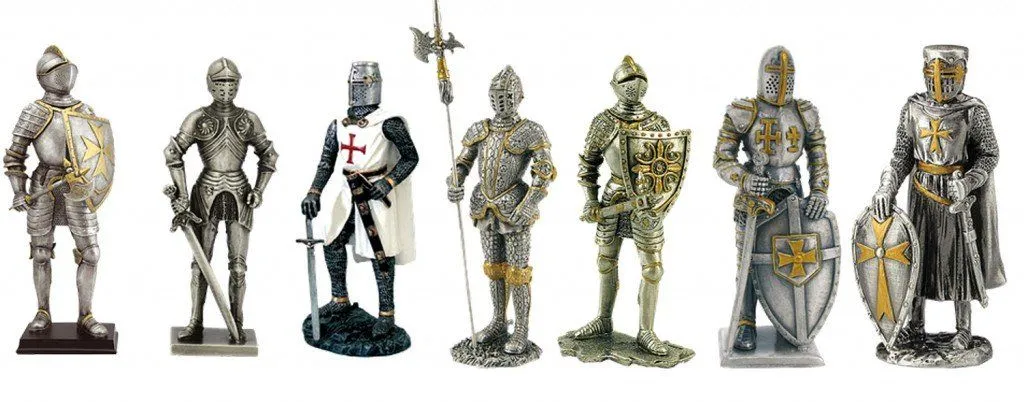
And these are just a few examples; if you were rich enough or important enough (or both), you could have the best of the best armor, made of strong but (relatively) light materials, to gain an a ‘defensive edge’ on the battlefield.
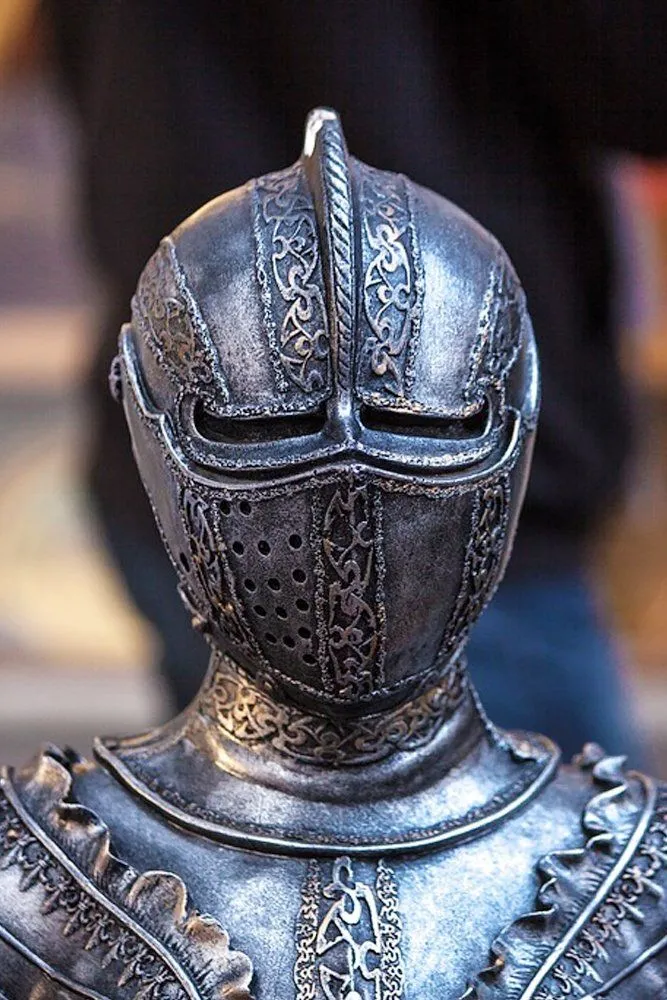
Despite wearing armor that virtually covered their entire bodies, armor-clad warriors DID die in battles, which makes one wonder how knights wearing such heavy armor were felled using nothing more than swords and arrows.
Before we discuss this any further, let’s first take a look at some interesting aspects related to this discussion:
It’s Not Just The Knights Who Wore Armor
People assume that knights were the only people who wore armor during battles, but this is certainly not true. While there’s no denying that knights were the dominant force of most armies in medieval times and almost all of them wore armor, there were plenty of others who wore it too!
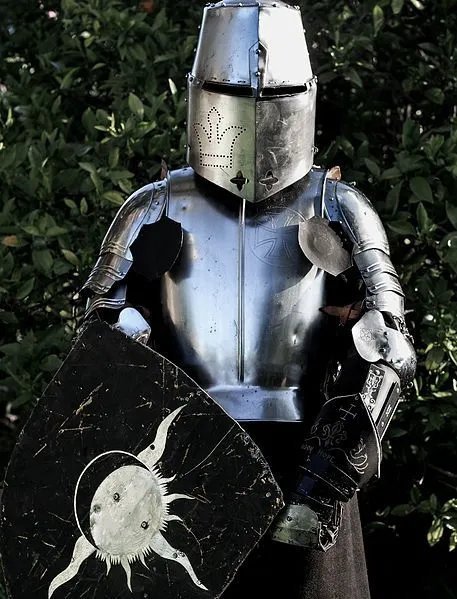
In fact, the use was so widespread that even foot soldiers in certain armies wore armor, although the quality and sturdiness of their armor was far worse than the knights’ armor.
Knights With Really Good Armor Were Often Not Killed
This is a bit surprising, but very true. Many times, an opponent wouldn’t actually kill a knight or a noble wearing particularly formidable armor. The reason? It was assumed that a warrior wearing such strapping armor must be quite rich. So, rather than killing such a ‘valuable’ warrior, it was common practice to capture them instead, then ask their relatives back home for a ransom.
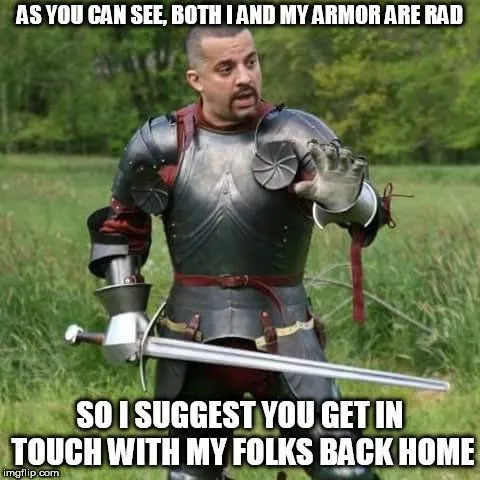
As such, warriors with strong, expensive full-body armor were often NOT killed in the first place.
Chinks In The Armor
Iron Man and all his armored adversaries can attest to this fact in the modern world, and it was true for medieval battles too.
While armor does go a long way towards shielding you from regular swords and wounds caused by ‘loose’ arrows in the battlefield, it doesn’t make you invincible… not by a long shot!
First off, regular armor doesn’t cover the entire body of the wearer. As a result, there were many exposed body parts where an opponent could strike. In fact, a good shot by a skilled archer could even pierce weaker armor at close range.
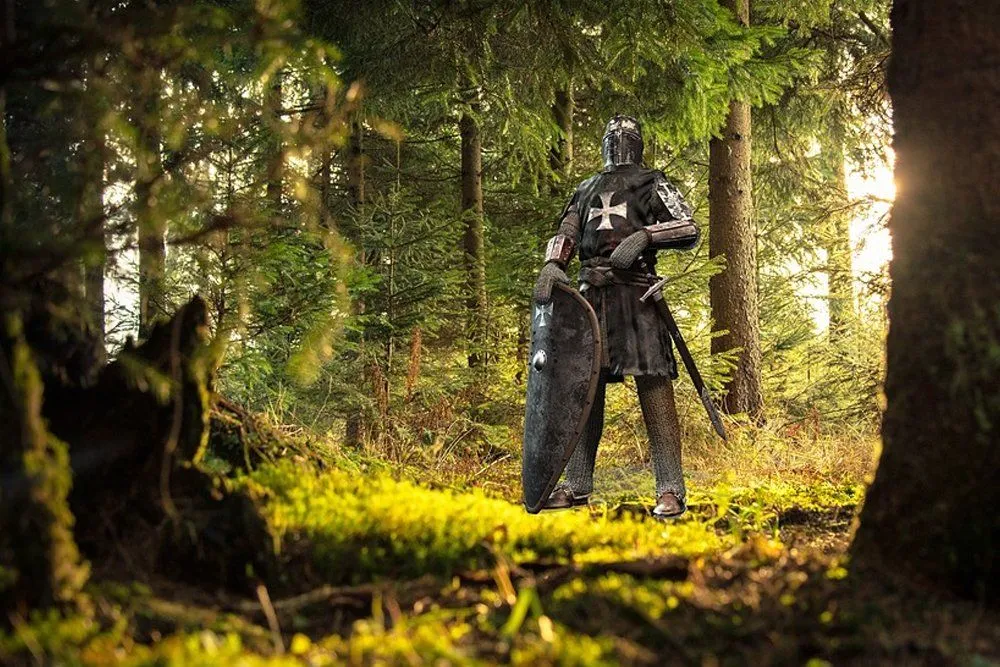
Even expensive, specially-designed full-body armor had chinks and weak points at various places (especially joints). Sharp weapons, like the misericorde and rondel dagger, were specifically designed to be driven through these gaps—through the visor and eye-holes, under the armpit, or into the groin—targeting vital organs that the plate could not cover. Later thrusting blades like the Italian stiletto served a similar role against mail and at the joints of plate, though almost no dagger could simply pierce a hardened breastplate head-on.
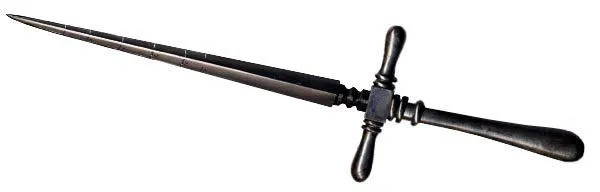
Apart from that, a suit of armor always had openings and joints, like the visor, near the armpits and even the groin, where an opponent could thrust a pointy object and bring down the armor-wearer.
Armor Doesn’t Protect Against Concussions
While full plate armor could prevent a glancing blow by a sword from harming the wearer, it doesn’t do much against concussive damage. A few swinging blows from a mace or hammer might not cut the body, but they could definitely deck the armor-wearer, as the bludgeoning could easily fracture bones beneath the armor. Specialised anti-armor weapons—the war pick, the bec de corbin, the poleaxe and the halberd—combined a concussive head with a sharp spike or beak meant either to crack plate or to punch through a gap on impact.
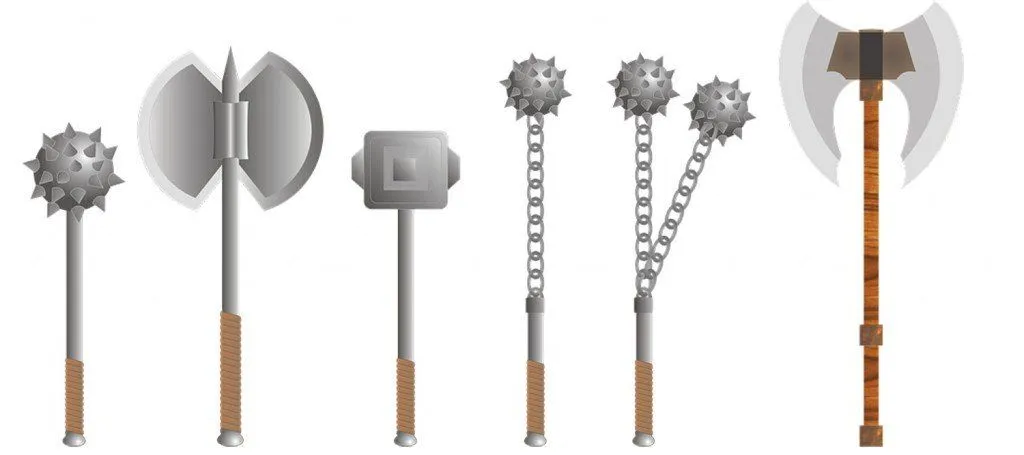
Once an armor-wearer is knocked to the ground, the opponent gains an upper hand, so dealing with the armor suddenly becomes much easier.
In a nutshell, full-plate or mail armor undoubtedly loads the dice in favor of the wearer, but it certainly doesn’t make them invincible against a formidable foe on the battlefield.
How Effective Was A Knight's Armor, Really?
Here's the part that surprises most people: a good suit of plate armor was extremely effective. Against the everyday threats of a medieval battlefield, a sword cut, a glancing arrow, a stray spear thrust, a well-made breastplate was close to impervious. Modern museums make this point bluntly. The Metropolitan Museum of Art notes that a hardened steel plate could not simply be punched through head-on by an ordinary blade, which is exactly why warriors who could afford full plate were so hard to kill.

So why did armored men still fall? Because effectiveness is not the same as invincibility. The quality of the steel mattered enormously. In his survey of hundreds of surviving harnesses, The Knight and the Blast Furnace, metallurgist Alan Williams found that the carbon content of medieval armor steel ranged from almost pure iron up to roughly 0.8% carbon, and the best workshops deliberately hardened their plates by carburizing and quenching them. A finely tempered Italian breastplate offered far more protection than a cheap, soft iron one, which is one reason a wealthy knight survived blows that killed a poorly equipped foot soldier.
And then there were the answers a battlefield always finds. Heavy bodkin arrows could bite into plate at very close range, even if they skated off at distance or at an angle. A thrust to a gap bypassed the steel entirely. Blunt weapons transmitted their shock straight through it. Most decisively of all, the spread of firearms from the 16th century onward eventually made even the finest plate obsolete, because a musket ball carried more energy than any armor of the period could reliably stop. Armor was a superb answer to the weapons of one era, and a fading one as the weapons changed.
How Did Knight's Armor Evolve From Mail To Plate?
The gleaming steel suit you picture when you hear the word "knight" was actually the end of a long arms race, not the start of one. For centuries, the dominant body armor in Europe was mail (often called chainmail): a flexible mesh of thousands of small iron rings, each one riveted shut and linked to its neighbors. A knee-length mail coat was called a hauberk, and from roughly the 9th to the late 13th century it was the gold standard of protection.

Mail was brilliant against slashing cuts, but it flexed under a hard thrust and did little to spread a crushing blow. So from the late 13th century onward, armorers began bolting rigid metal plates over the mail at the spots that were hit most often or hurt most when struck: the shins, the forearms, and the chest. This in-between stage is what historians call transitional armor, and the 14th century is full of it. A knight might wear plate defenses on his limbs and a coat of plates over his torso, with a mail shirt still worn underneath to cover the gaps.
Plate kept winning out, because solid steel deflects points and blunts impacts in a way woven rings never could. By about 1420, according to the Metropolitan Museum of Art, the full plate harness was complete: a defense of articulated steel plates, joined by rivets and leather straps, that enclosed almost the entire body. The finest of it came from a handful of specialist centers, above all Milan in northern Italy and the southern German cities of Augsburg and Nuremberg, whose workshops exported armor across Europe.
How Heavy Was A Full Suit Of Armor (And Could You Even Move In It)?
Movies love the image of a knight being winched onto his horse like a beached whale, but the real numbers tell a different story. A complete suit of field armor, the kind worn in actual battle, weighed only about 20 to 25 kg (45 to 55 lb), with the helmet adding another 2 to 4 kg (4 to 8 lb), according to the Metropolitan Museum of Art. That is roughly what a modern soldier or firefighter carries today.

Crucially, that weight was spread all over the body rather than dangling off the shoulders or waist like a backpack. Because each limb was built from articulated lames (overlapping strips of steel) linked by rivets and straps, a fit knight could run, lie down, mount a horse, and get back up unaided. The idea that plate armor turned its wearer into a statue is, in the Met's words, simply untrue.
That said, the armor was not free to wear. In a 2011 study published in Proceedings of the Royal Society B, Graham Askew and colleagues had experienced fight-interpreters from the Royal Armouries walk and run on a treadmill in faithful replica harnesses while their oxygen use was measured. Moving in armor cost 2.1 to 2.3 times as much energy as moving unburdened while walking, and about 1.9 times as much while running. The reason was not just the total mass but where it sat: hauling several kilograms of steel on each leg with every stride is exhausting, and the breastplate restricted the deep breaths a hard-working body needs. So armor did not pin a knight down, but it could wear him out, which is its own kind of battlefield danger.
References (click to expand)
- Medieval Armor and Weapons in the Later Middle Ages. The University of California, Davis
- The Medieval Warrior. Winthrop University
- MK Chung-Chuen-Yeung. THE EVOLUTION OF MATERIALS IN ARMS AND ARMORS. Worcester Polytechnic Institute
- A poor man's armour? Late-medieval leather armour from excavations in the Netherlands. Academia.edu
- Clothing, Armor, and Weapons of a Mid Thirteenth-Century .... The University of Wisconsin–Milwaukee
- J Gill. Clad In Steel: The Evolution of Plate Armor in Medieval .... The University of Puget Sound
- The Function of Armor in Medieval and Renaissance Europe. The Metropolitan Museum of Art
- Fashion in European Armor, 1400–1500. The Metropolitan Museum of Art
- Arms and Armor — Common Misconceptions and Frequently Asked Questions. The Metropolitan Museum of Art
- Askew GN, Formenti F, Minetti AE. Limitations imposed by wearing armour on Medieval soldiers' locomotor performance. Proc. R. Soc. B (2011). PubMed
- Alan Williams. The Knight and the Blast Furnace: A History of the Metallurgy of Armour. Brill