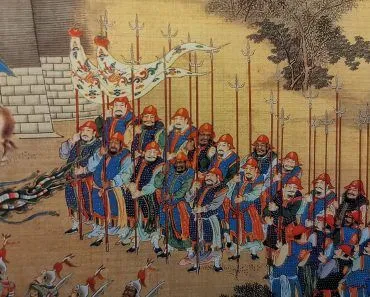
Western portrayal of the East as exotic, despite being heavily influenced by power dynamics and colonialism, is critiqued for perpetuating stereotypes.
Orientalism is a term that refers to the Western perception and representation of the cultures and peoples of the Orient.
Orientalism can be defined as the Western perception of the Orient as exotic, mysterious, and inherently different from the West. It involves creating stereotypes, myths, and fantasies about the Orient, often based on a Western perspective that privileges European cultures and values as superior.
Orientalism is not merely a neutral study of the Orient, but a discourse deeply intertwined with power dynamics and the historical legacy of colonialism and imperialism.
It is a concept that has been widely discussed and critiqued in academic circles, particularly in the fields of cultural studies, postcolonial theory, and literary criticism. The term was popularized by the Palestinian-American literary critic and Columbia University professor Edward Said in his seminal work, “Orientalism,” published in 1978. Said is widely regarded as one of the founders of postcolonial studies.
Historical Context
Orientalism, as a concept, emerged during the Age of Enlightenment in Europe, a period characterized by intellectual curiosity, scientific progress, and exploration. During this time, there was a notable surge in interest among European scholars, philosophers, and artists in the cultures, languages, and religions of the East, particularly the Middle East, South Asia, and East Asia.
The fascination with the Orient, which was not purely academic or benevolent, was driven by a variety of factors. These included the influx of goods and ideas from Eastern regions due to expanding trade networks, as well as the translations of ancient texts, such as the Quran and the Vedas.
Institutionally, Orientalism took shape with the founding of the Asiatic Society of Bengal by Sir William Jones in 1784, followed by the Royal Asiatic Society of London in 1823 and the Société Asiatique in Paris in 1822. These bodies produced grammars, dictionaries, and translations that, while genuinely advancing knowledge, were also closely tied to imperial administration—particularly the British East India Company.
This interest was often intertwined with the Western desire for economic, political, and cultural dominance over Eastern societies. European powers, driven by mercantile ambitions and the quest for resources, sought to understand the societies they encountered in order to better exploit them for their own benefit. This led to a skewed and often patronizing view of the East, where Western observers viewed Eastern cultures as exotic, mysterious, and inherently inferior to their own.
The rise of European colonialism and imperialism in the 18th and 19th centuries further entrenched Orientalist attitudes. As Western powers expanded their empires into Asia, Africa, and the Middle East, they justified their conquests by portraying Eastern societies as primitive, barbaric, and in need of Western intervention and civilization. This justification served to legitimize the exploitation and subjugation of indigenous peoples, as well as the imposition of Western values, institutions, and systems of governance.
Edward Said And The Book Orientalism (1978)
Although Western fascination with the East had brewed for centuries, the word “Orientalism” only acquired its sharp, critical meaning in 1978 — the year a Palestinian-American literary critic named Edward Said published a book that would quietly reshape the humanities.
Said (1935–2003) was born in Jerusalem during the British Mandate period, grew up between Cairo and the United States, and spent most of his academic career as a professor of English and Comparative Literature at Columbia University in New York. His displaced upbringing — fluent in Arabic, English, and French, simultaneously an insider and an outsider in every culture he inhabited — gave him a vantage point few Western scholars had: he could read the “Orient” as someone from it, while also being trained in the European canon that had built its image.
His 1978 book, Orientalism, published by Pantheon Books, argues that the European study of the “Orient” — its languages, literatures, religions, and peoples — was never the neutral, scholarly enterprise it claimed to be. Drawing on the French philosopher Michel Foucault's idea of discourse (the systems of language and knowledge that shape how we think about something), Said argued that Western Orientalism was instead a structured way of representing the East that quietly served Europe's imperial ambitions. To know the Orient, in this framework, was to be in a position to govern it.
The book makes three core claims:
- Knowledge and power are inseparable. European universities, colonial administrators, and travel writers didn't just describe the East; they constructed a version of it that justified ruling over it.
- The “Orient” is largely a Western invention. The image of the East as exotic, irrational, sensual, and stagnant says far more about the West's anxieties and self-image than about any actual Eastern society.
- This discourse persists long after formal colonialism ends. Hollywood films, news coverage, foreign-policy doctrines, and even sympathetic academic work all continue to reproduce Orientalist tropes today.
Orientalism is widely credited with founding the field of postcolonial studies, alongside later work by scholars like Gayatri Spivak and Homi Bhabha. Said followed it with The Question of Palestine (1979), Covering Islam (1981), and Culture and Imperialism (1993), which extended his analysis from the Middle East to the broader colonial world. He remained a public intellectual and an outspoken advocate for Palestinian rights until his death from leukemia in 2003.
Contextualising Orientalism
According to Edward Said, Orientalism is a manifestation of the West’s desire to exert power and control over the Orient. It perpetuates a binary opposition between the West (the self) and the Orient (the Other), where the West is portrayed as rational, progressive, and civilized, while the Orient is depicted as irrational, stagnant, and uncivilized. This dichotomy serves to reinforce the West’s sense of cultural superiority and legitimize its colonial and imperialist endeavors.
Orientalism is not merely a matter of misrepresentation or cultural ignorance; it is a systematic way of thinking and representing the Orient that shapes and reinforces Western attitudes, policies, and actions towards the East. Said argues that Orientalism is deeply embedded in various Western discourses, including literature, art, academia, and popular culture, and has profoundly influenced the West’s understanding and engagement with the Orient.
What Is An Orientalist?
If Orientalism is the discourse, an Orientalist is the person who produces it, and the word carries two layers of meaning that are worth separating. In its older, neutral sense, an Orientalist was simply a Western scholar who specialized in the languages, literatures, religions, and histories of Asia: the figure who compiled the first Sanskrit grammars or translated the Quran for European readers. Sir William Jones, the philologist who founded the Asiatic Society of Bengal in 1784, is the textbook example.

Edward Said gave the term its second, sharper edge. After his 1978 book, Orientalist came to describe not just an expert on the East but a participant in a system of representation that cast the East as exotic, irrational, and inferior, knowledge that traveled hand in hand with imperial power and colonialism. Used this way, calling a writer, filmmaker, or politician "Orientalist" is a critique, not a job description. The adjective behaves the same way: an "Orientalist painting" is one that frames the East through that romanticized, othering lens. So the very same word can honor a careful translator and indict a stereotyping screenwriter, which is exactly why context matters whenever you meet it.
Examples Of Orientalism
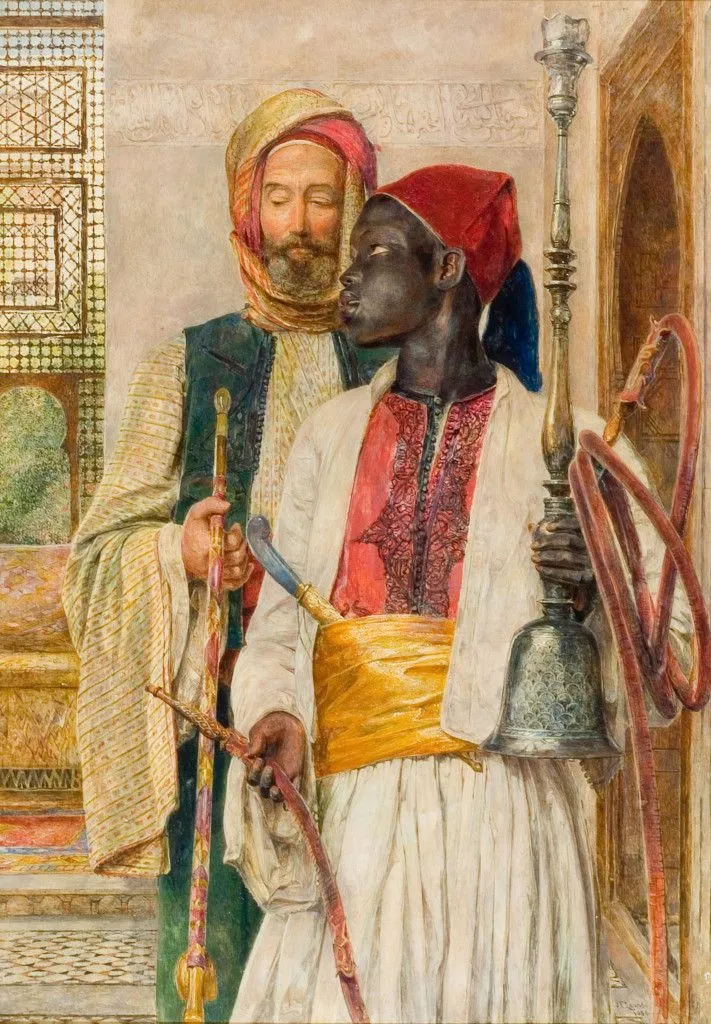
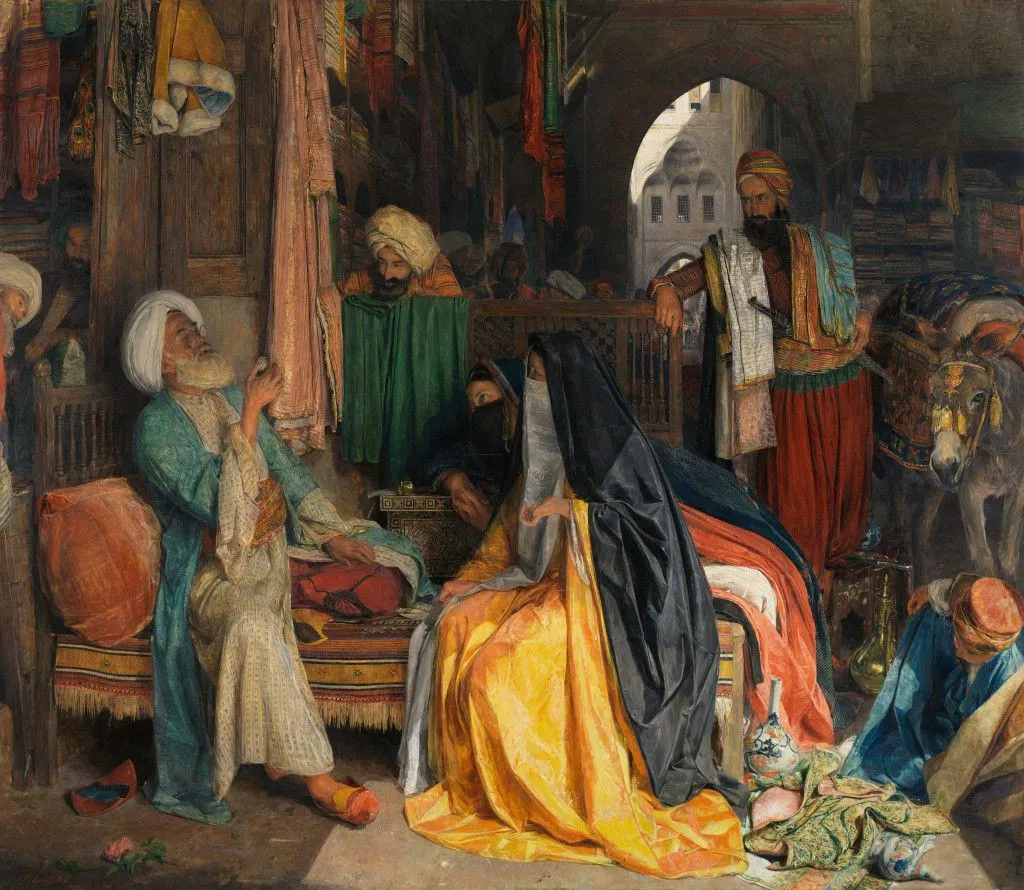
Orientalism manifests itself in various forms and across different media. In literature, works such as Arabian Nights and The Rubaiyat of Omar Khayyam became tools to perpetuate stereotypes of the Orient as a place of exotic sensuality, mysticism, and despotism. In art, the Orientalist painting tradition, popularized by artists like Jean-Léon Gérôme, Eugène Delacroix, and Jean-Auguste-Dominique Ingres, often depicted the Orient through a romanticized and sexualized lens, emphasizing harem scenes, odalisques, and exotic landscapes. Notably, Ingres painted his famous Grande Odalisque (1814) without ever travelling to the East, relying instead on second-hand accounts—an approach Said called “armchair Orientalism.”
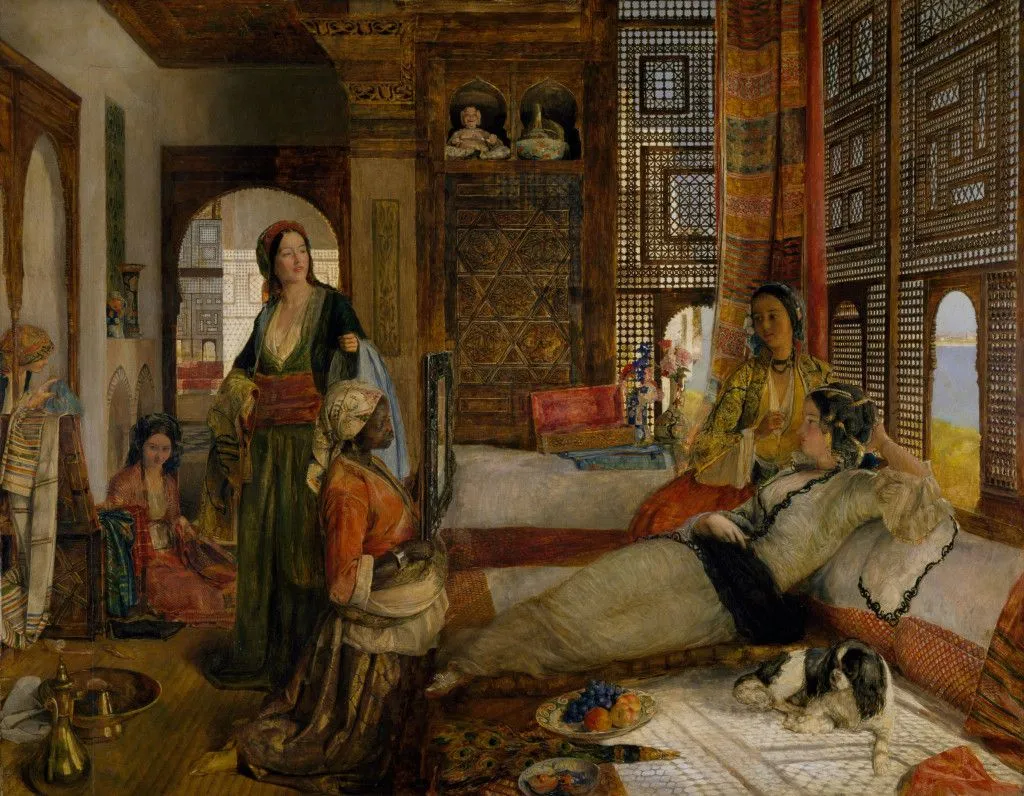
In popular culture, Hollywood films and television shows have often portrayed the Middle East and Asia as backward, violent, and oppressive, reinforcing Orientalist tropes and stereotypes. Even in academia, some Western scholars have been accused of approaching the study of Eastern cultures and civilizations through an Orientalist lens, prioritizing Western perspectives and failing to acknowledge the complexities and nuances of the Orient.
How Does Orientalism Appear In Literature?
Literature is where Said first sharpened his argument, and it remains the field where Orientalism is most often taught. His core claim is that the Western literary canon did not simply describe the East; it built a durable image of it, sorting the world into the familiar West ("us") and a strange, exotic Orient ("them"). Critics call this the construction of the Other: the East defined less by what it actually is than by everything the West imagines it is not.

Three novels turn up in almost every syllabus. Rudyard Kipling's Kim (1901) presents British India as a vast, knowable spectacle to be administered and enjoyed. Joseph Conrad's Heart of Darkness (1899) lays bare the brutality of empire while still rendering Africa as a silent, faceless backdrop. E. M. Forster's A Passage to India (1924) probes the gulf between colonizer and colonized yet never fully escapes it. Postcolonial scholars have since "written back" to these texts: the Nigerian novelist Chinua Achebe famously attacked Conrad in his 1975 essay An Image of Africa, and theorists like Homi Bhabha re-read Forster against the grain. This is why a search for "Orientalism in literature" leads straight to a larger idea, that stories are never neutral; they quietly carry the assumptions of the people who tell them.
Criticism Of Orientalism
Edward Said’s critique of Orientalism has been highly influential and has sparked widespread discussions and debates within various academic disciplines. While some have praised Said for exposing the deeply rooted biases and power dynamics inherent in the Western representation of the Orient, others have criticized his work for oversimplifying and overgeneralizing the concept of Orientalism.

Critics argue that Said’s analysis overlooks the diversity and heterogeneity of both Western and Eastern cultures, and that not all representations of the Orient are necessarily Orientalist. Some scholars have also pointed out that earlier non-Western critics, including the Egyptian sociologist Anouar Abdel-Malek—whose 1963 essay “Orientalism in Crisis” preceded Said’s book by fifteen years—as well as Mohammed Arkoun and Aijaz Ahmad, helped shape the discourse on the Orient and were not always given due credit. Ahmad, writing from a Marxist perspective, argued that Said’s analysis lacks historical specificity and ironically perpetuates the very binary opposition between West and East it seeks to dismantle.
Despite these criticisms, Said’s work has been instrumental in raising awareness about the pervasiveness of Orientalist attitudes and the importance of decolonizing knowledge and representations. It has inspired scholars and activists to challenge and deconstruct Orientalist narratives, and to amplify marginalized voices and perspectives from the East.
Why Is The Word "Oriental" No Longer Used?
"Orient" descends from the Latin oriens, meaning "the rising sun" and, by extension, the East, and for centuries Europeans used "Oriental" as a plain geographic label. The trouble is that the word never stayed neutral. As the discourse Said described took hold, "Oriental" absorbed the same baggage: it framed Asia and its peoples as exotic, backward, and permanently foreign. Applied to objects (an Oriental rug, Oriental spices) it can still sound merely old-fashioned, but applied to people it collapses a vast range of distinct cultures into one flattened, othered category.
That shift is now written into law. In May 2016 the United States enacted a bill, sponsored by Representative Grace Meng and passed unanimously by Congress, that struck "Oriental" (along with other dated terms) from the federal statute books, replacing it with "Asian American". Major style guides today discourage "Oriental" as a label for people, recommending "Asian" or, better still, the specific nationality. The word now survives mainly for objects and cuisine, and as the name of the academic critique itself, which is precisely why this article still has to use it.
Conclusion
Orientalism is a complex and multifaceted concept that reflects the power dynamics and historical legacies of colonialism and imperialism. While Edward Said’s critique has been influential in exposing the biases and stereotypes inherent in the Western representation of the Orient, the discourse surrounding Orientalism continues to evolve, with ongoing debates and critiques from various perspectives.
Orientalism, while controversial, did contribute to the expansion of knowledge about Eastern cultures in the Western world. It sparked academic interest in languages, literature, art, and history of the East, leading to the growth of Oriental studies and cross-cultural understanding.
Ultimately, confronting and dismantling Orientalist attitudes is crucial in promoting greater understanding, respect, and cultural exchange between the West and the East, and in challenging the perpetuation of harmful stereotypes and biases.
References (click to expand)
- CHAPTER ONE: Orientalism: The Making of the Other.
- https://www.jstor.org/stable/pdf/2504800.pdf
- 'Orientalism' and its critics
- Edward Said | American Professor and Literary Critic | Britannica.
- An Introduction to Edward Said, Orientalism, and Postcolonial Literary Studies. Lehigh University.
- Orientalism: Definition & Meaning. Merriam-Webster Dictionary.
- Public Law 114-157 (May 20, 2016). Congress.gov.