Dialectics is a method of inquiry that treats reality as inherently dynamic, contradictory, and evolving. It is most famously associated with the “thesis, antithesis, synthesis” triad (popularly tied to Hegel, but actually formulated by Fichte and popularised by Chalybäus). Karl Marx and Friedrich Engels later adapted Hegel’s dialectics into dialectical materialism, applying it to economic and social systems.
Dialectics is a philosophical concept that originates from ancient Greek philosophy and has been developed and refined over centuries by various thinkers. At its core, dialectics is a way of reasoning and understanding the world that emphasizes reality’s dynamic, interconnected, and contradictory nature.
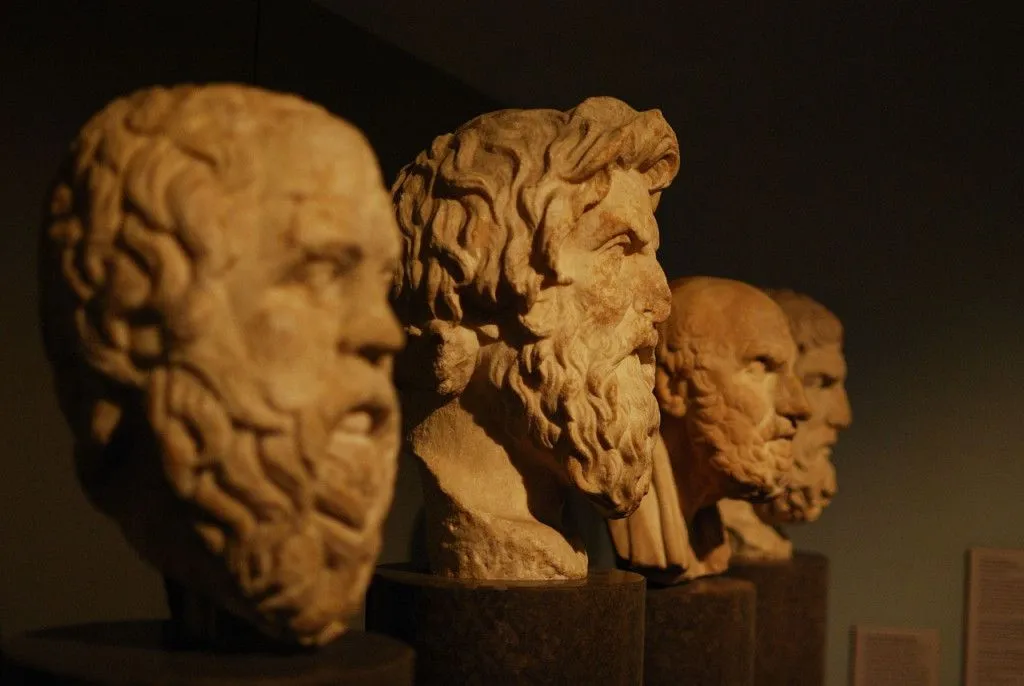
The term ‘dialectics’ comes from the Greek word ‘dialektikḗ,’ which means the art of conversation or discussion. In the classical Greek tradition, dialectics was associated with the Socratic method of questioning and refuting opposing arguments to arrive at a deeper truth.
In modern philosophy, dialectics has taken on a more specific meaning, implying a contradictory process between opposing sides that aims to supersede the logic of reductio ad absurdum.
This means that if the premises of an argument result in a contradiction, the premises are false, rendering one either devoid of premises or devoid of any substantive foundation.
The “Hegelian” Dialectical Triad
One important note before we go further: the famous “thesis – antithesis – synthesis” formula is popularly attributed to G. W. F. Hegel, but historians of philosophy have long pointed out that Hegel himself almost never used it. The crisp triadic schema was actually borrowed from Johann Gottlieb Fichte and popularised by Heinrich Moritz Chalybäus in 1837, and was famously debunked by Gustav Mueller in his 1958 paper The Hegel Legend of “Thesis-Antithesis-Synthesis”. (Britannica and the Stanford Encyclopedia of Philosophy both stress the misattribution.) Still, the triad is the way most people first encounter dialectics, and it captures the essence of what Hegel was after, so we use it here as a working teaching device.
The triad consists of three interconnected elements: thesis, antithesis, and synthesis.
The thesis represents the initial, established idea or position that serves as the starting point of the dialectical process. It is the generally accepted or dominant view on a particular issue or topic, providing a foundation upon which the dialectical exploration begins. The thesis is not necessarily absolute or infallible; it is simply the initial point of departure for the dialectical inquiry. It can be a specific theory, belief, social norm, or any established understanding that is widely held or considered the norm.
The antithesis is the opposing idea or position that arises in reaction to the thesis. It challenges and contradicts the existing thesis, often by highlighting its limitations, inconsistencies, or flaws. The antithesis represents a different perspective, a counterargument, or an alternative way of understanding the same issue or topic.
It emerges as a response to the perceived inadequacies or shortcomings of the thesis, introducing a new element, a different set of assumptions, or a contrasting approach that challenges the status quo. The antithesis is not merely a negation of the thesis; it is a necessary component of the dialectical process, as it pushes the dialogue forward.
The Synthesis
The synthesis is the resolution or reconciliation of the thesis and the antithesis. It represents a new, higher-level understanding that incorporates elements of both the thesis and the antithesis, while transcending their limitations. The synthesis is not a simple compromise or a midpoint between the two opposing positions; rather, it is a qualitatively different perspective that combines and transforms the previous viewpoints.
The synthesis arises from the dynamic interaction and tension between the thesis and the antithesis, as they challenge and inform each other. It represents a more comprehensive, nuanced, and integrated understanding of the issue or topic at hand.
The synthesis does not necessarily negate or completely discard the thesis and antithesis; instead, it incorporates their valuable aspects and elevates the discourse to a new level. This new synthesis then becomes the new thesis, leading to the emergence of a new antithesis, and the cycle continues, driving the dialectical process forward.
The thesis and antithesis are not seen as static, fixed entities, but rather as constantly evolving and interacting with one another. The synthesis, in turn, becomes a new thesis, which is then challenged by a new antithesis, leading to a further synthesis, and so on. Hegel saw this perpetual cycle of thesis, antithesis, and synthesis as the driving force behind the development of knowledge, society, and history.
The Industrial Revolution exemplifies the dialectical process. The thesis was the dominance of traditional agricultural and craft-based economic systems. The antithesis was the rise of industrialization, mechanization, and the factory system. The synthesis was the development of modern capitalist industrial societies with new social classes, technologies, and economic structures.
Where Did “Thesis, Antithesis, Synthesis” Really Come From?
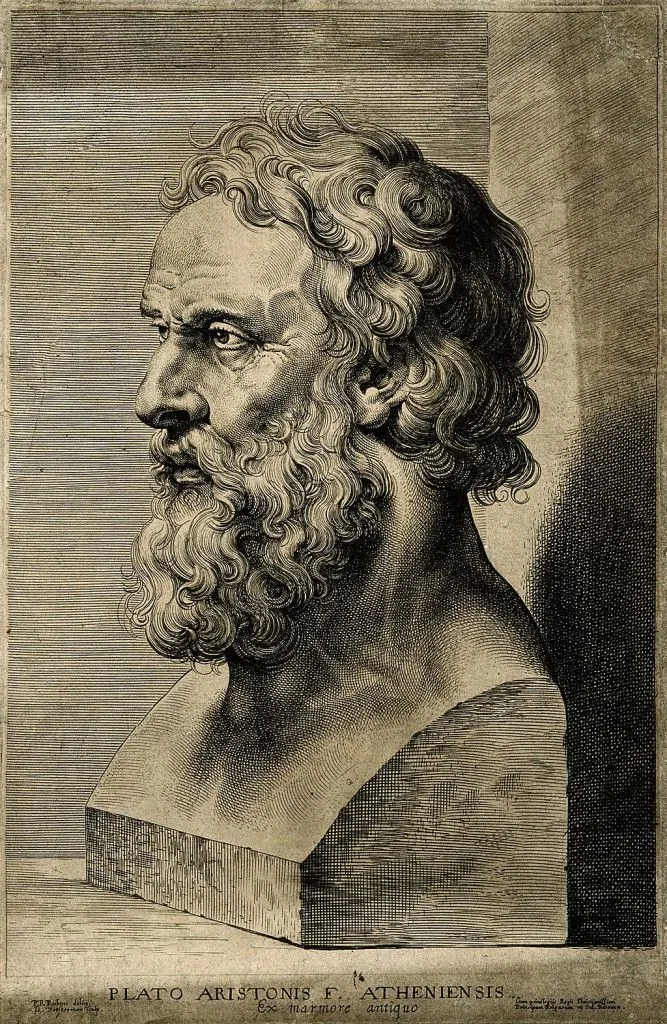
If Hegel did not coin the formula everyone hangs on him, who did? The triadic phrasing was developed by Johann Gottlieb Fichte, an idealist philosopher of the generation just before Hegel, who built his system around the movement from a posited idea to its opposite and on to a unifying third step. The Stanford Encyclopedia of Philosophy notes that Hegel only ever reached for the “thesis, antithesis, synthesis” language when he was describing Kant’s philosophy in his lectures, never as a label for his own method.

Hegel was, in fact, openly suspicious of the formula. He worried that boiling his philosophy down to a tidy three-step recipe turned a living process of thought into what he called a “lifeless schema,” a mechanical template stamped onto any subject from the outside rather than something that grows out of the content itself.
So how did the formula become welded to his name? Much of the responsibility lies with Heinrich Moritz Chalybäus, a German professor whose 1837 survey of speculative philosophy from Kant to Hegel recast Hegel’s ideas in neat Fichtean terms. The book was widely read (Karl Marx is generally thought to have been among its readers), and once the convenient shorthand caught on, later textbook authors simply copied it from one another. The philosopher Gustav Mueller traced and dismantled this chain of repetition in his 1958 essay, fittingly titled The Hegel Legend of “Thesis-Antithesis-Synthesis.”
What Was Hegel’s Real Dialectical Method?
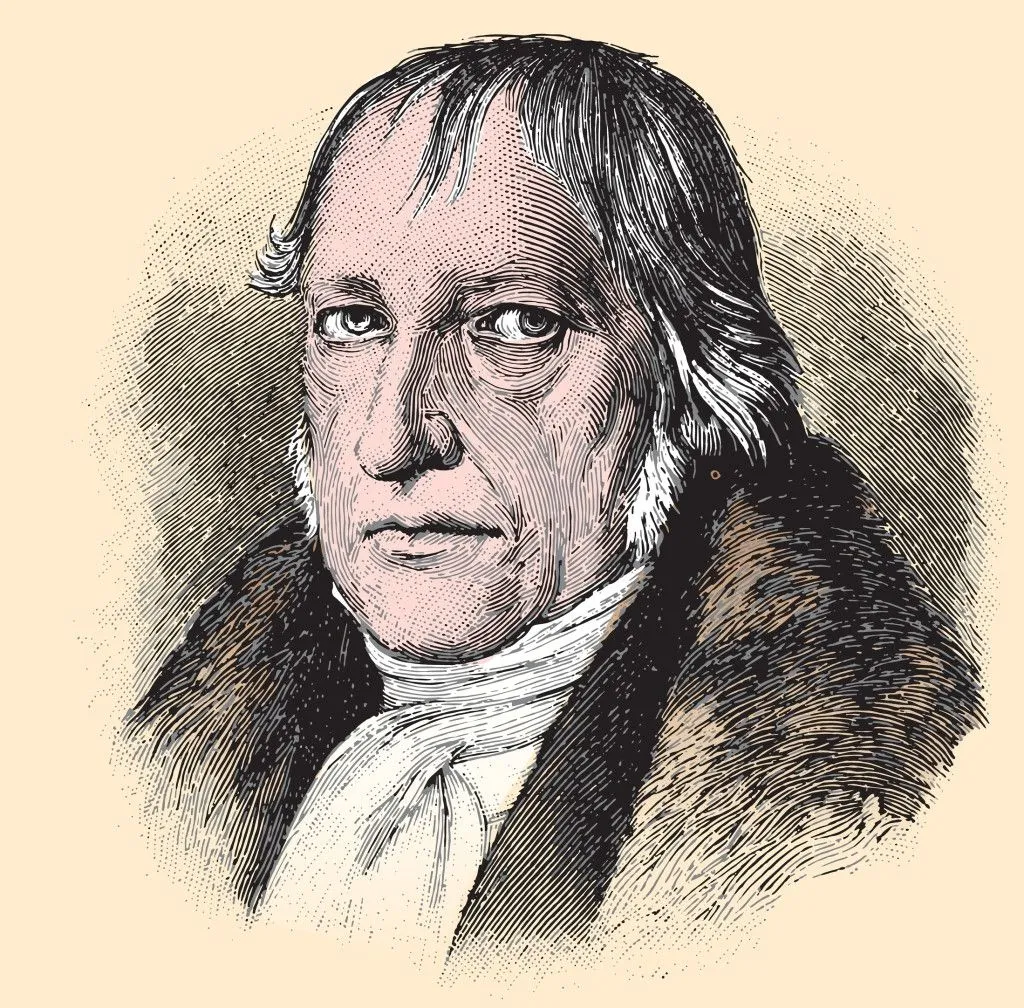
Strip away the borrowed labels and Hegel’s own account of dialectics still moves through three moments, just with different names and a subtler logic. In his Encyclopaedia Logic, he describes thinking as passing through a moment of understanding, a dialectical (or negative) moment, and a speculative (or positive) moment.

The moment of understanding is where a concept looks fixed and clearly defined, sitting on its own as though it were the whole truth. The dialectical moment arrives when that fixed concept runs into its own internal tension or one-sidedness and effectively undermines itself, passing over into its opposite. The speculative moment then grasps the unity hidden inside that opposition, producing a richer concept that holds the earlier tension together rather than wiping it away.
The idea binding all of this together is what Hegel called Aufhebung, usually translated as sublation. The German verb aufheben carries a deliberately double meaning: it means both to cancel or negate and to preserve or lift up at the same time. When one stage of thought is sublated, it is not thrown away; it is overcome and yet retained, folded into the more comprehensive idea that follows. That is why Hegel saw knowledge as cumulative rather than a string of clean replacements, and it is the genuinely Hegelian engine that the “thesis, antithesis, synthesis” slogan only loosely approximates.
Dialectical Materialism And Marxism
Hegel’s dialectical philosophy had a profound influence on the development of Marxism and the idea of dialectical materialism. Karl Marx and Friedrich Engels, the founders of Marxism, appropriated and transformed Hegel’s dialectics to fit their materialist, revolutionary worldview. In Marxist dialectical materialism, the focus shifts from the realm of ideas to the material, economic, and social conditions of human existence. The dialectical process is seen as the driving force behind the development of human societies and the class struggle.
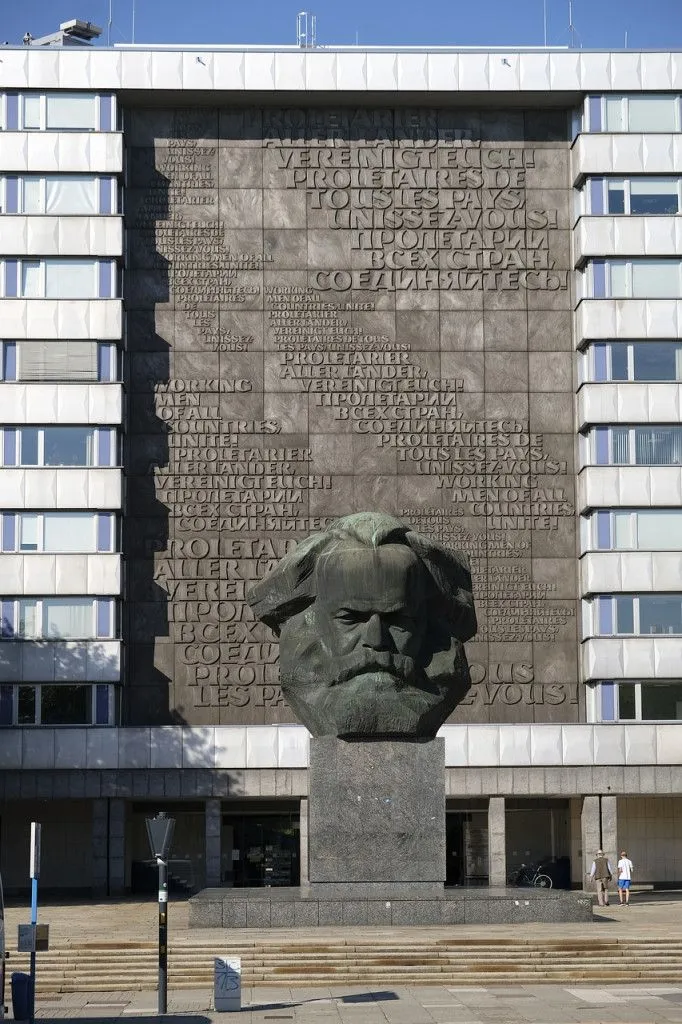
The Marxist dialectical triad reworks the 3 components. Thesis becomes the existing mode of production, social relations, and the dominant class in a given society. Antithesis is the contradictions and conflicts within the existing social and economic system, which give rise to the oppressed class. Synthesis is the revolutionary transformation of the social and economic system, leading to a new, more just and equitable society.
For Marxists, the dialectical process is not simply an abstract philosophical concept, but a tool for understanding and transforming the material world. The goal of dialectical materialism is to identify and resolve the inherent contradictions within capitalist society, leading to a socialist revolution and the establishment of a communist society.
Limitations Of Dialectics
Despite its widespread influence, dialectics has also faced significant criticism and limitations. The Hegelian-Marxist triad of thesis, antithesis, and synthesis has been criticized for being too simplistic and unable to capture the full complexity of real-world phenomena.

Dialectical theories have been accused of exhibiting a deterministic view of history, suggesting that the dialectical process inevitably leads to a predetermined outcome. Some critics also argue that dialectical theories lack sufficient empirical evidence and are more rooted in philosophical speculation than in rigorous scientific observation and testing.
Dialectical theories, particularly in the Marxist tradition, have been criticized for being heavily influenced by ideological and political agendas, rather than being purely objective and scientific, and for downplaying the role of individual agency and free will in shaping historical and social developments.
Despite these criticisms, dialectics remain a powerful and influential philosophical framework that continues to be debated and developed by thinkers across various disciplines. Its emphasis on the dynamic, contradictory, and interconnected nature of reality has inspired many to challenge traditional, static, and linear modes of thinking and to seek a more nuanced understanding of the complex world in which we live.
Conclusion
At its core, dialectics emphasizes the dynamic, interconnected, and contradictory nature of reality, and the constant process of thesis, antithesis, and synthesis that drives the development of knowledge, society, and history.
While dialectics has faced significant criticism and limitations, it remains a powerful and influential framework for understanding the world around us. By embracing the dialectical perspective, we can challenge our assumptions, engage with opposing viewpoints, and strive for a more comprehensive and nuanced understanding of the complex and ever-changing reality we inhabit.
References (click to expand)
- What is Dialectic?.
- Dialectic Creativity, Based Upon Hegel's Triad of Thesis, Antithesis, Synthesis. De Gruyter.
- Hegel's Dialectics. Stanford Encyclopedia of Philosophy.
- Mueller, G. E. (1958, June). The Hegel Legend of "Thesis-Antithesis-Synthesis". Journal of the History of Ideas. JSTOR.
- dialectic. Encyclopaedia Britannica.
- Johann Gottlieb Fichte. Encyclopaedia Britannica.