Table of Contents (click to expand)
The Great Compromise (also known as the Connecticut Compromise or the Sherman Compromise) was a deal struck at the 1787 Constitutional Convention. Proposed by Connecticut delegates Roger Sherman and Oliver Ellsworth, it created a two-chamber Congress: a House of Representatives apportioned by state population, and a Senate where every state, large or small, holds two equal seats.
This compromise occurred in the year 1787. It remains a pivotal moment in American History, as it was a crucial convention to amend the Articles of Confederation, which required fixing to remedy the crisis that the United States was facing at that time.
Let’s start by briefly examining the background of the Great Compromise.
The Connecticut Compromise led to a crucial debate among state delegates concerning how each state would be represented in Congress. This led to the Congress being split into a two-chambered system. This created the House of Representative, which is determined by a state’s population. The agreement retained the bicameral legislature, but the Upper House had to change in order to accommodate two senators from each state. The deal reshaped the American government’s structure, striking a balance between the highly populated states and their demands, while also taking into consideration the less-populous states and their valid interests.
Overview And Background
The United States went through some tumultuous years in the 1780s. The 1781 ratification of the Articles of Confederation provided an inadequate governmental structure. It had severe shortcomings related to the regulation of critical economic activities, such as trade, the levying of taxes and the drafting of soldiers. It also failed to solve the slavery issue, which had become polarizing in the North-West Territory. Following the American Revolution, the economy had plummeted and continued to struggle.
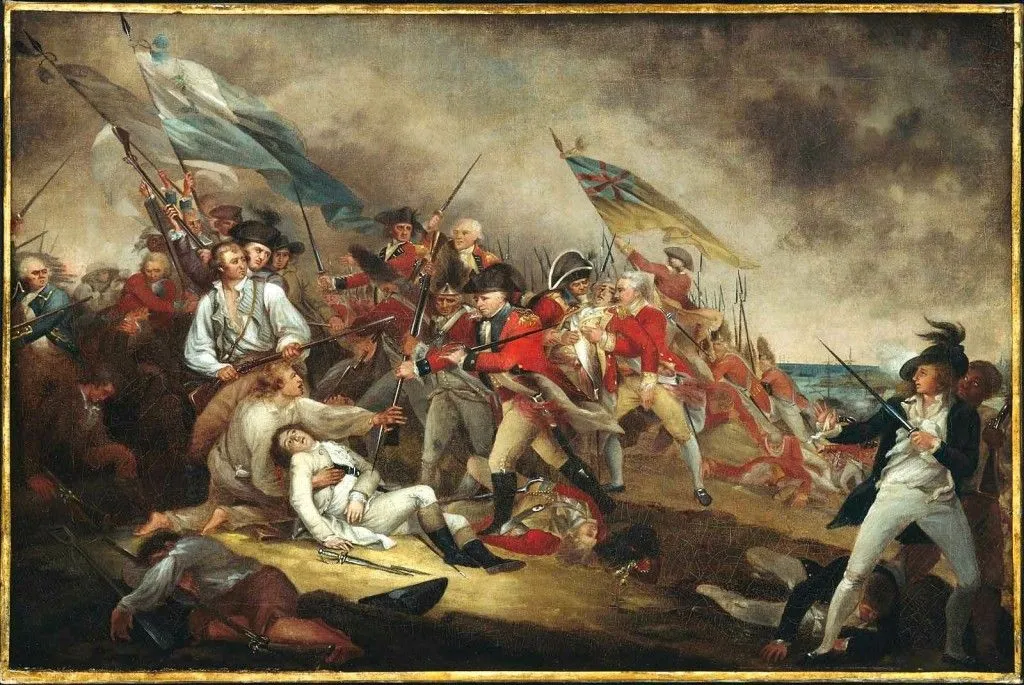
Many citizens found it extremely difficult to earn a livelihood, let alone pay taxes too! Hence, many people had turned to the State for help, but to their dismay, there were no concrete relief schemes in place. Further contentious political tactics had created significant strife and discord among the people. This instability paved the way for the Annapolis Convention of September 1786, which Alexander Hamilton and James Madison had pushed for in order to address the idea of a national reform. Madison helped rally states to send their delegates to Annapolis, Maryland, for the meeting. However, only five states’ representatives attended, but they still approved a plan in which every state would send delegates to the 1787 Philadelphia convention.
In May of 1787, 55 delegates representing 12 states (Rhode Island was absent) met in Philadelphia to discuss the limitations of the Articles of Confederation. The Constitutional Convention started later on, when Edmund Randolph introduced James Madison’s Virginia Plan, which William Paterson countered with the New Jersey Plan.
What Did The Great Compromise Do?
Before 1787, larger states like Virginia preferred congressional representation based on the population of the respective state. However, on the other end, smaller states wanted an equal representation of all states. This led to a massive debate and significant tension between the larger and smaller states. It was James Madison, with fellow Virginia delegate Edmund Randolph (who actually presented it on the floor), who came up with a solution for this via the Virginia Plan on May 29, 1787.
This plan outlined that the government should comprise three branches (the legislature, executive and judiciary). The three branches would serve a two-house legislature. The populace would elect the members of the Lower House, who in turn would elect representatives for the Upper House. In other words, both houses included a proportional population representation. Madison also proposed that Congress be granted a veto for all state laws. The New Jersey Plan, put forward on June 15, 1787 by William Paterson, called for equal representation of each state, as was the case in the Articles of Confederation, but Paterson also sought to increase Congressional power. He called for a one-house legislature, fair representation from each state, and popular elections.
Paterson also proposed a lifetime Supreme Court appointed by executive officers. He focused on the likelihood that the national government could violate the sovereignty of the states, so there needed to be a body that could keep the federal government in check. At this point, the less populous states’ representatives feared that the agreement would result in larger states drowning out their voices and interests, rendering the small states useless at the national scale. Madison, on the other hand, argued that the most important states were very different from each other. Hamilton pointed out that each state was an artificial entity. As such, the two sides, in which one side comprised the large states and the other represented the smaller states, rejected each other’s plans. The disagreements called for reflection, leading to intense negotiation over the future of the US government.
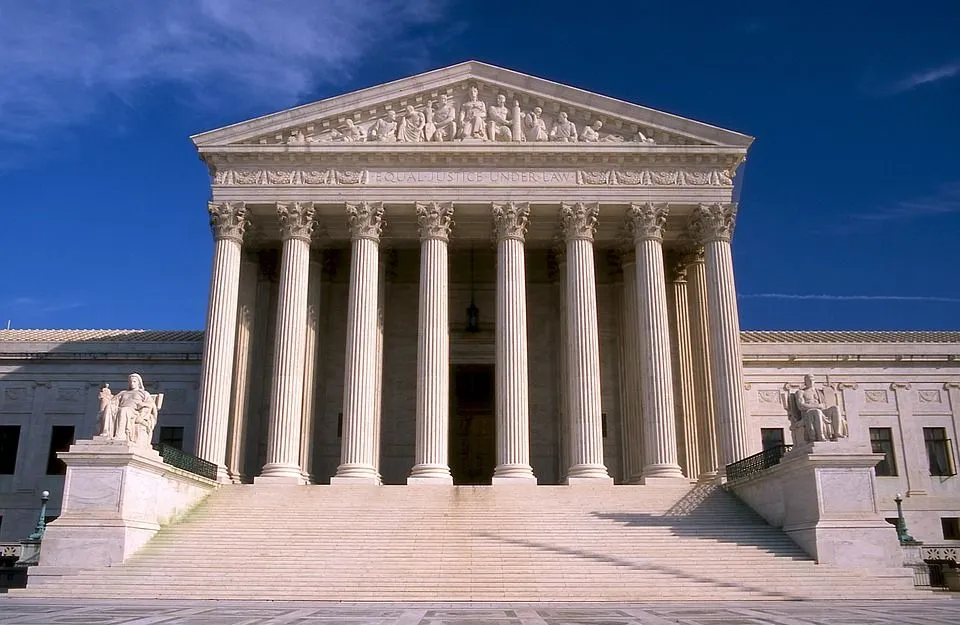
Roger Sherman, a delegate from Connecticut, with fellow Connecticut delegate Oliver Ellsworth, made a suggestion that eventually turned into the Great Compromise. Their idea involved a two-chamber legislature for the US (the Senate and the House of Representatives). The report from the convention’s “Grand Committee” recommended that, in the lower house, each state would send one member for every 40,000 inhabitants, along with two senators in the upper house (regardless of the state’s size). Benjamin Franklin, who served on that committee, backed the compromise and added the provision that all revenue bills would have to originate in the House. On July 16, 1787, the proposal passed by a single vote. Thus, the compromise was conjured, which paved the way for final constitutional passage and an important stepping stone in the creation and development of the United States.
What Was The Result Of The Great Compromise?
The most significant effect of the Great Compromise was the substantial change in America’s governmental structure. The agreement focused on working out the interests of large states like Virginia and New York, as well as the smaller states like New Hampshire and Rhode Island, striking a balance between proportional and general clout. The most visible change achieved under the compromise was that each would split congressional delegates between representatives, who would then be elected by district to serve in the Lower House, as well as senators to represent individual states in the Upper House.
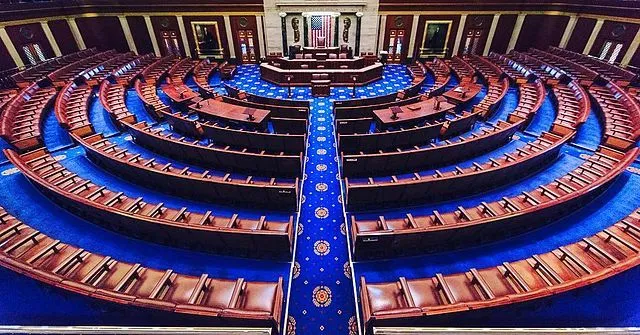
As such, the compromise balanced the needs of both the smaller states, which wanted a unicameral legislature, and the larger states, which were rooting for a bicameral legislature, thus paving the way for constitutional development. Ultimately, the Connecticut Compromise kept the Convention together and led to a bicameral Congressional system, in which the Lower House is based on proportional representation, and each state has equal representation in the Upper House. In conclusion, the Great Compromise helped to establish a power balance between large and small states concerning their voice and representation in Congress.