Table of Contents (click to expand)
The Emu War of 1932 was Australia's brief, doomed campaign to use machine-gun-armed soldiers against an estimated 20,000 emus invading wheat fields in Western Australia. After Major G.P.W.A. Meredith fired 9,860 rounds for only 986 confirmed kills, the operation was abandoned—the emus won. The ‘war’ was unsuccessful in bringing down the emu population, which is why it’s considered a rare war where humans were defeated.
The Great Emu War Of Australia (1932)
It all started after World War I came to an end.
Australian soldiers returning from the war had to resume their ‘normal’ lives once again. Most of the Australian soldiers that participated in the war were commoners, such as farmers or shepherds, as well as other men who had led pretty basic lives prior to the war.
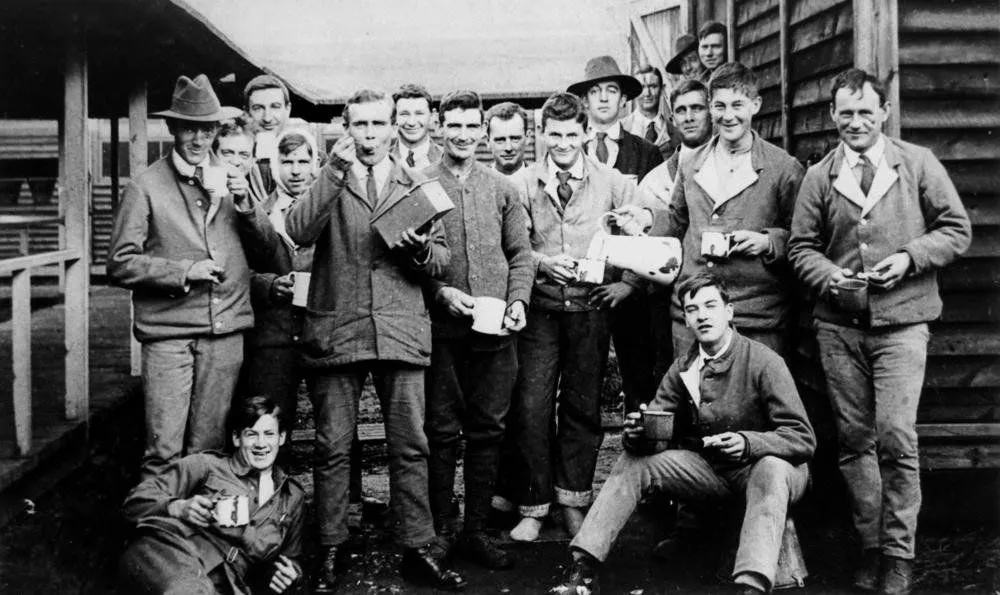
After the war culminated and these Australian soldiers returned home, their government struggled to find things that their veterans could do. One thing the government did in those circumstances was roll out a ‘soldier settlement scheme’ across all states, wherein more than 5,000 ex-soldiers were provided with plots of land, which they had to use to cultivate wheat and raise sheep.
Many soldiers were allocated lands in some pretty marginal areas of Perth (Western Australia), and the lands were barely usable. Needless to say, the veterans were not very happy.
To make matters worse, the Great Depression hit in 1929, which triggered a drastic downfall in wheat prices. In a bid to pacify hard-pressed veterans, the government promised wheat subsidies, but those aid packages never saw the light of the day.
Just when veterans thought the situation couldn’t get any worse, they were proven wrong, thanks to a particular beast of the wild – the emu.
The Emu Problem
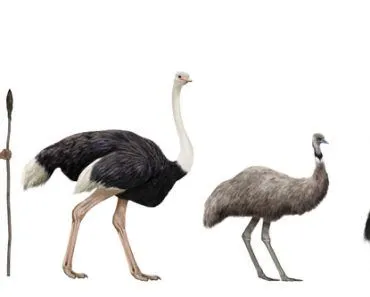
Emus are very big, flightless birds primarily found in Australia. Standing up to about 1.9 meters (6.2 feet) tall, emus are the second-tallest living bird in the world, after the ostrich. They have long necks and legs, but very short wings (less than 8 inches).
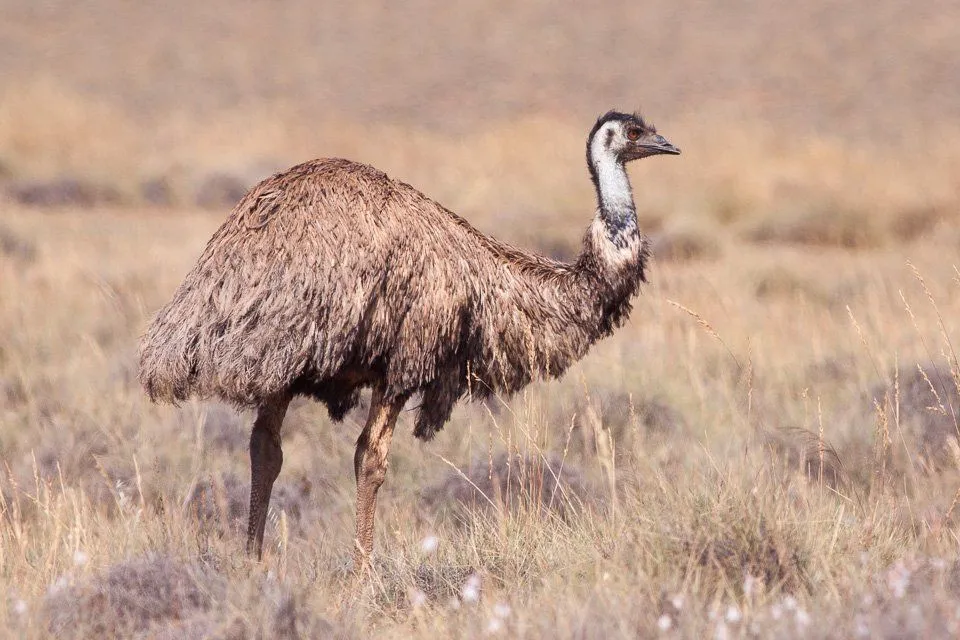
Up until 1922, emus were a protected native species in Australia, but then things changed.
Emus started to wreak havoc on crops; they came in huge numbers and ate standing crops down to the stub, thereby ravaging farmers’ crops and destroying their livelihood. By late 1932, around 20,000 emus had migrated to the newly cultivated lands, as resources in those areas were plentiful.
Needless to say, this was a nuisance that farmers couldn’t just ignore. At first, the farmers, who were ex-military, started shooting emus, since they were trained riflemen.
Yet even after felling hundreds of those mighty birds, they couldn’t really put a dent in the ever-growing numbers. It was then that they turned to the government for aid and requested the support of the Australian military.
The Military Vs. The Emus
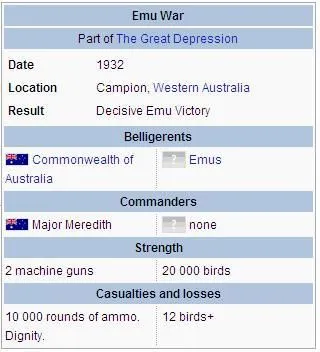
The ‘war’ against emus was commanded by Major G.P.W.A. Meredith—Gwynydd Purves Wynne-Aubrey Meredith, to give him his full mouthful of a name—of the Royal Australian Artillery's 7th Heavy Battery. Armed with 10,000 rounds of ammunition and 2 Lewis guns, a small contingent headed to the district of Campion to gun down a bunch of emus.
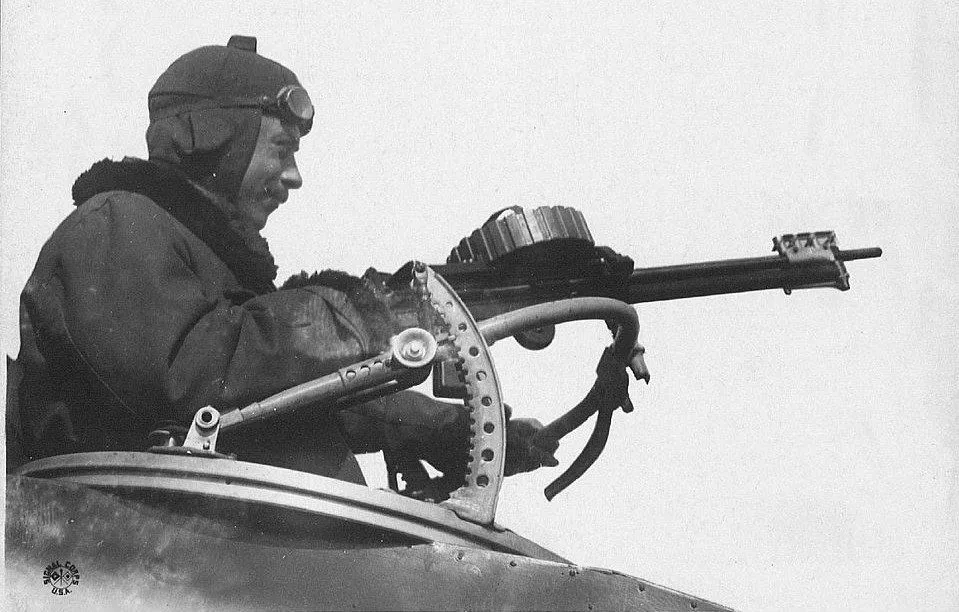
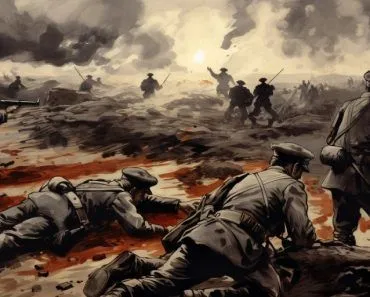
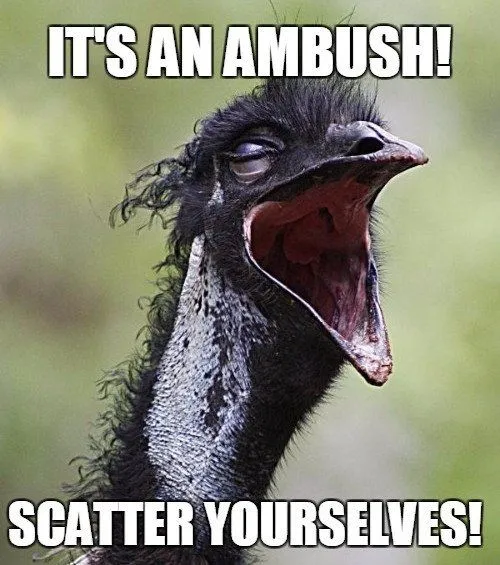
Armed troops moved behind the birds in tight combat formation, but the birds responded to this strategic assault by scattering themselves in all directions to minimize their casualties.
A couple days later, around 1,000 emus were spotted in a particular area. Again, soldiers opened fire, but this time from point-blank range. They felled around 10-12 emus before their machine guns jammed in the rainy weather, giving a perfect window of opportunity for the remaining emus to escape. That’s exactly what they did, fleeing safely out of the range of soldiers’ guns.
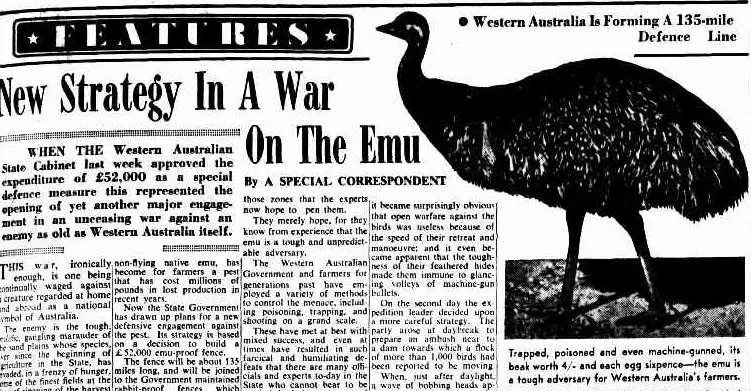
This was the first attempt by the military to cull the numbers of emus in the region. The abject failure of the military contingent to accomplish its objective (killing thousands of emus), combined with a lot of negative media coverage, prompted the government to pull out the military from the affected regions. Thus, in the first battle, emus emerged victorious.
Emus Struck Again, And So Did The Military…
A second military attempt to cull the emu numbers began on 12 November 1932 and ran until Meredith was finally recalled on 10 December. While this assault provided better results (i.e., they killed more emus this time), it was still far from a successful operation, from a logistical standpoint.
Meredith's official report claimed 986 confirmed kills using 9,860 rounds of ammunition—almost exactly ten bullets per emu—plus another 2,500 birds wounded and presumed to have died later. Historians treat both figures as suspiciously tidy, but even on the army's own numbers it was hardly a triumph. The government decided it wasn't worth it. Major Meredith was recalled, and the emus won… again!
This is how emus won the “Great Emu War of Australia” in 1932.
That being said, their numbers did drop drastically over the next 6 months, as the government provided locals with ammunition to tackle the situation themselves (which they did with great success). Even so, emus really made a place for themselves in the hearts of many people for their striking maneuverability (even when wounded), tactical intelligence and sheer bravery.
Major Meredith, the Australian commander in the Emu War, went on record to say this about his valiant ‘opponents’:
If we had a military division with the bullet-carrying capacity of these birds, it would face any army in the world… They can face machine guns with the invulnerability of tanks. They are like Zulus whom even dum-dum bullets (the ones that expand upon impact) could not stop.