There is no way of knowing if Pepin was actually short; it could be conjecture, a misinterpretation, or a mistranslation.
Before I start, the man in question has the name Pepin the Short… but also Peppin the Younger or Pippin III (depending on how you want to spell it), or Pépin le Bref (if you like him better in French). They’re all valid spellings and epithets.
Now, on to the more pertinent question…
Who Was Pepin?
Pepin III was a Frankish king and the first Carolingian to sit on the throne. Oddly, the term Carolingian, used to describe the lineage of kings he belonged to, is derived from his son, Charlemagne. That worked great for Charlemagne, but it must be terrible for Pepin to be the first one to do it and still not derive an important branch of kings from your name.
Pepin usurped the throne from the Merovingians, who were considered to be the first race of kings of the Franks, a Germanic tribe spread across France, Germany and Belgium. The reason this tribe stood out is because in the aftermath of the collapse of the Western Roman Empire in the 5th century CE, this tribe created one of the strongest Christian kingdoms of medieval Europe.
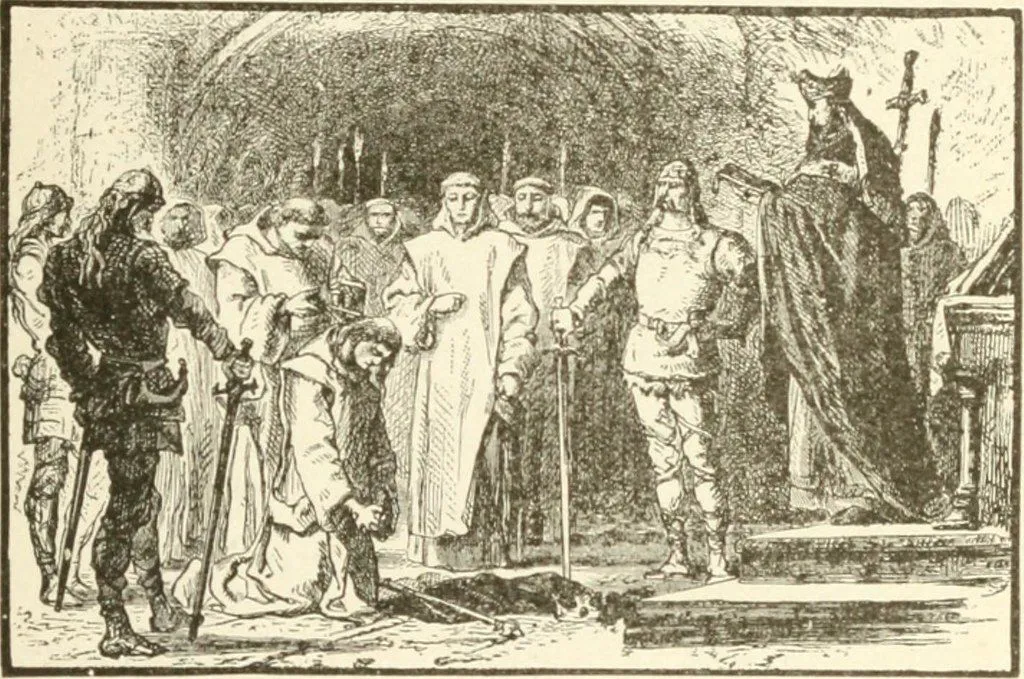
So how did a mayor’s son end up wearing the crown? In 751, Pepin deposed the last Merovingian figurehead, Childeric III, who was packed off to a monastery and had his long hair (the Frankish badge of royalty) ceremonially shorn. To give the power grab a sacred stamp of approval, Pope Stephen II personally trekked across the Alps and anointed Pepin, along with his two young sons, in 754.
Pepin repaid the favor in the most consequential way imaginable. He marched his army into Italy, forced the Lombards to give up a band of territory around Ravenna, and handed it to the papacy. That gift, promised in 754 and confirmed in 756, is known as the Donation of Pepin, and it became the legal bedrock of the Papal States that the Church would go on to rule for roughly eleven centuries. Pepin reigned until his death in 768, when his kingdom passed to his two sons: Carloman, and a boy who would grow up to become Charlemagne.

Was He Really That Short?
Truthfully, it is impossible to know how tall Pepin was, but it’s unlikely that he was short enough for people to remember him for it. Those of you who know that Napoleon was unwisely called short, hold your horses, as the situation here is not the same. Pepin is called short simply because of misattributed honorifics.
Back in the day, when Latin ruled the figurative roost, people used all sorts of fancy Latin terms as epithets, monikers and nicknames. Pepin’s happened to be “Pippinus” or “Pippinidus.” Pepin’s suffixed nickname “the Short” may have been a misinterpretation of “Pippinus,” which means “little Pippin” or “young Pippin”.
Perhaps that understanding was lost on the first translators, and before long, the use of ‘the Short’ became too common and popular to be corrected. This would be like someone stumbling across my texts in two hundred years and literally interpreting the ones where I call my friends ‘queen’ or ‘boss’.
Another theory, which further highlights the problem with most historical inquiry, is that we don’t really have many primary sources that describe the life of Pepin. Our most famous near-contemporary chronicle, Einhard’s Vita Karoli Magni (the Life of Charlemagne), is devoted to his son rather than to Pepin, and it pointedly sets the father’s deeds aside instead of recording anything about his appearance. The epithet itself only surfaces in commentaries written centuries after his death, used mainly to tell him apart from the other men in his family, who are also conveniently named Pepin.
Basically, the source of this epithet isn’t very reliable; it is only due to the fact that this epithet started being used that it exists.
So, How Tall Was Pepin Really?
Here’s the unsatisfying but honest answer: nobody actually knows, because nobody bothered to write it down. Logging the precise height of a king simply wasn’t something eighth-century chroniclers did, so there is no real measurement to recover.
That hasn’t stopped the internet from serving up suspiciously specific figures. Search around and you’ll see Pepin pegged anywhere from under five feet to about 150 to 155 cm (roughly 4 feet 11 inches to 5 feet 1 inch). Treat every one of them as guesswork. Not a single number traces back to a document written in Pepin’s lifetime; they are modern estimates dressed up as fact, usually back-calculated from the nickname itself, which is circular reasoning at its finest.
It also helps to know the baseline. The average adult man in early medieval Europe stood somewhere around 170 cm (5 feet 7 inches), and the Frankish aristocracy had a reputation for being especially tall and imposing. So even a perfectly average Pepin could have looked stubby standing beside his towering relatives. “Short,” in other words, may have been relative rather than remarkable.
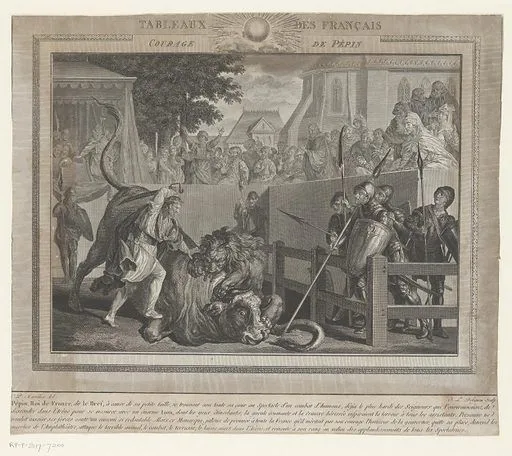
The legend, naturally, preferred a better story. One popular medieval tale, the kind later artists loved to paint, has a vertically challenged Pepin leap into an arena to face a lion and a bull that his sniggering nobles assumed would make short work of him, beheading each with a single stroke to prove that the size of a king’s body says nothing about the size of his reign. It is almost certainly too good to be true, but it lands the real point: whatever his actual height, Pepin’s record as a ruler towered over the joke buried in his name.
Does This Point To A Larger Issue Of Historical Reconstruction?
When there are no primary sources available that can help reconstruct the past and the people in it, historians must resort to a variety of methods to understand and interpret the lives of historical figures, as well as the events surrounding them. Historians over the generations build such narratives, relying on secondary sources, which are works on the subject written by other historians based on their own research.
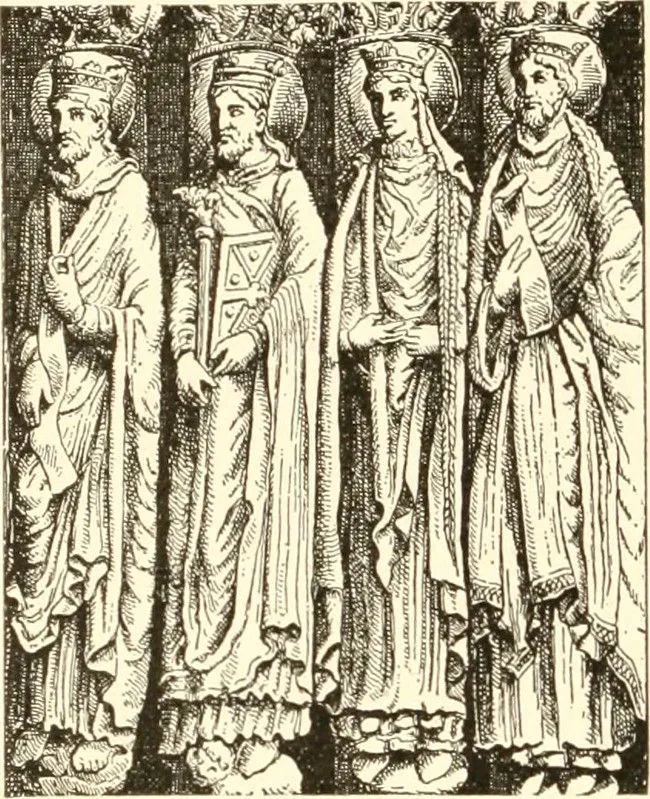
Now, imagine one historian through their research concluding that Pepin was in fact short, given that most historical records did not have proper citations and bibliographies like we do, and that references made to earlier works did not mean much if those works did not survive (or couldn’t be interpreted or translated). Thus, historians relying on the work of this one person could reinforce a ‘fact’ that may or may not be true.
I doubt that Pepin’s height would leave much of a dent in the historical record, but when such instances are observed around sensitive subjects and historical events that impact the present circumstances of people, it can lead to the manipulation of the past, or a mere misunderstanding of it, with tangible consequences.
Conclusion
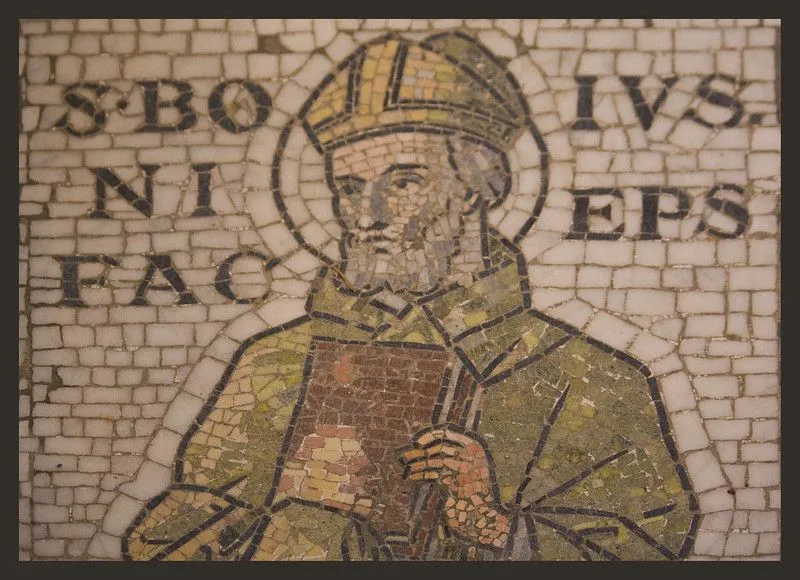
The fact remains that Pepin’s shortness somewhat overshadowed his other achievements; he was best buds with Saint Boniface and the Pope formally prohibited anyone who wasn’t related to him from becoming king of the Franks. He was quite literally the reason the Papal States (the state of the Catholic Church) came into existence (it’s called the Donation of Pepin).
His shortness also serves as a reminder to those of us who take history seriously; we can only draw definitive conclusions after thorough research and inquiry that delves into not just text, but also context. In other words, always check your sources!
References (click to expand)
- de Jong, M. (2015). The Empire that was always Decaying: The Carolingians (800-888). Medieval Worlds. Osterreichische Akademie der Wissenschaften.
- THE LIBRARY OF IBERIAN RESOURCES ONLINE - libro.uca.edu
- H White. (1973) Interpretation in History - JSTOR. JSTOR
- Carroll, N., & The Hegeler Institute. (1990). Interpretation, History and Narrative. (S. J. B. Sugden, Ed.), Monist. Oxford University Press (OUP).
- Donation of Pippin. Encyclopaedia Britannica.
- Pepin the Short. EBSCO Research Starters.