Table of Contents (click to expand)
Julius Caesar was assassinated on the Ides of March (15 March) in 44 BC by a group of about 60 Roman senators, led by Brutus and Cassius. They feared he had become too powerful: named dictator for life, he was seen as a threat to the Republic, so they stabbed him 23 times to stop him from becoming king.
23. That’s how many times Julius Caesar was stabbed. On the Ides of March (the midpoint of the month in the Roman calendar, falling on the 15th of March on our calendars) in 44 BC, he was stabbed by senators of the Roman Republic at a meeting of the Senate. It remains one of the most notorious assassinations in history.
Who Was Julius Caesar?
Gaius Julius Caesar has been immortalized for some because of his swift victories that gave the world one of its most beloved mottos ‘Veni, vidi, vici’ (I came, I saw, I conquered), others because of his famous last words in Shakespeare’s eponymous play, ‘et tu, Brute?’ (and you, Brutus?).
More than his words, however, his actions seem to resonate through the echelons of history. He was a brilliant general and politician in the Roman Republic, who went on to become its dictator after a civil war, thereby becoming the progenitor of the Roman Empire.

Known for his involvement in Rome’s complicated power politics, military genius in the Gallic Wars against the Gallic, Germanic and British tribes, and building a bridge on the river Rhine and crossing the river Rubicon, Caesar was a formidable statesman who was unafraid of crossing lines (or rivers) to the chagrin of the Roman Senate.
Why Was He Assassinated?
Following a civil war, of which Caesar emerged the victor, he gained considerable influence and power in Roman politics. In January 49 BC he had crossed the Rubicon into Italy with his army, defying the Senate’s order to give up his command, an act of open rebellion that triggered the civil war. His rising fame and popularity among the masses posed a threat to others in the Senate, a majority of whom were appointed, not elected.
Having earlier been named dictator for ten years in 46 BC, Caesar was then appointed dictator for life (dictator perpetuo) in early 44 BC. With this lifetime authority and the army under his control, he could systematically change the fundamental functioning of the previously closed-off Roman politics.
The Roman Senate had enormous influence over the workings of the Roman Civil system. It often controlled policy, civil and military decisions through treasury-management and vetoes.
However, a popular military and civil leader like Julius would be able to outdo them in their own sphere of influence.
There are many contradictory sources on what followed next, but the gist is that, seeing him as a threat to the Republic, a group of Senators assassinated him in a Senate assembly.
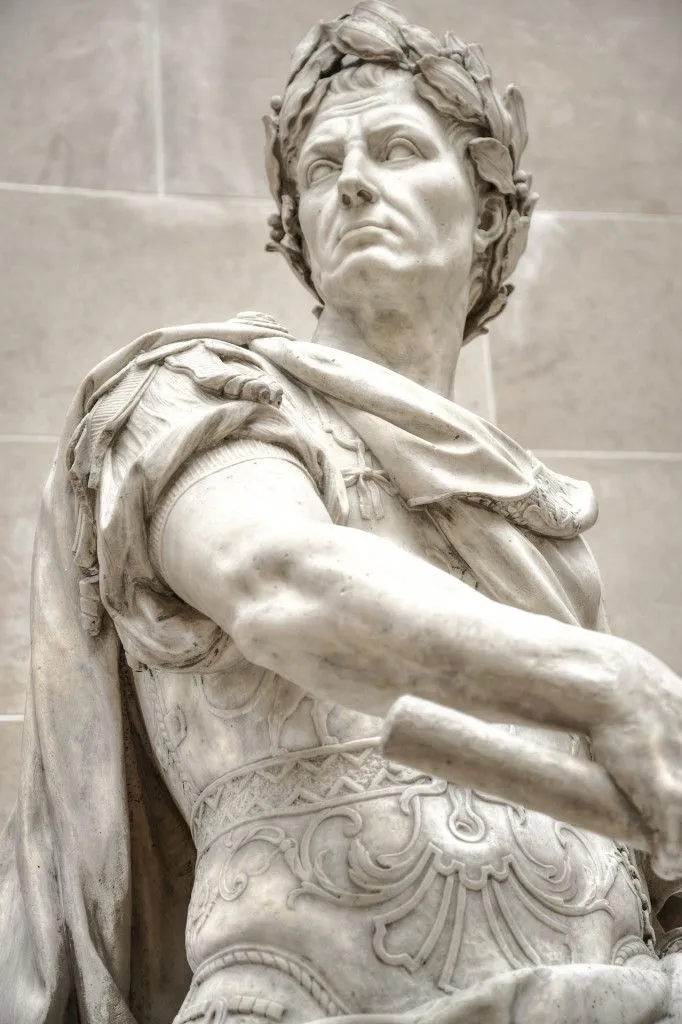
The senators Marcus Junius Brutus and Gaius Cassius Longinus were the masterminds behind the slaying, which consisted of almost sixty senators in the assembly attacking the helpless Caesar. Both of them had been on the losing side of the civil war, but had reconciled with Caesar and were considered friends by him. They were motivated by Caesar’s increasingly authoritarian behavior and a sense of responsibility to the Roman Republic and its people, to very literally stab their friend in the back.
Aftermath
In the aftermath of his assassination, Caesar’s death mobilized the people of Rome against the senators responsible for his death. Caesar had, over the years, created a strong following that developed into a personality cult. The common people of Rome saw him as a hero and a great leader that had ushered Rome into a prosperity greater than ever before. For the conspirators, he was a tyrant, but for the people, he was an ideal for them to support.
So, when instead of bestowing honors on his person, he was betrayed by a group of elites, a wave of indignation grew in the people of Rome until their violence submerged the Republic. A series of civil wars was fought in the chaos that ensued, beginning with the Liberators’ civil war (43-42 BC) against Brutus and Cassius and culminating in the defeat of Mark Antony and Cleopatra at Actium in 31 BC.
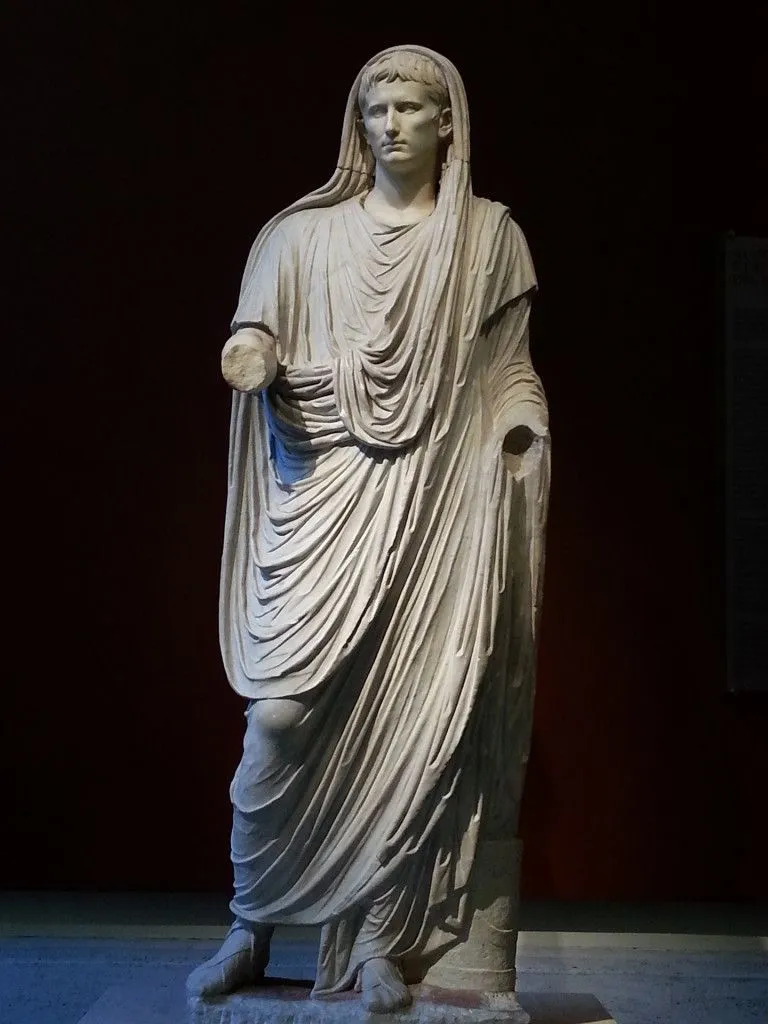
Augustus, also known as Octavian, the grand-nephew and heir of Caesar and a powerful party to these civil wars, became Rome’s first emperor and brought order to the mayhem. Augustus was able to carefully manipulate the contours of what the people saw of the Senate (as an aloof, indifferent representation of the upper-class interests) and created a narrative that borrowed from the legacy of Caesar’s followers. On gaining his power, he “reinstated” the Roman Republic in 27 BC, all the while keeping the actual influence and power for himself as princeps (first citizen).
Conclusion
A man of great valor (his very name, after all, became a title for ruler in its own right), Caesar became a victim of the vanity that is known to bring down great men. Hubris, or pride, made him underestimate the frustrations of the influential aristocratic classes that formed the Senate. They were the ones with the most to lose from his exponential rise among the lower and middle classes.
Nonetheless, his charisma as a leader seemed to have failed him in life, but in death, it turned him into a god. When the Senate formally deified him in 42 BC as Divus Iulius (“the divine Julius”), he became the first historical Roman to be elevated to a god of the state. Historians wrote about him, political and war commentators studied his successes and today, we still hear his name more often than any other general.
Let it be known, however, that the Caesar salad is not, in fact, named after him, but Caesarism is, and Kaiser is a derivative of Caesar!
References (click to expand)
- History - Julius Caesar - BBC. BBC Online
- Thompson, J.A. Sic Semper Tyrannis: Justification of Caesar's Assassination. Western Oregon University
- Mar 15, 44 BC: Julius Caesar Assassinated | National Geographic Society - education.nationalgeographic.org
- Life of Julius Caesar by Plutarch - Goodreads. Goodreads
- Grant M. (2002). The Twelve Caesars. Phoenix