To make a soccer stadium as loud as possible, architects keep the venue small and intimate, fit the stands with reflecting surfaces (and often a roof) that bounce noise back at the crowd, and use materials like wood and metal that boost reverberation. The loudest crowd roar on record, 142.2 dBA, came from fans at Arrowhead Stadium in Kansas City.
Imagine going to a football match only to find out that the crowd at the stadium is watching the match in dead silence. Where’s the fun in that? If you’d wanted peace, you would be watching the match at home on your television. That’s exactly why stadiums are meant to be loud, to the point where your ears start buzzing after the game! Noise producers like horns, vuvuzelas (a type of African horn), trumpets, and drums add to the collective voice of the fans.

The collective sound that we hear inside the stadium is what we call the ‘atmosphere of the stadium’. A good atmosphere at a sports stadium can make a big difference for both the players on the pitch and the spectators in the stands. However, it’s not easy to engineer the acoustics to get that exciting, magic feeling of the crowd.
The best football stadiums in the world, such as the Camp Nou of FC Barcelona (reopened in 2025 after its Espai Barça rebuild), the Santiago Bernabeu of Real Madrid, the Allianz Arena of Bayern Munich, and Borussia Dortmund's Signal Iduna Park, have specifically engineered acoustics to get the most sound and energy out of the crowd.
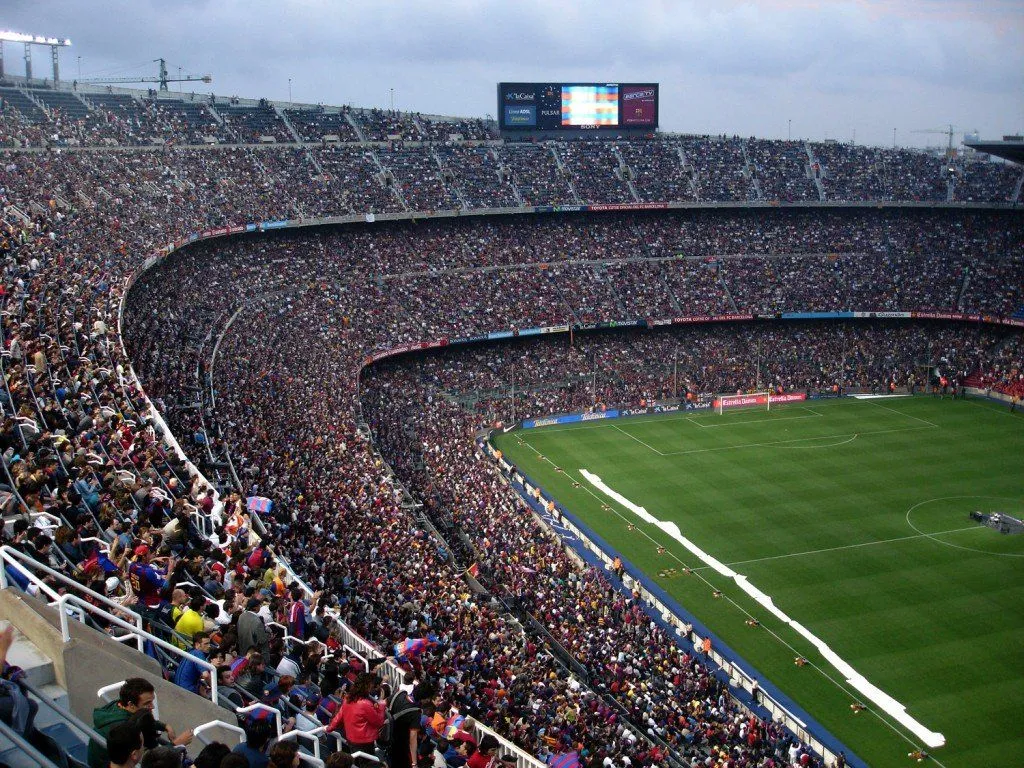
A lively crowd aids in boosting the performance of the home team, along with intimidating the away side.
So How Does An Architect Manage To Get The Most Out Of The Crowd?
Creating an atmosphere is not only about generating as much noise as possible. The new generation of stadiums now incorporates design features that help boost fan support by trapping and amplifying crowd noise. You’d think that a larger crowd means more noise, and while that’s true to some extent, in order to maximize the decibel levels, it’s important to keep the size of the stadium as small as possible, and to provide reflecting surfaces that can turn the noise back to the crowd. Since sound loses energy as it travels, the key is to keep the venue small and intimate.
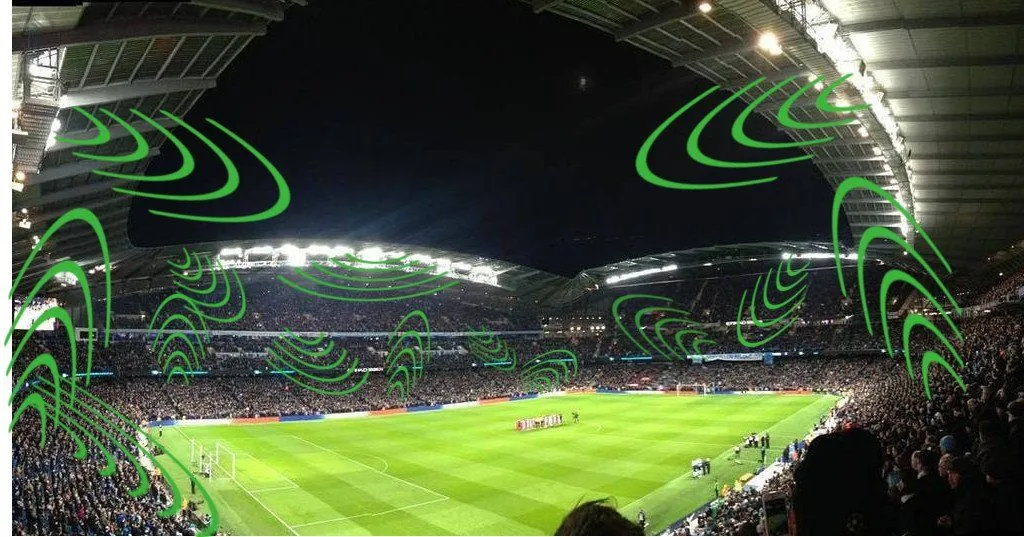
Most European football stadiums have partial roofs, which help to reflect the waves back to the crowd.
Another way of amplifying the sound is by using materials like wood and metal, which increase reverberations, thus increasing the sound of the crowd. The hollowness of the wood helps the sounds reverberate throughout the structure. This enables the crowd at one end to hear their counterparts at the opposite side. The payoff of getting all of this right can be enormous: fans of the NFL's Kansas City Chiefs pushed Arrowhead Stadium to 142.2 dBA in 2014, a Guinness World Record for the loudest crowd roar at a sports stadium, and Borussia Dortmund's steep, roofed Signal Iduna Park turns its “Yellow Wall,” the 24,454-capacity standing terrace that is the largest in European football, into one of the loudest single stands in the sport. It is worth noting that not every famous venue is engineered for noise. Many large, open-bowl American football stadiums, including MetLife Stadium in New Jersey (host of the 2026 FIFA World Cup final), let sound escape rather than trapping it, so their atmosphere leans more on the size of the occasion than on acoustic design.
Qatar's Al Bayt Stadium, which hosted the opening match of the 2022 FIFA World Cup, was built with acoustics in mind. Based on a tent-inspired model, it sits on a raised plinth that helps hold the noise and chants of the fans inside in a highly controlled way, while the PTFE membrane skin of the roof keeps reverberation in check on its own. The design team paid particular attention to projecting and testing the decibel levels inside, so the sound wouldn't be too harsh on the people in the stands.
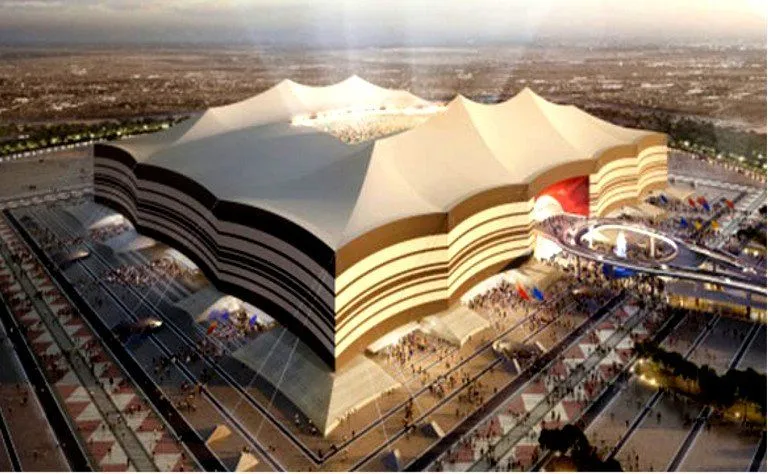
Essentially, the fundamental factor for obtaining an optimum noise level without being overly dependent on the fans is to equip the stadium walls with plenty of reflecting surfaces. These surfaces should be made of materials that provide optimum reflection of sound, along with strength and durability.
How Loud Does A Soccer Stadium Actually Get, Especially When A Goal Is Scored?
So what do all of those efforts add up to on the decibel meter? For most of a match, a packed, lively stadium hums along at a surprisingly steady level. When acousticians measured one full sports stadium section by section, the average sound exposure came out around 91.7 dBA, climbing to roughly 94 dBA close to the noisiest supporters. That is already loud enough that the same study warned spectators should really only sit in it for a couple of hours before it starts to threaten their hearing.

The moment everyone really comes to hear, though, is the goal. When the ball hits the net, that steady hum spikes into a short, explosive roar. When Luis García scored for Liverpool against Chelsea in the 2005 Champions League semi-final, the noise at Anfield was reported at around 130 dB, often cited as the loudest moment in British football history. At the 2010 World Cup in South Africa, the combined drone of tens of thousands of vuvuzelas pushed readings to roughly 131 dBA, closer to standing near a jet engine than to a normal conversation.
The record figures you tend to see quoted, like the 142.2 dBA that Kansas City Chiefs fans hit at Arrowhead Stadium in 2014, come with an important asterisk. Those are peak values, the single loudest instant a meter catches, not a level the crowd holds for any length of time. Acousticians who examined the meter readout from an earlier Arrowhead record, a 137.5 dBA peak set in 2013, pointed out that the sustained ("fast" time-weighted) reading on the very same screen was just 122.1 dBA, a full 15 dB quieter than the headline number. In other words, a stadium that briefly touches a jet-engine peak still spends the match at a roar rather than a scream.
None of this is harmless. According to the US National Institute for Occupational Safety and Health (NIOSH), the safe ceiling for prolonged exposure is just 85 dBA over an eight-hour day, and the safe time halves for every extra 3 dB. By that math, the 100 dBA bursts common in a loud stadium are safe for only about 15 minutes, and a 120 dB goal roar for a matter of seconds. It is part of why architects do not simply chase the highest possible number: the goal is a stadium that feels electric, not one that sends every fan home with ringing ears.
References (click to expand)
- How do you give stadiums atmosphere?. BBC Online
- Stadium Acoustics Pump Up the Volume. American Institute of Physics (Inside Science).
- Loudest crowd roar at a sports stadium. Guinness World Records.
- Noise Levels at Baseball Stadiums and the Spectators' Attitude to Noise. International Journal of Environmental Research and Public Health (PMC).
- Noise and Hearing Loss. National Institute for Occupational Safety and Health (NIOSH / CDC).
- Making Some Noise: Questioning Those 'World Record' Stadium Sound Levels. Acentech.
- Why Are (Some) Sports So Noisy?. Hearing Health Foundation.