Table of Contents (click to expand)
Spectators are the fans who fill the stands to watch a game. They are not just background noise: a home crowd can tilt the result through "home advantage," largely by nudging referees in favor of the home team. When COVID-19 forced leagues to play in empty stadiums, that home edge shrank by roughly half.
Picture this: it is 2020, and the NBA, the NFL, the Premier League and Major League Baseball are all playing to silent, empty arenas. No roaring crowd, no chanting fans, no wave rippling around the bowl.
For the first time in living memory, elite sport carried on without spectators, and not just for one freak game but for whole seasons across the planet.
So here is the question those eerie, hushed stadiums forced on us: what is the most important role that spectators actually play in a contest between two sides?
As fun as it is to be the fan who catches a foul ball or starts the chant, the crowd turns out to do something far bigger than that.
What Role Do Crowds Play?
Back in 1898, Norman Triplett ran what is widely called the first laboratory experiment in social psychology, and it was monumental for sports psychology too. He had noticed something odd in cyclists: they tended to clock faster times racing alongside a rival than riding alone. To test the idea in the lab, he had children reel in fishing line as fast as they could, either solo or in pairs.
Triplett found that the children wound the reel faster in pairs than alone (a result that, much later, turned out to be statistically shakier than the textbooks let on). Either way, it kicked off the study of what we now call social facilitation: the way our performance changes simply because other people are around.
It seems straightforward enough in simple, mechanical tasks, but it gets messy in humans. We have a tendency to overthink and emotionalize everything.
So when we perform in front of people we know are judging us (cue those dreaded pick-and-speak competitions in school), it often triggers evaluation apprehension. More specifically, we’re scared of performing or talking or even trying out for a team, for fear of being ridiculed.
Decades later, Robert Zajonc tied the loose ends together. In his drive theory of social facilitation, he argued that the mere presence of others puts us in a state of physiological arousal, and that arousal makes us reach for our "dominant response," the move that comes most automatically.
If the skill is well-practiced, that dominant response is the right one, so an audience sharpens us. If the skill is new or difficult, the dominant response is more likely to be wrong, so an audience makes us worse. Zajonc tested exactly this with cockroaches, timing them through an easy straight runway versus a tricky maze, with and without an audience of fellow roaches. What he is essentially saying is that if you’re well prepared, you’re sorted and will ace it. If you’re not, well, leave it to the gods.
What About Distraction?
If you have ever sat in the stands at an NFL game or a Premier League match, you know how noisy and loud it can get. Fans are cheering, screaming and chanting from start to finish. That wall of sound can be distracting even for seasoned athletes.
At the 2020 ATP Cup quarter-final between Novak Djokovic and Denis Shapovalov in Sydney, the crowd was given a stern warning after Serbian fans kept taunting Shapovalov. When Shapovalov swore back at them, the chair umpire stepped in and told the spectators that this was a tennis match and, if they could not be civil, they should "just go home."
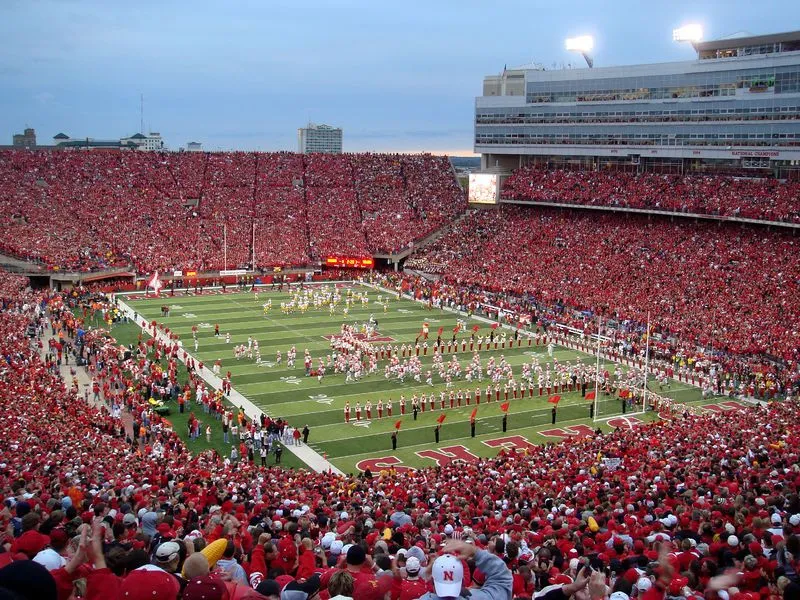
Crowds are distracting, and they can rattle a player’s focus, sour their mental state and tip the outcome of a game. To ease that cognitive load, many athletes are coached not to let the crowd get the better of them. Narrowing their attention onto the things that matter (the play in front of them) helps them push through, and plenty of players learn to "blank out" the noise entirely.
That is why so many athletes described the silent COVID-era games as feeling oddly like a practice scrimmage: relaxed, low-pressure and strangely calm without a crowd feeding off every play.
The pandemic was not the first time researchers got to watch a sport go quiet. Back in 1989, a measles outbreak forced the University of Hartford to host its conference basketball tournament with no spectators in the building. A study by Moore and Brylinsky compared those crowd-free box scores against games played in front of fans and found no real drop in performance without an audience; on some measures the teams actually played better in the empty gym.
Should We Eliminate Crowds Altogether?
While studies show that a crowd-free environment is more relaxed, that is not what players are really after. After being told in March 2020 that stadiums would have to sit empty, LeBron James said that he plays for his fans and would not play in a stadium without them (he walked the comment back later, once he grasped the situation).
Then again, what real benefit do fans bring? Why pack the place with these boisterous, noisy humans when everything could be so much calmer and more relaxed without them?
Well, a crowd can change the outcome of a game and hand the home side an edge. That edge has a name: home advantage, and it is one of the most reliable patterns in sport. Across the big US leagues, the home team wins well over half the time, from around 54% in Major League Baseball up to roughly 60% in the NBA, where the home-court edge is strongest. Research points to two ingredients: the crowd can lift the home players, but, even more powerfully, it nudges the referees into calling the game in the home team’s favor.
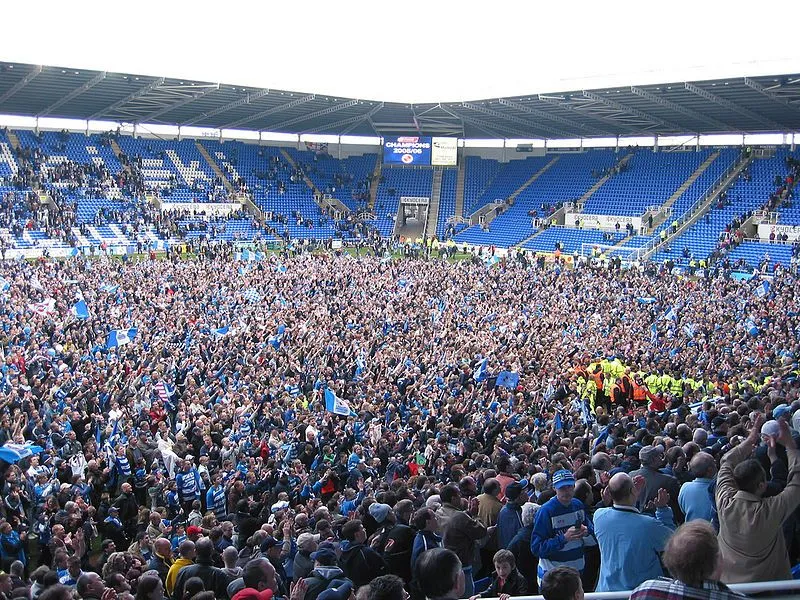
The COVID-19 shutdown turned that hunch into one of the largest natural experiments sport has ever run. A systematic review of 26 studies on these "ghost games" found that, with the stands empty, home advantage roughly halved, and the single biggest reason was that the referee bias largely vanished. In the Premier League, the number of yellow cards shown to away teams fell by about a third once the fans were gone. With no roaring home crowd to play to, officials simply called fouls more evenly, and visiting teams started winning more often on the road.
Another study, tellingly titled "Audience support and choking under pressure: a home disadvantage?", found that the very fans who are meant to be motivating can pile so much pressure on a player that they "choke." All that supportive attention turns into intense self-focus and self-awareness, which disrupts the smooth, practiced responses an athlete relies on.
What happens when the home crowd turns abusive? Games and players’ mindsets are significantly affected. A study of college basketball games looked at how abusive spectators changed player behavior; it found that when the crowd grew anti-social and hostile, the home team committed far more violations than the visiting team.
However, when the audience was calm, the violations happened significantly less.
It also turns out that the audience effect is sport-specific. Whether it is encouragement or hostility, players are affected by it, but not in the same way from one sport to the next. A study in the North American Journal of Psychology argued that you cannot generalize the impact of a crowd’s jeers or cheers. A basketball player’s free throws were largely unaffected, an unsupportive crowd hurt baseball pitchers, and for golfers any kind of noise (jeers or cheers alike) led to worse performance.
In football games, players note that those who are in more stationary positions are more prone to hearing abuses. Some even dread standing near particular stands, as the crowd there can be extremely abusive and even racist.
While players say this, playing for the major leagues and international teams is exciting, as is the attention that comes from the rest of the world. The kind of love and support players receive can be overwhelming and extremely motivating. Most players of a particular sport would be accustomed to the nature of the game and the kind of fans that it attracts. So, as annoying as spectators can be at times, they are part of the game just as much as players are.
Are Spectators Essential Then?
Though Zajonc got there in a rather bizarre way (with cockroaches, no less), he was right that an audience can lift a well-prepared performer. A crowd makes the atmosphere more joyful and the game more fun to play and to watch.
The crowd even narrates the action for you. When the cheer swells, you know the home team is doing well; when the stands let out a deflated "ohh," you know something has gone wrong. A burst of singing and roaring, and you can safely bet someone just scored a goal or hit a home run.
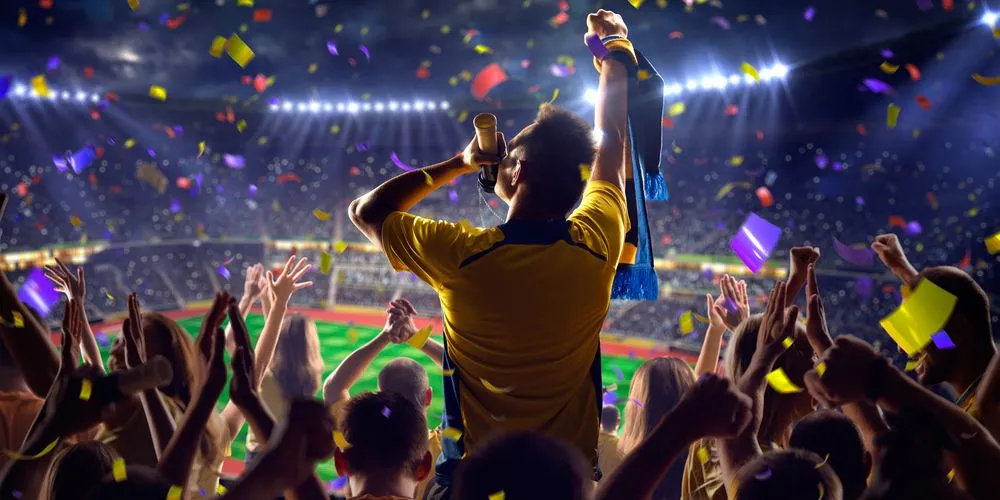
Fans these days will do almost anything to help their team win. They pull the strangest stunts to get inside a player’s head, and the moment they sense it is working, it only gets worse.
Modern sport asks for more than raw physical skill; it demands the mental discipline to tune out the white noise. The taunting and jeering genuinely throws players off their game, yet that, too, seems to be part of the deal.
So yes, spectators do far more than watch and support: at their best they raise a player’s performance. But that only holds when the athlete sees the crowd as a source of motivation, or stays neutral toward it. Turn that support into pressure, and the same crowd can make a player choke.
Interestingly, the effect does not even need a real, flesh-and-blood crowd. Studies have found that the presence of virtual humans in a simulated environment can trigger the same social facilitation and inhibition effects, something worth keeping in mind in an age of streamed competition and esports played in front of millions online.
References (click to expand)
- Leitner, M. C., et al. (2022). The cauldron has cooled down: a systematic literature review on home advantage in football during the COVID-19 pandemic. Management Review Quarterly. PMC, NCBI.
- Pettersson-Lidbom, P., & Priks, M. Behavior under Social Pressure: Empty Italian Stadiums and Referee Bias. IDEAS/RePEc.
- Home-Field Advantage: The Facts and the Fiction. Chicago Booth Review.
- Wallace, H. M., Baumeister, R. F., & Vohs, K. D. (2005). Audience support and choking under pressure: a home disadvantage? Journal of Sports Sciences.
- Social Facilitation Theory in Psychology. Simply Psychology.
- Home advantage. Wikipedia.