Commercial airplanes cruise at around 35,000 feet (about 6.6 miles or 10,668 metres) because the air up there is thin enough to cut fuel burn dramatically, the cold air helps the engines run efficiently, and the altitude lets pilots cruise above most weather, terrain, and bird strikes. The exact "sweet spot" altitude is the balance between fuel efficiency and the structural and oxygen limits of the aircraft.
Most commercial airplanes cruise at an altitude of nearly 35,000 feet—around 6.62 miles (10,600 meters) in the air! For people who think the top of a skyscraper is tall, flying more than 6 miles off the ground is incredible!
The thing is, what’s wrong with flying a few hundred meters above the ground, so long as the plane clears all ground structures like communication towers and skylines?
Well, first of all, the height at which most planes fly is not some arbitrarily chosen number. There are very good reasons why planes fly at precise heights in the sky. Let’s look into the science of why planes fly so high.
Air Resistance And Fuel Efficiency
One of the main reasons commercial airplanes fly so high is air resistance. You see, the higher you go above the ground, the thinner the atmosphere becomes, and therefore, the less resistance there is on the movement of the plane.
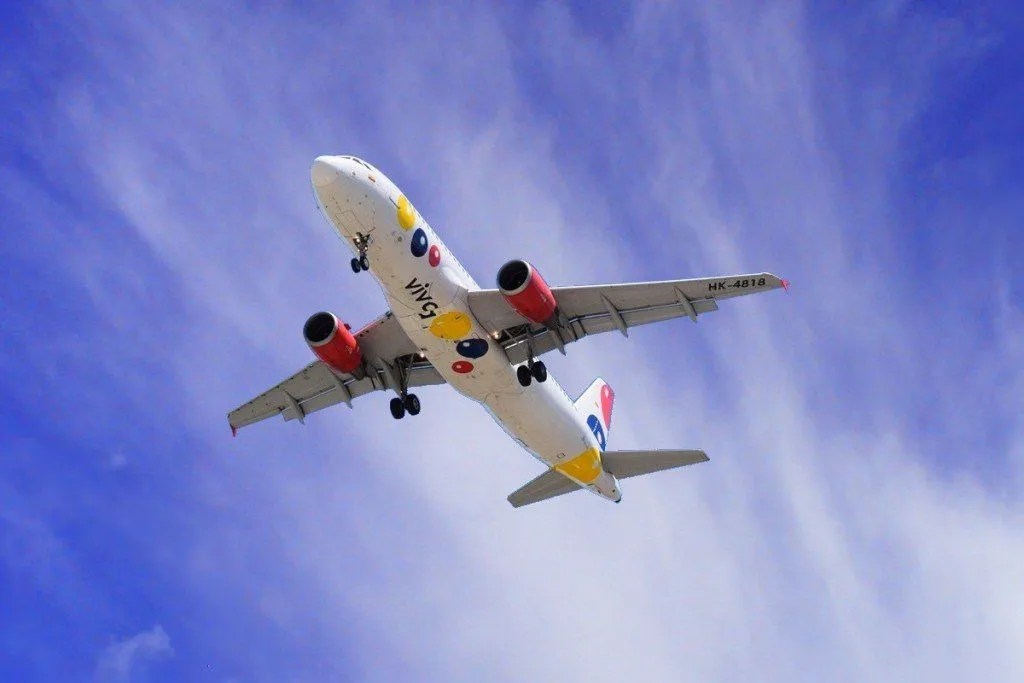
It’s pretty straightforward, actually—the more air molecules the plane must move through, the more energy it will need, so the more fuel it will need, and consequently, the operating costs will be higher. Additionally, it is pretty cold up there, around -55°C, which also aids in improving the efficiency of the jet engines.
Cruising Altitude: A Sweet Spot
Due to lower resistance at higher altitudes, commercial airplanes can keep moving forward with minimal fuel expenditure. Commercial airplanes typically fly between 32,000 feet and 38,000 feet, with the sweet spot being approximately 35,000 feet, which is popularly referred to as cruising altitude.
A balance between operating costs and fuel efficiency is achieved somewhere around 35,000 feet, which is why commercial airplanes usually fly at that altitude.
Most commercial airliners are certified to operate between roughly 39,000 and 43,000 feet, with a few wide-body models like the Boeing 747-400 reaching about 45,000 feet. Going beyond an aircraft’s certified ceiling is precarious because the air becomes too thin to generate the lift needed for stable flight and the engines lose the oxygen they need to keep producing thrust.
Back in 2004, Pinnacle Airlines flight 3701 crashed after its pilots took their CRJ-200 right up to its maximum operating altitude of 41,000 feet during a positioning flight. The aircraft stalled in the thin air, both engines flamed out and could not be restarted, and the jet eventually crashed into a residential area about 2.5 miles south of Jefferson City Memorial Airport in Missouri, killing both pilots.

Avoidance Of Weather-related Events Like Thunderstorms
Another important reason why commercial airlines fly at 6.6 miles up is that, at that height, they get more ‘stable’ air and don’t usually have to worry about clouds or weather-related events (e.g., thunderstorms).
Although planes can still fly through clouds and storms, they experience a lot of turbulence when doing so. This can cause discomfort in the passengers and even create panic on the plane. Fortunately, pilots are trained to handle such situations and they are expected to report such occurrences to the air traffic control room for further aid and advisement.
As an airline company, you don’t want turbulence; what you want is to give your passengers as smooth a flight as possible.
Clearing Obstacles
This one is sort of obvious. As a pilot, you don’t want to duck and dart through towers, buildings, and other ground structures while flying a plane. Regardless of how cool that may sound to some of you, it’s simply unsafe, not to mention impossible!
Terrain is marked by the sea level, so some terrain may be much higher above sea level than the runway/airstrip. That’s why planes ‘climb’ to an appropriate altitude to stay away from any sort of ground structures.
Over cities, towns and other congested areas, aircraft are not allowed to fly below 1,000 feet above the highest obstacle within a 2,000-foot radius (the FAA’s rule under 14 CFR 91.119; ICAO has a similar one). Over open country the minimum drops to 500 feet, and over open water it is just 500 feet from any person, vessel, or structure. The rule is partly about safety and partly about noise, which is why you tend to notice planes most when you live near an airport.
Cruising up high also gives airliners the room to plan a long, fuel-efficient descent into their destination.
However, at around 35,000 feet, airplanes lie on the sweet border between the troposphere and stratosphere. This region is almost free of birds, insects and microbes, so the chances of a bird strike up there are very small (though not literally zero — a Rüppell’s vulture famously struck an aircraft at 37,000 feet over Ivory Coast in 1973).
Miracle On The Hudson
There have been many instances of bird strikes on airplanes, but the one that got the most attention was the case of US Airways Flight 1549. Back on January 15, 2009, an airplane (Airbus 320) was struck by a flock of birds that caused both of the plane’s engines to fail. Fearing that the powerless airliner wouldn’t make it back to LaGuardia or to nearby Teterboro, Captain Chesley "Sully" Sullenberger deliberately ditched the aircraft on the Hudson River.
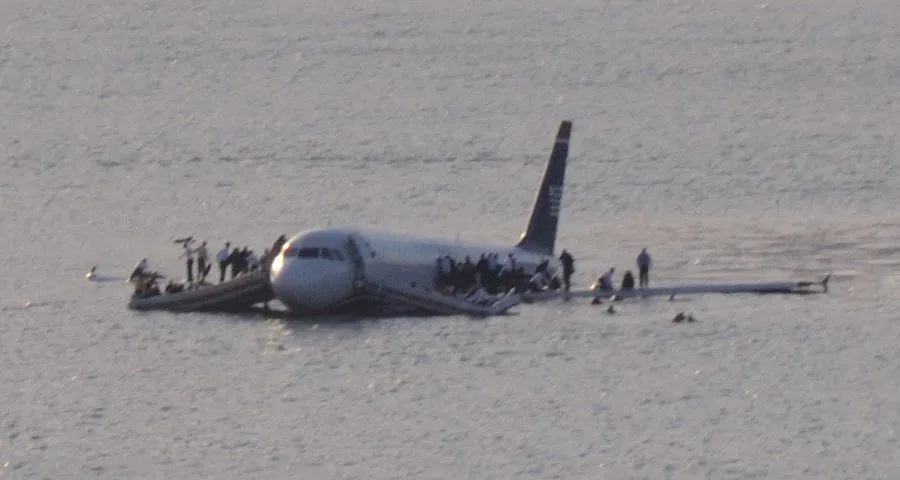
Miraculously, the plane didn’t sink after landing on the river and instead stayed afloat. This provided time to do rescue operations and all the passengers were evacuated. This incident is famously called the Miracle on the Hudson. You can learn more about it from our video below. You’ll learn exactly what happens when birds strike an airplane and how such incidents can be best averted by flying adequately high!
Safety Cushion
Imagine that you’re flying a commercial jet just a mile above the ground and something goes wrong. The plane starts to plummet. You know that the problem causing the plane to descend rapidly can be fixed, but the plane is falling too fast and you simply don’t have enough time to fix the problem. At that moment, you would think, “If only I had more time…”
Being up high provides that extra time to think and calculate and execute what needs to be done to keep your passengers safe.
What About Private Jets And Helicopters?
Thus far, we have discussed commercial airplanes reaching great heights and enjoying the related perks, like less air resistance and bird annoyance, but what about private planes and helicopters?
Private jets are a slightly confusing category, because the name covers two very different things. The high-end business jets you read about (the Gulfstream G650, the Cessna Citation X, the Bombardier Global 7500) use turbofan engines and actually cruise higher than most airliners, with certified service ceilings of around 51,000 feet. The small propeller-driven planes you might rent at a local flight school (a Cessna 172, a Piper Cherokee) are a different beast: their piston engines work roughly like a car engine and are rated to much lower altitudes, typically below 14,000 feet.
The other big constraint for unpressurized small aircraft is the pilot, not the plane. As you climb higher, the partial pressure of oxygen drops, which can quickly lead to hypoxia (where tissues stop getting enough oxygen). FAA rules under 14 CFR 91.211 require the pilot to use supplemental oxygen after 30 minutes above 12,500 feet, continuously above 14,000 feet, and the entire crew and passengers must be on oxygen above 15,000 feet — which is the practical reason most rental aircraft never venture much higher.
Helicopters are a completely different breed. Instead of wings they fly by rotating blades, and most everyday operations stay below 10,000 feet. They can go higher, though: the Aerospatiale Lama set the absolute helicopter altitude record at 40,820 feet back in 1972, and a modified Eurocopter AS350 B3 landed on the summit of Mount Everest (29,029 feet) in 2005.
Well, now you know why commercial planes fly at an altitude of around 6.6 miles. Flying at that height gives optimum air pressure and ambience—and most importantly, a safety cushion for pilots in case something goes wrong!