Table of Contents (click to expand)
Yes, a helicopter can fly upside down, but only for a few seconds at a time. Aerobatic models like the MBB Bo 105 and the Westland Lynx, which use rigid rotor heads, can loop and barrel-roll. Most commercial choppers cannot, because their rotor joints, blades, engine fuel and lubricant systems aren't built for sustained inverted flight.
If you’ve ever been to an air show, where trained aviators perform all sorts of daring maneuvers in the air with their aircraft, you surely would have been spell-bound by the death-defying flips and turns those aircraft make. Out of all the stunts performed by individual aircraft, the one that awes me the most is the ‘upside down’ flight.
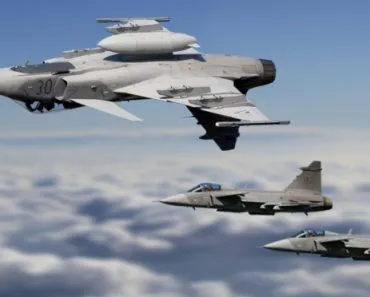
However, flying upside down is not that uncommon for aircraft; fighter pilots regularly engage in this gravity-defying maneuver, both in air shows and sorties.
This means that there’s a good chance you have seen a fighter aircraft zooming past the sky belly-up, but can you say the same about a helicopter? Can a helicopter fly upside down?
Short answer: Yes, some helicopters can fly upside down, but it’s NOT easy. Watch on this video you will know :
Flight Of A Helicopter
As you might already know, a helicopter flies by generating ‘lift’ – an upward force that keeps it from falling due to the effect of Earth’s gravity. Lift is generally produced by wings of any airborne vehicle, such as airplanes and choppers. Just like airplanes, helicopters also use airfoils to generate lift, but unlike airplanes, their airfoils aren’t in fixed wings, but are instead built into their strong, metallic rotor blades that spin at very high speeds (typically a few hundred revolutions per minute, roughly 200 to 500 RPM depending on the size of the chopper).
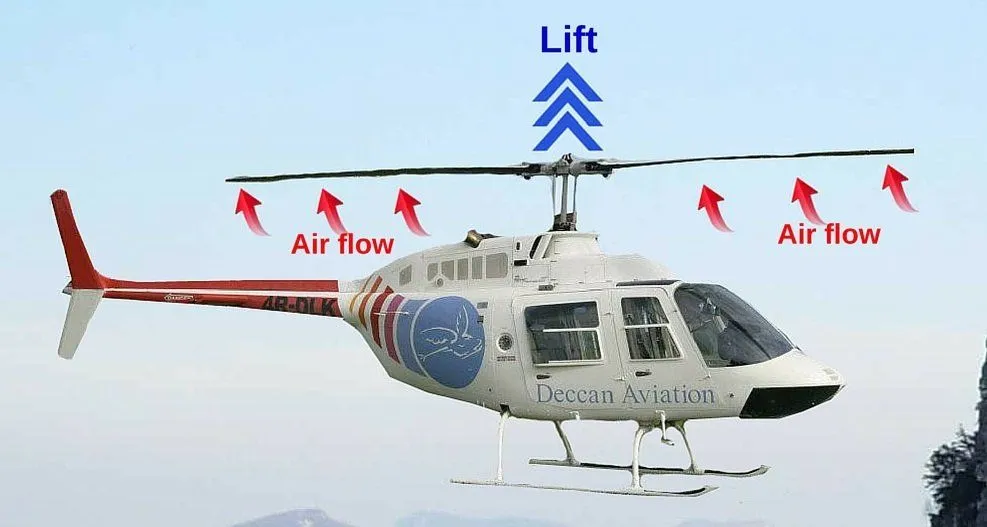
What these rotors do is push air downwards, creating a huge downdraft of air that thrusts the fuselage upwards, keeping the chopper airborne. With so many advancements in the mechanics and navigation technology of choppers, they have become quite a sophisticated and safe means of quick transport. In fact, it’s believed that if you are involved in a crash, you are more likely to survive if it’s a helicopter as opposed to an airplane.
Flying Upside Down
Since choppers rely on their rotors to generate lift and stay airborne, and those rotors engage solely in the act of spinning, it’s quite logical to assume that a chopper can manage to fly even when it’s inverted. Apart from being decidedly inconvenient, flying upside down shouldn’t be that big of a problem from a technical standpoint for most commercial choppers, right?
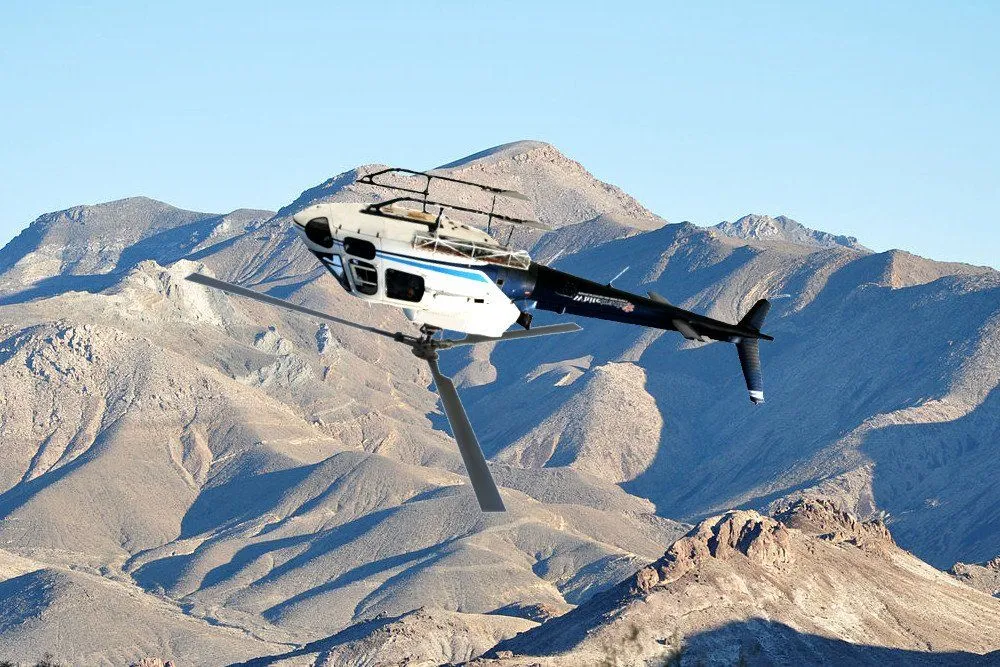
Well, in theory, this argument is more or less correct. Since a chopper relies on rotor blades to generate vertical thrust, flying belly-up shouldn’t pose too many problems, according to one Emilio Frazzoli, Associate Professor of Aeronautics and Astronautics at the Laboratory for Information and Decision Systems (MIT). However, in reality, flying a helicopter upside down is not that simple.
Challenges
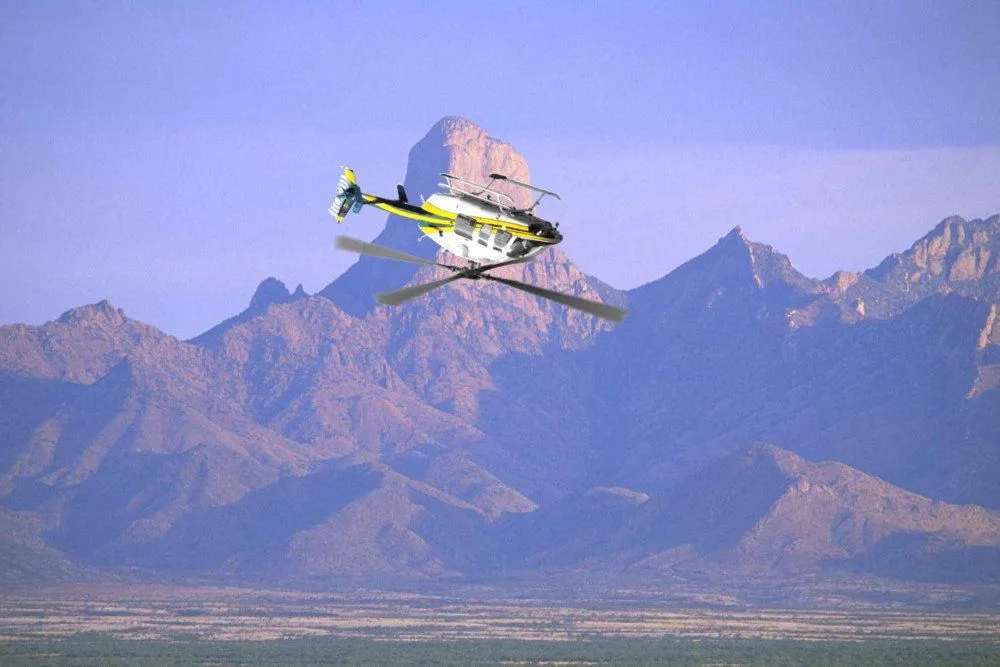
Most commercial choppers cannot maintain a sustained upside-down flight. The reason is pretty simple – they’re not designed to do that. To make a chopper fly upside down for more than a few seconds, the joint that connects the rotor blades with the fuselage would have to be redesigned and reinforced so that it could handle the load of a belly-up chopper. Also, the blades themselves would need to be more rigid so they wouldn’t flex, bend too close to the fuselage and crash against it, which would compromise the safety of the chopper and everyone in it.
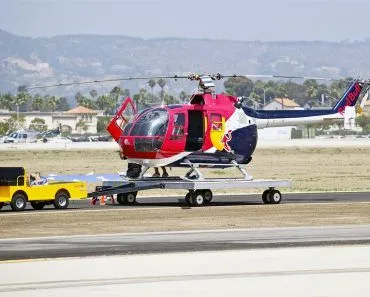
Furthermore, the chopper engine would require an overhaul so that the fuel and lubricants could be channeled properly during the upturned flight of the chopper. The flight controls would also need a tweak so that the blades could tilt downwards. For these reasons, there are a handful of helicopters agile enough to be flown upside down (briefly), thanks to their stiff, hingeless rotor heads. A prototype Westland Lynx (the type later flown by the UK Army Air Corps and the Royal Navy) was the first helicopter to complete a barrel roll, and the Lynx went on to perform loops and rolls in the British Army’s Blue Eagles display team. The most famous aerobatic chopper, though, is the MBB Bo 105: Red Bull’s “Flying Bulls” use a stripped-down Bo 105 to throw loops, rolls and inverted passes at airshows. And if you remember the opening of the James Bond film Spectre, the spinning helicopter stunt above Mexico City’s Zócalo was performed by stunt pilot Chuck Aaron in an AgustaWestland AW109, not in a regular passenger chopper.
Having said that, many of today’s choppers CAN fly upside down for a few seconds at a time, provided there’s an expert pilot handling the controls. While flying belly-up, you need to generate lift at the bottom of the chopper (which would be at the top in the inverted position).
This could be done by tilting the rotor blades a bit downwards. Also, the controls would be inverted, so the pilot would need to decrease thrust to gain altitude, push the stick backward to go forward and vice versa.
Suffice to say that it’s a bad idea to try and do a barrel roll inside a real helicopter if you’re not an expert. However, if you are insistent on trying to see the Physics behind it unfold in reality, you could always get your hands on a miniature, remote-controlled helicopter, take it to an airfield and watch it roll on its back all day!
References (click to expand)
- Can helicopters fly upside down? | MIT School of Engineering
- Airfoil - Wikipedia. Wikipedia
- Can a helicopter fly upside-down? | Notes and Queries. The Guardian
- Westland Lynx - Wikipedia
- MBB Bo 105 - Wikipedia
- BO 105 C - The Flying Bulls (Red Bull)
- Chuck Aaron Flies in James Bond's 'Spectre'. Flying Magazine