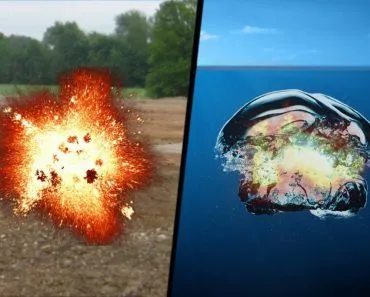
No: NOAA's National Severe Storms Laboratory says you cannot stop a tornado with a rocket, missile, or nuclear bomb. The tornado is only the visible spike of a much larger supercell thunderstorm, which would simply spawn another funnel. And the blast itself, especially nuclear, would cause far more death, property loss and radioactive fallout than the storm it was aimed at.
For those who have ever witnessed or experienced the awesomely terrifying power of a tornado, you know that there is nothing like it on Earth. Tornados seem to be incredible and unpredictable outpourings of Nature’s fury, and the idea of stopping one seems too crazy to imagine.
However, tornados are also hugely destructive and can cause massive loss of life and property, so there is quite a bit of research into how a tornado can be destroyed or dissipated before it does any harm. One of the most popular theories is to use a large-scale explosion, bomb, or rocket to send enough energy into the tornado to neutralize it – by counteracting the massive wind power already on display. But would it work? Can we use an explosion to stop a tornado?
A Quick Recap Of Tornados…
There is still a lack of knowledge regarding how exactly tornados form, which makes them both mysterious and deadly, because predictions of tornados are rather uncertain, unlike hurricanes and other tropical storms that tend to have longer lifespans. Some tornados can form and disappear within seconds, while others may rage across the land for over an hour. On average, tornados last for less than ten minutes, but they can still do a lot of destruction in that time!
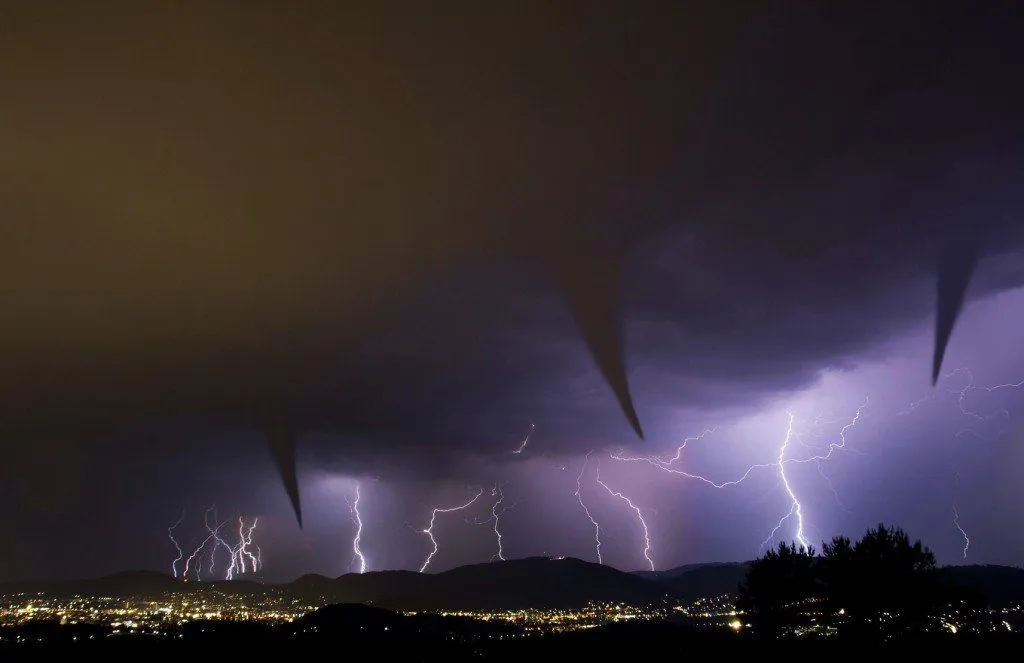
A tornado forms when there is a hot layer of atmospheric air that is covered by a relatively cold, dry bank of air above. When the warm air at the bottom of the atmosphere rises (due to its temperature), it pushes up on the cold air above. These are similar to the conditions for a normal thunderstorm, but when extreme winds are also brought in to the picture, causing the updraft of air to rotate, you get what is called a supercell thunderstorm, which is the primary source of tornados.
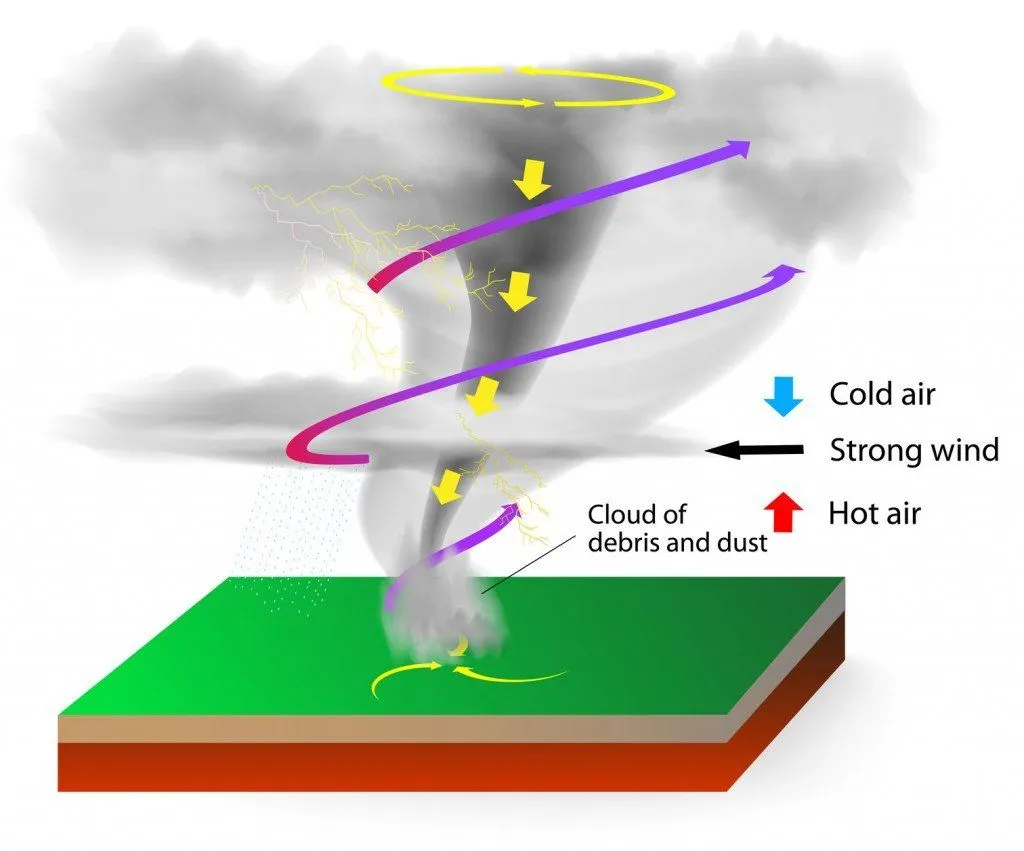
These rapidly spinning updrafts can then turn vertical and reach down to the ground, touching down in some cases, which is when the destruction truly begins. There is an incredible amount of energy and force in a tornado, and as it moves across the landscape, winds of over 100 mph tear up everything in their path. The strongest tornado ever measured was the 1999 Bridge Creek-Moore (Oklahoma) twister, where a mobile Doppler-on-Wheels radar clocked winds at 301 mph (a 2021 reanalysis revised the reading to 321 mph, the highest tornado wind speed on record). Even so, the huge amount of energy produced by a massive storm system and a tornado would require quite an impressive solution… but an explosion?
In Theory, The Idea Of An Explosion Seems… Unique
The thought behind an explosion being detonated in the heart of a tornado, or directly in its path, stems from the idea of disrupting energy flow. By changing heat flow and wind movements through the detonation of a powerful explosion in the path of a tornado, it could be possible to disrupt the energy of the twister and eliminate the threat.
However, as researchers have noted, this is no guarantee that you won’t simply be shifting energy within the larger storm system. In other words, by eliminating one twister and making the conditions unfavorable for a tornado in one location, there’s no way of knowing whether a new tornado will form in its place, perhaps 100 meters away, or a mile! There is so little practical experimentation that has been safely tried, which makes much of these ideas theoretical in nature.
Also, the consequences of shooting a rocket near a domestic area (which would be the only reason to use this sort of large-scale force – to prevent casualties) would pose its own risks, such as collateral damage of property and life. The proximity that this sort of infrastructure would require also makes the idea of explosions, bombs, or rockets slightly impractical. Imagine a four-minute tornado forms and your nearest drone strike or bomb deployment place is five minutes away; there’s no telling how long a tornado would last, nor are their paths overly predictable. The heavy-handed nature of using a massive explosion to stop a tornado is therefore possible, but not practical.
What If You Nuked A Tornado?
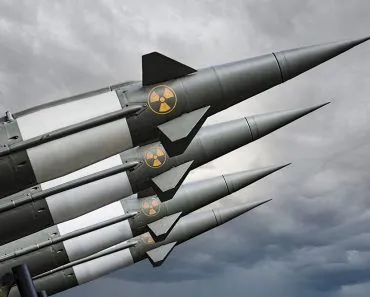
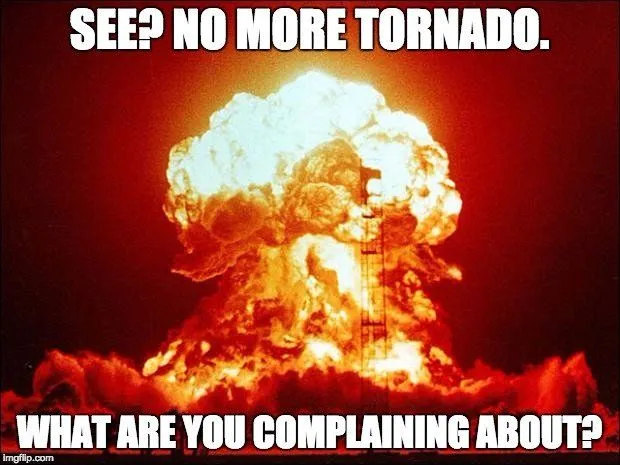
This is by far the most popular version of the question online, so it's worth tackling head-on: no, you cannot stop a tornado with a nuclear bomb. NOAA's National Severe Storms Laboratory has the same answer for tornadoes that they give for hurricanes: detonating a nuclear device near a tornado would be more deadly and destructive than the storm itself, would not stop the parent supercell from spawning fresh tornadoes minutes later, and would dump radioactive fallout across exactly the populated areas you were trying to protect.
There's also an energy-budget catch that makes the idea sound better than it is. A single tornado is a tightly focused vortex, but it is only the visible spike of a much larger supercell thunderstorm. Estimates from the U.S. National Severe Storms Laboratory put the total energy of a tornado-spawning thunderstorm at the equivalent of anywhere from 8 to more than 600 Hiroshima bombs. The vortex you see on the ground is drawing from a reservoir that even a strategic nuke can't empty in one shot, and as soon as the blast wave passes, the supercell is still there, still rotating, still able to produce another funnel.
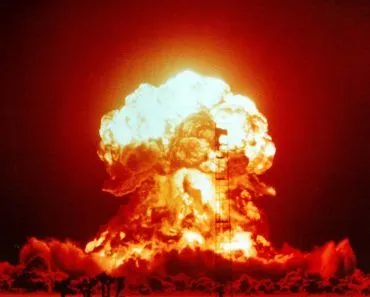
The third problem is geometry. A 1-megaton nuclear blast has a fireball roughly 2 km across and total destruction out to 5 km or more. Tornadoes form fast and move unpredictably at 30-70 mph, often through farmland and small towns. To "hit" a tornado you'd have to detonate the device at or near a populated area, which is the same thing as nuking your own town. The cure is, on every axis, much worse than the disease.
Can Fireworks Stop A Tornado? (And What About Twisters?)
If you have searched this exact question lately, you can probably blame Hollywood. The 2024 blockbuster Twisters built its whole climax around firing canisters of moisture-absorbing chemicals into a funnel to dry it out, and the spectacle sent a fresh wave of people online asking whether you could really kill a twister with, say, a few fireworks launched off the back of a pickup. The short answer is the same one we keep arriving at: no. Fireworks carry a laughably tiny fraction of the energy in play, and the parent supercell simply doesn't care.

The numbers are humbling. Robin Tanamachi, an atmospheric scientist at Purdue University, has estimated that the energy churning through a tornado's column is on the order of one Hiroshima-sized atomic bomb every second. A tornado that stays on the ground for a minute is therefore burning through roughly 60 nuclear bombs' worth of energy, and it is pulling all of it from the much larger storm overhead. A burst of fireworks, by comparison, is a sparkler waved at a furnace. (For a sense of just how much raw power a twister packs, see our piece on whether we could harness energy from tornadoes and hurricanes.)
The chemical-drying trick from the film fares no better. To soak up enough moisture and heat to starve a supercell, Tanamachi has noted, you would essentially need "a miniature Sun." And as Dr. Bill Gallus, a meteorology professor at Iowa State University, told Science Friday, no one is even trying to switch off a tornado in the first place: researchers are not aware of any serious effort to dissipate them, so the work goes instead into forecasting and warnings that get people to shelter in time. The fireworks, in other words, were strictly for the movie.
Any Other Solutions To Stop Tornados?
Although bombs don’t seem like a great idea, researchers have been developing methods of stopping tornados by changing the conditions in which they’re formed. One of the most interesting ideas consists of solar-power collecting satellites in space beaming that solar energy in a concentrated form (microwaves) at large storm fronts. In theory, this could cause the cold, dry air to heat up at the top of supercell storms, preventing the dangerous updrafts that cause tornados to form.
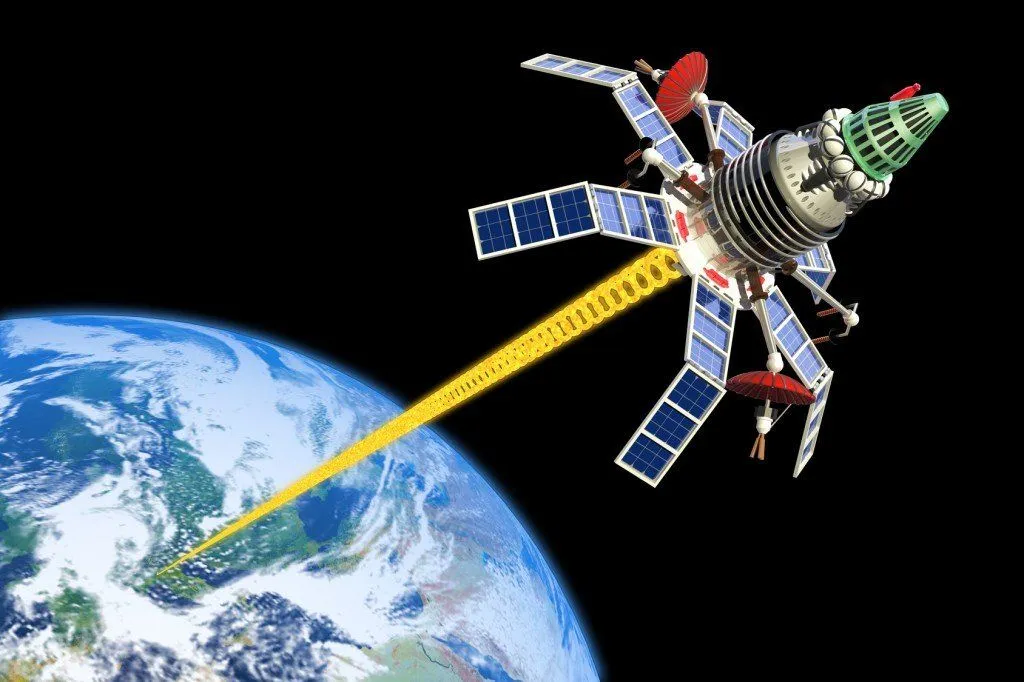
Another outlandish (but creative) theory suggests that we could use solar satellites or mirrored lenses on Earth to heat up atmosphere in certain areas, effectively diverting the paths of these tornados and large storms away from inhabited or protected areas. Again, the precision, timing, and infrastructure required for these sorts of solutions are a bit difficult (and expensive) to achieve, but at least we know that someone is on the job.
When a tornado is bearing down on your house, the last thing you want to worry about is dodging bombs and explosions too. Until a better, more viable solution is found, you should just duck and cover, and hope the storm passes over.
So How Do Tornadoes Actually Stop On Their Own?
Here is the reassuring twist: tornadoes are remarkably good at killing themselves, no rockets required. According to the National Weather Service's Spotter's Field Guide, a tornado moves through a brief life cycle, developing, mature, and finally dissipating, and the thing that ends it is the same machinery that built it. The culprit is the rear-flank downdraft, a surge of cooler air that descends and wraps around the back of the rotating circulation.

A tornado is fed by warm, moist, buoyant air streaming in at the surface. As the rear-flank downdraft undercuts that inflow and curls all the way around the vortex, it separates the tornado from the warm air it needs to survive. Choked off from its fuel, the circulation can no longer sustain itself and begins to fall apart. This is why a dying tornado so often takes on that eerie, thin, snake-like shape, the famous "rope" stage, before it finally fades away. On average, the whole performance is over in under ten minutes.
That natural shut-off is also why every serious "stop a tornado" idea targets the parent supercell rather than the funnel itself: the vortex was always going to rope out on its own. The honest takeaway, then, is that the tornado will dissipate when its storm decides it should, and not a second sooner, which is exactly why meteorologists pour their effort into early warnings instead of weapons. When one is bearing down, your job is simply to get to a sturdy, low, interior space (a basement or a windowless inner room beats riding it out in a bathtub) and let the storm burn itself out.
References (click to expand)
- Hurricane FAQ - NOAA/AOML - www.aoml.noaa.gov
- 3 wild ideas for how to stop a tornado - Popular Science. Popular Science
- Severe Weather 101: Tornado FAQ. NOAA National Severe Storms Laboratory.
- 1999 Bridge Creek-Moore tornado. Wikipedia.
- Tornado Life Cycle. NWS Weather Spotter's Field Guide. National Weather Service.
- The Tornado Science To Know Before Seeing 'Twisters'. Science Friday.
- Can You Stop A Tornado? Atmospheric Scientists Reveal the Truth About the Biggest Plot Point in 'Twisters'. Inverse.