Table of Contents (click to expand)
A vortex ring (or toroidal vortex) is a doughnut-shaped whirl of fluid that forms when a slug of air or water is pushed out through an opening. The fluid at the edge rolls up on itself into a spinning ring. Each part of the loop is carried forward by the flow the rest of the loop creates, so the ring propels itself and holds its shape, as seen in smoke rings, dolphin bubble rings and mushroom clouds.
If you have ever sat down for a relaxing afternoon at a hookah bar, you’ve likely seen someone showing off their skills in blowing smoke rings. They are captivating, because despite being made of a gas, which we know will (generally) evenly distribute within its container, these rings seem to whirl and dance in place, refusing to break apart or fade. Some people can even do tricks, blowing dozens of rings or passing tiny spinning rings of gas through larger ones.
Humans aren’t the only creatures who have a fascination with such rings. Various marine creatures can create such rings underwater, both with air and fast-moving water. In fact, such rings (called vortex rings) can be made in a number of unexpected places, and still hold some mysteries for researchers to uncover.
How Are Vortex Rings Formed?
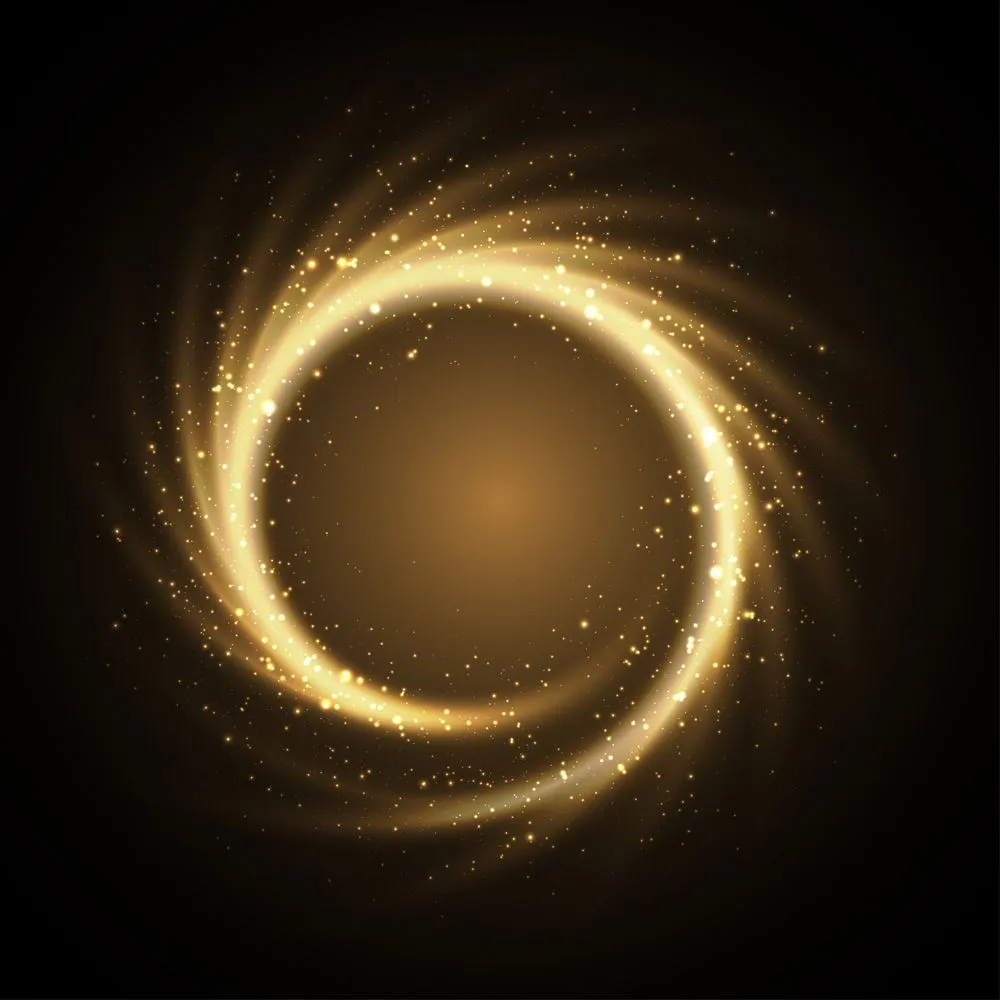
More formally known as a toroidal vortex, a vortex ring is a vortex of a fluid or gas that forms around an imaginary axis line in the form of a closed loop. Basically, it looks like a ring of water or air, spinning tightly around itself and temporarily maintaining its shape and form. Some vortex rings can retain their shape for impressively long distances through water and air, provided they aren’t disturbed.
These types of vortices form very often in turbulent water, where the speed and direction of water varies in different pockets and regions, but in such unstable conditions, they are difficult to observe. However, you can see them rather clearly in other forms, such as rising from a lit tobacco pipe, ringing the mouth of an erupting volcano (Mount Etna is a famous offender), in front of a just-fired artillery piece, in the rotating head of a mushroom cloud, or even emerging from your own mouth at a hookah bar!
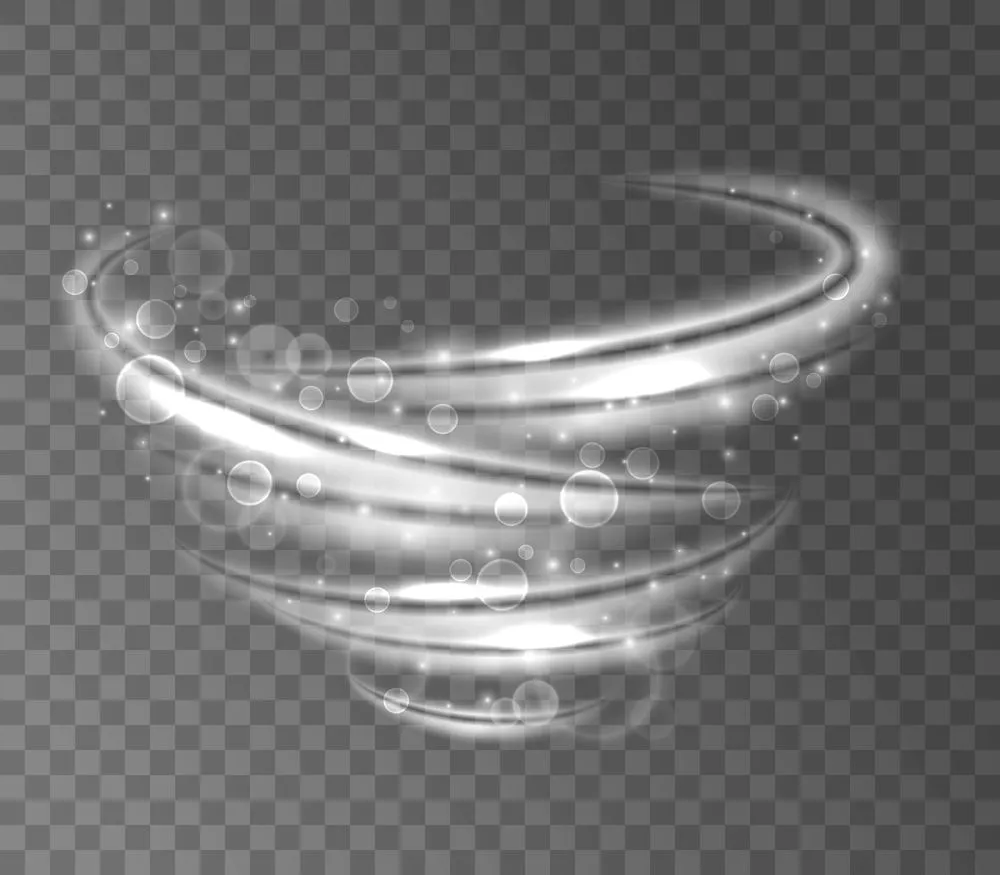
The science behind toroidal rings is quite elegant at its most fundamental level. When a slug of fluid (say, a puff of smoke) is pushed out through a narrow opening, it moves faster than the still air around it. Along the rim of the opening, that fast core drags against the slow surrounding fluid, creating a thin layer of shear, a sheet where one side slides past the other. That sheet curls, and its edge rolls up on itself into a tight, spinning ring, much like the leading edge of a wave folding over. This is why the doughnut shape appears: the fluid is not flowing in a simple straight line but tumbling continuously around the core of the ring, over the top, down the outside, and back through the center.
The clever part is what happens next. Each segment of the spinning loop sits in the swirling flow created by the rest of the loop, and that flow nudges it forward. In other words, the ring carries itself along under its own motion, with no engine and no push from behind. Because the spin (what physicists call vorticity) stays bundled in the thin core, a vortex ring can travel a surprising distance and keep its shape, instead of immediately smearing out into the surrounding fluid. It only widens and fades once friction and drag finally bleed the spin away.
These visually fascinating types of rings can be caused by numerous things, such as dropping a mass into a fluid. In the wake of the descending mass, a ring of water will often form; imagine a bullet being fired through water in the movies! Some of the long watery wake from the rapidly moving bullet will form into vortex rings behind it, with the inner edges of the ring moving faster than the outer edges, perpetuating itself through the water.
Smoke rings are the easiest form of vortex rings to observe, and while we don’t encourage tobacco use in our readers, it is a rather beautiful thing to witness when done well. When forcing a large mass of fluid (smoke) out of a narrow opening (the mouth), the smoke will interact with the edges of the opening and begin to flow back upon itself when it encounters the non-moving air outside the opening. The inner edges of the smoke ring will move rapidly, coiling back around the core and holding the ring shape as it moves forward in the air. These smoke rings will slowly widen and lose velocity as more of the fluid particles are disturbed and break off from the toroidal motion.
Vortex Rings Underwater
The creation of a vortex ring, as we have described it, sounds like something inherently manmade, but knowledge of these rings extends into the animal kingdom, including cetaceans, specifically dolphins, beluga whales and humpback whales. There have been countless observations and intentional studies on these creatures, because they often create, manipulate, play with and utilize vortex rings underwater.
When a dolphin flicks the end of its tail, or moves its head quickly, the shift in speed of the surrounding water is often enough for a vortex ring to form made of water. While this would be invisible (it is simply water rapidly rotating in other water), these creatures then blow bubbles, which get caught up in the swirl of the ring. There is perhaps no clearer evidence that dolphins know how to play than watching them create vortex rings, infuse them with air and then dart around, seeming to play catch with their own creations.
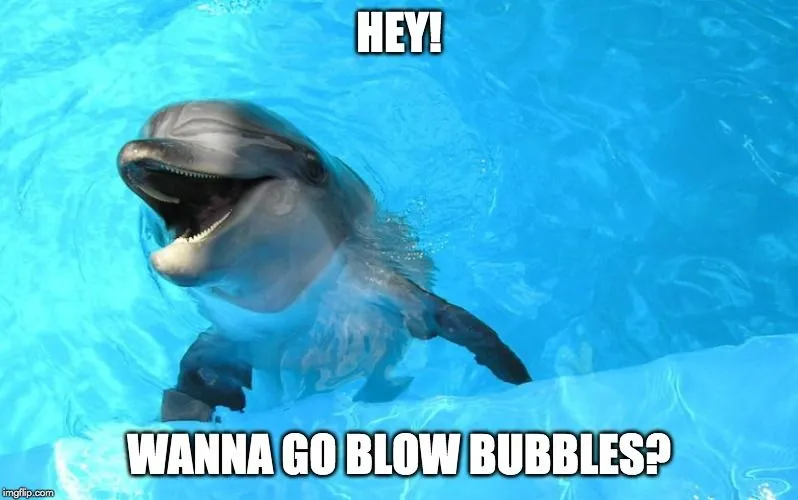
As mentioned earlier, these rings can often perpetuate for some time, allowing these creatures to play with them, moving them by flapping their tails, blowing other rings, cutting them in half, or even chomping through them. This final act of biting, when a playful sea creature is apparently “finished” with the game, will cause the ring to dissipate into normal air bubbles floating up to the surface.
Interestingly enough, bubble rings tend to hold together impressively well in water. Water is far denser and less compressible than air, so it keeps the spinning core tightly organized and resists the turbulence that quickly tears smoke rings apart in air. The trapped air also sits at lower pressure inside the fast-spinning core than in the calmer water around it, which helps pin the bubble into its ring shape. All of this buys the animals even more time to play with and maneuver their bubbles before they break up, far longer than a gas or smoke ring usually lasts.
That playfulness may not be the whole story. In a 2025 study, researchers with the WhaleSETI project documented humpback whales deliberately blowing large bubble rings, which look strikingly like smoke rings from above, while calmly approaching boats and divers. The team suspects these rings are a friendly, curious signal aimed at humans rather than a feeding or play behavior, a reminder that even a topic as tidy as fluid dynamics can still surprise us.
Animals aren’t the only things that create vortex rings underwater; propellers and scuba divers are often the culprits. Propellers rapidly change the speed of water, and scuba divers occasionally release rapid expulsions of gas from their masks. Both of these scenarios are ideal settings for the formation of these entrancing rings!
A Final Word
If you’re feeling daring, next time you’re underwater, try blowing out a rapid burst of air from your mouth. If you do it right, you may be able to create a vortex ring of your own. For those who partake in the occasional evening at a hookah bar, work on your smoke ring-blowing skills and then explain the science behind them to your friends. Remember, the rapid movement of one fluid or gas through another fluid or gas of a different density, pressure or speed has the potential to form a vortex ring due to a combination of dynamic forces.
References (click to expand)
- McCowan, B., Marino, L., Vance, E., Walke, L., & Reiss, D. (2000). Bubble ring play of bottlenose dolphins (Tursiops truncatus): Implications for cognition. Journal of Comparative Psychology. American Psychological Association (APA).
- Lundgren, T. S., & Mansour, N. N. (1991, March). Vortex ring bubbles. Journal of Fluid Mechanics. Cambridge University Press (CUP).
- Cheng, M., Lou, J., & Lim, T. T. (2013, June 1). Motion of a bubble ring in a viscous fluid. Physics of Fluids. AIP Publishing.
- WhaleSETI: Curious Humpback Whales Approach Humans and Blow Bubble “Smoke” Rings. SETI Institute (2025). [On Sharpe et al., Humpback Whales Blow Poloidal Vortex Bubble Rings, Marine Mammal Science.]