Yes, your eyebrows and eyelashes do grow, but they stop short because they spend far less time in the anagen (active growth) phase than scalp hair does. Scalp follicles stay in anagen for roughly 2 to 7 years, which is why head hair can grow to a metre or more. Eyelashes, by contrast, stay in anagen for only about 4 to 6 weeks, and eyebrows for about 2 to 4 months, so each individual hair falls out long before it can get long.
A good number of people, especially folks living in urban settings, spend a considerable amount of time and money keeping their hair in check. And why not? A full head of hair adds some serious ‘weight’ to one’s overall physical personality. Hair on one’s head continues to grow and must be cut/trimmed roughly once every 2-3 months.
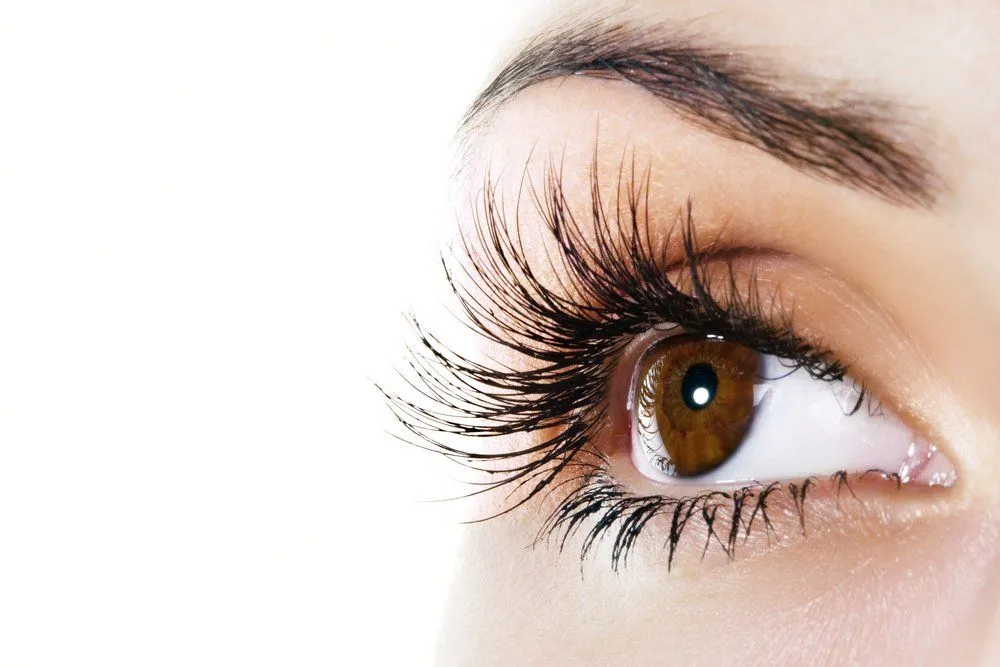
However, what about the hair on our eyebrows and eyelashes? Do you remember the last time you trimmed your eyelashes? Probably not. How is it that the hair on our eyelashes and eyebrows doesn’t grow as fast as the hair on other parts of the body?
Before we get to the bottom of this ‘hairy’ mystery, it’s important to know a thing or two about hair growth in general.
Hair Growth In Humans
Aside from a few parts of the body, hair is present all over human beings. That’s very good news for us, because depending on the location on the body, hair plays a vital role in thermoregulation, i.e. maintaining the core temperature by keeping us cool during the summers through perspiration and warms us through insulation in colder weather.
In ancient times, when woolen clothing and blankets were not common commodities, it was body hair that kept our pre-historic ancestors warm/cool in the face of an unforgiving climate.
Hair Follicle Growth Cycle
Hair follicles are mammalian organs present in the skin that are responsible for the production and growth of hair. The production of hair occurs in three main stages, excluding the formation of the specific hair follicle (called follicular morphogenesis). These stages are as follows:
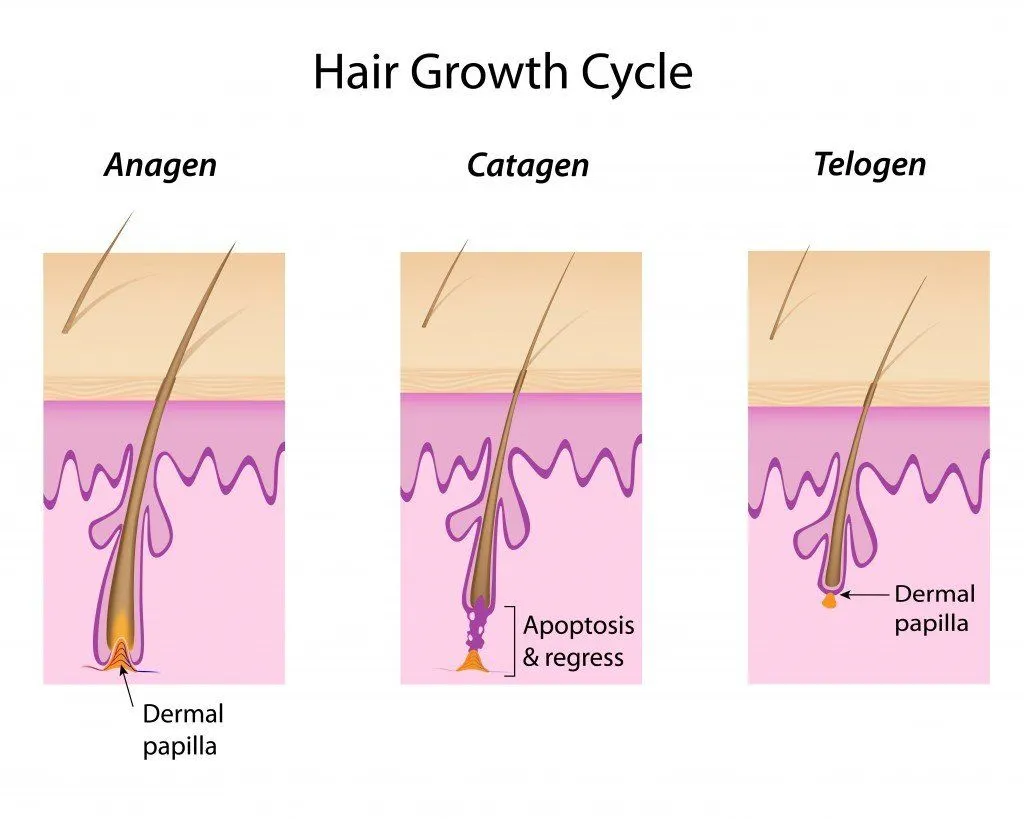
Anagen Phase
This is the active growth phase of hair follicles. During the anagen phase, the root of the hair divides rapidly and the length of the strand grows at the rate of about 1 cm every 28 days. This is the most important stage, as far as hair growth is concerned. Towards the end of this stage, hair follicles automatically enter the next phase…
Catagen Phase
This is a transition stage that marks the end of hair growth and the cutting off of the blood supply to the hair strand. This phase lasts for 2-3 weeks and converts the hair into a club hair.
Telogen Phase
After moving through two eventful phases, this is the phase where hair finally gets some rest from all that internal activity. It is in this phase that hair begins to fall, which occurs for every strand of hair on your body. In other words, don’t panic if you see a few strands of hair in your shower after washing your head; they were just finishing their run!
Why Do Eyelashes And Eyebrows Stop Growing?
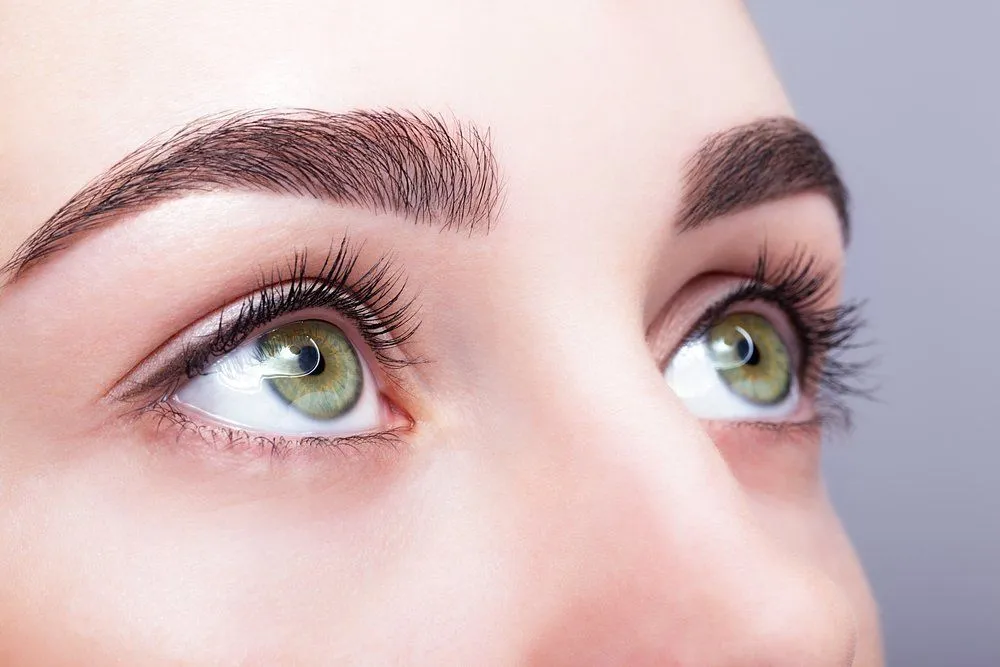
Many people think that the hair found in eyebrows and eyelashes doesn’t grow at all, that they stay the same from birth to death. However, that couldn’t be further from the truth. Hair in those areas does grow, but not as fast as hair on the scalp.
Since we’re specifically talking about ‘growing’ hair in eyebrows and eyelashes, the anagen phase provides the best explanation. Although every strand of hair on your body goes through the anagen phase, the duration for which the strand stays in the anagen phase varies hugely according to the location of the strand.
While hair on the scalp usually stays in the anagen phase for 2 to 7 years (depending on various genetic factors), the hair in your eyelashes stays in that phase for only about 4 to 6 weeks, and eyebrow hairs for roughly 2 to 4 months. Each individual hair therefore falls out long before it has had a chance to grow as long as the hair on your head.
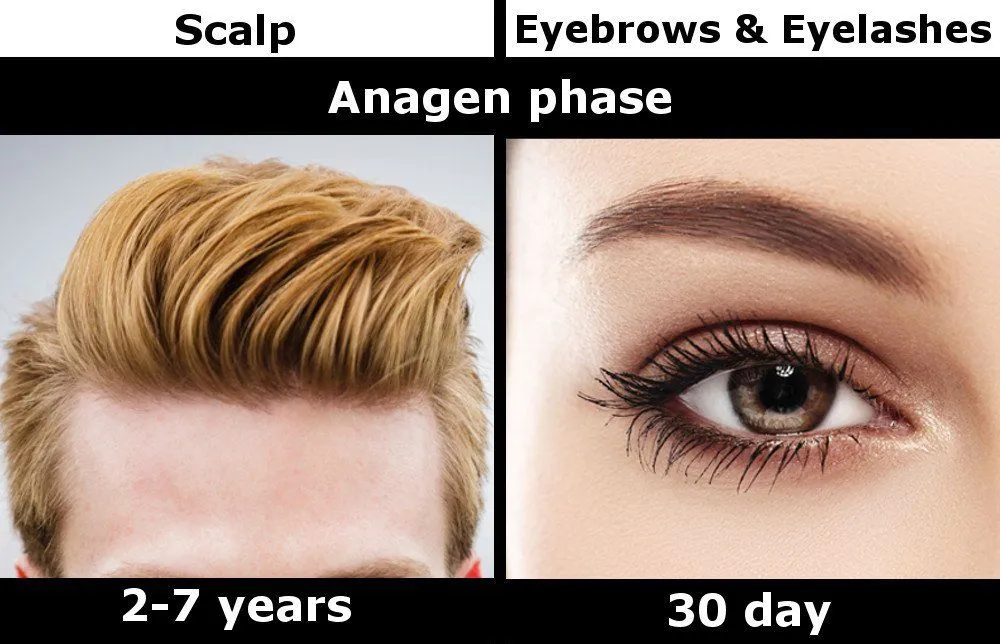
If the hair of our eyebrows also experienced a longer anagen phase, our eyebrows and eyelashes would be much longer than they are now, but that would probably get very annoying, very quickly, don’t you think?
Are Eyelashes And Eyebrows The Same Kind Of Hair As The Hair On Your Head?
Here’s a question that trips up a lot of people: are your eyelashes and eyebrows even hair at all, or are they something else entirely? The short answer is yes, they are absolutely hair, and they belong to exactly the same family as the hair on your scalp.
Dermatologists sort human hair into two broad types. Terminal hair is the thick, dark, easily visible kind, and vellus hair is the short, fine, almost-invisible fuzz that covers most of the rest of your body (the kind you only notice in a certain light). Your scalp hair, eyebrows, and eyelashes are all terminal hair. In fact, when a baby is born, almost the entire body is covered in tiny vellus hairs, and the only terminal hairs already in place are on the scalp, the eyebrows, and the eyelashes. So eyebrow and eyelash hair really is the same category of hair as the stuff on top of your head, just programmed to behave differently.
That difference comes down to the follicle, not the hair type. As we saw earlier, the length a hair can reach is governed mostly by how long its follicle stays in the active anagen phase, and lash and brow follicles simply switch off that phase far sooner than scalp follicles do. The hairs are the same kind; the biology of their follicles is what sets the limit. Later in life, hormones can flip some vellus hairs into terminal hairs (which is part of why facial hair changes at puberty), a process we explore in our piece on why women don’t grow beards like men.
Do Eyelashes And Eyebrows Grow Back If You Lose Them?
Pluck a stray brow hair, or lose a lash to a stubborn bit of mascara, and you may wonder whether it will ever come back. In almost all everyday cases, it will. Because eyelash and eyebrow follicles keep cycling through anagen, catagen, and telogen for life, a hair that is shed or pulled is normally replaced by a fresh one from the same follicle.

How long does that take? After a lash is pulled out, it takes roughly 8 weeks to grow back, and the whole lash population renews itself on a cycle of about 6 to 10 weeks. Losing a handful of lashes is completely normal; ophthalmologists note that shedding 1 to 5 eyelashes a day is nothing to worry about, since the upper lid alone carries roughly 90 to 160 lashes and the lower lid 75 to 80. Eyebrow hairs cycle more slowly, which is why an over-plucked brow can feel like it takes forever (often a couple of months or more) to fill back in.
There is one exception worth knowing about. Abnormally fast or patchy loss of lashes and brows has a medical name, madarosis (from the ancient Greek madaros, meaning bald), and it can be a flag for an underlying issue such as alopecia areata, a thyroid problem, chronic eyelid inflammation (blepharitis), or compulsive hair-pulling (trichotillomania). The good news is that in many of these cases the hair regrows once the cause is treated. But if you are losing lashes or brows rapidly, on both sides, or alongside skin changes or scalp hair loss, it is worth getting it checked by a doctor rather than waiting it out.
References (click to expand)
- Human hair growth - Wikipedia. Wikipedia
- Physiology, Hair. StatPearls (NCBI Bookshelf)
- Epidemiologic analysis of eyelash characteristics in healthy women. Journal of the American Academy of Dermatology
- Anatomy, Head and Neck: Eyelash. StatPearls (NCBI Bookshelf)
- Impact and Management of Loss of Eyebrows and Eyelashes (madarosis). PMC (NCBI)
- Why Are My Eyelashes Falling Out? American Academy of Ophthalmology