Table of Contents (click to expand)
Medicines don't actually "know" where to go. A swallowed pill is absorbed from the gut into the bloodstream, which carries the drug to every organ. It only acts where its chemical shape fits a matching target, a receptor or enzyme, in the cells that need it, like a key fitting one lock.
Got a headache? Pop an Advil and voila! Just like that, the headache will be gone. Suffering from gas? No need to fear, Tums is here!
That’s basically the magic of modern medicine (something to fix everything), but have you ever wondered how the aspirin knows that you have a headache and not say, muscle pain or something else? Spoiler alert: it doesn’t!
Though it may seem like our pills zero in on our pain and cure it with rapid efficiency, in reality, they’re not nearly that advanced. These pills or drugs have no idea where to go after you take them.
What Route Do Pills Take In The Body?
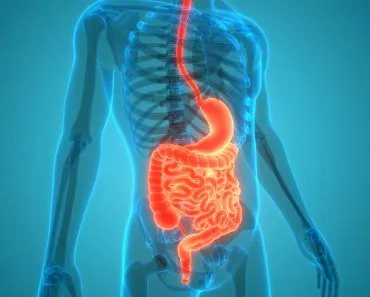
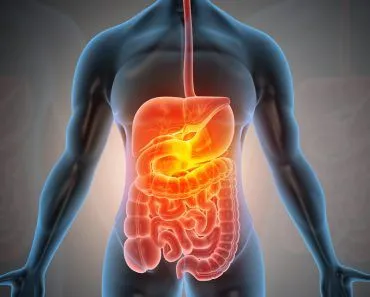
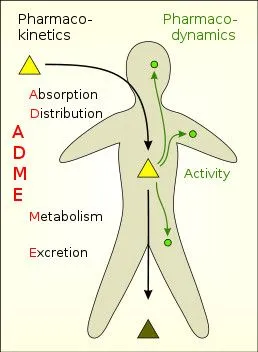
Medicines in the form of tablets, pills or liquids begin their journey by being swallowed. They then travel through the gut, where they get broken down and absorbed into the bloodstream. A special ‘highway’ called the hepatic portal vein brings the contents from the small intestine to the liver through the blood.
In the liver, the pill is further broken down into its drug components and released back into the bloodstream. Since all organs and tissues of the body are supplied with blood, the drug goes everywhere, but this doesn’t mean that it will act everywhere.
Binding To Target Receptor
Medicines are essentially chemicals. These chemicals are designed in such a way that they only attach to certain protein molecules in the body, such as receptors and enzymes. There are many different types of these target proteins, which may sit on the cell surface or even inside the cell. Each one has a distinct shape; you can think of them as locks, with each lock type having a unique key.
In this case, the medicine is the key. The medicine travels throughout the body and binds to the lock (its target) only if it fits.
For example, Advil contains ibuprofen, a pain medication. As ibuprofen flows by, it slots into an enzyme called cyclooxygenase (COX). Only after it binds to this target can the drug perform its job.
By blocking COX, ibuprofen halts the production of prostaglandins, the chemical messengers your body makes at a site of injury to crank up inflammation and make nerve endings extra sensitive to pain. Fewer prostaglandins means less swelling and a dialed-down pain signal, which is why that headache fades.
In the case of beta-blockers (drugs used to control high blood pressure), they latch onto the beta receptor (located in the cells of the heart, blood vessels and lungs) and block adrenaline from binding to the same receptor. This prevents adrenaline from acting on the cardiac cell and raising blood pressure, as shown below.
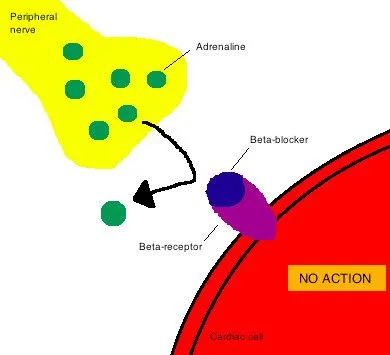
None of this could have happened without the drug binding to its target receptor. However, this natural system is not foolproof.
Sometimes, drugs may bind to receptors other than the target receptor, especially if the two are similarly shaped. This is like when you wave at someone from afar, thinking it’s your friend, only to get closer and find out that it’s a complete stranger.
Unfortunately, in this case, the wave acts more like a handshake, as the drug binds to the wrong target and sets off a chain reaction, resulting in unwanted side effects.
What Happens In Case Of Side Effects?
Drugs are meant to be taken at a certain dosage. If taken in lower quantities than this optimum dosage, it may fail to bind to the target receptor. In such a case, the medicine will be completely useless, as the drug cannot perform its function.
In contrast, when medicines are taken in higher quantities than their prescribed dosage, they are more likely to bind to more than just the target receptors, causing unexpected reactions known as side effects.
Every medication has a known list of common side effects, such as stomach upset, drowsiness, dry mouth, etc., all of which are mentioned on the label. Only in severe cases do these side effects result in hospitalization.
Hence, administering the correct dosage of a drug is very important for its efficacy.
Yet, for certain cases, such as chemotherapy drugs, side effects are unavoidable. Chemotherapy drugs are designed to target fast-growing cancer cells. Unfortunately, along with the cancer cells, they may also attack other rapidly dividing cells, such as hair cells, which is why hair loss is a side effect of chemotherapy.
Administering drugs locally can decrease the chances of side effects. For example, an antibacterial skin cream can be used to treat a skin infection topically. However, this specificity is not a feasible solution for all diseases and infections.
Smart Drugs Make Medicine Safe And More Efficient
Researchers are working on developing ‘smart drugs’, which are like GPS-enabled cars that travel to a desired target location without fail.
In other cases, drugs can remain inactive near the target location until it is time to activate them. Since drugs are usually excreted from the system after they detach from the target receptor, they need to be taken regularly. However, by being able to control drug activation, we can maintain a drug at the desired dosage level in the body, thus avoiding the need for frequent administration.
A growing class of these are stimuli-responsive nanoparticles, tiny carriers that stay sealed until they sense a specific trigger at the target, such as the slightly acidic pH inside a tumor, a particular enzyme, or a pulse of heat, light or ultrasound applied from outside the body. The carrier then releases its cargo right where it is needed, edging us toward delivery systems that drop the right dose, at the right place, at the right time.
Microchips
Another study looked at microchips placed under the skin, spinal cord or in the brain to precisely deliver a drug. The microchips have tiny wells loaded with a drug, such as chemotherapy or pain medication, and then covered with gold foil caps. The drug is released upon applying an electric current of one volt that dissolves the caps and releases the drug into the system.
Microneedles
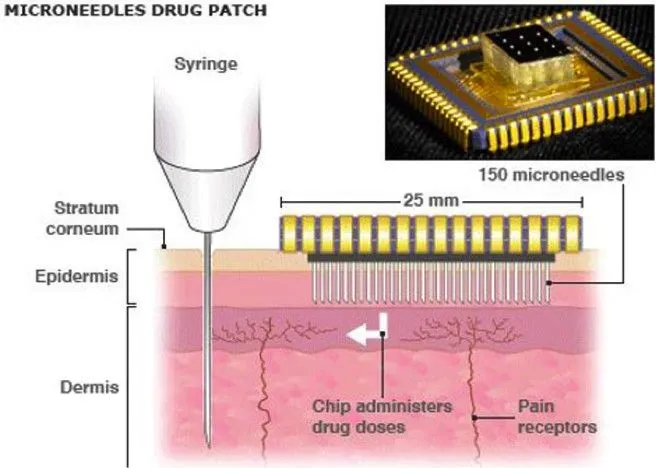
Microneedles are another invention utilizing dozens of microscopic needles to locally administer a drug. The needles are so fine that they don’t reach the nerves, thereby facilitating painless drug delivery.
With several studies of this type currently in the works, it won’t be long before our drugs stop their aimless meandering through our bloodstream. The only big question is whether we can make these ‘smart’ drugs as affordable as the ‘dumb’ ones!
References (click to expand)
- Drug Delivery Systems. The National Institute of Biomedical Imaging and Bioengineering
- COX Inhibitors. StatPearls. NCBI Bookshelf
- Finding and Learning about Side Effects (adverse reactions). U.S. Food and Drug Administration
- Current approaches in smart nano-inspired drug delivery: A narrative review. PMC
- How do medicines know where in the body to start working?. The MIT School of Engineering