Table of Contents (click to expand)
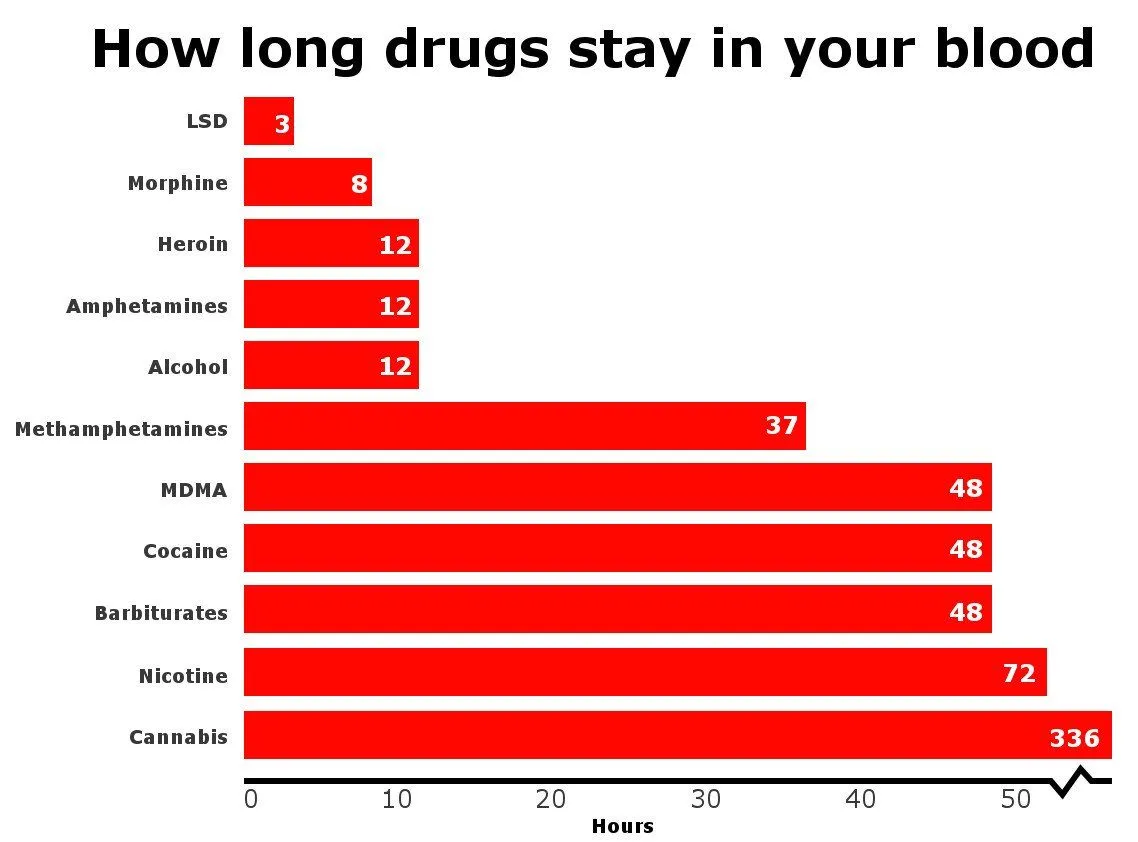
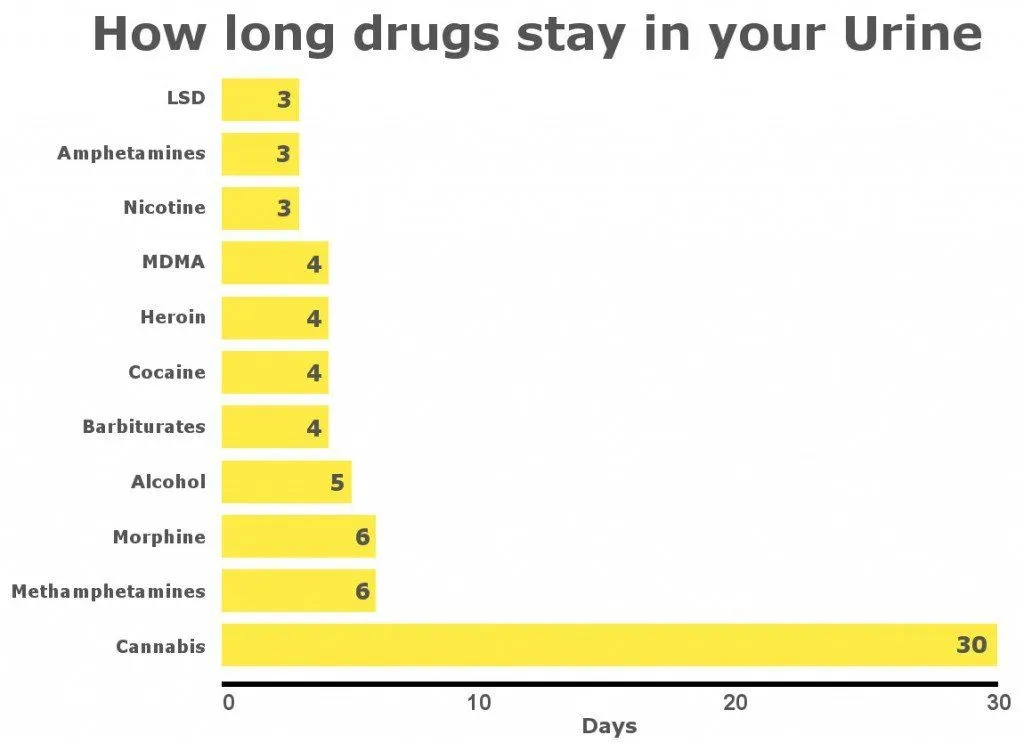
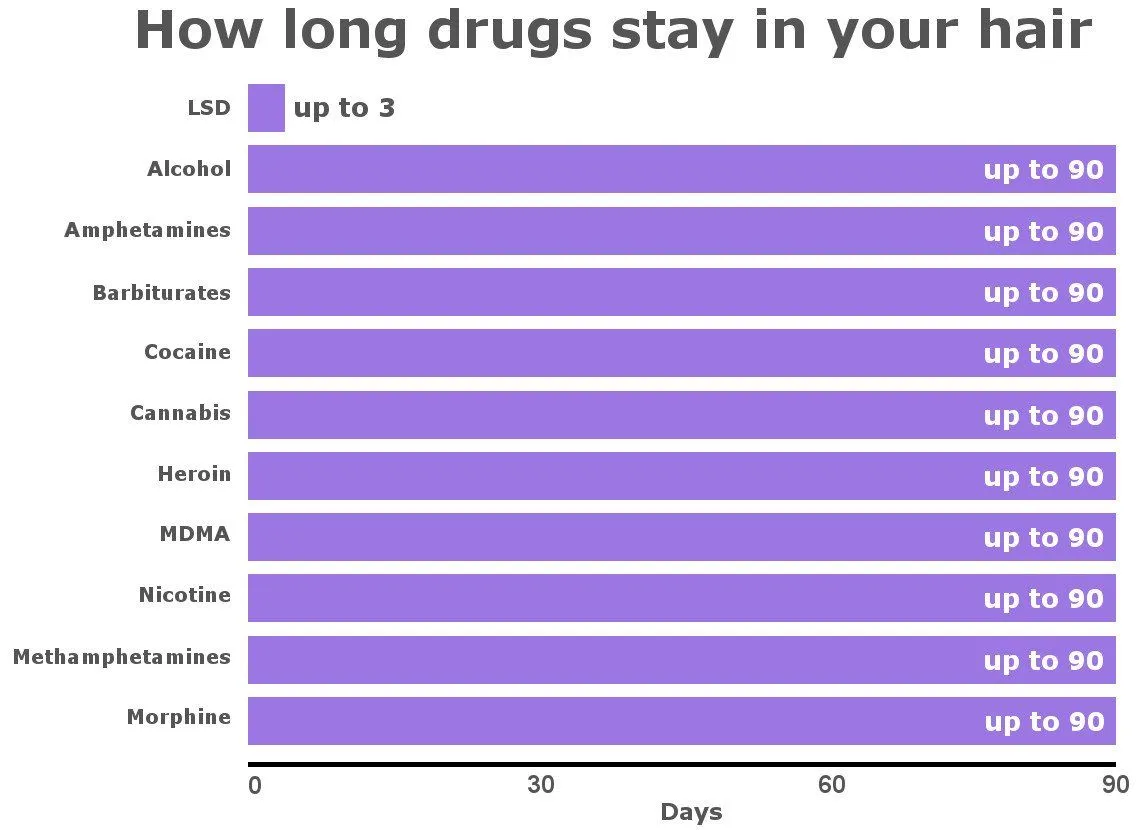
Most drugs leave the bloodstream within 1 to 2 days and urine within a few days, though cannabis can linger for 1 to 2 weeks (or longer in heavy users), while a hair test can reveal use over roughly the past 90 days. As a rule of thumb, a drug is mostly cleared after about 5 half-lives, but the exact window depends on the substance, the dose, the test used, and a user's metabolism.
How often do we see sportspersons, athletes and artists reprimanded for abusing illicit drugs? The drugs are often abused to either enhance an athlete’s performance or simply to have a good time. Either way, a lifetime ban awaits. However, in the case of an artist, the condemnation isn’t as severe as it is for an athlete. Drug abuse in media culture is often romanticized, as it is perceived to be a coping mechanism for the adversities of being bound by reputation or representation. It enacts a catalyst that fuels an artist’s performance, the deprivation of which could cause a slump in the art itself. Why meddle with the artist’s process? Why compromise health for a potential masterpiece? At the same time, the athlete is relegated to a lifetime of shame.

With full knowledge of the repercussions of drug use, a notorious user will try anything to rectify or obscure his deed – failing a drug test. However, with advancements in biochemistry, drug tests have become increasingly fool-proof. The chemicals an abuser injects, smokes or snorts do not exit the body after the perceptual effects wear off. Their remnants can be detected in the blood, urine, and hair, (yes, the hair) after a few hours, days or even months!
Why Do Drugs Stay In The Body?
Many drugs extend their stay in the body because they are very stubborn. That stubbornness comes down to chemistry: a lot of recreational drugs are fat-soluble (lipophilic), which means they prefer fat to water. Picture stirring oil into a glass of water, the two refuse to mix and the oil separates out. A fat-soluble drug behaves much the same way, slipping out of the watery blood and into fatty tissues, where it can linger before slowly trickling back out. So regardless of how a drug is taken, traces are destined to turn up in one’s blood, urine or sweat.
The drugs can only exit the body by means of excretion, which includes sweating, defecating and urinating. However, before commencing their journey through the sewage drains, they must be metabolized into water-soluble molecules. This process occurs in the liver, which is why livers can be gravely damaged by drug abuse. The soluble molecules in a user’s system dissolve into the water in their blood before being filtered out by the kidneys and excreted in urine. This small window marks the tester’s opportunity and the user’s undoing!
However, the size of this window varies from person to person. The length of time a drug can be found in a user’s system depends on several genetic and external factors. The results depend upon the metabolism and tolerance of a user, the type of test being performed, the dosage during the last session of abuse, the potency of the drug being abused and the user’s medical condition. These are highly influential factors as they can alter entire results. For instance, a user exhibiting a high metabolism will convert the drugs into water-soluble molecules and flush them out quicker than someone with a low metabolism.
Pharmacologists capture this idea of "how fast a drug leaves" with a single number: its half-life, the time it takes for the amount in your bloodstream to drop by half. After one half-life, half the drug is gone; after two, three-quarters; and so on. The handy rule of thumb is that a drug is essentially cleared after about 4 to 5 half-lives, by which point roughly 94 to 97 percent of it has been eliminated. A short-half-life stimulant might be 95 percent gone within a day, while a drug with a long half-life (or one that hides in fat) can hang around for days. That is why a single number for "how long does it stay" never tells the whole story.

Other than sweat, blood, and urine, drugs can also be detected in our hair, and this opens up a far longer window. As your hair grows, it locks tiny amounts of drug into the shaft, leaving a kind of timeline along its length. Scalp hair grows at a sluggish rate of roughly 1 cm (about 0.4 inches) per month, so a standard 3 cm sample taken near the scalp captures about the last three months of use. Labs can even snip that sample into 1 cm segments to estimate, month by month, when use occurred.
How Long Do They Stay In Our System?
Even though alcohol and nicotine (cigarettes) are not traditionally considered to be drugs, I’ll still include how long they stay in our system and influence our behavior (why do you think you can’t sleep at night?). As for cannabis being a drug or not, the debate is still ongoing, but we’ll include it as well. Unlike hard drugs, alcohol and nicotine can be easily detected by a user’s breath. The physical detection of hard drugs becomes a little more complicated, ranging from pupil dilation to cold sweats. However, these can only be detected when the session of drug use is immediately followed by an inquiry. Blood, urine and hair tests remain the most rigorous and instructive tests. The rough windows below are a useful guide, but treat them as ballpark figures rather than guarantees, since dose, frequency of use, the specific test, and individual metabolism all shift the numbers. Blood tests offer the shortest window, typically catching most drugs for only 1 to 2 days. Cocaine usually clears the blood within about a day, while a long-half-life drug like diazepam can show up for longer. Saliva (oral fluid) tests are similar, generally useful for up to about 1 to 2 days after use. Urine is the workhorse of drug testing and the window stretches further: amphetamines and methamphetamine are usually detectable for 1 to 3 days, cocaine for 1 to 3 days, heroin and other opiates for 2 to 3 days, and PCP for up to a week. Cannabis is the outlier, an occasional user may test clean within a few days, but in a daily, heavy user, fat-stored THC metabolites can keep a urine test positive for two weeks or more. Hair, as we saw, plays the long game, reaching back roughly 90 days. The graphs below break this down test by test.