An electric guitar works through electromagnetic induction. Its ferromagnetic (steel or nickel) strings sit inside the magnetic field of one or more pickups, each made of a magnet wrapped with thousands of turns of fine copper wire. When a plucked string vibrates, it disturbs that field and induces a tiny alternating current in the coil. An amplifier then boosts that signal and drives a loudspeaker to produce the sound you hear.
The most revolutionary instrument of the 20th century was undoubtedly the electric guitar. It’s the instrument that symbolizes the rebellious nature of modern times and embodies rock ‘n’ roll in every way. Some of the famous musicians in the past century, such as Jimi Hendrix, The Rolling Stones, and Nirvana, were the greatest proponents of this beautiful instrument. However, electric guitars are not bound by their coolness or the skill required to play them. They are also completely packed with science. However, before we move on to the science behind the electric guitar, let’s take a closer look between electric guitars and acoustic guitars on a scientific level!

Acoustic Vs. Electric Guitars
When you pick up an acoustic guitar, you mostly hold empty space! Inside the large wooden guitar body is nothing more than air. Whenever you pluck the strings, the wooden frame of the guitar vibrates, which makes the air inside the guitar body vibrate. These vibrations amplify the strings’ sounds so that you can hear them. Acoustic guitars have those large holes in the middle of the body, under the strings, so the amplified sound can escape and travel to your ears. The soundhole works as a Helmholtz resonator: the air inside the box bounces against the “springiness” of the air sitting in the hole, and that coupling boosts the lower frequencies you hear from an acoustic guitar.

When you pick up an electric guitar, you will notice that most of them have thinner solid bodies and sometimes even smaller than acoustic guitars. Even though most electric guitars are made of solid wood, it doesn’t matter what the body of an electric guitar is made of. George Beauchamp, the pioneer who invented the electric guitar, said in the 1930s: “The body may be varied considerably in size, shape, and construction, and may be constructed of various materials without departing from the spirit of the invention.” His original design suggested the body could be made from “a simple integral casting of metal, such as aluminum.” Most of the first electric guitars ever made had their bodies cast out of materials, including molded Bakelite (one of the first plastics) and sheets of soldered brass.
At this point, one might wonder why the electric guitar body’s material doesn’t matter. Quite simply, it’s because the body of an electric guitar is not particularly important in producing and amplifying sound. The primary purpose of the electric guitar body is to maintain proper tension in the strings for us to obtain the desired sounds. Although resonance still plays an important part in giving an electric guitar its tone, solid-body electric guitars generate most of their sound through an entirely different process from acoustic guitars. Despite the acoustic and electric guitars being played similarly, the scientific principles upon which both of these instruments operate are starkly different.
Law Of The Electric Guitar
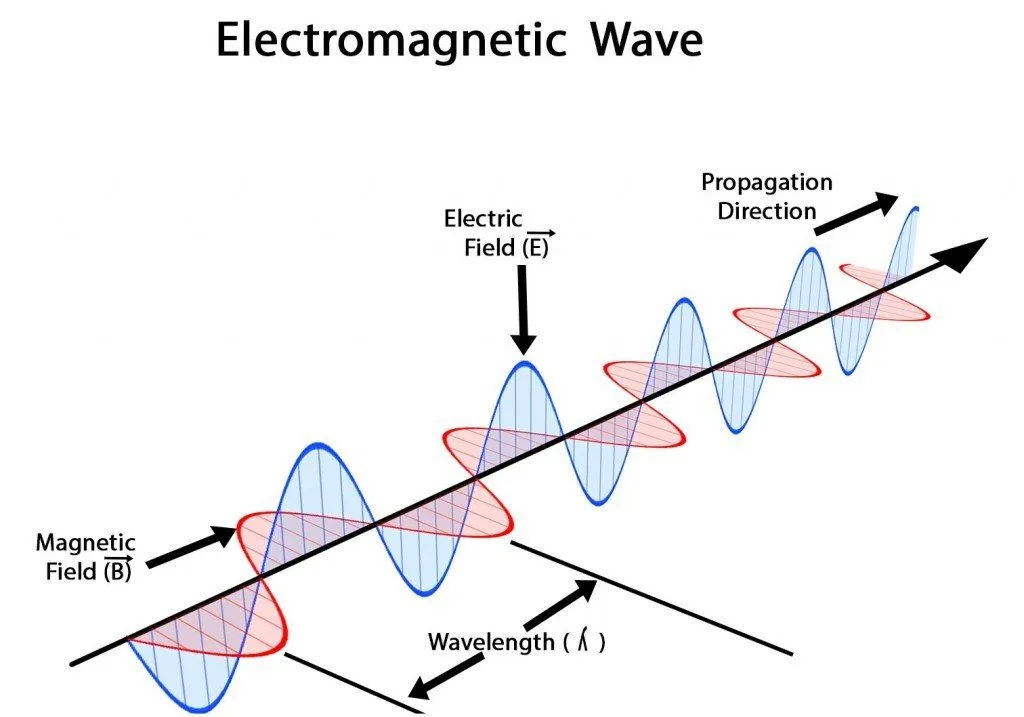
As stated earlier, the electric guitar is based on a fundamental law of physics: electromagnetism. To be more specific, it relies on electromagnetic induction. To put it simply, electromagnetic induction is when a change in the magnetic field induces electricity. The converse is also true, that a change in electricity results in induced magnetic fields. Now, how does this connect to the electric guitar? Ignoring most of the technical specifications of an electric guitar, we will only look at the parts responsible for producing the sounds.
The metal strings of an electric guitar are a bit like dynamos, because they make electricity when you move them. Under the strings, there are electricity-generating devices called pickups. Each one of these pickups consists of one or more magnets with hundreds or thousands of coils of very thin wire wrapped around them. The magnets generate a magnetic field around them that passes up through the strings. As a result of this, the strings become partially magnetized. When the strings vibrate, they make a very small electric current flow through the wire pickup coils. The pickups are connected to an electric source that picks up and processes various parametric information from each string. It is then sent to an amplifier. Usually, the amplifier and loudspeaker are built into a single unit called an “amp.” Now, the next time you go to a rock concert to watch someone shred an electric guitar solo, you know you’re watching electromagnetism at work!
What Are The Parts Of An Electric Guitar?
Before we go any deeper, it helps to know what you are actually holding. An electric guitar has three main regions: the headstock, the neck, and the body.

The headstock sits at the top and carries the tuning machines (also called tuners or machine heads). Turning these tightens or loosens each string, raising or lowering its pitch. Where the headstock meets the neck, a small grooved piece called the nut spaces the strings out and sets how high they sit.
The neck is the long piece you wrap your hand around. Glued or bolted to its front is the fretboard, studded with thin metal strips called frets. Press a string down behind a fret and you shorten the vibrating length of that string, which raises the note. A hidden steel rod inside the neck, the truss rod, keeps it from bowing under the pull of the strings.
Most of the interesting hardware lives on the body. This is where you find the pickups sitting under the strings, the bridge that anchors the strings at the bottom, and the volume and tone controls plus a pickup-selector switch. The thin output jack on the edge of the body is where you plug in the cable that runs to your amp. On an acoustic guitar the body does the heavy lifting of making sound, but on a solid-body electric, as we have seen, the body is mostly there to hold everything in place and keep the strings under tension.
Single-Coil Vs. Humbucker Pickups: Why Does My Guitar Hum?
Not all pickups are built the same, and the difference is something you can both see and hear. The two classic designs are the single-coil and the humbucker.

A single-coil pickup is the simpler of the two: one coil of fine wire wound around magnetic pole pieces, with one pole under each string. It gives the bright, crisp tone you hear on a Fender Stratocaster, which carries three of them. There is a catch, though. A single coil behaves a lot like a radio antenna, so it happily picks up stray magnetic fields from nearby mains wiring, lights, and transformers. Since household power in the US runs at 60 Hz (50 Hz in the UK, Europe, and Australia), that interference shows up as a steady background hum.
The fix arrived in the 1950s, when Seth Lover at Gibson invented the humbucker, a name that literally means "hum bucker." A humbucker is two coils sitting side by side, wound in opposite directions, with the magnet under one coil flipped to the opposite polarity. Here is the clever part: outside interference reaches both coils almost equally, and because the coils are reversed, the two hum signals cancel each other out. Meanwhile, the flipped magnets mean the signal from the vibrating strings stays in phase and actually adds together. The result is a quieter, thicker, fuller sound, which is why humbuckers became the staple of Les Paul guitars and a lot of hard rock.
This also answers a question plenty of beginners ask: does an electric guitar need electricity? The guitar itself does not. A standard pickup is passive, meaning it generates its own tiny current purely from the moving strings, with no battery required. The electricity is only needed downstream, at the amplifier, because that raw signal is far too weak to drive a loudspeaker on its own. (The speaker then runs the same magnet-and-coil trick in reverse, much like the drivers in your headphones.)
Who Invented The Electric Guitar?
We have mentioned George Beauchamp a couple of times, so let's give the story its due. Around 1931, Beauchamp, working with Adolph Rickenbacker, built the first practical electromagnetic pickup: a coil of wire wrapped around a magnet that sensed the strings' vibrations and turned them into an electrical signal.

They fitted this pickup to a small lap-steel guitar with a round body and a long neck, which earned it the nickname the "Frying Pan." Introduced in the early 1930s, it became the first commercially viable electric guitar. Beauchamp filed his patent in 1934, and it was finally granted in 1937 as U.S. Patent 2,089,171. The earliest bodies really were cast from aluminum, just as Beauchamp described, which is exactly why the body material does not matter much: the sound was coming from the pickup, not the wood.
The solid-body electric we picture today came a little later. Around 1940, guitarist and inventor Les Paul mounted strings and a pickup on a solid block of pine, an instrument he called "the Log," to cut down on unwanted body vibration. Through the 1940s, Leo Fender and Paul Bigsby were experimenting along the same lines, and by the early 1950s the mass-produced solid-body electric guitar, the one Jimi Hendrix and countless others would make famous, had truly arrived.
References (click to expand)
- Electric guitar - Encyclopaedia Britannica
- Harmonics - The Feynman Lectures on Physics, Vol. I, Ch. 50
- Pickup (music technology) - Wikipedia
- Electric guitar - Wikipedia
- The Invention of the Electric Guitar - Lemelson Center, Smithsonian Institution
- Electric Guitar Pickups - HyperPhysics, Georgia State University
- Physics of Guitar Pickups - Daniel A. Russell, Pennsylvania State University