Your liver is, on average, less than 3 years old at almost any point in your life, because its cells are constantly renewed. Scientists worked this out using radiocarbon birth dating, which reads the spike in atmospheric carbon-14 left behind by 1950s-60s nuclear weapons testing.
Imagine if your body could regenerate like Wolverine and remain youthful for centuries; that marvelous mutant has been around since World War 2! While adamantium may not be in the cards for humanity, a vital organ in our bodies has been secretly living a renewed youthful life without most of us ever knowing! The liver, toxin destroyer extraordinaire, has the legendary ability to regenerate itself and remain younger than the rest of the body. However, we didn’t know how young until quite recently!
Liver, A True-blue Multi-tasker
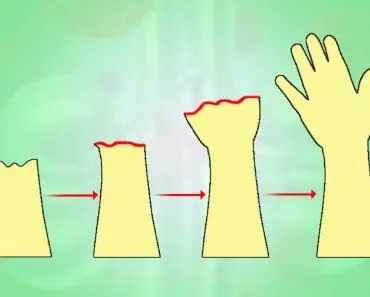
The liver is the largest solid organ in the body, measuring up to the size of a rugby ball, and weighing an average of 1.5 kg. If the mitochondria are the cell’s powerhouses, then the liver is the body’s power plant. It breaks down the food we eat to provide energy and stores the excess energy as glycogen for a rainy day. It is also part of the body’s waste management system, filtering out toxins and waste from the blood. However, like Wolverine, the most impressive function of the liver is its regenerative powers after sustaining damage. We only need around 25-30% of our liver to function, as it will grow back to its full size in just a few months! This is how people are able to donate parts of their liver and remain completely unharmed.
Is It Rude To Ask The Liver Its Age?
For years, no one knew whether the cells of the liver renewed themselves or lived for decades, like neurons. Studies showed that the liver cells of mice can live for up to 400 days, but this does not directly parallel with humans. “It was clear to us that if we wanted to know what happens in humans, we needed to find a way to directly assess the age of human liver cells,” said Dr Olaf Bergmann to sciencedaily.com. Dr Bergmann is a research group leader at the Center for Regenerative Therapies Dresden (CRTD), part of TU Dresden in Germany, where he studies how cells renew themselves across different organ systems.
When Biology Went Nuclear
Fortunately for Dr Bergmann, he only had to peek a few years back to realize that his answers quite possibly lay hidden in the work of another great mind. Back in 2005, Dr Kirsty Spalding, in her attempt to age the neurons of the brain, was inspired by radiocarbon dating used in archaeology to develop a new tool that could calculate the age of human cells.
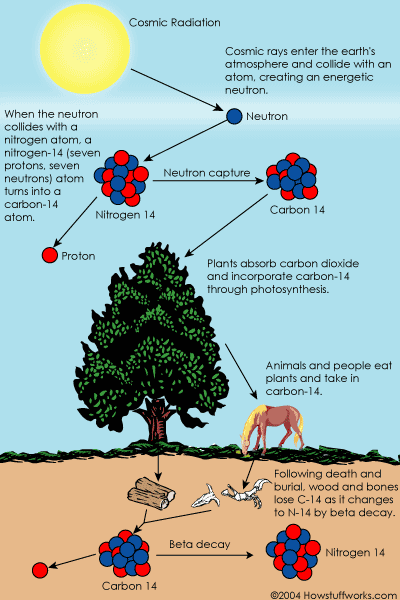
Radiocarbon is a type of carbon formed in the atmosphere. It reacts with oxygen to form radioactive carbon dioxide, which enters plants during photosynthesis. This gets passed onto the animals that consume these plants. Once the animal or plant dies, the radioactive carbon within them slowly decreases due to radioactive decay. Archaeologists use this principle to determine the age of organic materials, such as wood or bone. However, these levels weren’t specific enough to calculate the actual age of cells, so how did they use this method?
Extensive above-ground nuclear weapons testing that occurred during the 1950s-1960s caused a spike in the levels of 14C in the environment. Thanks to the ban on this sort of testing in 1963, there was an exponential decrease in 14C levels. Kirsty used this decrease to correlate it with the levels of 14C in DNA, allowing her to retrospectively date cells of the human body.

The Liver, Our Little Toddler
Dr Olaf Bergmann and his colleagues then used retrospective radiocarbon birth dating to determine the hepatocytes’ age in the liver. “Even though these are negligible amounts that are not harmful, we can detect and measure them in tissue samples. By comparing the values to the levels of atmospheric radiocarbon, we can retrospectively establish the age of the cells,” explains Dr Bergmann. They looked at the 14C levels in the human liver tissue of more than 50 individuals between the ages of 20 and 84. At the end of their analysis, they found an average human liver cell to be less than three years old. Dr Bergmann and his team thus became the first to show that a person’s liver remains young and constantly renews itself throughout their lifetime. Moreover, in their study, they also found that a proportion of liver cells could live up to 10 years, as a result of higher DNA accumulation, as compared to the others. This proportion of cells gradually increased with age, indicating that it could be a protective mechanism against harmful mutations. Research is still underway to understand the precise role of these older cells in the liver.
How Does The Liver Keep Renewing Itself?
If the liver is forever turning over its cells, where do the replacements come from? For a long time the textbook guess was that a reserve of liver stem cells must be quietly topping things up, the way stem cells in your skin and gut do. The real answer is more surprising: the liver mostly skips the stem-cell route. Lineage-tracing experiments show the organ is replenished mainly by existing mature hepatocytes simply dividing to make more hepatocytes, rather than by a dedicated stem-cell pool. The bile-duct-derived progenitor cells that can act as a backup only switch on when ordinary hepatocyte division is blocked. (If you have ever wondered why we can regrow a liver but not a lost limb, that division-on-demand is a big part of why some organs regenerate and others don’t.)

This is also the machinery behind the liver’s famous comeback after surgery. When a chunk is removed, the regrowth is technically compensatory hyperplasia: the surviving hepatocytes leave their resting state and start dividing, restoring lost mass rather than re-sculpting the original lobes. In humans, DNA synthesis in the regenerating liver peaks roughly 7 to 10 days after the operation, and the organ’s mass is largely restored within about three months. The whole sequence is kick-started by a wave of signaling molecules, including interleukin-6 (IL-6), tumor necrosis factor-alpha (TNF-α) and hepatocyte growth factor (HGF), which flip hepatocytes from “rest” to “divide” and then, once the job is done, switch them off again.
What Age Does Your Liver Fully Develop?
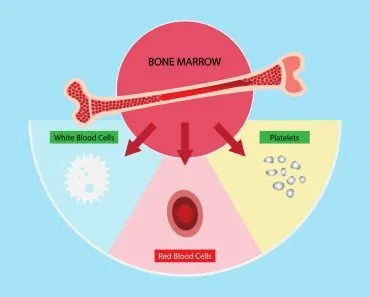
Asking how old the liver is naturally raises a second question: when does it finish growing up in the first place? Construction starts remarkably early. The liver begins as the hepatic diverticulum, a small bud of foregut tissue, in roughly the third to fourth week after conception. By around weeks 9 to 28 of pregnancy the fetal liver is actually the body’s main blood-cell factory, a job it later hands over to the bone marrow as birth approaches.

Here is the twist, though: the liver is structurally present long before it is functionally finished. The drug-processing enzymes that define a grown-up liver, the cytochrome P450 family, are barely switched on at birth. The fetal form CYP3A7 dominates a newborn’s liver and then fades away, while the adult workhorse CYP3A4 is essentially undetectable in newborns and only climbs toward adult levels over the first couple of years. Many P450 enzymes do not reach adult activity until somewhere between roughly 1 and 6 years of age. That slow ramp-up is exactly why doctors are so careful with infant medicine doses; a baby’s liver simply cannot clear drugs the way an adult’s can. So your liver is built early, but it does not truly come of age until early childhood.
How Old Are Your Other Organs?
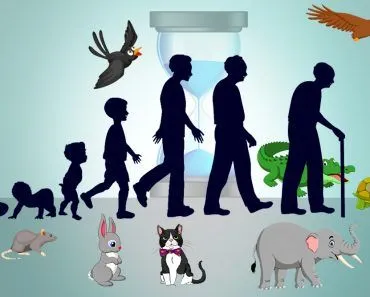
If your liver resets itself to a perpetual three years old, what about the rest of you? The same radiocarbon birth-dating trick, a clever spin-off of the carbon dating that ages ancient bones, has been turned on other tissues, and the answers are all over the map. The lining of your gut is the speed champion, with surface cells lasting only a few days before being shed and replaced. Your skin renews on a scale of weeks. At the opposite extreme sit the neurons of your brain’s cortex, most of which are as old as you are; you largely keep the ones you are born with for life.

The heart turns out to sit somewhere in between, and the same Olaf Bergmann helped work that out too. Using carbon-14 dating, his group found that human heart-muscle cells (cardiomyocytes) do renew, but slowly: about 1% per year at age 20, dropping to roughly 0.3% per year by age 75. Over an entire lifetime, fewer than half of your cardiomyocytes are ever replaced, so a sizeable share of the heart you finish life with is the heart you started with. The takeaway is that “how old are you?” has no single answer at the cellular level. Your gut is days old, your liver is toddler-aged, your heart is middle-aged, and your neurons are as old as the candles on your birthday cake.
Conclusion
Dr Olaf Bergmann and his team were able to show that our liver will always be around 3 years old. They are currently using Radiocarbon birth dating to determine the age of other organs within the human body, including the heart. It will be interesting to see how old other organs are and which ones ultimately determine our overall age.
References (click to expand)
- Liver Anatomy - Medscape Reference. eMedicine
- Heinke, P., Rost, F., Rode, J., Trus, P., Simonova, I., Lázár, E., … Bergmann, O. (2022, June). Diploid hepatocytes drive physiological liver renewal in adult humans. Cell Systems. Elsevier BV.
- Spalding, K. L., Bhardwaj, R. D., Buchholz, B. A., Druid, H., & Frisén, J. (2005, July). Retrospective Birth Dating of Cells in Humans. Cell. Elsevier BV.
- Liver: Anatomy and Functions | Johns Hopkins Medicine. hopkinsmedicine.org
- Liver Regeneration after Hepatectomy and Partial Liver Transplantation. International Journal of Molecular Sciences. PMC, NCBI.
- Liver development. StemBook. NCBI Bookshelf.
- Establishment of Metabolism and Transport Pathways in the Rodent and Human Fetal Liver. International Journal of Molecular Sciences. PMC, NCBI.
- Age-Dependent Changes in Cytochrome P450 Abundance and Composition in Human Liver. Drug Metabolism and Disposition. PMC, NCBI.
- Bergmann, O., et al. (2009). Evidence for Cardiomyocyte Renewal in Humans. Science. PMC, NCBI.