Table of Contents (click to expand)
No single factor decides how long a species lives, and the mechanism is still hotly contested. The strongest contenders are an animal's metabolic rate (primates spend about half the energy of similar-sized mammals and live far longer) and a built-in limit to the number of times its cells can divide, known as the Hayflick Limit, roughly 50 divisions for human cells.
Family reunions are incredibly unique experiences for humans, as it is remarkable to see the breadth and difference in relatedness between people who share the same genes. From the freshest infant to the most wrinkled matriarch (topping out at over a century in age), a family portrait can include three, four or even five generations! There are no other species on the planet who regularly gather family members for portraits, and there are extremely few species on the planet with the longevity where so many generations will simultaneously be alive at the same time!

Yes, as many scholars and laypeople have noted throughout history, human beings seem to have an unusually long lifespan, in comparison to the majority of life on Earth, particularly similarly sized mammals. While there have been many theories proposed as to why this is the case, there is still some ongoing debate as to what determines the lifespan of different species.
Before we get into the unique situation of modern humans, looking back into our own past may give us a bit more perspective.
Human Lifespan In The Past
Believe it or not, the oldest human being in history (so far as we know) was a 122-year-old French woman named Jeanne Calment, who died in 1997. She remains the only person ever verified to have reached the age of 120. However, people living to a century or longer is no longer an unusual occurrence; in fact, you may know someone who has aged into the triple digits! We take this as commonplace now, but it is important to remember that a mere two centuries ago, the human life expectancy was much shorter. It is widely believed that the global life expectancy in the year 1900 was only 31 years of age. Our rapid advancement of medical knowledge and expertise in the 20th century, and the globalization of such knowledge to far-flung parts of the world, elevated that life expectancy across the globe to roughly 72 years of age in 2014.

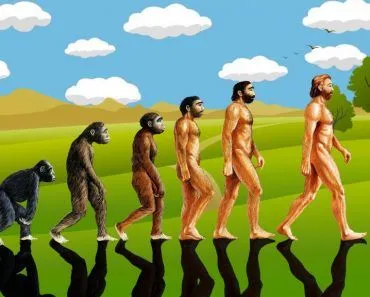
What this means is that for hundreds of thousands of years, as Homo sapiens was developing into a species and coming into their own, they likely had a lifespan of no greater than 30 years. You can compare this to the lifespan of chimpanzees, which average 30-40 years in the wild but can reach into their 50s (and occasionally far beyond) in captivity, or gorillas, who live for roughly 35-40 years in the wild and up to about 50 in captivity. Considering how closely related we are to the great apes (sharing roughly 99% of the same DNA as chimpanzees and bonobos), our rather impressive modern lifespan can be understood. After all, humans today also have the advantages of agricultural and medical technology, shelter, weather predictions… the list goes on and on. In other words, humans do a good job of keeping themselves healthy, protected and alive well into their old age.
Although the average life expectancy around the globe has been consistently rising for the past century, there is the question of whether there is a cap on human life, or whether ongoing medical advancements will make it so that 100 is the new 72. While this gives us some perspective on our present longevity, it doesn’t necessarily answer the basic question….
Why Do Humans Live For So Long Compared To Most Other Species?
As mentioned above, the exact mechanism for determining a creature’s lifespan is hotly contested, but some of the strongest contenders for an explanation include total energy expenditure and an upper limit to the number of cell division cycles.
Energy Expenditure
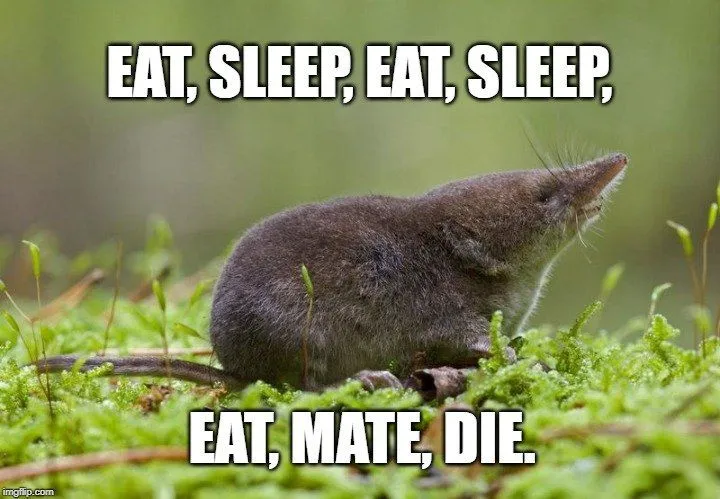
In comparison to most other species, humans and great apes take a long time to reach maturity. For example, newborn horses are able to walk within 90 minutes of birth, whereas humans often don’t walk for 1-2 years. Some species of shrew, which are mammals like humans, live for less than a year, and often die within a few weeks of their one and only brood of offspring. Humans, on the other hand, don’t sexually mature for at least a decade, and the average age for women giving birth to their first child in countries around the world range from 18-31 years of age.
All of this is to say that other species develop, mature and reproduce much quicker, and thus require much higher intakes of energy, because their energy expenditure is so much higher. The shrews mentioned above eat close to their weight in insects every day, because their metabolism is incredibly fast, with a heart that can beat more than 800 times per minute (and over 1,000 in the tiny Etruscan shrew)!
Generally speaking, other species develop and reproduce more rapidly, reaching adulthood within 1-2 years, and reproducing as often as possible during their viable period for reproduction. Humans and other primates are exactly the opposite of that. Measured against body size, primates burn only about half the energy of a typical placental mammal of the same mass, a remarkably slow metabolism that tracks closely with their slow growth and long lives. This idea, that a fast-burning life is a short one while a more relaxed metabolic rate can stretch lifespan out by decades, is the old "rate of living" hypothesis. It's an appealing rule of thumb, but a flawed one. Once you correct for body size, metabolic rate and longevity don't actually line up neatly: bats and many birds run hot yet live far longer than ground-dwelling mammals of the same size. So a slow metabolism is more of a companion to long life in primates than a proven cause of it.
Cell Divisions (Hayflick Limit)
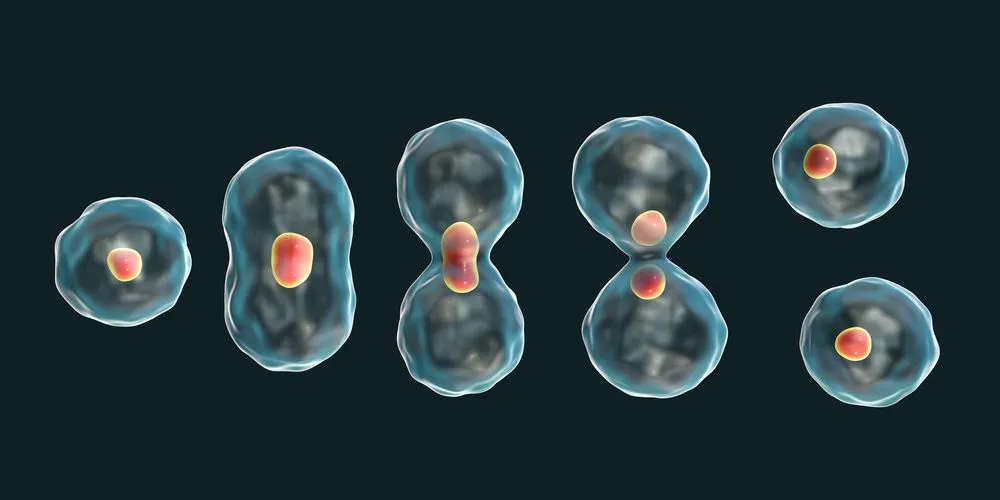
Another potential explanation is an in-built limit to the number of times that a cell population can divide before becoming senescent, i.e., unable to divide further. This limit is called the Hayflick Limit, and for humans cells, it is found to be approximately 50 division cycles. This expiry date on cell’s dividing ability seems to hint at a natural cut-off point for human life, and it seems to hold up across other animals. Species with notoriously short lifespans, such as mice (2-3 years), have a Hayflick Limit of about 15 divisions, while longer-lived animals tend to have a higher one (e.g., Galapagos tortoises, which can live for well over a century, have a Hayflick Limit of roughly 110).
As cells divide, their telomeres (the protective caps on the ends of chromosomes) grow shorter, and once they wear down past a critical point, further accurate division becomes impossible. That shortening is what drives the Hayflick Limit at the level of a single cell. Whether it actually sets the lifespan of the whole organism is a different question, and a far murkier one. Correlation is not causation, and no one has shown that hitting the Hayflick Limit is what kills an animal.
A Genetic Connection?
In a number of simpler species, single genes have been found that hold an outsized grip on lifespan. The most famous example is the tiny roundworm Caenorhabditis elegans: in pioneering work led by Cynthia Kenyon, mutating a gene called daf-2 doubled the worm's lifespan. daf-2 encodes the worm's receptor for insulin and a related signaling molecule (insulin-like growth factor, or IGF-1), so dialing that pathway down flips a network of other genes governing transcription, protein production and reproduction. Crucially, the very same insulin/IGF-1 signaling pathway exists in mammals, including humans, hinting at a deep, shared genetic lever on aging. These discoveries are exciting, as they may hint at an underlying genetic blueprint for an organism’s lifespan. For researchers seeking the “fountain of youth” or “immortality”, these research frontiers are particularly exciting.
Exceptions To The Rule
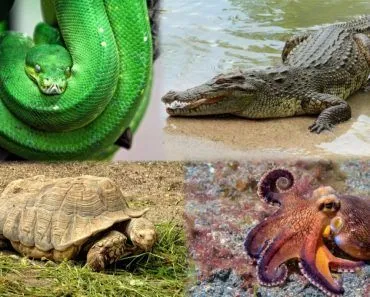
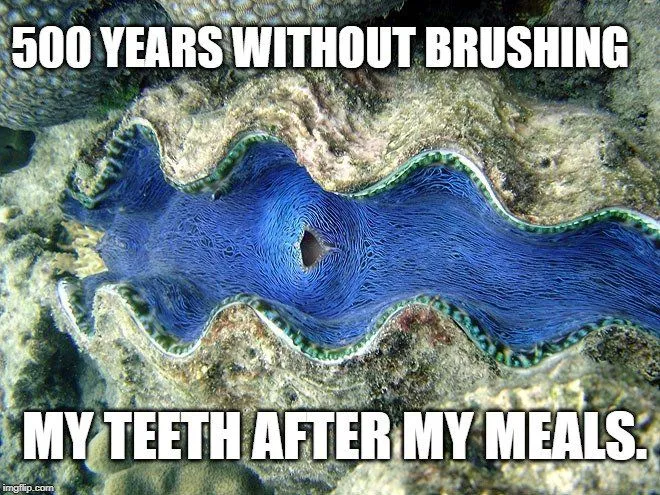
Now, while humans do have the potential to live for a century or more, we are by no means the longest-living organism on the planet. The giant tortoises of the Galapagos Islands have been known to live for over 150 years, and the bowhead whale, the longest-lived mammal we know of, can survive more than 200 years in the icy Arctic. The Greenland shark beats them both: radiocarbon dating of the lenses in their eyes suggests the species lives at least 272 years, with the oldest individual estimated at around 392 years (give or take a century). In terms of invertebrates, an ocean quahog clam nicknamed "Ming" was found to be 507 years old, born around the time of the Ming Dynasty, making it the oldest individual animal whose age has ever been precisely measured.
Yes, it is rather remarkable that human life expectancy has more than doubled in the span of only a century, but from what we know thus far, or can practically apply, there is an average cap to how long we can live. As cells and tissues become older and have more errors in their genetic coding, the body begins to break down, disease is more likely, and the ability to heal is hampered. As we all know, life is unpredictable, so it’s best to make the most of your existence while you can!
References (click to expand)
- Genetic Control of Aging and Life Span - Nature. Nature
- Bonobo genome completed. Max Planck Society.
- Mather, K. A., Jorm, A. F., Parslow, R. A., & Christensen, H. (2010, October 28). Is Telomere Length a Biomarker of Aging? A Review. The Journals of Gerontology Series A: Biological Sciences and Medical Sciences. Oxford University Press (OUP).
- Limits on Cell Life Span Have Little To Do With ... - Fight Aging!. fightaging.org
- Finch, C. E. (2009, December 4). Evolution of the human lifespan and diseases of aging: Roles of infection, inflammation, and nutrition. Proceedings of the National Academy of Sciences. Proceedings of the National Academy of Sciences.
- Pontzer, H., Raichlen, D. A., et al. (2014). Primate energy expenditure and life history. Proceedings of the National Academy of Sciences (PNAS).
- Shay, J. W., & Wright, W. E. (2000, October). Hayflick, his limit, and cellular ageing. Nature Reviews Molecular Cell Biology. Springer Science and Business Media LLC.