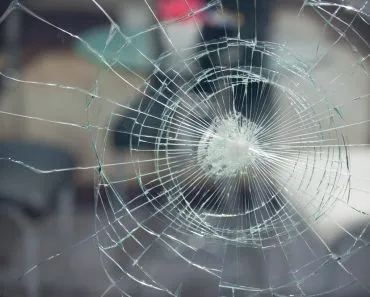
Glass is transparent, but its cracks look opaque because their rough, broken surfaces scatter light in every direction (irregular reflection). Light that does enter gets trapped by total internal reflection and partly absorbed, so almost none passes straight through. The result is a cloudy, grey edge instead of a clear one.
If you’ve ever broken your glasses, you’ve surely noticed that the cracked edge of the glass appears dark grey and opaque. In fact, if you wear open frame glasses, then you’ve also surely seen that the bottom edge of the glass is green-greyish in color and also opaque, even without any cracks.
This also happens with glass rulers, windows, and smartphone screens. Not only glass, but hard transparent plastics (like the screen guard of smartphones) also display the same phenomenon.
But why does this happen? Shouldn’t glass be transparent from every direction?
The answer lies in the question itself, i.e., the “direction”. However, before jumping right into it, we must first understand some basics about the behavior of light in general.
Basics Of Geometrical Optics
1) Reflection Of Light
When light strikes a smooth, shiny surface, it bounces off the surface instead of passing through. This is known as reflection, and it can be described more precisely using simple geometry.
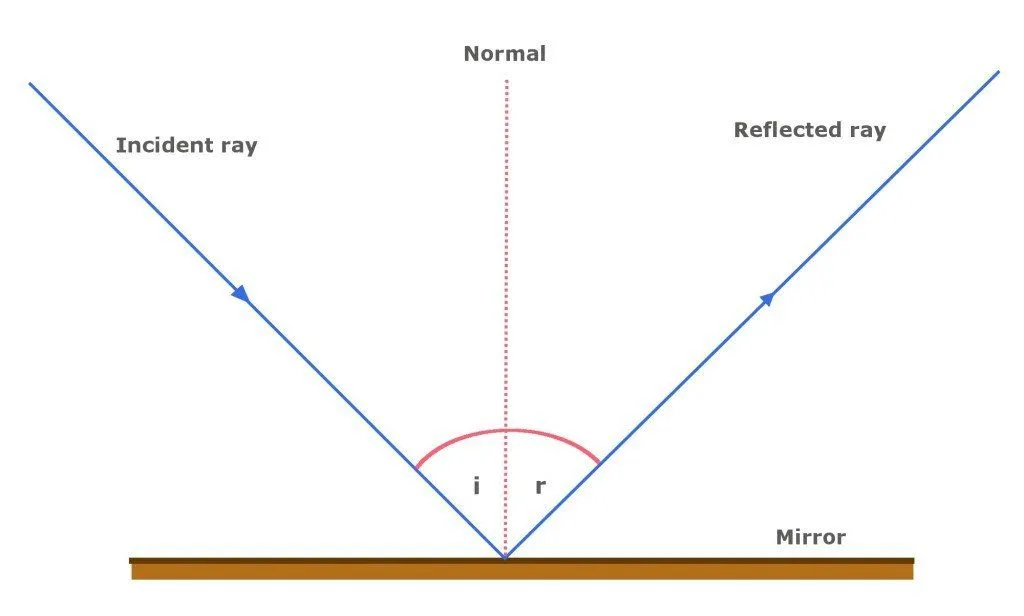
Imagine that a ray of light strikes a plane surface. At the point of contact between the surface and the light ray, draw a line perpendicular to the plane. This line is called the normal. When a ray of light strikes the plane surface, it makes some angle with the normal. This is called the angle of incidence. When the light bounces off the surface, the reflected ray also makes some angle with the normal. That angle is called the angle of reflection.
For reflection, the angle of incidence and the angle of reflection are always equal.
2) Refraction Of Light
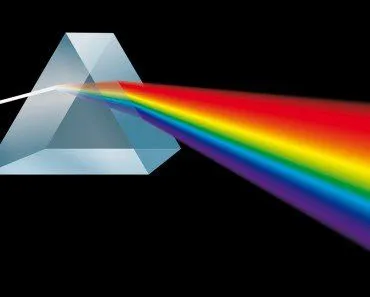
When light strikes a transparent object, like glass, it moves through that object and comes out on the other side. However, light bends as it crosses the boundary between the glass and the surrounding medium, which is why objects viewed through glass can look shifted or distorted.
This is called refraction, which can also be described more precisely using simple geometry.
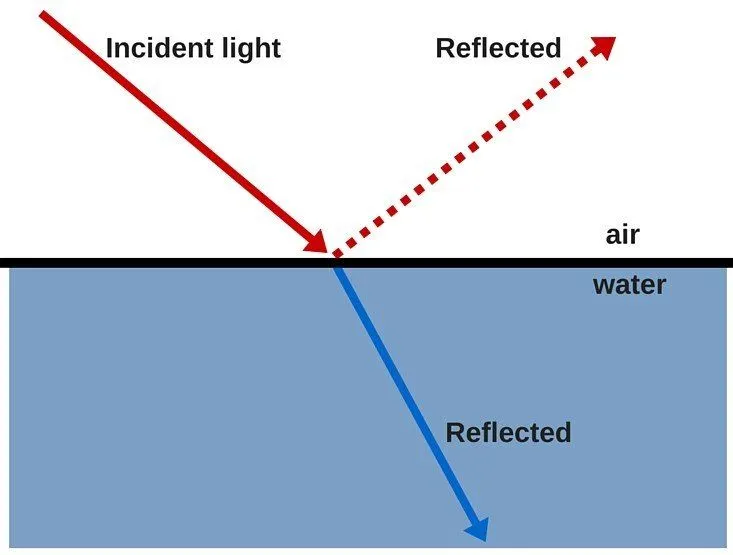
Assume that a ray of light propagates through air and strikes a thick glass slab. At the point of contact between the slab and the light ray, draw a line perpendicular to the glass slab. This is called the normal. When the light ray strikes the glass slab, it makes an angle with the normal. This is called the angle of incidence.
After striking the slab, the ray enters the slab and moves through it. This light ray inside the slab is called the refracted ray. The angle between the refracted ray and the normal is called the angle of refraction.
During refraction, the angle of incidence and the angle of refraction are never equal.
Every medium has a property called optical density. Optical density gives some idea about the speed of light in that material. The ratio of the speed of light in vacuum to the speed of light in that material is called the refractive index. The greater the refractive index, the slower the speed of light, and thus the greater the optical density.
n = c / v , where v = speed of light in the medium
c = speed of light in vacuum
n = refractive index of the medium
If the speed of light in a medium is slower than the speed of light in vacuum, then that medium is said to be optically denser than air.
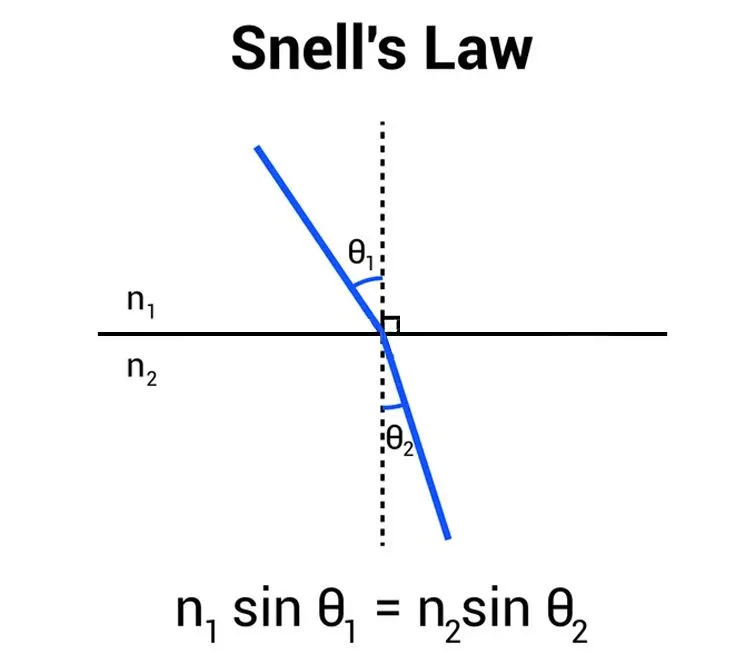
If light travels in two media with different refractive indices, then Snell’s law provides a useful relationship.
n1 sin θ1 = n2 sin θ2, where n1, n2 = refractive indices of media 1 and 2 respectively
θ1 = angle of incidence
θ2 = angle of refraction
3) Total Internal Reflection
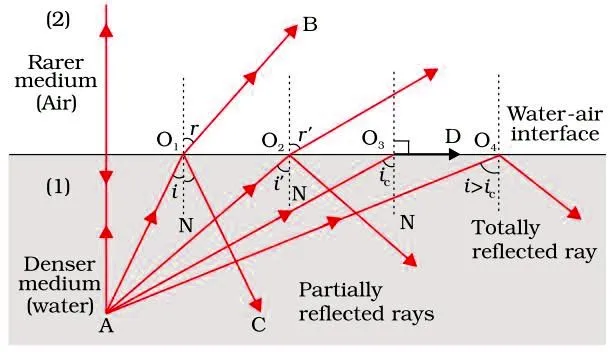
When light moves from an optically denser medium into an optically rarer medium, if the angle of incidence is greater than a threshold angle, called the critical angle, then the light ray gets reflected back towards the original medium, without undergoing refraction. This phenomenon is called total internal reflection.
Absorbance Of Light
Whenever light propagates through a medium, its intensity decreases over time. For example, a beam from a torch can only reach so far before it fades away and becomes invisible. This happens because light interacts with the matter around it, and some of that light gets absorbed as a result of this interaction.
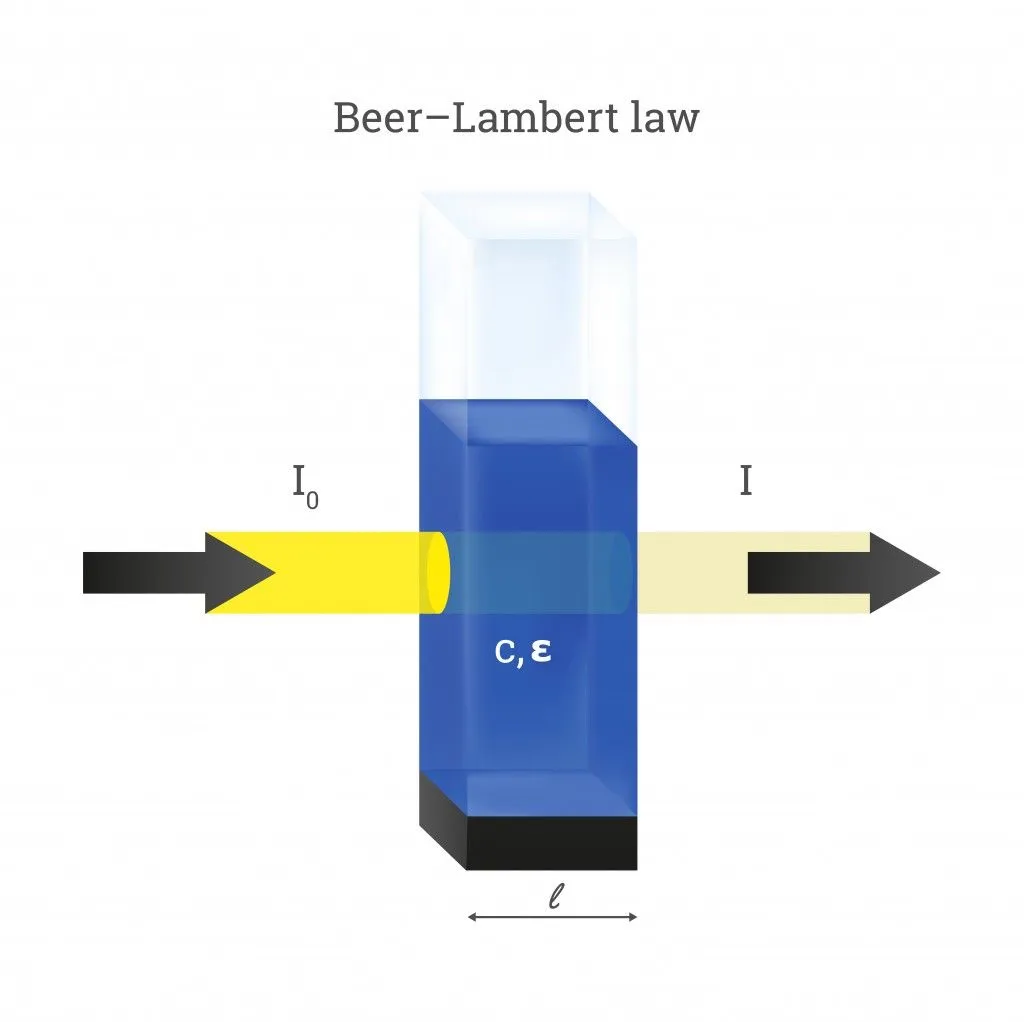
Similarly, when light moves through glass, some of its energy gets absorbed, resulting in a decrease in the intensity of the refracted wave. If the glass is thick enough, light must travel a long distance inside the glass. Thus, a significant fraction of the light gets absorbed and the intensity of the emergent ray is diminished, as compared to the intensity of the incident ray. How much a material absorbs light is given by Beer-Lambert’s law.
The intensity of emergent light, I is given by:
I = Ioe−εcl, where Io = intensity of incident beam
l = distance travelled by light inside the absorbing medium
c = molar concentration of absorbing molecules, ions
ε = molar absorption coefficient (gives an idea of the absorbing capacity of the medium)
Thus, the greater the glass length, the lesser is the intensity of the emergent ray.
Transparent, Translucent Or Opaque: How Light Behaves With Each
Before we get to the cracked edge, it helps to know that every material can be sorted into one of three groups, based on what light does when it arrives: transparent, translucent or opaque. The difference between them comes down to the two effects we have already met, i.e., how much of the light gets scattered and how much gets absorbed.

A transparent material, like clear glass or water, lets light pass straight through with almost no scattering. The rays keep obeying Snell’s law on the way in and out, so the image on the far side stays sharp and you can read this text through a clean window. (There is a subtlety in how we still manage to see a transparent object at all.)
A translucent material still lets light through, but scatters it so heavily along the way that no clear image survives. Frosted bathroom glass is the everyday example. It is ordinary clear glass whose surface has been roughened by sandblasting or acid etching, and that pitted surface scatters the light in all directions, blurring the shapes behind it while still letting the brightness through.
An opaque material, like wood or metal, lets no light through at all, because the light that strikes it is either absorbed or reflected away.
The key takeaway is this: a material does not have to absorb light in order to stop being transparent. Strong scattering on its own is enough. So yes, glass can be made translucent or even opaque without changing what it is made of, simply by roughening its surface or seeding it with tiny scattering centers (milk glass is clear glass clouded with exactly such particles). Hold on to this idea, because a cracked edge does the very same thing, only by accident.
Why Cracks In Glass Look Opaque
Now that we have some idea about the behavior of light inside a medium, let’s discuss the answer.
When light strikes a cracked glass edge, the following happens:
There always exists some reflection, even off a transparent surface like glass. The cracking of glass exposes the rough edges. When a light beam is incident on this rough edge, the beam splits into multiple rays that get reflected away in multiple directions. These reflected rays interfere in such a manner that no clear image can be formed. This is called irregular reflection.
Some of the light enters the glass. When light enters through the cracked edge, some of the rays become trapped inside due to total internal reflection. This is because the rays move in a manner such that the angle of incidence inside the glass is greater than the critical angle.
Thus, the light cannot come out of the glass. Since light is trapped inside, there’s no visibility of the region behind the broken glass, i.e., the transparent glass on the other side. As a result, the transparency of that glass region becomes diminished.
Since some of the light remains trapped, it also gets absorbed. The longer the path length (l) that the light rays have to spend inside the glass, the greater the amount of absorption. This decreased intensity of light (I) is also responsible for the increased opacity of cracks. The greater the molar absorption coefficient of glass (ε), the greater is the absorption of light.
Thus, cracks appear opaque/highly translucent due to a combination of irregular reflection, total internal reflection and absorption inside the glass!
Why Does A Crack In Glass Sometimes Shine Like A Mirror?
A cracked edge does not always look dull and grey. Look at a crack buried inside a thick glass block, or a chip running through a drinking glass, and it often flashes bright and silvery, as if a sliver of mirror had been slipped inside. That old physics-class observation, that a crack in a glass vessel often shines like a mirror, comes from the same total internal reflection that traps light along the edge.

A crack is really a very thin gap filled with air. When light travelling through the glass reaches this gap, it meets a glass-to-air boundary buried inside the solid. Glass has a refractive index of about 1.5 and air about 1.0, so the light is moving from a denser medium into a rarer one, which is exactly the condition needed for total internal reflection. For a glass-air boundary the critical angle works out to roughly 42°, and any ray that strikes the crack at a steeper angle than that is thrown back completely, with none of it crossing into the air gap.
A surface that returns essentially all of the light falling on it is, by definition, behaving like a mirror. That is why the crack glints silver rather than staying clear: you are seeing light bounced straight back at you off the internal glass-air surface. It is the very same effect that keeps signals racing down an optical fiber and helps a well-cut diamond sparkle.
References (click to expand)
- The Beer-Lambert Law - Chemistry LibreTexts. LibreTexts
- Total Internal Reflection - University Physics III (OpenStax). Physics LibreTexts
- 27 Geometrical Optics - Feynman Lectures - Caltech. The Feynman Lectures on Physics
- Transparency and translucency - Wikipedia
- Frosted glass - Wikipedia
- Total Internal Reflection - College Physics (OpenStax / Lumen Learning)