The angle of incidence is the angle between an incoming ray and the line perpendicular (the "normal") to the surface at the point of contact, measured from the normal. In aerodynamics, it has a different meaning: the fixed angle between the wing’s chord line and the fuselage’s longitudinal axis. It is often confused with the angle of attack, which is the angle between the wing’s chord and the actual oncoming airflow.
Let’s look at the different interpretations (based on their respective contexts) of the term ‘angle of incidence’. We shall start with the interpretation that is most commonly used.
What Is The Angle Of Incidence?
In optics, the angle between the ray incident on a plane surface and the line perpendicular to the surface at the point of incidence (of the ray) is defined as the angle of incidence.
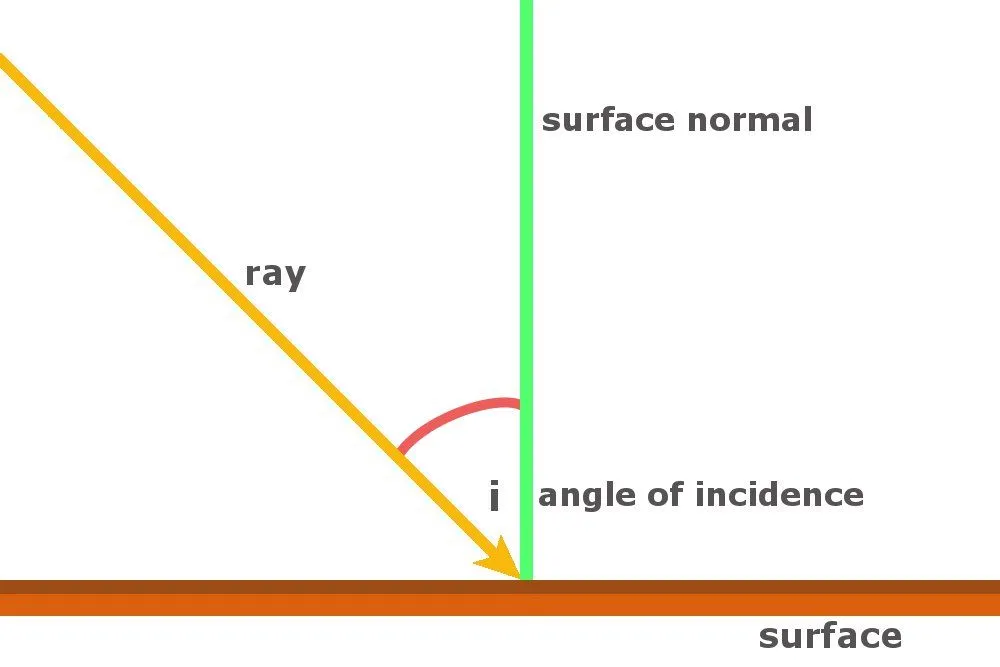
For starters, a perpendicular line is one that goes straight up from a surface. In optics, they refer to this line as the ‘normal’. The normal is very important when talking about angles in optics. This is not just optics; you’ll come across this ‘normal’ all the time while studying physical laws.
The angle of incidence involves two lines: the first is the incident light ray that falls on a surface. A normal is drawn at the point where the incident ray touches the surface. Now, the angle that the incident ray makes with the normal is called the angle of incidence.
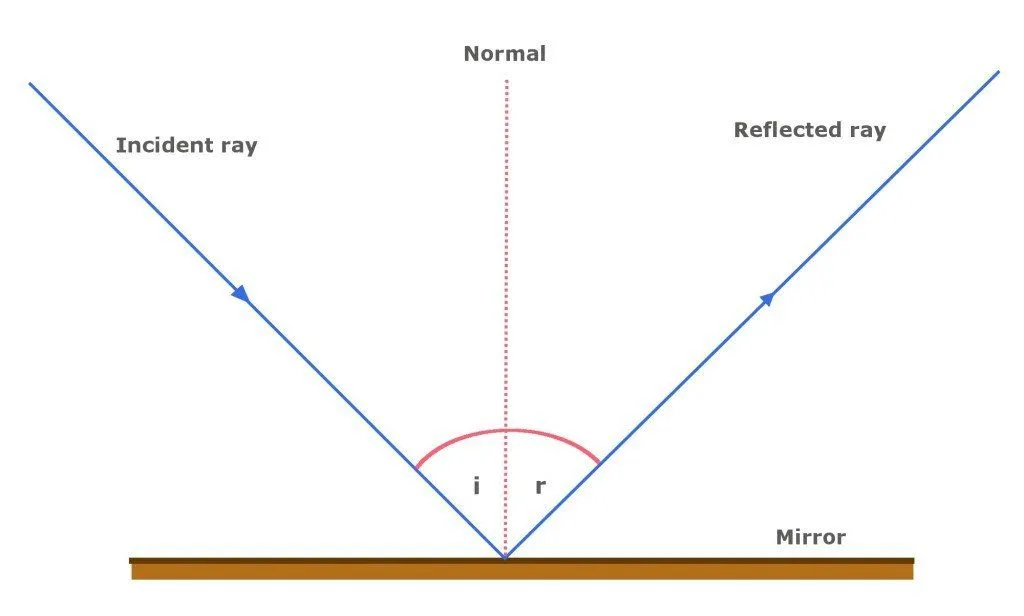
The other angles related to light rays (associated with surfaces) include the angle of reflection and the angle of refraction. In fact, the law of reflection states that the angle of incidence is equal to the angle of reflection.
Glancing Angle
It should be noted that when dealing with a light ray that is almost parallel to the surface, it’s sometimes more useful and convenient to refer to the angle between the ray and the surface, rather than the ray and the normal. In more specific terms, you can determine the magnitude of the former by subtracting the value of the angle of incidence from 90. This small angle is referred to as the “glancing angle”.
The concept of a glancing angle is widely used in atomic optics and X-ray spectroscopy. This angle is so small that it’s often expressed in milliradians.
These were all the basic things you needed to know about the angle of incidence in optics. Now, let’s move on to the other interpretations of this flexible term.
Angle Of Incidence (Aerodynamics)
In aerodynamics, the angle of incidence refers to the angle formed between the chord line of the wing and a reference axis along the fuselage. This definition applies for aircraft that have fixed wings.
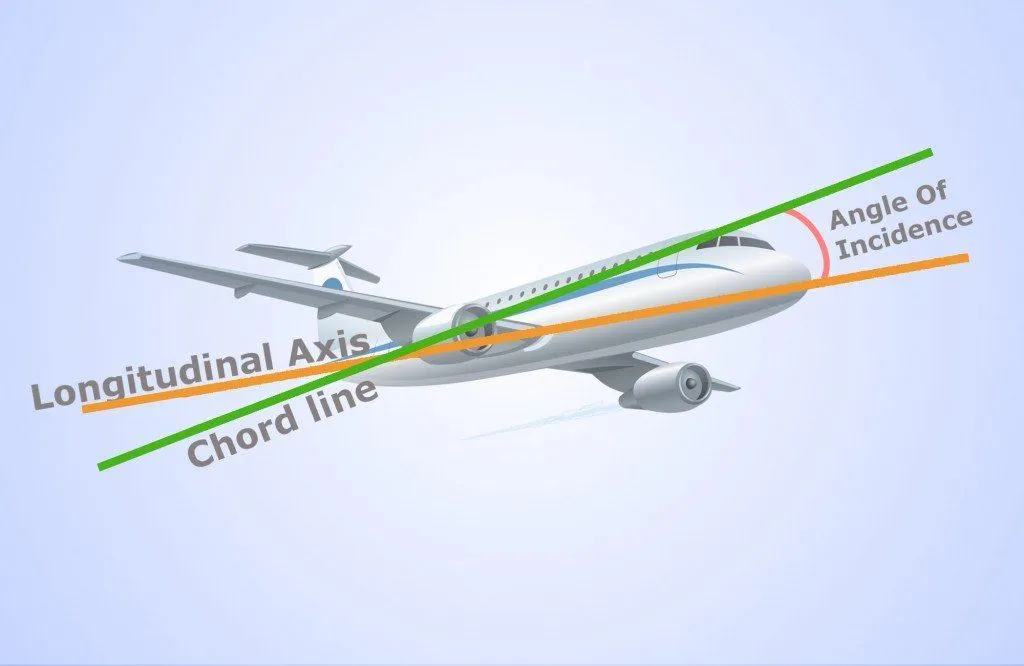
The chord line, in aeronautics, is the imaginary straight line that joins the leading and trailing edges of an airfoil (a structure shaped to produce lift when it moves through the air). The longitudinal axis of the aircraft passes through the aircraft from nose to tail. It’s a reference axis along the fuselage. Thus, the angle of incidence, in aeronautics, refers to the angle between the chord line (where the wing is attached to the fuselage) and the longitudinal axis, a reference axis along the fuselage.
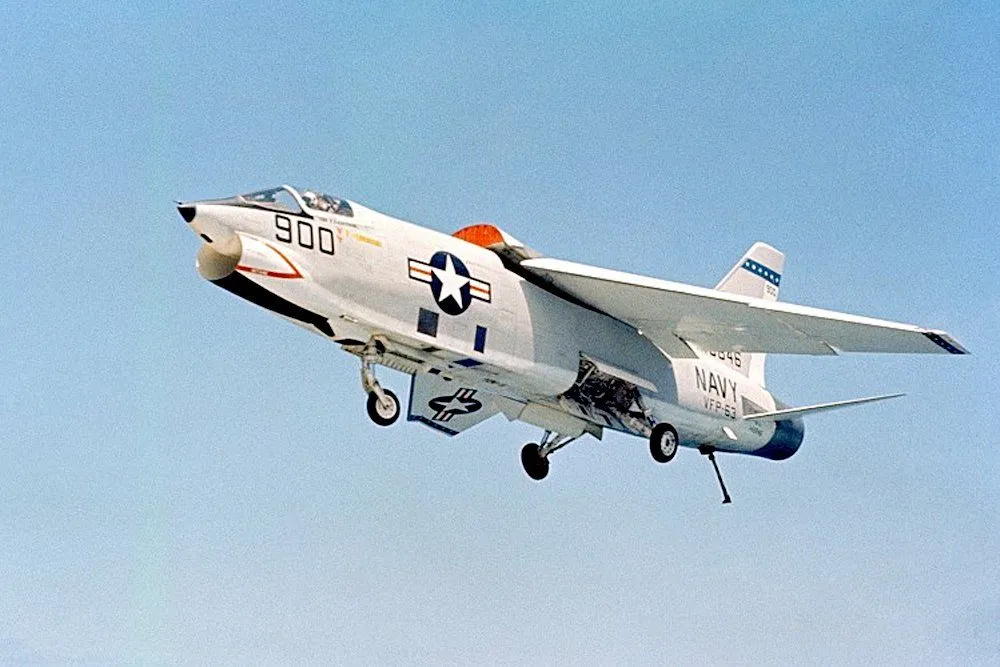
Also referred to as the mounting angle, the angle of incidence is fixed in the design of the aircraft, and barring a few uncommon exceptions, it cannot be varied or altered during flight.
Angle Of Attack
The angle of attack (AOA) is the angle between the chord of the wing and the undisturbed airflow. In simple words, it’s the angle between a reference axis on an airplane wing and the oncoming air.
This reference axis can sometimes be the imaginary line connecting the leading and trailing edge of the aircraft at some average point on the wing. However, most commercial airplanes use the longitudinal axis or fuselage centerline as the reference axis.
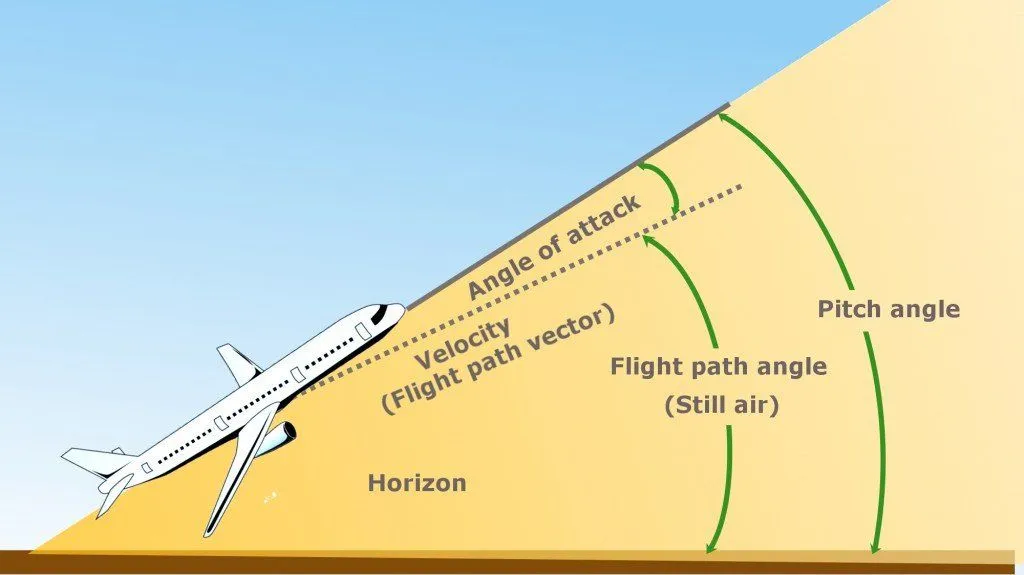
It should be noted that in aeronautics, the term ‘angle of incidence’ is sometimes used as a synonym for ‘angle of attack’, but in reality, these two terms refer to different angles.
Angle Of Incidence vs Angle Of Attack: What’s The Difference?
These two angles get mixed up constantly, so let’s pin down the difference in plain terms. The angle of incidence is built into the aircraft. It’s the fixed angle at which the wing is bolted onto the fuselage, measured between the wing’s chord line and a line running parallel to the longitudinal axis of the airplane (the imaginary line from nose to tail). The angle of attack, on the other hand, is set by how the airplane is flying. It’s the angle between that same chord line and the relative wind, the air actually streaming over the wing.

Here’s the cleanest way to keep them straight: the angle of incidence does not change in flight, while the angle of attack changes every time the pilot raises or lowers the nose. Pull the nose up and the wing meets the oncoming air more steeply, so the angle of attack increases, even though the rigging angle of the wing has not moved at all. This distinction matters because it’s the angle of attack, not the angle of incidence, that determines how much lift the wing makes, and it’s the angle of attack that decides when a wing stalls. The angle of incidence simply sets the starting point; the air and the pilot do the rest. You can see this same chord-line-versus-airflow idea at work in our piece on how planes generate lift (even upside down).
Why Are Wings Mounted At An Angle?
If the angle of incidence is fixed and doesn’t directly add lift, why bother tilting the wing at all? Why not bolt it on perfectly flat? The answer is about keeping the fuselage at a sensible attitude. Wings are usually rigged at a small positive angle of incidence so that the wing can fly at a useful angle of attack while the fuselage stays roughly level with the airflow. On many light, general-aviation aircraft this rigging angle is only a few degrees, with values of around 6 degrees being common.

That small tilt buys real comfort and visibility. By letting the wing carry its load while the nose stays down, the angle of incidence keeps the cabin floor close to level in cruise, and it lowers the pitch attitude a pilot has to hold during takeoff and slow flight, which improves the view over the nose. Because it is set once in the design, this angle is also called the rigging angle, or the rigger’s angle of incidence. There are a handful of exceptions: the F-8 Crusader was famously built with a wing whose incidence could be raised for takeoff and landing, precisely so the fuselage could sit lower for better forward visibility. The horizontal tail surface gets its own incidence angle too, usually different from the wing’s; that deliberate mismatch (known as decalage) helps balance the aircraft and is part of what keeps it stable in pitch.
References (click to expand)
- Angle of Attack for Airfoil.
- What is angle of attack?.
- https://www.rpi.edu/dept/phys/ScIT/InformationTransfer/reflrefr/rr_content/reflection_10.html
- The reflection and refraction of light.
- Angle of Attack. Glenn Research Center, NASA.
- Why Would You Want To Change Your Angle Of Incidence? Boldmethod.
- Angle of incidence (aerodynamics). Wikipedia.
- Decalage. Wikipedia.