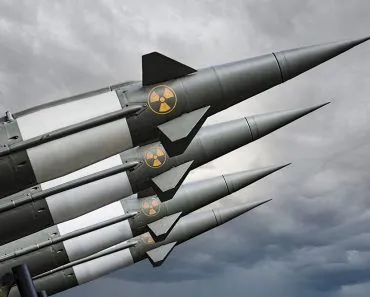
Nuclear missiles are decommissioned by dismantling them. In the United States this is overseen by the National Nuclear Security Administration at the Pantex Plant in Texas, where the warhead is taken apart inside a protective bay. Metals such as copper and gold are recycled, while the fissile core (plutonium or uranium) and the high explosives are the hardest parts to handle safely.
Dismantling a nuclear missile is no small feat, and it remains one of the most important geopolitical challenges we as humans face. To give some rough figures, as of early 2026 there are roughly 9,600 warheads in military stockpiles and about 12,200 nuclear warheads in the world once retired weapons awaiting dismantlement are counted in. Now, what would it take if you wanted to dismantle just one warhead? Although the numbers stated so far might look high, there was a point when the world held close to 70,000 nuclear warheads in total, at the peak of the Cold War in 1986. Now an interesting question did cross my mind when seeing these figures. How did the numbers come down so drastically?
Cutting The Missiles Down
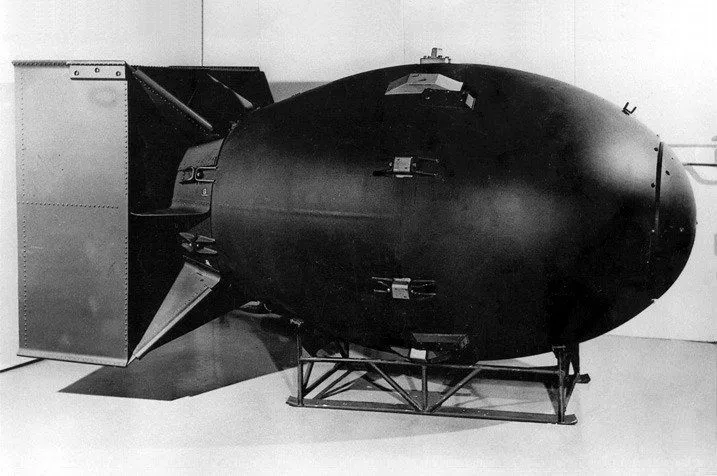
Numerous treaties and unilateral steps in the post-Cold War era have driven the non-proliferation and reduction of these weapons. After the dissolution of the Soviet Union, President George H.W. Bush launched the Presidential Nuclear Initiatives of 1991 and 1992, ordering deep, immediate cuts to tactical and strategic forces and pulling thousands of warheads out of service. His son, George W. Bush, kept the trend going: during his presidency (2001 to 2009) the U.S. stockpile fell by roughly half, from about 10,000 to just over 5,000 warheads, helped along by the 2002 Moscow Treaty (SORT) signed with Vladimir Putin.
Coming to the present day, the New START treaty between the United States and Russia was the last remaining cap on the two countries' deployed strategic arsenals, but it expired on 5 February 2026 with no replacement in place. To give some perspective on why these treaties matter, take the case of India and Pakistan. Between them the two countries hold roughly 360 warheads today. Modeling studies suggest that even a limited exchange between them would loft enough soot into the upper atmosphere to cool the planet, slash crop yields, and trigger global famine, a scenario often called a "nuclear winter."
Stripping A Missile Down
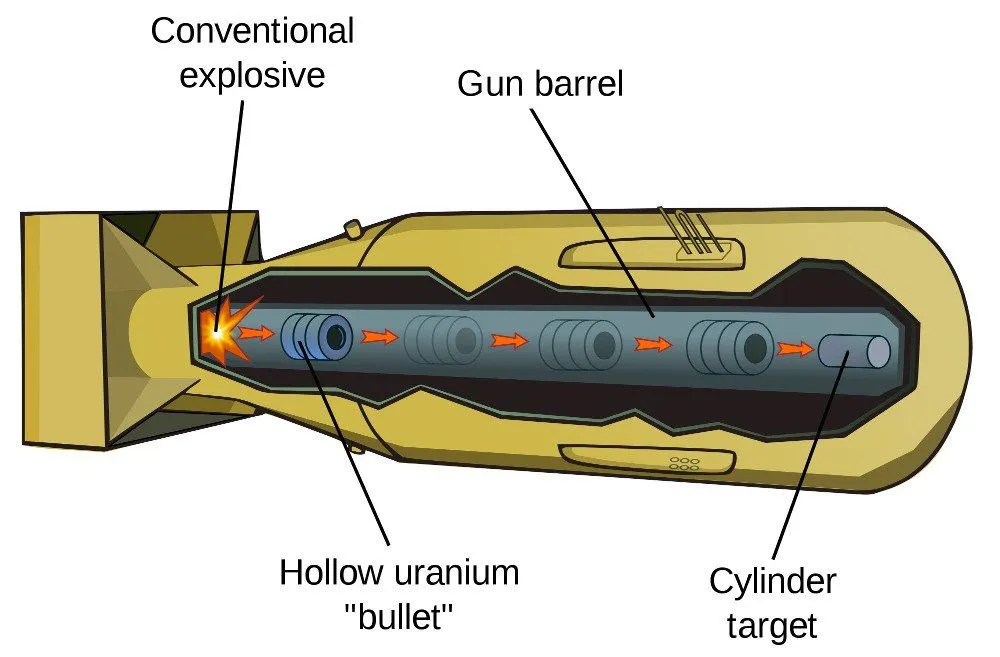
Now, keeping the political issues aside, let's take a look at how a nuclear missile is stripped down. The prime components in a nuclear warhead are the exterior casing, the fissile core (which may be either plutonium or uranium), a deuterium-tritium boost gas (used to boost the explosive yield) and other elements described by the Union of Concerned Scientists. In the United States, the National Nuclear Security Administration is the government body that oversees the dismantlement of nuclear weapons. The work is done at the Pantex Plant in the Texas Panhandle, near Amarillo. The same facility once assembled these weapons and now handles their disassembly, with the warhead taken into a heavily protected bay where it is taken apart.
One quirk of these weapons is that they need upkeep even before they are retired: the tritium in the boost gas is radioactive and decays with a half-life of about 12.3 years, so it has to be periodically replenished. During dismantlement, metals such as copper and gold are recovered, recycled and sold. The hardest part of the process though, as you might have already guessed, is the handling of the explosive materials. And the two fissile metals, uranium and plutonium, cannot be handled in the same manner.
Differences In Uranium And Plutonium
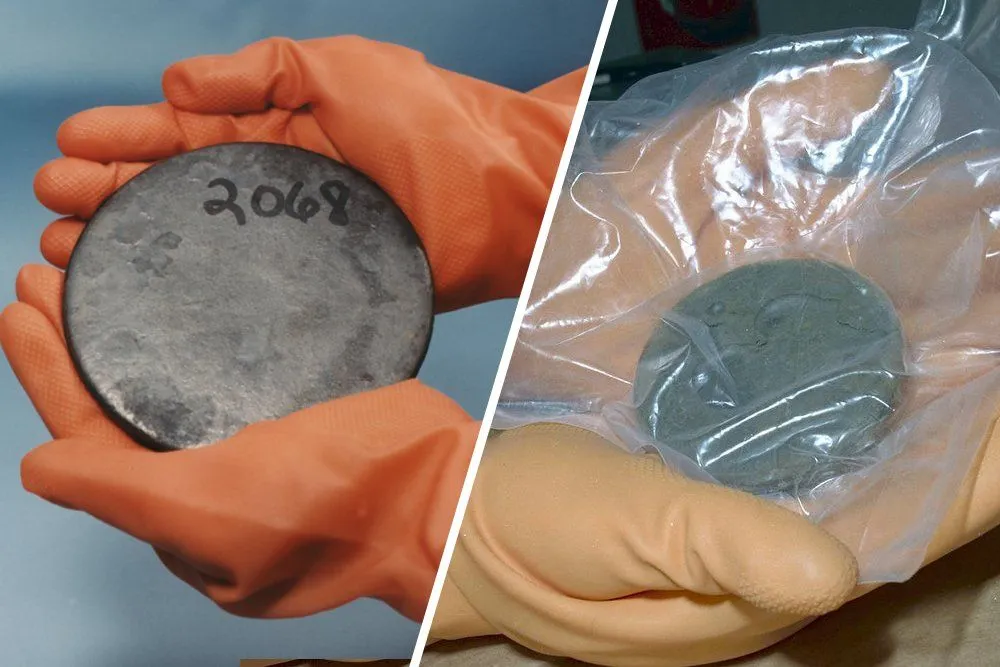
Both uranium and plutonium make successful fissile material for a bomb. The difference lies in the fact that you need much less plutonium to reach critical mass, which is one reason it is often favored for compact warheads. Weapons-grade uranium, on the other hand, is conceptually simpler to use in a bomb. The catch is in the enrichment. The fissionable isotope is uranium-235, but it makes up only about 0.7% of natural uranium, the rest being the far more abundant uranium-238. To build a weapon you have to concentrate the U-235 up to around 90%, and the most common way to do this is by spinning uranium hexafluoride gas in massive centrifuge cascades that separate the isotopes by weight.
The funny thing about plutonium is that, although a trace of it occurs naturally, the plutonium used in bombs is essentially man-made. The isotope used in plutonium-based warheads is plutonium-239, which is bred in reactors from uranium-238. Once enriched, uranium can also serve as fuel in commercial nuclear reactors for years. Weapons-grade plutonium, however, has few uses beyond nuclear weapons, which is one of the reasons non-proliferation treaties so strictly condemn its spread.
What Happens To The Bomb Fuel?

Pulling the warhead apart is only half the story. Once the fissile core is out, what do you actually do with all that uranium and plutonium? The answer is one of the more remarkable feats of the post-Cold War era, and it explains why those "scrap missile" searches have a surprisingly hopeful ending.
For uranium, the trick is to run enrichment in reverse. Weapons-grade uranium is concentrated to roughly 90% U-235, while a commercial reactor only needs around 3 to 5%. So you simply blend it back down: the highly enriched metal is oxidized, fluorinated and then mixed in a gas stream with low-enriched uranium until it is dilute enough to be reactor fuel. That is exactly what the Megatons to Megawatts program did. Between 1993 and 2013, Russia recycled 500 metric tons (about 1.1 million lb) of bomb-grade uranium, the equivalent of roughly 20,000 dismantled warheads, into more than 14,000 metric tons of low-enriched uranium that the United States bought for its power plants. For about two decades, that downblended warhead material generated up to 10% of all U.S. electricity. If you switched on a light in America during those years, there is a fair chance the power came from what used to be a Soviet bomb.
Plutonium is the awkward one. Unlike uranium, you cannot dilute it into harmlessness, so the plutonium "pits", the hollow, bowling-ball-sized cores that trigger a warhead, are simply pulled out and stored. The United States keeps roughly 15,000 surplus pits in concrete-and-steel igloos at the Pantex Plant in Texas. Because plutonium degrades very slowly (studies put the working life of a pit at a century or more), they can sit there for decades. The current U.S. plan, known as dilute and dispose, is to mix surplus weapons plutonium with an inert material and bury it deep underground at the Waste Isolation Pilot Plant in New Mexico, putting it beyond reach for good, much like the deep-geological approach used for other forms of nuclear waste.
From Warhead To Orbit: Missiles That Became Rockets

Here is the part that genuinely surprised me when I started reading. Not every retired missile gets cut into scrap. A stripped-down warhead leaves behind a perfectly good rocket, a tall stack of solid- or liquid-fuel stages engineered to throw a heavy payload thousands of kilometers. Take the bomb off the top, bolt a satellite on instead, and that same Cold War missile becomes a space launch vehicle.
The American example is the Minotaur family, built by Northrop Grumman under the U.S. Space Force's Rocket Systems Launch Program, which exists specifically to convert decommissioned strategic missiles into launchers. The Minotaur I and II are built from Minuteman ICBM motors, while the heavier Minotaur IV, V and VI reuse stages from the retired Peacekeeper missile. The Minotaur I first flew in January 2000, and in 2013 a Minotaur V lofted NASA's LADEE probe all the way to the Moon. An even older case is the Titan II: after these huge missiles were pulled from silos in the 1980s, Lockheed Martin refitted them to carry U.S. government satellites into orbit.
Russia did the same with arguably the most feared missile of the Cold War. The R-36M, which NATO nicknamed the SS-18 Satan, was repurposed into the Dnepr rocket. Operated by the company Kosmotras, the Dnepr first launched in 1999 and went on to set records for the number of satellites placed in orbit by a single rocket, at one point deploying 32 spacecraft in one flight. It is hard to think of a cleaner example of swords into ploughshares: a weapon designed to carry up to ten warheads across the planet, spending its retirement delivering communications and Earth-observation satellites instead.
References (click to expand)
- About the Pantex Plant. National Nuclear Security Administration, U.S. Department of Energy.
- Status of World Nuclear Forces. Federation of American Scientists.
- Backgrounder on Decommissioning Nuclear Power Plants. U.S. Nuclear Regulatory Commission.
- Nuclear Weapon Reduction. Nuclear Threat Initiative (NTI).
- Military Warheads as a Source of Nuclear Fuel. World Nuclear Association.
- Megatons to Megawatts. Centrus Energy Corp.
- Plutonium Pit Production. National Nuclear Security Administration, U.S. Department of Energy.
- Minotaur (rocket family). Wikipedia.
- Dnepr (rocket). Wikipedia.
- Dealing with a Debacle: A Better Plan for US Plutonium Pit Production. Bulletin of the Atomic Scientists.