Table of Contents (click to expand)
Beatboxing works by using the lips, tongue, throat and breath to imitate drums and other instruments, drawing on the full range of speech sounds humans can make. The style emerged in early-1980s New York hip-hop and is named after the “beatbox” drum machines it mimics.
Beatboxing is a method of making music or beats using only the sounds made from one’s mouth. Beatboxers (people who beatbox) make these beats to mimic drum-like instruments. It sits within a broader family of vocal percussion, and similar traditions of making music with the voice alone turn up across the world and throughout history.
Konnakol, the spoken percussion of Carnatic music from South India, scat singing from American jazz, a cappella vocal arrangements, and the lilting (or “diddling”) of Irish and Scottish folk music all use the voice to carry rhythm or melody. They are cousins of beatboxing rather than the same thing. Scat singing, for instance, improvises melody and nonsense syllables over a tune, whereas beatboxing concentrates on imitating drums and turntables, so the two are related but distinct.
Additionally, the field of Phonetics and Phonology, which is the study of the sounds produced by human beings, takes particular interest in the fascinating practice of beatboxing.
Have you ever tried to beatbox? Here is a fun exercise: say the phrase “boots n’ cats” on repeat to produce a very basic beat using only your mouth! And just like that, you’re beatboxing.

Where Did Beatboxing Originate From?
Beatboxing, as we know it today, arose from necessity in the hip-hop scene of New York City in the early 1980s. Rappers needed beats to rhyme over, but the drum machines that produced those beats (early ones such as the Roland TR-808, nicknamed "beatboxes") were expensive and out of reach for most young musicians. So instead of buying the machine, performers learned to imitate it with their mouths. The name stuck: a person doing the job of the beatbox became a "human beatbox."
A handful of artists turned that workaround into an art form. Doug E. Fresh, billed as "the original human beatbox," could mimic drum patterns and turntable effects using only his lips, tongue and throat. Darren "Buffy" Robinson of the Fat Boys and Biz Markie pushed the techniques further in the mid-1980s, with Biz Markie often credited for popularizing the inward "click" sounds that let beatboxers breathe in while keeping a beat going. Their records carried beatboxing out of New York street culture and into the mainstream, where it remains a recognized discipline with its own world championships today.
How Does Beatboxing Work?
To understand the process of the fascinating art that is beatboxing, we will look at two separate research studies that were done to unearth the science behind accurately imitating instruments.
The first study was conducted in Grenoble, France, on a professional male beatboxer who was asked to perform all the beats he knew. The sounds that he produced were recorded for further observation and analysis. The researchers described every produced sound in phonetic terminology.
Every sound produced had its own acoustic signature. This means that each sound was unique in its own way. It was an astounding demonstration of the use of the mouth and its components!
For some of the recorded sounds, the researchers found that articulation and breathing were decoupled, meaning the beatboxer could shape a sound without it being tied to a normal breathing cycle. This kind of fine control over airflow is part of what lets skilled beatboxers keep a continuous beat going.

The second study worth discussing was conducted on a 27-year-old male American who speaks English and Spanish. The researchers used real-time Magnetic Resonance Imaging (rtMRI) to analyze his speech sound mechanisms. This beatboxing artist amazed researchers with his ability to produce ejectives and clicks. These are speech sounds that do not occur in English or Spanish but are found in languages such as Xhosa, Khoekhoe and Hausa, where clicks and ejectives serve as everyday consonants. The sounds he articulated were also given linguistic descriptions.
If you’re interested in more information on that particular study and its findings, refer to this website!
Why Are Linguists Interested In Beatboxing?
Linguistics is the scientific study of languages. Linguists deal with languages and try to understand their properties better. Within the fields in Linguistics, Phonetics and Phonology deal with human speech sounds. They study speech sound production, perception and their properties.
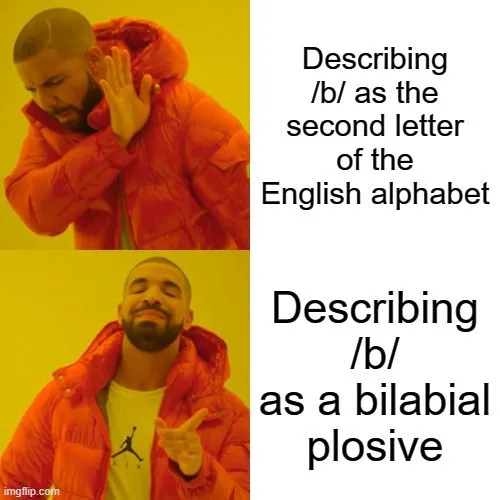
Can you believe that? We can describe any possible utterance of speech through a linguistic lens! For example, to produce the sound /b/, our lips close together to stop the air from escaping our mouth. Then, we let out a puff of air as we release our lips.
This action is a bilabial plosive or bilabial stop (bi = two, labial = relating to the lips, plosive/stop = words used to describe stopping of airflow using our mouth and releasing it suddenly).
The methods used in beatboxing were unknown for much of its existence, which is why Phoneticians and Phonologists now show such interest in uncovering the unusual mechanisms behind beatboxing.
Conclusion
Beatboxing as an art form has been in existence for many years in different cultures and lands, taking on a variety of different names. Beatboxing as we commonly know it draws on a remarkably wide range of human speech sounds to create music, reaching well beyond the consonants of any single language. As the studies above show, a skilled beatboxer can borrow sounds (like clicks and ejectives) that they never use when they speak, making it a strikingly versatile use of the human voice.
So, the next time you try to pick up beatboxing, remember that while the production of sound may be easy for us, speech is, inherently, a byproduct of primary functions of the mouth and lungs! To be able to produce speech, let alone make music with our mouths, is yet another astonishing aspect of human beings!
References (click to expand)
- Human Beatbox: The Art of Pushing Back the Limits of Vocal Possibilities. National Center for Voice and Speech (NCVS).
- Paroni, A., Henrich Bernardoni, N., Savariaux, C., Lœvenbruck, H., Calabrese, P., Pellegrini, T., … Gerber, S. (2021, January). Vocal drum sounds in human beatboxing: An acoustic and articulatory exploration using electromagnetic articulography. The Journal of the Acoustical Society of America. Acoustical Society of America (ASA).
- Proctor, M., Bresch, E., Byrd, D., Nayak, K., & Narayanan, S. (2013, February). Paralinguistic mechanisms of production in human “beatboxing”: A real-time magnetic resonance imaging study. The Journal of the Acoustical Society of America. Acoustical Society of America (ASA).
- Proctor, M., et al. (2013). Paralinguistic mechanisms of production in human beatboxing (full text). PMC, U.S. National Library of Medicine.
- History of Beatbox: Old School. humanbeatbox.com