That famous "BZZ-BZZ-BZZ" buzzing right before your phone rings is the GSM buzz. On 2G GSM networks, your handset transmitted in short bursts at exactly 217 Hz (an audio-band frequency), and those RF bursts were rectified by unshielded transistor junctions in nearby speaker amplifiers, demodulating the burst envelope back into audible noise. Most 4G LTE and 5G phones don't cause this, and US carriers have now shut down their old 2G/3G networks, so the buzz is largely a historical artifact.
If you have a cell phone (and most of the world does), then you know how powerful and incredible they are, but they’re far from perfect. From cracked screens to water damage, they are still tiny machines that are susceptible to outside influences. One of the most confusing and mysterious behavior of phones, however, is their impact on nearby speakers when they ring.
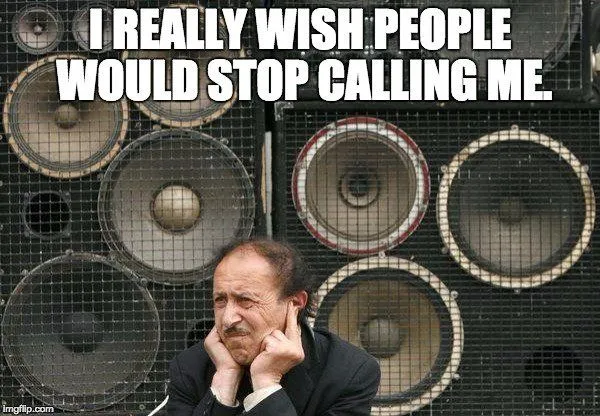
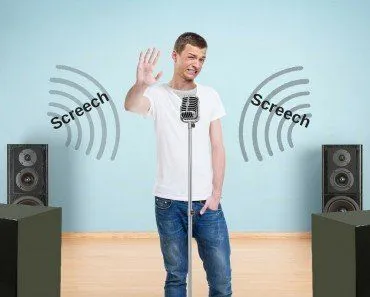
You can surely remember that high-pitched screeching that rips out of the speakers, and while many people didn’t initially connect it with their ringing phones, it’s now a well known link. The question is… why does that sound occur?
The Science Of The Screech
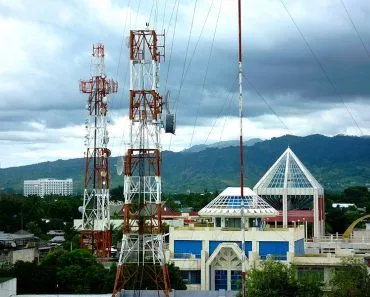
To put this in simple terms: every cell phone is a radio transmitter that talks to a nearby base station (the tower). On the old 2G GSM networks, each handset was assigned a 577-microsecond time slot inside a 4.615-millisecond frame, transmitting in sharp bursts at a repetition rate of about 217 Hz, which sits right in the middle of the human audio band. The wiring inside most cheap speakers is not shielded against radio-frequency pickup, and the semiconductor junctions in the amplifier (input-stage transistors and op-amp ESD diodes) act as non-linear circuit elements that rectify those RF bursts.
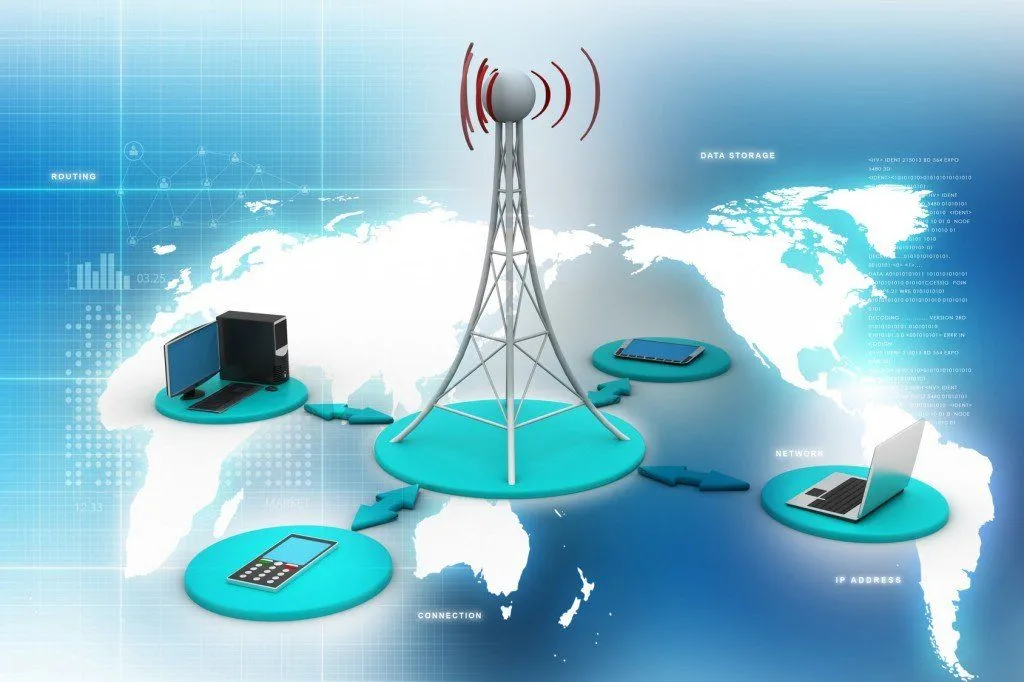
The non-linear element in the amplifier rectifies the radio bursts, turning the 217 Hz envelope back into audio. The result is the characteristic BZZ-BZZ-BZZ on top of whatever the speaker is already playing.
The effect was loudest on cheap powered (active) speakers and on PC sound systems with long unshielded analog input cables. Higher-end gear with shielded cables, ferrite chokes on the inputs, and properly designed PCB layouts was largely immune.
In even simpler terms: the long speaker cables and PCB traces act like an unintended antenna that picks up the burst transmissions from a nearby GSM phone. The amplifier then demodulates the envelope, producing the noise until the phone's transmission stops.
Ways To Avoid The Annoyance?
It may seem like common sense, but the best way to eliminate that irritating noise from your speakers is to simply move your phone a fair distance away (depending on the strength of the signal and the type of speaker). Usually, the range of interference is only a few feet, but can be as little as a few inches in some cases.

If you want to prevent it from ever happening, you simply need to invest in the right type of speakers – namely those that are of high enough quality that have shielded cables. Speakers that have digital inputs are also preferable and won’t react in the same way as older speakers. You can also shield your amplifier, which is located in the subwoofer in most inexpensive speakers. By wrapping the amplifier in tin foil and grounding it, you can avoid the interference noise.
Not all phones caused the buzz equally. 2G GSM phones, which used TDMA (Time-Division Multiple Access), produced it constantly because of those sharp 217 Hz on/off bursts. CDMA (Code-Division Multiple Access) phones, used by carriers like Verizon and Sprint in the US, transmitted continuously with smooth power control and so caused far less buzz. (Verizon, by the way, is a carrier, not a phone brand.) 4G LTE and 5G NR phones use OFDMA / SC-FDMA with much smoother envelopes and adaptive power control, and produce hardly any of the classic GSM buzz.
Today, this is mostly a memory. AT&T shut down its 2G GSM network on 1 January 2017. Verizon retired its CDMA 3G network on 31 December 2022. T-Mobile began winding down its remaining 2G GSM in 2024. With modern 4G LTE and 5G handsets and most 2G/3G infrastructure gone, the classic GSM buzz that defined the late 2000s and early 2010s desk-speaker experience is now a fairly rare event.

The best and easiest solution, of course, is to keep your phone in your pocket, and try not to stand next to a cheap speaker if you’re expecting a call!
Was It Only Speakers, Or Did Other Gadgets Pick It Up Too?
Speakers got all the blame, but they were never the only victims. Anything with an amplifier and a length of unshielded wire feeding into it could turn into an accidental GSM radio. The wire works as an unintended antenna, and the first non-linear semiconductor junction in the signal path (a transistor input or a protection diode) rectifies the radio bursts back into audio, exactly as it does inside a cheap speaker.

The usual suspects were car stereos, guitar and bass amplifiers, wired microphones, landline phones, and even some early MP3 players. A peer-reviewed SAE engineering study found the buzz to be "a very common EMI problem in automotive sound systems," and traced it to GSM phones emitting "short duration RF pulses at a rate of 217 Hz" that couple through the car's wiring harness into the audio path. The interference pulses carry the 217 Hz fundamental plus a thick stack of harmonics that smears right across the audible range up to 20 kHz, which is why it sounds harsh rather than like a clean tone.
The most surprising casualty was the hearing aid. A behind-the-ear aid sits centimeters from the phone pressed to your head, so the coupling can be brutal. A study in IEEE Transactions on Rehabilitation Engineering measured interference of up to 122.5 decibels of sound pressure from an aid placed within 2 cm of a transmitting GSM phone, and it was still detectable nearly 3 meters (about 10 feet) away. The mechanism is the same one your desk speaker used: as researchers put it, "the square-law detection mechanism inherent in various semiconductor junctions within a hearing aid can convert any audio frequency amplitude modulation present in the RF signal to audio frequency signals." The fix is the same everywhere too, namely shielding, distance, and clamping a ferrite bead over the offending cable.
Is It The Same As The Steady Hum From Your Speakers?
It is easy to lump every annoying speaker noise together, but the GSM buzz is a different animal from the low, steady hum you sometimes hear with nothing playing. Telling them apart is mostly about rhythm and pitch.
That constant droning hum is mains hum, and it comes from your electrical supply, not from any phone. Its fundamental sits at twice the power-line frequency, so it is a steady 120 Hz tone in the United States (where the grid runs at 60 Hz) and a slightly lower 100 Hz in the UK, Europe, and Australia (50 Hz grids), with extra harmonics piled on top from the non-linear magnetic cores in transformers. A close cousin is the ground loop, where two pieces of gear are tied to ground through both their power plugs and their signal cables, and the small voltage difference drives a current around that loop. Both produce an unbroken, low buzz that stays put whether or not a phone is anywhere near.
The GSM buzz is the opposite. It is higher in pitch (built on that 217 Hz burst rate), and crucially it is intermittent and rhythmic, the famous dit-dit-dit that flares up only when a nearby handset talks to the tower, then vanishes. So the quick test is simple: if the noise is a smooth, ever-present drone, suspect your wiring or a ground loop; if it is a stuttering burst that comes and goes with a phone, that is the dying breed of GSM interference.
References (click to expand)
- Code-division multiple access - Wikipedia. Wikipedia
- Time-division multiple access - Wikipedia. Wikipedia
- TDMA Noise and Suppression Techniques. Texas Instruments AN-1496
- Plan Ahead for Phase Out of 3G Cellular Networks and Service. Federal Communications Commission
- RFI Rectification Concepts (MT-096). Analog Devices
- Investigating GSM Interference in Automotive Sound Systems (2013-36-0198). SAE International
- Hearing aid electromagnetic interference from digital wireless telephones. IEEE Trans. Rehabilitation Engineering. PubMed
- RF Interference in Hearing Aids from Cellphones. PMC, NCBI
- Mains hum - Wikipedia. Wikipedia