Table of Contents (click to expand)
- What Is Radiation, And Is All Radiation Dangerous?
- What Happens When You Switch Off Your Phone Data?
- Does Switching Off Just The Phone Data Help In Reducing Your Overall Radiation Exposure?
- Does Airplane Mode Reduce Phone Radiation?
- Does Your Phone Still Emit Radiation When It Is Switched Off?
- Which Is More Harmful: WiFi Or Mobile Data?
- 4 Ways To Reduce Exposure To Phone Radiation
Does turning off mobile data, WiFi, or your whole phone really stop radiation? How airplane mode, a powered-off phone, and WiFi vs mobile data compare.
Many of us use our phones to set alarms to wake up at set times each morning. We generally keep our phones on the nightstand or within arm’s reach. Sounds normal, right?
However, have you ever considered how much radiation you expose yourself to, even while sleeping, because you keep your phone next to your bed at night? Or when you carry it around in your pocket everywhere you go?
All phones emit radiation, but the amount can vary between different phone models. This is because wireless phones use radiation to transmit signals, rather than wires.
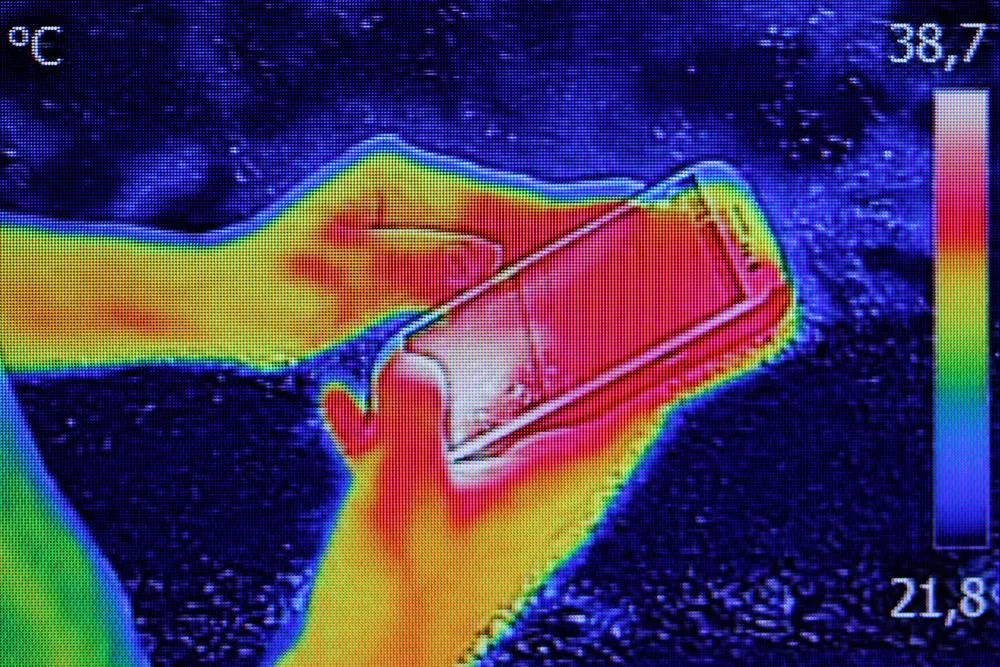
If you turn off the mobile data and Wi-Fi on your phone, would it lower the amount of radiation to which you’re exposed?
To answer this, let’s examine what radiation is and how it works.
What Is Radiation, And Is All Radiation Dangerous?
Radiation, in this context, simply refers to electromagnetic radiation. Consider this example: tossing a pebble into a lake creates ripples that spread out in every direction.
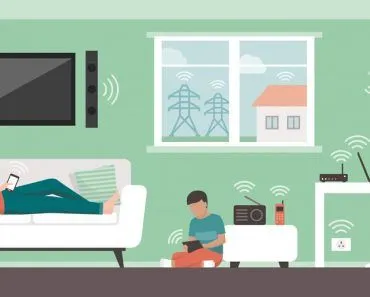
Similarly, an object, like a smartphone, laptop, WiFi router, or any electronic device that operates wirelessly, emits waves in all directions; these waves, unlike the waves formed in a lake, transport energy.
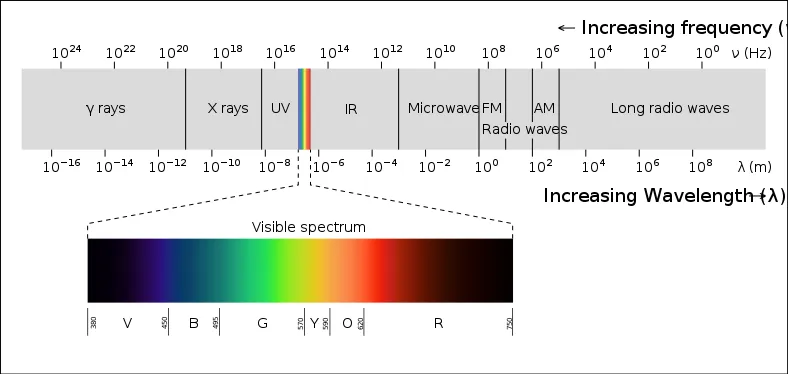
We are surrounded by electromagnetic radiation all the time. In fact, the very reason you can read this article is because of visible light, which is another type of electromagnetic wave whose wavelength falls in the visible range.
Unfortunately, many people associate the word ‘radiation’ with something dangerous. However, not all radiation is harmful.
Radiation comes in two types: non-ionizing and ionizing radiation.
Non-ionizing radiation, such as radio waves, have the lowest energy levels. They are, therefore, not considered harmful to living organisms. However, there is ongoing research about some potential health effects (Read more).
On the other hand, ionizing radiation, like gamma rays and X-rays, is highly energetic and can cause cell damage to living beings, including plants, animals, and human beings.
Do Smartphones Emit Ionizing Or Non-ionizing Radiation?
Smartphones use radio waves to communicate with nearby towers and electronic devices. As we just discussed, radio waves do not possess enough energy to cause significant molecular changes in the human body. These waves do not have high penetrative power and fall into the category of non-ionizing radiation.
What Happens When You Switch Off Your Phone Data?
To access the internet on your phone, you need to be wirelessly connected to some network (either your WiFi router or cell phone tower). Therefore, if you switch off the WiFi or mobile data on your phone, are you being exposed to less radiation?
The answer is yes. If you switch off these internet-connectivity features on your phone, theoretically, you will be exposed to less radiation.

However, it is important to note that whenever you send or receive calls, texts, or any other notification from the internet on your phone, your phone transmits/receives RF (radio frequency) signals. These signals are non-ionizing, so they are generally not considered harmful to humans.
That said, it must also be pointed out that this is an area of ongoing research; there are a number of studies that discuss the potentially harmful effects of prolonged exposure to non-ionizing radiation emitted by smartphones.
Does Switching Off Just The Phone Data Help In Reducing Your Overall Radiation Exposure?
Yes, at least to some extent.
Simply switching off your phone data won’t completely eliminate radio wave emissions, even when your phone is on standby mode. This is because the phone needs to be connected to a nearby cell tower to be online and available for calls and messages. Therefore, radio waves will still be emitted to maintain the phone’s connectivity.
In addition, there are other passive features, like Bluetooth, which will still emit radiation to remain connected to nearby devices, like Bluetooth speakers, headphones and TVs.
Therefore, turning off your phone’s data or WiFi can lower your exposure to radiation, but it won’t completely eliminate it.
Does Airplane Mode Reduce Phone Radiation?
Yes, and this is where a common misconception trips people up. Turning off just your mobile data does not silence your phone’s cellular radio. The phone still registers with and pings the nearest tower so it can receive calls and texts. Airplane mode is different: it is the single switch that shuts down all of the phone’s transmitters at once (the cellular radio, WiFi and Bluetooth). With every radio off, the phone has nothing to broadcast, and your RF exposure from it drops to negligible levels while the phone itself stays on and usable for offline tasks like reading, music or your alarm.

That distinction matters if you are trying to cut exposure deliberately. Switching off mobile data saves battery and stops background apps, but the cellular transmitter keeps working in the background. To actually stop the phone from transmitting without powering it down, you need airplane mode, or you can power the phone off entirely. If you still want WiFi at home, most phones let you turn airplane mode on and then re-enable WiFi by itself, which keeps the high-power cellular radio off while leaving the low-power WiFi link active.
This is why guidance for reducing RF exposure at night usually phrases it as keeping the phone ‘off or in airplane mode’ rather than simply turning off the internet. It is also the most practical habit on this whole list: a one-tap switch that quiets every antenna in your pocket.
Does Your Phone Still Emit Radiation When It Is Switched Off?
This is the question many people really mean when they ask about phone radiation. They are not asking what happens when they turn off mobile data, but what happens when they switch the whole phone off. The short answer is reassuring. A phone’s radio waves come from its transmitters: the cellular radio, the WiFi chip and the Bluetooth chip. When you talk on a phone, it literally acts as a transmitter, sending your voice out on radio waves. Power the phone down completely and none of those transmitters are running, so the phone has nothing to broadcast and effectively emits no radiofrequency (RF) radiation at all.

It helps to separate three states that people often lump together:
- Fully powered off: every radio is dead. No pinging towers, no WiFi, no Bluetooth, so RF emission drops to essentially zero.
- On but idle (screen off, in your pocket): the phone is still wide awake. It keeps checking in with the nearest cell tower so it is ready to receive a call or text, which means it is still transmitting in short bursts.
- Airplane mode: the phone stays on and usable for offline tasks, but its transmitters are switched off.
So if your goal is to push your exposure as close to zero as possible, say while you sleep with the phone on the nightstand, switching the phone fully off is the most complete option. Shutting it down genuinely stops the RF emissions, not just the data. That is exactly why public-health guidance suggests keeping a phone off or in airplane mode if you want it near your bed at night.
Which Is More Harmful: WiFi Or Mobile Data?
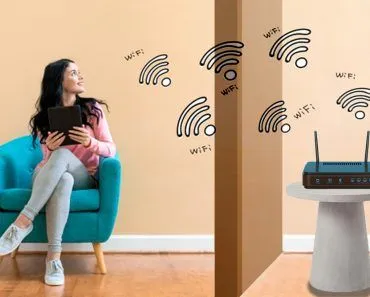
If you have to pick, WiFi is the lower-emission choice, and the reason comes down to power and distance. Your home WiFi only has to reach a router sitting a few meters away, so both your phone and the router transmit at very low power, typically around 0.1 watt (100 milliwatts). Mobile data is a tougher job, because your phone may be trying to reach a cell tower kilometers away, so it has to shout much louder.

How much louder? An older 2G handset could peak at up to 2 watts, while modern LTE and 5G phones run at a time-averaged power of roughly 0.12 to 0.2 watt, still well above a WiFi link. Crucially, a phone does not transmit at a fixed strength. It uses automatic power control: when the signal is strong it whispers, and when the signal is weak it cranks the power up to stay connected. That is why making a call or streaming video on one or two bars of cellular pushes your exposure higher, while a strong WiFi connection keeps it low.
Does that make mobile data harmful? No. Both WiFi and cellular signals are non-ionizing radio waves, and both sit far below the safety limits regulators set for how much RF energy a phone may deposit in your body, measured as the specific absorption rate, or SAR (capped at 1.6 W/kg for the head in the United States). The honest takeaway is that neither is established as dangerous, but if you want to minimize RF for its own sake, a strong WiFi signal beats weak mobile data, and avoiding long calls when you only have a bar or two of reception makes a real difference.
4 Ways To Reduce Exposure To Phone Radiation
You will be exposed to some electromagnetic radiation from your phone or nearby phones in our phone-obsessed modern world… that is just unavoidable.

While you cannot completely eliminate your exposure to phone radiation, you can reduce it significantly using these methods:
- Consider using speakerphone during calls. That way, you will limit the time that your head is closely exposed to phone radiation.
- Carry your phone in a bag instead of your pocket.
- Switch off your phone data and WiFi when you don’t need them. Although this sounds like a difficult thing to do, switching off your connection to the internet and Bluetooth is not really that bad, once you overcome the initial “Oh no, I can’t live without my phone” phase. Many apps on your phone work in the background and therefore constantly use up phone data; setting your phone completely offline will not only reduce your radiation exposure, but will also save your phone data.
- Switch to airplane mode on your phone when you sleep or when you don’t need to use your phone. This may sound extreme to some people, but it’s totally doable. Simply set your phone to airplane mode and your exposure to phone radiation will drop to negligible levels.
References (click to expand)
- Belpomme, D., Hardell, L., Belyaev, I., Burgio, E., & Carpenter, D. O. (2018, November). Thermal and non-thermal health effects of low intensity non-ionizing radiation: An international perspective. Environmental Pollution. Elsevier BV.
- International Commission on Non-Ionizing Radiation Protection. (2020). Principles for non-ionizing radiation protection. Health physics, 118(5), 477-482.
- Facts About Cell Phones and Your Health – CDC.
- Tuieng, R. J., Cartmell, S. H., Kirwan, C. C., & Sherratt, M. J. (2021, November 5). The Effects of Ionising and Non-Ionising Electromagnetic Radiation on Extracellular Matrix Proteins. Cells. MDPI AG.
- Cell Phones and Cancer Risk Fact Sheet – National Cancer Institute.
- Non-Ionizing Radiation From Wireless Technology – US EPA.
- Mobile terminals – transmitter power and SAR. German Federal Office for Radiation Protection (BfS).
- Mobile Phones and WiFi – Radiation Safety Unit, The University of Manchester.
- How to Reduce Exposure to Radiofrequency Energy from Cell Phones – California Department of Public Health.
- Specific Absorption Rate (SAR) for Cellular Telephones – FCC.