Table of Contents (click to expand)
You no longer have to switch your devices fully off. The worry was that the radio waves they emit could cause electromagnetic interference with a plane's navigation and communication systems. Since 2013 the FAA lets you use gadgets gate-to-gate in airplane mode, which silences those transmissions. Only cellular voice calls remain banned, by the FCC.
After finally maneuvering into our designated seats in an airplane, you will invariably hear the universal (and quite cliche) announcement come over the speakers. “Please turn off your mobile phones and other electronic equipments, as we are about to take off.” This is when people sulkily put their electronic devices into airplane mode and wait for the all-clear. However, there are always some exceptions, if you know what I mean. Back in December 2011, Alec Baldwin, the famous Hollywood actor, was famously booted off an American Airlines flight at the gate after he refused to stop playing the word game Words With Friends on his phone.

Every time that dreaded announcement is made, I can’t stop from being curious… Why in the world do they want me to turn off my tablet? It’s not like I’m planning on making any phone calls during takeoff.
As it turns out, the decision to ban the use of cell phones and other electronic devices on airplanes relates to more than just a pointless debate between hazards and safety.
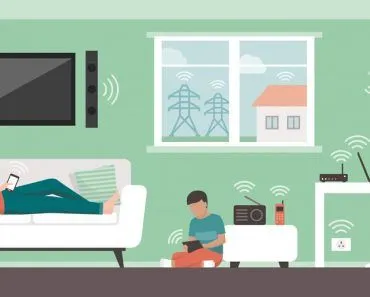
Electronic Devices Emit Radio Waves
For decades, aviation norms (broadly similar across most of the world) treated the airspace below roughly 3,000 meters (10,000 feet) as a no-gadget zone. The reasoning was that takeoff and landing are the busiest, most safety-critical moments of a flight, so anything that might disturb the cockpit was best switched off.
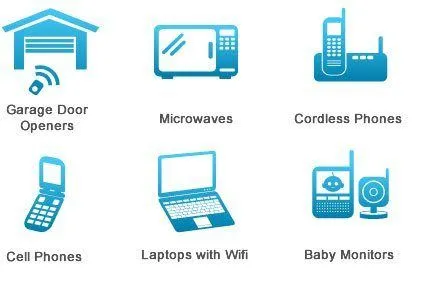
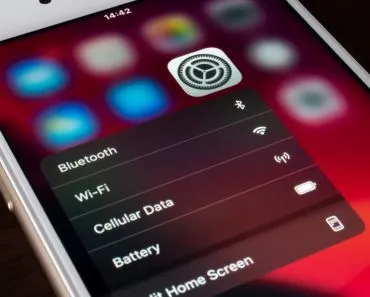
Electronic devices like smartphones, laptops, and iPads emit radio waves, which enable you to stay connected to the world (far below you) via the Internet. So what about that famous “Airplane Mode”? This is exactly the compromise regulators eventually landed on. Switching on airplane mode disables the cellular, Wi-Fi, and Bluetooth transmitters, so your phone stops actively broadcasting in search of a signal. With those radios silenced, the device is no longer treated as a meaningful interference risk, which is precisely why you are now allowed to keep using it.
Electromagnetic interference is the concern that drove the original restrictions against portable electronic devices (PEDs). From a theoretical perspective, it is argued that radio transmitters (like mobile phones, gaming consoles, and so on) may interfere with the communication capabilities of the airplane and disturb the safety of the flight. This is not restricted to these devices, but seemingly harmless ones, like a Kindle, also emit radio waves, albeit at low power. These can also affect the communications of the airplane by interfering with the radio waves emitted by the aircraft to the ground. The radio waves emitted by such devices could theoretically impact vital systems, such as radar and collision avoidance technology. The problem is magnified if the gadgets are damaged and begin emitting stronger radio waves than they should, or if signals from multiple devices combine.
Why Do Radio Waves Interfere With Airplane Communications?
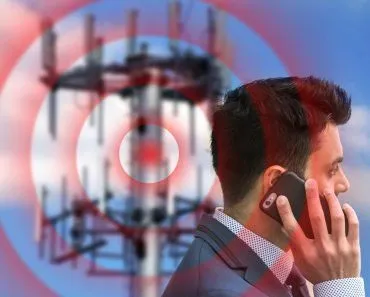
On a normal day, when using your smartphone within the confines of your room or from the porch outside (or anywhere practically), the radio waves that your phone emits don’t have any difficulty finding a network tower. They get hooked up to the one nearest your location, allowing a call (or a text, or an email) to be connected.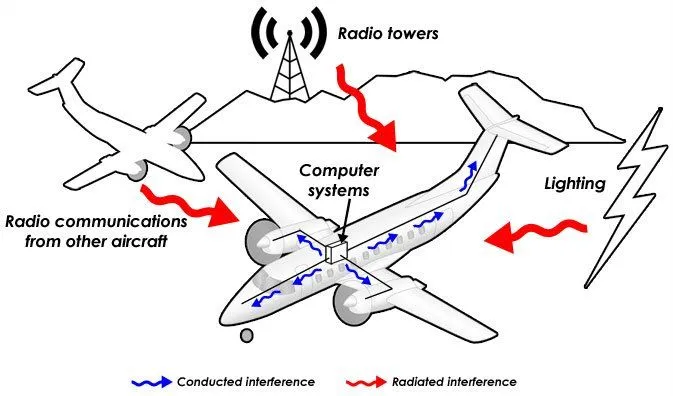
However, when you’re airborne, flying in an airplane that is moving at a high rate of speed, thousands of feet above the ground and thus far away from the network towers (which are essentially on the ground), things change dramatically. At any given moment, your smartphone has many different network towers to which it can connect. Therefore, both your cellphone and the network towers can become confused. This results in your phone emitting a stronger radiation than normal, which (theoretically) could interfere with the communications of an airplane.
Is The Caution Necessary?
If you are someone who always follows the rules, then it helps to know that two different U.S. agencies are involved here, and they say two different things. The Federal Communications Commission (FCC) is the one that bans you from making cellular phone calls once an aircraft is airborne, under a rule (47 CFR 22.925) that dates back to fears your phone would jam ground-based networks as it raced past tower after tower. The Federal Aviation Administration (FAA), which owns the safety side, does not actually prohibit personal electronic devices on board at all.
That is the part most people have not caught up on. On October 31, 2013, the FAA reviewed the evidence and concluded that modern aircraft tolerate the radio noise from passenger gadgets just fine. It cleared airlines to let you use devices “gate-to-gate,” through every phase of flight including takeoff and landing, as long as phones are in airplane mode. The one carve-out: on roughly 1% of flights, in very poor visibility, the crew may still ask you to switch devices fully off because certain landing systems have not been proven immune to interference. Europe has gone a step further. In late 2022 the European Commission told member states to free up 5G frequencies for aircraft by mid-2023, so that EU airlines can install an onboard “pico-cell” (a tiny in-cabin base station) and let passengers use their phones normally, no airplane mode required.
So the honest answer is that the blanket “switch everything off” era is over. Flip your phone to airplane mode, follow whatever the crew asks on the rare bad-weather day, and you are good. Of course, you could also just leave the digital world far below you for a couple of hours and simply relax.
You are flying, after all!