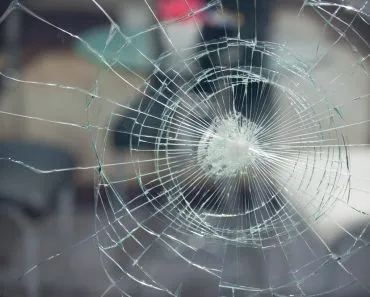
Tempered glass breaks into small, blunt granular pieces (instead of long sharp shards) because the rapid-cooling step in its manufacture locks the outer surfaces in compression and the core in tension. When a crack finally beats the surface compression, the stored tensile energy in the core makes the entire pane crumble at once into tiny pebbles. Car side windows use tempered glass; windshields use laminated glass (two glass plies bonded with a PVB plastic interlayer), which holds the broken pieces in place after impact.
From coffee tables and skyscrapers to house windows and car windshields, we are surrounded by glass. It is a terrific and highly useful material – transparent, reflective and reasonably strong (depending on the type of glass).
However, strength is not the only thing that varies depending on how the glass is made; there’s another rather unusual trait that separates certain glass types from others – the way the glass breaks.
You have surely seen movie scenes where automobiles (like cars or trucks) blow up or get smashed against something. During any such scene, have you noticed that the glass in car windows doesn’t break like regular glass (that we use in our daily lives)? Instead, it breaks up into very tiny, granular pieces.
The question is, why does that happen?
What Is Tempered Glass?
Judging by its appearance and how it feels to the touch, it’s easy to tell the glass they use in automobiles apart from regular glass. The former is called tempered or toughened glass, and is used in shower doors, refrigerator trays, architectural glass doors and tables, oven doors, and smartphone screen protectors. It is typically 4-5 times stronger than regular annealed glass and tolerates sustained temperatures up to roughly 250 °C (480 °F), with thermal-shock resistance of about 150-200 °C, far better than regular glass.
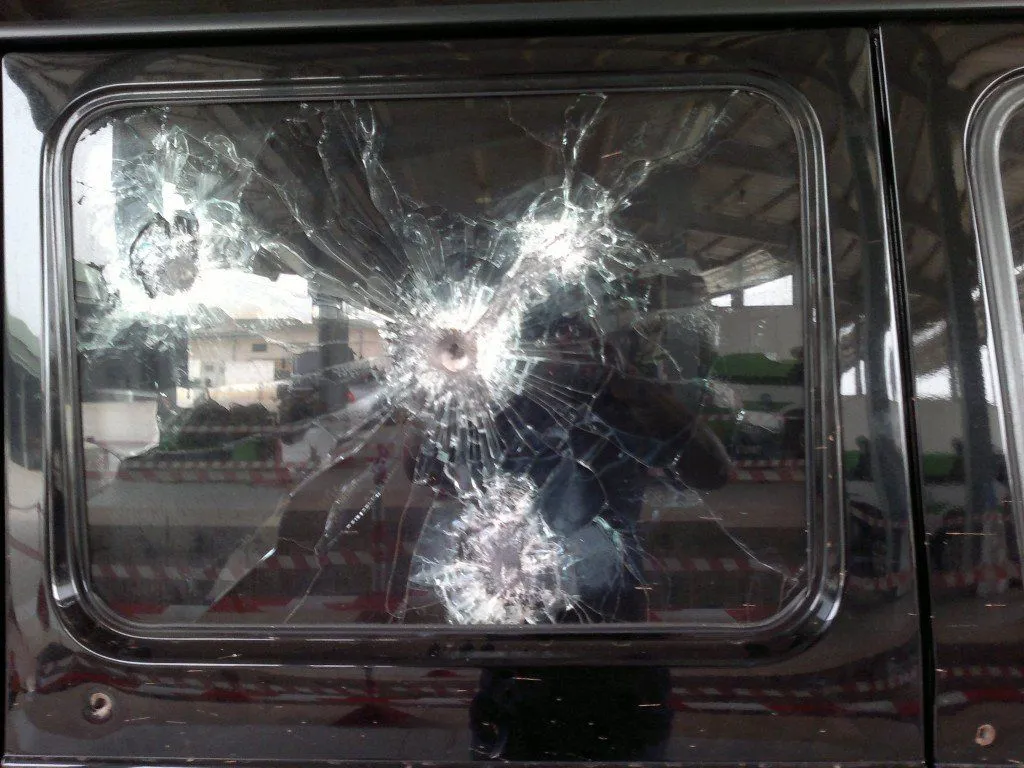
Apart from its strength, tempered glass is also known for the characteristic way it breaks. Unlike regular glass, which shatters into sharp shards that can potentially cause injuries, tempered glass breaks into smaller pieces that interlock with neighboring pieces and therefore don’t fall readily.
Why Does Tempered Glass Break Into Tiny Pieces?

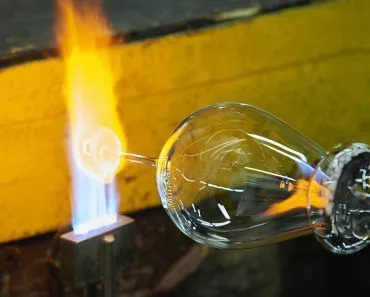
As mentioned earlier, the characteristics of any glass type depend on the materials it is made with and the chemical and mechanical processes it undergoes during its manufacture. The way that tempered glass breaks into much smaller pieces is specifically attributed to the manufacturing process. The glass is heated to around 620 °C (above its softening point) and then rapidly cooled (quenched) with jets of cold air on both sides.
The cooling process occurs more quickly on the outer surface of the glass than at its center. As a result, the center attempts to retract from the outer surfaces as it cools. This causes the outer surfaces to experience compressive stress while the center is under tension.
The compressive stress gives toughened glass its increased strength; the higher the stress, the smaller pieces that the glass breaks into. The benefit of this differential heating comes in the form of increased endurance of the glass; it means that such glass can be stretched or pulled to a certain limit without breaking, which is a good thing to have in many forms of glass.
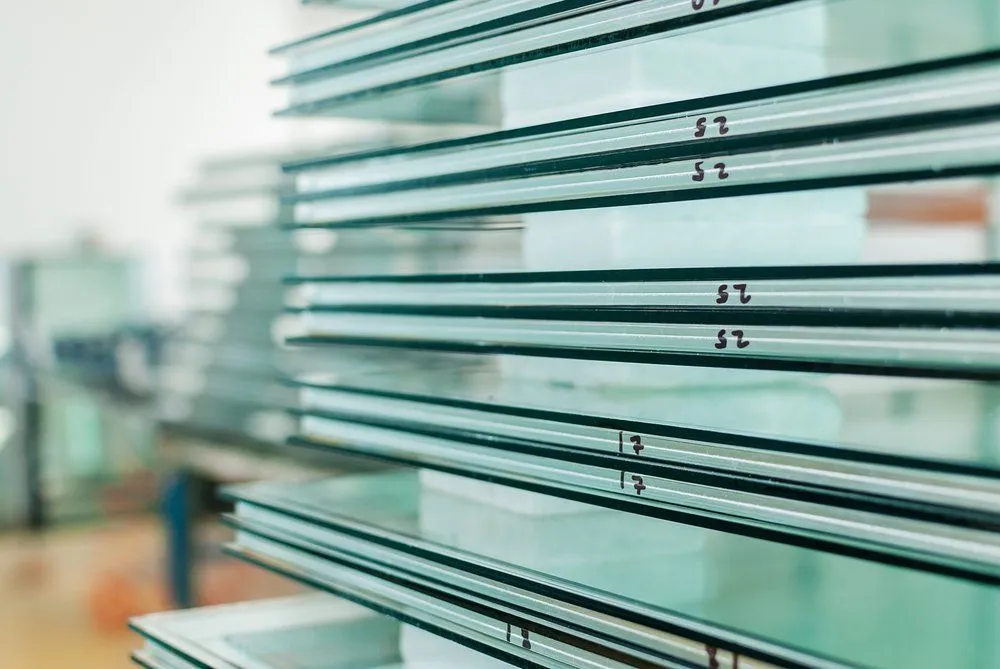
As an optional finishing step, some panels are etched with hydrofluoric acid to blunt microscopic surface cracks and squeeze out a bit more practical strength. One quirky failure mode worth knowing about: trace nickel sulphide (NiS) impurities, accidentally introduced from furnace refractories or raw materials, can become trapped in the glass. Over months or years, these inclusions slowly transform from their high-temperature alpha phase back to the beta phase, expanding by 2-4% and sometimes causing apparently random spontaneous shattering. To weed out at-risk panels, manufacturers run a “heat-soak test,” reheating finished glass to deliberately trigger failures before installation.
What Is Laminated Glass?
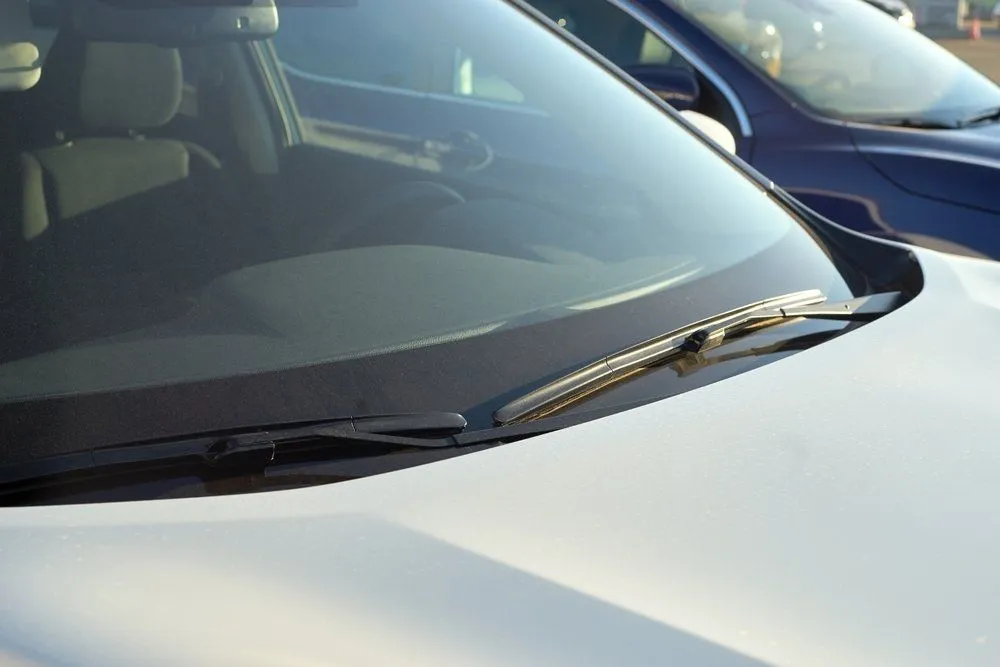
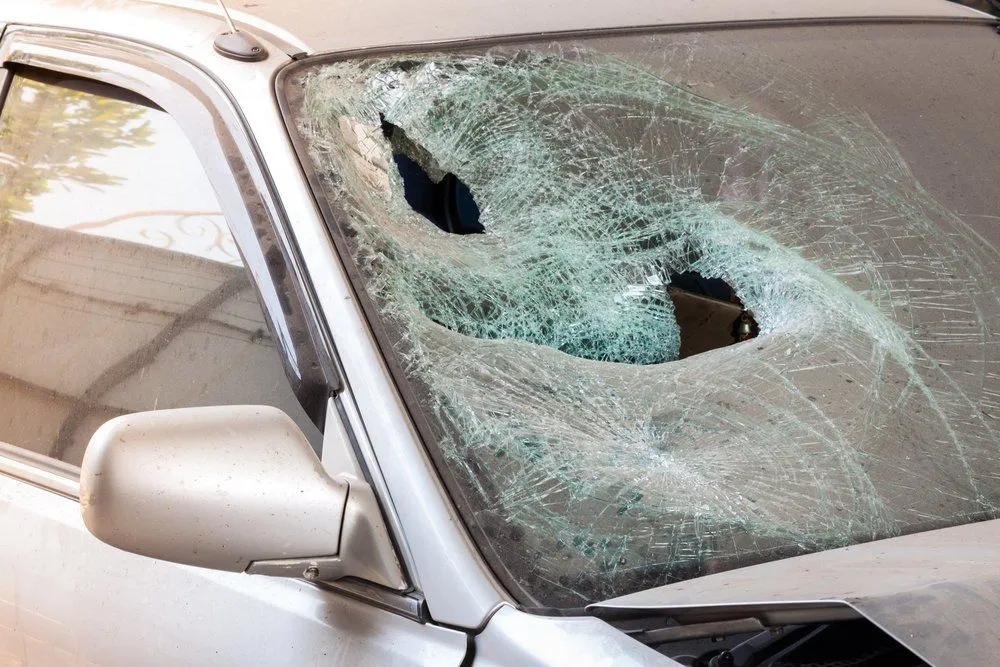
Note that toughened glass, i.e. the glass used in side windows, is different from the glass used in the windshield. The type used in the latter is called laminated glass, which is made by sandwiching a laminate (usually polyvinyl butyral or PVB plastic) between two (or more) layers of glasses and bonding them using high pressure and heat.
How Laminated Glass Is Different From Other Glasses?
In addition to being very strong, this also offers a unique advantage. Upon breaking, the broken pieces of glass don’t usually fall out; in fact, they stick to the laminate and tend to stay in the frame. This is why applying significant force on the windshield will make the whole thing pop out of its frame in a single piece.
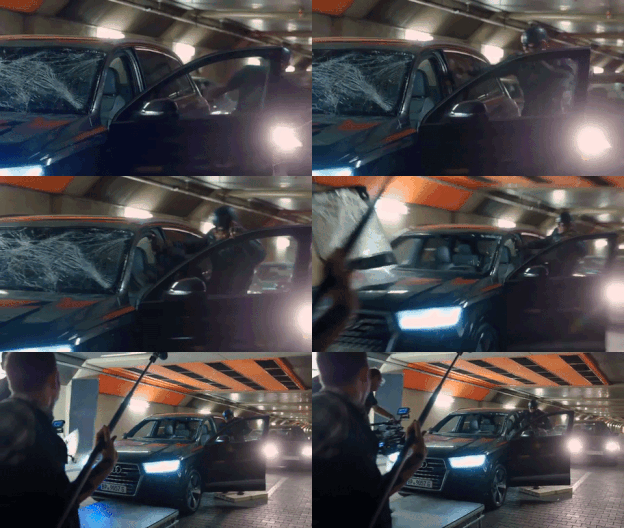
Due to their strength and the ability to withstand a lot of pressure, laminated panels are widely used in office complexes, public buildings, and most bullet-resistant glazing (which is typically multi-layer laminated glass, sometimes combined with polycarbonate, rather than tempered glass on its own). Laminated glass also offers decent soundproofing. All in all, both types of glass are strong and have their own characteristic properties, so choosing the ‘right’ type of glass depends entirely on your requirements.
Tempered Glass vs. Regular (Annealed) Glass: What’s The Difference?
Here’s a fact that surprises most people: tempered glass and the ordinary glass in a picture frame usually start out as the exact same material. Both are typically soda-lime glass. What sets them apart is not the recipe, but how they are cooled after being formed.
Regular glass is annealed, which simply means it is cooled slowly and evenly. This lets the whole sheet relax to almost no internal stress, which is exactly what you want if you plan to cut, drill, or grind it later. The downside is that annealed glass has no built-in defense against cracks. Its surface is dotted with microscopic flaws, and when you stress it, tension concentrates at the tip of one of those flaws and a crack races through the sheet at high speed. That is why broken window glass comes apart into a few large, irregular, dagger-like shards.
Tempered (or toughened) glass is just annealed glass that has been put through the reheating-and-quenching treatment described above. That extra step locks the surface into permanent compression (a minimum of 69 MPa, or 10,000 psi, for fully tempered 6 mm safety glass) and makes the finished pane roughly four times stronger. It also completely changes how the glass fails: instead of a handful of shards, the stored energy makes the whole sheet crumble into a shower of small, blunt granules. Safety standards such as the European EN 12150 “fragmentation test” formally require toughened glass to break into a minimum number of these tiny, relatively harmless particles before it can be sold as safety glass.
There is a catch, though. Because all that stress is baked in, tempered glass cannot be cut or drilled after the fact; try, and it will burst into granules on your workbench. Every hole and cut-out has to be made while the glass is still ordinary annealed glass, before it ever goes into the furnace. This is exactly why plain annealed glass still fills your picture frames and interior cabinet doors, while tempered glass is reserved for the places where a break could hurt someone: car side windows, shower enclosures, and phone screen protectors.
Why Is Broken Glass So Sharp?
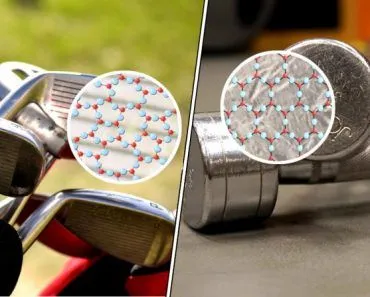
Step back from tempering for a moment and ask an even more basic question: why is any broken glass so alarmingly sharp in the first place? The answer lies in the fact that glass is amorphous. Unlike a crystal such as salt or quartz, its atoms are frozen in a jumbled, disordered arrangement with no long-range order and, crucially, no cleavage planes, which are the built-in planes of weakness that let a crystal split into neat, flat faces.

With no such plane to follow, a crack in glass takes the only path it can: a smooth, curved break called a conchoidal fracture, named for the shell-like ripples it leaves behind (picture the concentric growth lines on a mussel shell). Where two of these curving surfaces meet, the edge tapers to an incredibly fine, acute angle. That is what makes a glass edge dangerous. It is not serrated like a bread knife; it is simply, geometrically, almost impossibly thin.
Just how thin? Consider obsidian, the natural volcanic glass that breaks by exactly the same conchoidal fracture. A well-knapped obsidian blade can have a cutting edge only about three nanometers thick, many times sharper than a high-quality steel surgical scalpel. A handful of surgeons actually use obsidian blades for delicate work, though they are not approved by the US Food and Drug Administration for use on humans. Under an electron microscope a steel edge looks ragged and saw-toothed, while a glass edge stays perfectly smooth. Your shattered drinking glass is running on the very same physics.
So is tempered glass sharp too? At the microscopic level its fragments fracture conchoidally just like any other glass, but the locked-in stress shatters the pane into thousands of tiny granular cubes rather than long blades. Each little chunk carries very little mass and momentum, so it is far less able to slice deep into skin. That is why those granules are described as “relatively harmless” and not simply “harmless”: sweep up a pile of them carelessly and you can still pick up a nick or two.